Practical answer first: most family itineraries based in central Tokyo benefit from not renting a car daily—use a car only for specific day trips (coastal drives, mountain escapes, or multi-stop countryside routes). Driving truly improves a Tokyo-centered family trip when your route includes multiple dispersed stops outside the rail network, tight schedules with small children, or luggage-heavy transfers between distant towns. Otherwise, Japan’s rail and bus networks, combined with occasional taxis or private transfers, usually beat city driving for convenience and predictability. Below I’ll help you weigh route value, insurance language to watch, pickup/return friction at airports and urban garages, and a practical non-driving fallback so you can choose the right mobility approach for your family.
When driving genuinely improves a Tokyo family trip
Driving adds clear value when your plan includes several dispersed destinations that lack frequent direct rail service or when you need tight timing with young children. Good examples are multi-stop coastal routes (for example visiting small seaside towns and beaches), mountain routes where public transport is infrequent, or a ring trip that connects attractions across prefectural borders. A car lets you carry strollers, picnic gear and luggage without juggling transfers, and gives freedom to stop for naps or scenic pull-offs on your schedule—important with little ones.
Balance those benefits against predictable Tokyo congestion, limited central parking and narrow streets in some towns. Factor in the time spent picking up and returning the car, potential fees for one-way drops, and the learning curve of local signs and parking rules. If most of your attractions are within a 90–120 minute rail journey from Tokyo and well-served by local transit, driving is probably an extra hassle rather than a help.
Decide whether driving earns its place
| Mobility strategy | Best for | Cost or friction to check |
|---|---|---|
| Rent a car for selected day trips | Families wanting flexibility for specific multi-stop excursions beyond rail reach | Adds pickup/return time, parking costs and local driving learning curve |
| Rail + regional buses | Families focused on major destinations with reliable public schedules | Less flexible for remote spots and requires careful timetable coordination |
| Rail + taxis/private transfers | Families prioritizing convenience and door-to-door service for short legs | Higher per-ride cost, especially with long distances or frequent use |
| Full guided or chartered vehicle | Families wanting a worry-free, preplanned itinerary with a driver | Least independent approach and typically more expensive than self-driving |
Check live rental choices only after the route test
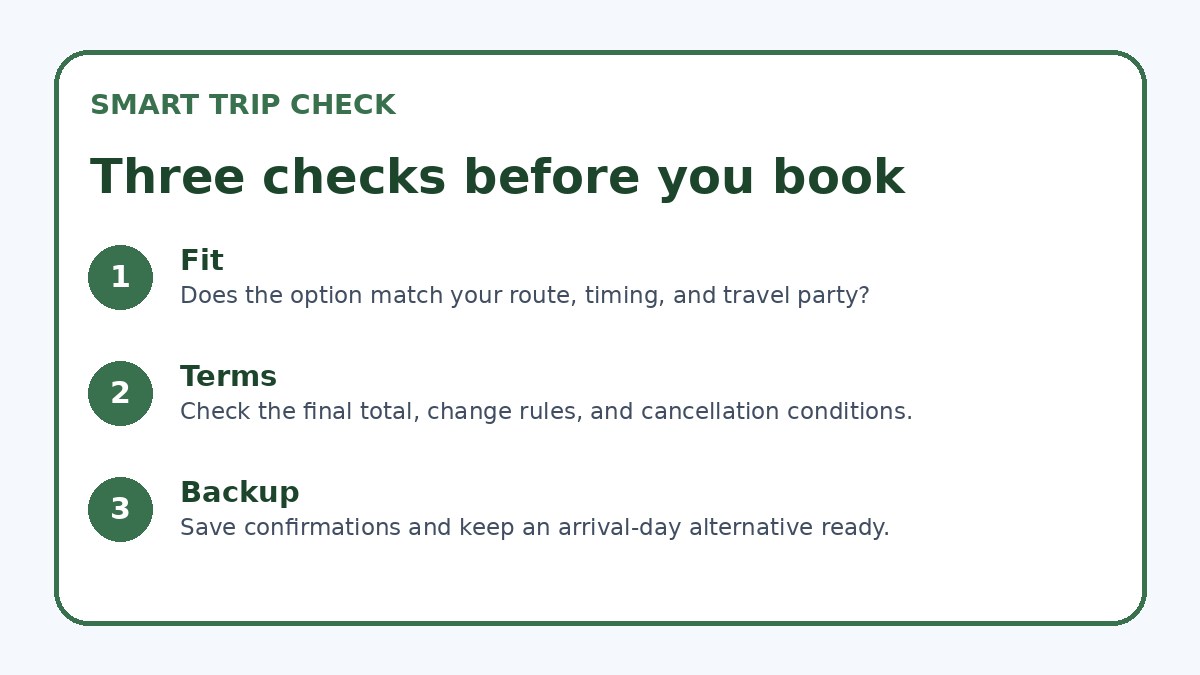
Use the exact driver, dates, pickup point, and return plan to compare current conditions.
Insurance wording and what to verify before booking
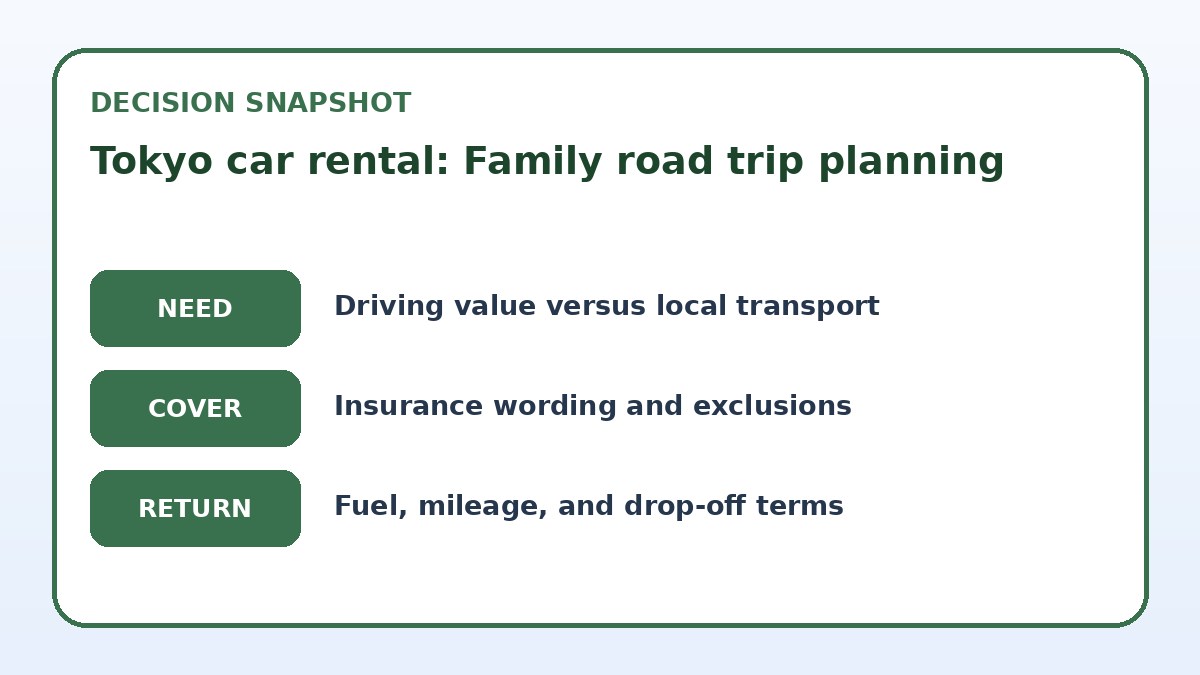
Insurance policies vary widely; the critical items to confirm are the excess (deductible) amount, whether collision damage waiver (CDW) actually reduces your liability, and if roadside assistance is included or only available for purchase. Confirm whether policies explicitly cover third-party liability, personal injury, and damage to rented equipment like child seats. Also check limits on kilometers, geographic restrictions (some rentals prohibit crossing prefectural borders or using certain mountain roads), and how claims are handled in English if you don’t speak Japanese.
When you compare offers, ask for the insurer’s contact procedure and paperwork required in case of an incident. If you rely on a credit-card rental insurance benefit, verify eligibility requirements on the final booking page—card benefits often require you to decline the rental company’s CDW and follow specific claim steps. Keep digital and printed copies of all insurance terms, and confirm whether reimbursement will be direct or require you to pay and later claim.
Compare the full rental conditions
Confirm insurance wording, exclusions, deposit, fuel, mileage, and return terms on the final page.
Pickup, return friction and practical timing tips
Pickup and return add real time costs, especially for families with restless kids. Airport counters can be busy and located in remote parking areas that require shuttles; downtown garages may be compact and hard to find. Confirm exact pickup hours, whether the company offers child seats at pickup or only by prior reservation, late pickup or early return penalties, and whether the agent will inspect the vehicle with you in a language you understand. Plan buffer time both ways: factor an extra 30–60 minutes for pickup and 30–90 minutes for return depending on airport or city logistics.
If you’ll drop the car at a different location, verify one-way drop fees and whether the receiving location will inspect the vehicle on arrival or requires you to complete paperwork at the original branch. For evening returns, ask if after-hours drop-off procedures exist and whether the company processes final charges the same day. Having a local SIM or portable Wi‑Fi, and a pre-saved agent contact, reduces stress and helps coordinate late pickups or unexpected delays.
Car rental terms to verify
- Map each day: mark which stops lack reliable rail access and would benefit most from a car.
- Request written insurance details: confirm excess amount, roadside assistance, and what child seats or additional drivers cost.
- Check pickup/return logistics: exact counter location, shuttle needs, opening hours, and after-hours drop-off rules.
- Compare one-way drop fees and geographic restrictions if you plan to return the car at a different location.
- Prebook child seats and add a second driver on the rental agreement to share driving duties safely.
- Save the rental agreement, insurance contacts, and a local emergency number both digitally and in printed form.
Non-driving fallback: build a realistic transit-first plan
A good fallback combines rail for main travel corridors, regional buses for towns off the main lines, and taxis or private transfers for the first/last mile or when traveling with a lot of luggage. Start by mapping major train stations near your planned stops and check whether regional passes or IC cards ease transfers. For day trips beyond rail, identify scheduled bus routes or shuttle services; many tourist destinations publish timetables that work with train arrivals, and booking windows may be necessary for some mountain or coastal buses.
Also prepare family-friendly contingency: reserve seats on limited express trains when possible, book private transfers for night arrivals or long legs with young children, and confirm stroller policies on trains and buses. Keep receipts and contacts for local taxi companies that accept card payments; in some rural areas cash is preferred. Finally, build extra time into your schedule for weather delays or slower-moving children—having a comfortable, reliable backup keeps the trip enjoyable without the hassles of driving.
Car Rental & Road Trip questions travelers ask
Is driving in Tokyo itself recommended for families?
Driving inside central Tokyo is usually not recommended for families because traffic, limited parking and complex one-way streets can make short journeys slow and stressful. Tokyo’s public transport is extensive, fast and often more convenient for reaching museums, parks and central attractions. If your base is inside the city and you plan mostly urban activities, use trains and reserve a car only for day trips that start early and head outside the densely populated core.
What insurance terms should I watch most closely when booking a Tokyo car rental?
Prioritize clear statements about the excess (deductible), whether collision damage waiver (CDW) fully covers vehicle damage, and the scope of third-party liability. Verify whether roadside assistance is included, what the policy covers for child seats or additional drivers, and any geographic restrictions. If you expect to rely on credit-card insurance benefits, read the card issuer’s conditions on the final booking page to confirm required steps to validate coverage.
How can I organize car pickup and return to minimize stress with children?
Choose a pickup location with straightforward access—prefer airport counters with shuttle details or downtown branches with clear directions and parking. Reserve child seats in advance so they’re ready at pickup; allow extra buffer time on pickup and return days for inspections and paperwork. Confirm after-hours drop procedures and take time to photograph vehicle condition before driving off. Keep snacks, water and comfort items in reach to reduce fuss during the handover process.
Final decision note
For most family trips that center on Tokyo, a hybrid approach works best: rely on trains and buses for city days and rent a car selectively for multi-stop rural excursions, coastal drives or mountain visits where public transport is sparse. Make the driving decision by mapping actual routes, checking insurance specifics, and calculating pickup and return friction. If you choose not to drive, build a reliable transit-first fallback with reserved train seats, regional bus research and a plan for short taxi or private-transfer legs. Before final booking, verify insurance wording, child-seat availability, pickup location details and any one-way or geographic restrictions on the rental company’s final confirmation page.
Continue planning
Check current options and final conditions
Use the provider page to confirm live availability, the final total, cancellation terms, and every condition that matters to your trip.
This evergreen planning guide was created with AI-assisted drafting and a structured quality review. It does not display live prices, schedules, availability, visa guidance, or provider rankings. Verify current details before booking. Some links are affiliate links; we may earn a commission at no additional cost to you.