Within the first hour after you land in Seoul you’ll make a quick, practical decision: where will you sleep and what time will you leave for the airport? For first-time visitors, planning the return trip starts here. Confirm your flight time and arrival terminal, then match luggage, party size, and risk tolerance to transfer types. If you’re staying near a major hub, a rail link or airport limousine bus may be simple; if you’re far out or traveling late, a taxi or private transfer can remove stress. This article gives a short practical answer up front, then explains tradeoffs and the checks you should make while your flight and accommodation details are open.
Check options for your arrival details
Use your flight, luggage, party size, and accommodation address to compare current choices.
Match luggage and party size to transfer type
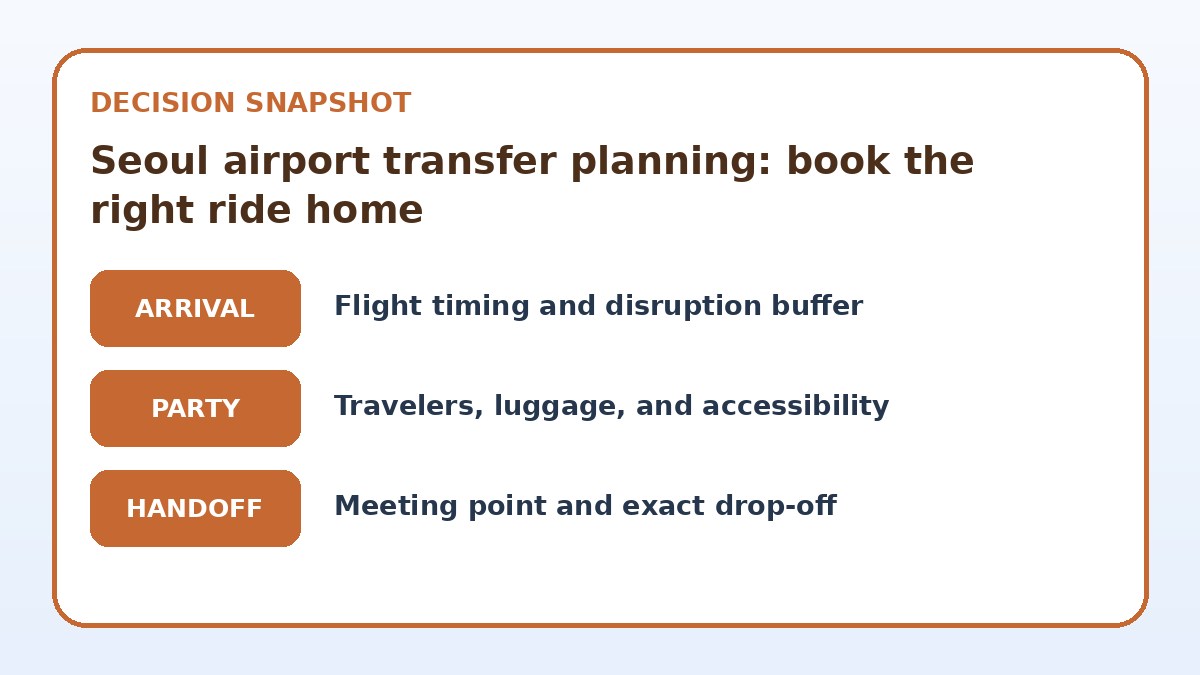
Start by counting checked bags, carry-ons, and any oversized items. Rail and shuttle services are excellent if you have one or two suitcases per person and can handle short walks or elevators at stations. If someone in your party has mobility needs, or you’re carrying sports gear, strollers, or musical instruments, a private vehicle or taxi that loads at the curb will usually be faster and less stressful. Think through door-to-door time, not just travel time; transfers with extra walking or escalator trips can add significant effort when everyone is tired.
Also consider how many people are traveling. Shared airport shuttles and public buses lower cost for solo travelers but can increase wait and transfer time for groups. For three or more people, the per-person price difference between a taxi and a train may narrow, and door-to-door pickup becomes more attractive. When comparing options, imagine your walk from your room to the pick-up point with all your bags—if that final walk is uphill, on cobbles, or involves multiple stairs, choose a vehicle that brings you right to the curb.
Arrival details to have ready
- Confirm your flight number, terminal, and scheduled departure time and save them where you can access them quickly.
- Count people and suitcases, note mobility needs, and choose a vehicle size that accommodates everyone and all bags.
- Check operating hours and frequency for trains, buses, and shuttles for your planned departure window.
- Ask your hotel about curbside access, luggage handling, early check-out procedures, and recommended pick-up spots.
- If booking a private service, verify the meeting point, driver contact, vehicle type, and change/cancellation policy on the provider’s final page.
- Save screenshots or confirmation emails and keep your phone charged so you can show bookings and contact drivers at the last minute.
Plan for late, early-morning, or disrupted departures
Check the operating hours and frequency of any scheduled service you intend to use. Night trains and airport buses may run less often or stop earlier than daytime services. If your flight requires an early-morning arrival at the airport or you expect unpredictable plans, pick a transfer type with frequent service or flexible pickup. When time is tight, a taxi or private transfer reduces the risk of missing a connection because they are available on demand and take the most direct route to the terminal.
If your outbound flight time leaves little margin for delay, build in extra buffer time for traffic, ticket queues, and security lines. For disrupted travel—strikes, severe weather, or sudden schedule changes—have a backup mode of transport saved in your phone and confirm cancellation or change policies before you book. Keep the airline app open and your accommodation’s contact handy so you can adjust your departure time or request a later check-out if needed.
Match the transfer to your arrival
| Arrival approach | Best for | Detail to verify |
|---|---|---|
| Airport rail (train) | Solo or light-luggage travelers staying near a station who want a predictable schedule. | Not door-to-door; requires walking with bags and timed connections to local transit. |
| Airport limousine bus / scheduled shuttle | Visitors staying near main hotel corridors who prefer fewer changes and lower stress. | Fixed stops can add time; services may run less often late at night or early morning. |
| Taxi / ride-hail | Small groups with moderate luggage or travelers needing direct, on-demand service. | Subject to traffic and surge pricing; verify drop-off rules at your accommodation. |
| Private transfer / booked car | Large groups, travelers with lots of luggage, or anyone prioritizing door-to-door reliability. | Higher cost and you must confirm vehicle size, meeting point, driver tracking, and change/cancellation terms. |
Make the meeting plan clear
Check the final pickup instructions, waiting conditions, and exact drop-off coverage.
Clarify meeting points and arrival coordination
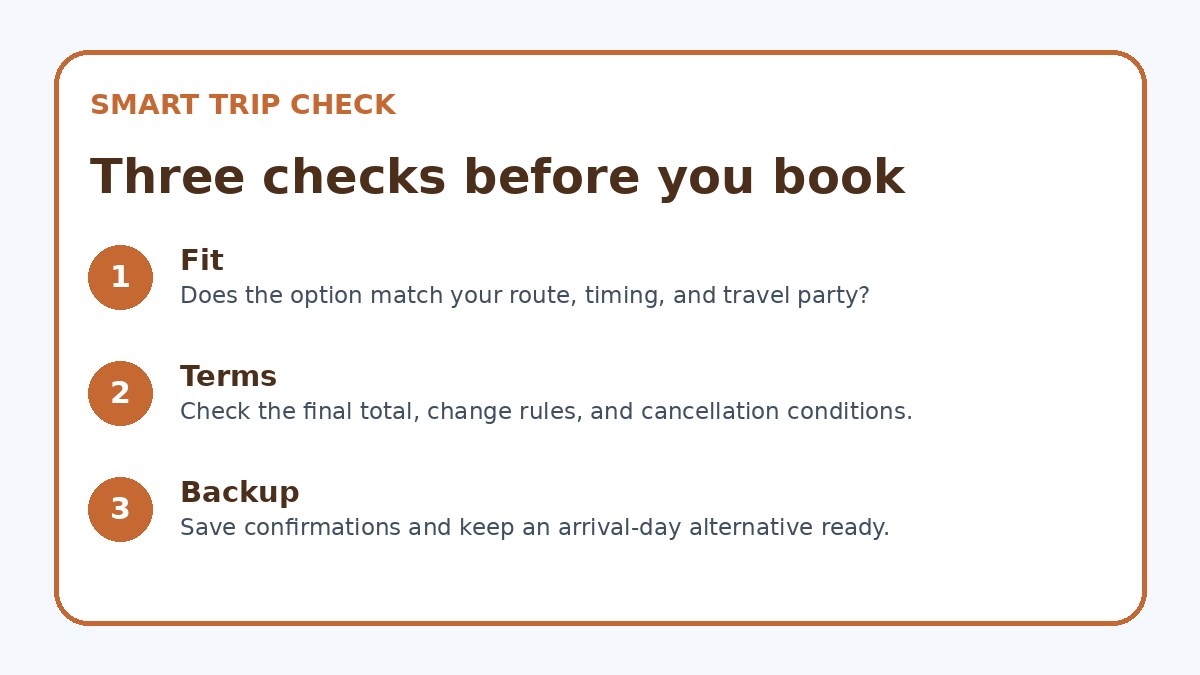
When you prebook a transfer, confirm the pick-up and drop-off locations in writing. Airports and hotels often have specific meeting points that are easier to find than general addresses—look for terminal numbers, gate zones, or named hotel entrances. For ride-hail and taxis, share the exact GPS pin or photo of the hotel entrance with your driver and ask for a vehicle plate number. If you’re meeting inside a building, note whether you’ll need to go through security or pass desk checks; that can add time and change where you should plan to meet.
If you’re coordinating with a group, pick a simple, visible landmark and set a firm clock time plus a 10–15 minute buffer for late arrivals. For private transfers, provide flight arrival time, terminal, and baggage details to the driver or operator so they can track delays and adjust pickup. When using a shuttle or shared transfer, check how many stops are scheduled so you know whether you’ll be first to drop off or might remain on the vehicle while others disembark.
Check how your accommodation fits drop-off and check-out
Before you book a hotel, ask how easy it is to get to main roads and whether the property allows cars to stop at the door. Some small guesthouses are on narrow alleys where taxis can’t park—those need a short walk with luggage. If you plan an early departure, confirm whether the hotel can store luggage after check-out or provide a staff member to help move bags to the pickup point. Knowing this ahead of time can change your transfer choice: a nearby train station might beat a long taxi walk.
If you’ll request an early check-out or a wake-up call, tell the hotel in advance and ask whether they can line up a taxi or private transfer for a specific time. Many hotels will help book a vehicle but verify that the booking page or confirmation includes cancellation terms and whether there are additional fees for early morning pickups. Keep screenshots or printed confirmations to show the driver and the front desk to avoid misunderstandings during the busy departure window.
Airport Transfer & Local Mobility questions travelers ask
How early should I leave Seoul for an international flight when choosing different transfer modes?
Aim to be at the airport early enough for check-in, bag drop, and security lines—then add buffer time for your chosen transfer. For scheduled rail or shuttle services, factor the next available departure if you miss one; for taxis and private cars, build in traffic variability at peak hours. If your flight is early morning, favor options that operate on your schedule or that the hotel can reliably arrange. Check train and bus timetables and the taxi or transfer provider’s local guidance before finalizing.
Can my hotel arrange a meet-and-greet with a driver and help with luggage?
Many hotels can arrange a driver to meet you at the lobby and assist with luggage, though policies vary. Ask the front desk what they include—some properties add a handling charge or require advance notice for early departures. Confirm whether the driver will come inside the lobby or meet at a curbside point, and get a written confirmation showing pickup time. Always verify the operator’s contact number in case of flight delays so the hotel and driver can coordinate.
Is it safe to rely on ride-hailing apps late at night or during disruptions?
Ride-hailing is generally available late at night, but availability can be limited during severe disruptions, major events, or peak demand, which can increase wait times and fares. If your schedule is tight, consider pre-booking a private transfer or arranging a hotel-backed taxi in advance. When you do use apps, confirm the driver’s vehicle plate and identity before getting in, and share your trip details with someone you trust. Keep a backup plan—like the nearest 24-hour hotel desk or a scheduled shuttle—if an app cannot fulfill a booking.
Final decision note
Planning your return from Seoul’s airport is a practical exercise: match luggage, party size, schedule, and risk tolerance to one of the major transfer types. If you travel light and stay near a station, rail or scheduled shuttle can be efficient. For groups, heavy luggage, or tight timing, a taxi or private transfer reduces the friction of door-to-door movement. Always confirm meeting points, operating hours, and the provider’s change or cancellation terms on the booking page before you pay. Keep flight and hotel details accessible, save confirmations, and have one backup option so you can leave Seoul calmly and on time.
Continue planning
Check current options and final conditions
Use the provider page to confirm live availability, the final total, cancellation terms, and every condition that matters to your trip.
This evergreen planning guide was created with AI-assisted drafting and a structured quality review. It does not display live prices, schedules, availability, visa guidance, or provider rankings. Verify current details before booking. Some links are affiliate links; we may earn a commission at no additional cost to you.