For families travelling from New York City to Toronto, the core decision is a routing-versus-fare tradeoff: faster, simpler itineraries often cost more, while lower fares usually mean longer connections or separate tickets. Start by deciding whether prioritizing minimal transfer hassle or a lower headline price matters most for your children’s needs and energy levels. With that priority set, check flight duration, number of stops, minimum connection times, baggage transfer rules, and fare-change conditions for the specific tickets you’re considering. Have exact travel dates, full traveler ages, and any infant or booster-seat needs ready before searching live inventories. These details will determine whether a slightly higher fare is worth the convenience of a single through-ticket and fewer transfer points for your family’s comfort.
See live routes for your exact travel day
Compare direct and connecting choices with the same baggage and traveler details.
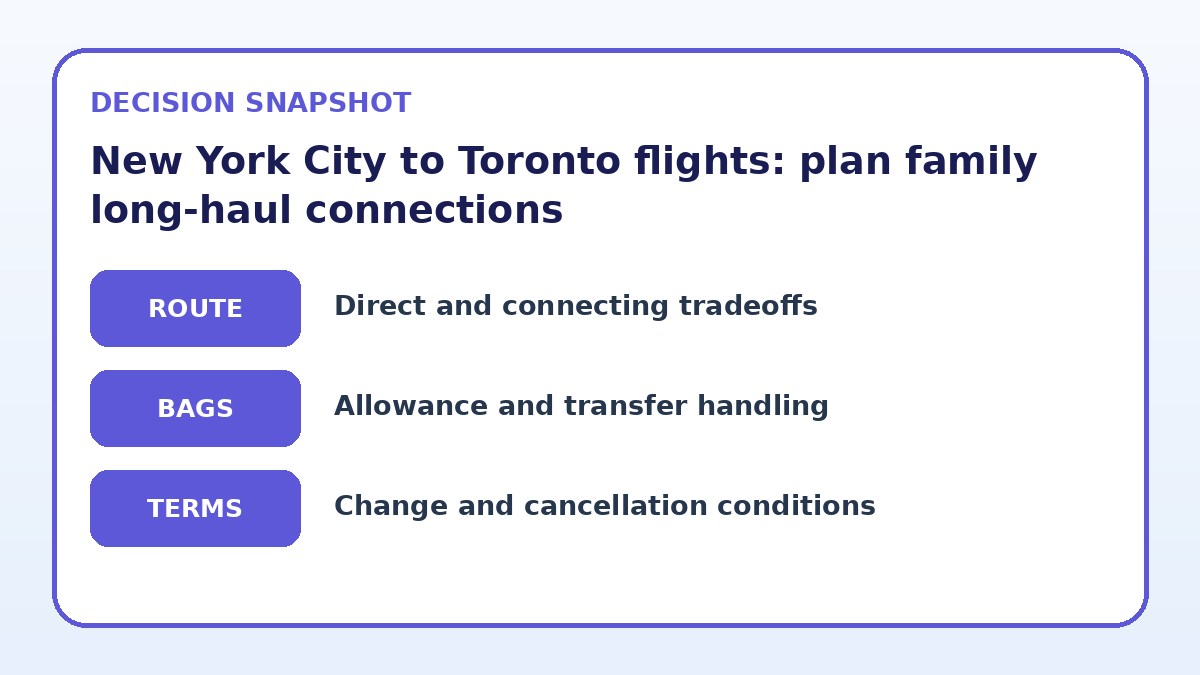
Routing choices and how they affect family comfort
When evaluating routing options, think beyond the number of stops: consider airport layout, terminal transfer type, and whether the connection requires customs or an extra security screening. Direct or nonstop services (if available) minimize movement and the emotional strain of transitions, but they can be pricier. Connections that remain within the same terminal or airline alliance typically make a transfer with luggage easier and quicker. For families, a slightly longer total elapsed time may be preferable if it reduces walking distances, eliminates cross-terminal transfers, or avoids late-night arrival windows when support services are limited.
Also factor in the type of aircraft and onboard amenities when routing matters for comfort: the cabin layout, availability of bassinet seats, and whether inflight entertainment or power outlets are available can change how manageable a long-haul segment feels with children. If a connection forces you into a short segment with no lavatory or limited space, that transfer can feel longer than the minutes indicate. Use the routing to plan rest stops, meal timing, and diaper or leg-stretch breaks so that the itinerary supports predictable family routines rather than disrupting them.
Baggage transfer and connection risk: what families must verify
Baggage rules and who transfers your luggage are central to connection risk. A single through-ticket typically ensures checked bags are transferred to the final destination by the carrier; this reduces the burden on caregivers during a tight connection. If you book separate tickets or mix carriers, expect to collect and recheck baggage between legs—factor the time for that and potential fees. Verify on each itinerary whether checked bags are included in the fare, if there are oversized/extra item charges for strollers or car seats, and whether priority handling is available for families.
Beyond bags, consider missed-connection policies and whether the operating carrier has a rebooking obligation in case of delays. With through-tickets, airlines often re-accommodate passengers onto the next available flight of the same carrier or partner; with separate tickets, you may be responsible for missed connections. Before booking, check the provider’s connection minimums, petition options for errant delays, and whether an airline will hold a connection for families with young children. Confirm these points on the carrier’s final booking page rather than relying on third-party summaries.
Compare flight-selection strategies
| Flight strategy | Best for | Risk to check |
|---|---|---|
| Single through-ticket on one carrier | Families prioritizing minimal transfer hassle and guaranteed baggage handling | Usually higher fares but lower connection and rebooking risk |
| Separate low-cost legs | Price-sensitive families willing to manage baggage recheck and longer buffers | Lower headline price with higher logistical and missed-connection risk |
| Codeshare itinerary with same alliance | Families seeking balanced convenience with more schedule choices | Requires careful verification of which carrier issues the ticket and who handles disruptions |
| Longer daytime connection with hotel stopover | Families who prefer to break the journey and maintain routines | Adds time and lodging cost but reduces the stress of tight transfers and nighttime arrivals |
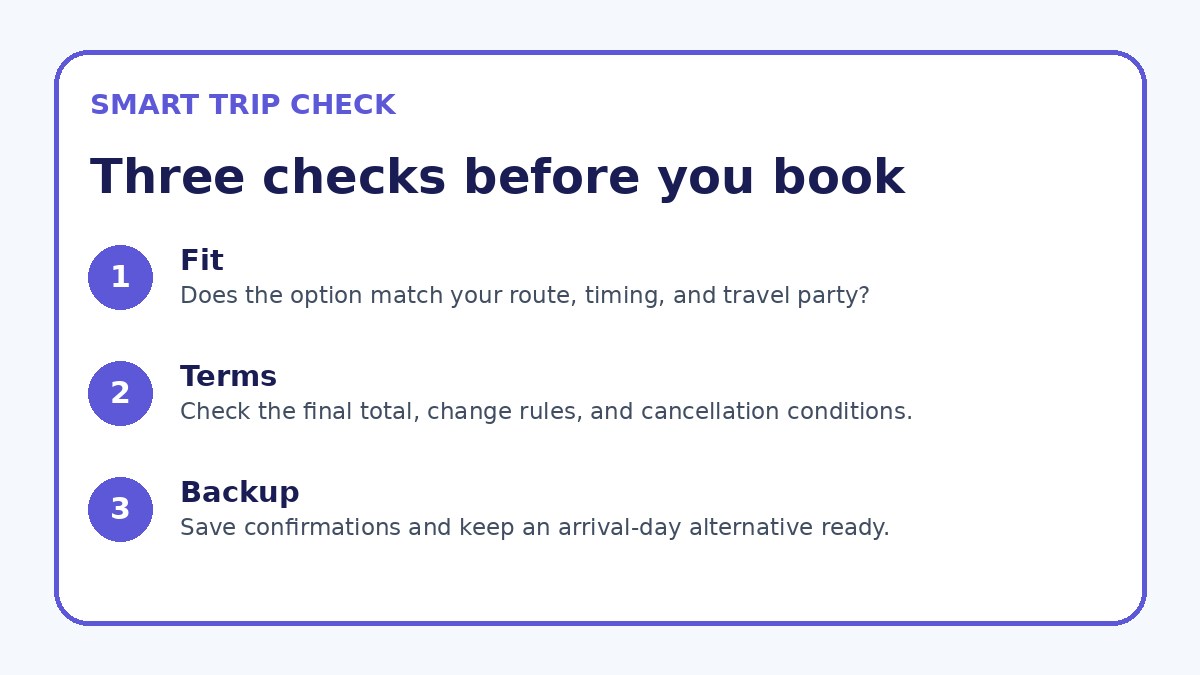
Recheck the complete itinerary
Confirm airports, connection handling, baggage, and change conditions before deciding.
Schedule fit: syncing flights with kids’ routines and ground logistics
Choose flight times that align with your children’s sleep and eating patterns to reduce meltdowns and make inflight stretches more predictable. Early morning departures may mean an earlier start but can lead to calmer flights if children nap on board; late-evening departures might allow kids to sleep through the night, but be mindful of airport services and safe transit options at arrival. For connections, aim for comfortable buffer times—enough to collect bags, make restroom and snack breaks, and manage unexpected queues without sprinting between gates. Account also for travel time from your NYC lodging to the departure airport and from Toronto’s arrival airport to your final accommodation.
If you require ground transport that includes car seats or wheelchair assistance, schedule additional connection time so staff can assemble seats or meet you at the gate. Factor in how customs and immigration procedures might extend transfer times, especially for international arrival or departure terminals. Plan alternative care and distraction strategies for any extended waits—download child-friendly entertainment, pack favorite snacks and collapsible comfort items, and identify family-friendly lounges or play areas in the airports you’ll use so that the schedule supports a calm transition rather than a rushed scramble.
Flight details to verify
- Collect exact travel dates, full passenger names, and ages (including infants) before searching fares.
- Check whether your chosen itinerary is a single ticket or separate bookings and confirm baggage transfer rules.
- Verify change, cancellation, and refund conditions on the carrier’s final booking page before payment.
- Plan connection buffers that allow time for customs, stroller pickup, and restroom or snack breaks.
- Reserve seats together and request any special assistance (wheelchair, gate check) directly with the carrier.
- Pack a carry-on bag with essential snacks, medications, entertainment, and spare clothes for quick access.
Fare conditions and protecting your family’s booking
Read fare conditions line by line: check change and cancellation rules, whether seat selection and carry-on bags are included, and how refunds are processed. Families benefit from flexible fares that permit date or passenger swaps without punitive fees, particularly when illness or school schedule changes can force last-minute adjustments. If you need to add a stroller or car seat, verify whether those items are free to check or if they incur charges. Confirm baggage weight limits and the process for excess- or overweight items because children’s gear can add unexpected kilos.
Also verify the ticketing carrier on codeshare itineraries: the airline that issues the ticket is the one whose rules typically govern changes and cancellations. Inspect what protections are offered for delays or missed connections—some fares include re-accommodation and meals when disruptions occur, others do not. When comparing options, open the carrier’s official booking page to confirm the exact fare conditions, baggage allowances, and family-specific services before finalizing payment. Trip.com can be used as one place to compare options, but always cross-check the carrier’s terms on its own booking platform.
Flight Guide questions travelers ask
Should families always book nonstop or direct flights between New York City and Toronto?
Nonstops or direct flights reduce handling and the chance of missed connections, which benefits families with young children. However, nonstop options are often more expensive or less frequent; a carefully chosen connection with a generous buffer and same-terminal transfer can be almost as low-stress. Evaluate whether the price difference justifies the convenience and check carrier policies on baggage and rebooking. Also confirm flight times match your family’s routine since the time-of-day can matter more than whether a flight is nonstop.
How much connection time should we allow when travelling with kids?
Connection time depends on whether you must collect and recheck baggage, pass through customs, or change terminals. For families, add extra cushion beyond published minimums to account for restroom and snack breaks, diaper changes, and possible gate changes. A short connection may feel manageable for adults but stressful with children and gear. Before booking, map the terminals involved and check the airlines’ recommended minimum connection times, then add at least 30–60 minutes for family needs if the itinerary includes baggage reclaims or inter-terminal transfers.
What baggage and child-equipment rules should we confirm before booking?
Confirm whether checked bags are included, the allowance for strollers and car seats, and if gate-checking is complimentary. Different fare classes and carriers treat child equipment differently—some permit one stroller and one car seat free, others count them toward your allowance. Also check weight limits, extra-item fees, and the process for rechecking items during connections. Verify these conditions on the carrier’s official booking page so you know whether to travel with compact gear, rent items at your destination, or budget for extra baggage charges.
Final decision note
Planning a comfortable family connection from New York City to Toronto hinges on choosing the right balance between convenience and cost. Prioritize whether you value minimized transfers and guaranteed baggage handling or a lower headline fare with more hands-on logistics. Prepare exact travel dates, traveler ages, seat and car-seat needs, and confirm fare conditions and baggage transfer rules on the carrier’s booking page before purchase. Allow generous connection buffers, reserve seats together, and pack a well-stocked carry-on to handle delays or surprises. With these steps you’ll reduce stress and make the journey smoother for everyone.
Continue planning
Check current options and final conditions
Use the provider page to confirm live availability, the final total, cancellation terms, and every condition that matters to your trip.
This evergreen planning guide was created with AI-assisted drafting and a structured quality review. It does not display live prices, schedules, availability, visa guidance, or provider rankings. Verify current details before booking. Some links are affiliate links; we may earn a commission at no additional cost to you.