If you’re a solo traveler deciding between fares for Bangkok to Phuket flights, start by prioritizing flexibility against price and travel convenience. Practically, the first question is whether you need full flexibility—same-day changes, free cancellations, or simply the option to rebook with a small fee—because each choice affects routing, baggage allowance, and connection risk. This article gives a short answer up front: choose the fare class that matches how certain your dates are, then confirm the provider’s exact change and cancellation steps on the booking page. Below you’ll find concrete tradeoffs—how routing affects missed-connection risk, where baggage allowances matter, how schedule fit changes value, and what to verify on airline pages before committing. Prepare exact travel dates, your passport name, contact details, and any loyalty numbers before looking at live fares so you can compare like-for-like terms efficiently.

See live routes for your exact travel day
Compare direct and connecting choices with the same baggage and traveler details.
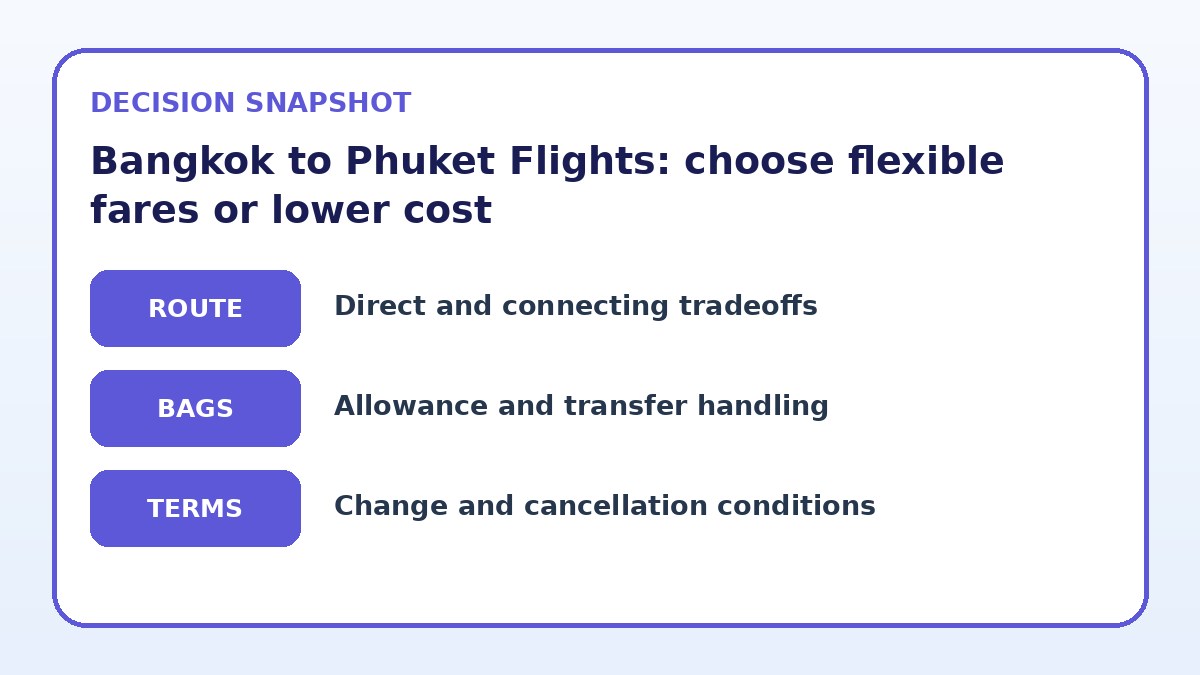
Routing and connection risk
On the Bangkok to Phuket route you’ll usually compare direct flights with options that include a connection. Direct flights minimize connection risk, reducing the chance of missing a onward leg because of a delay. If you select a connecting itinerary, confirm whether the carrier issues a single ticket covering both segments; single-ticket connections normally protect you against missed connections and rebooking fees, but make sure the rule is explicit on the final booking screen.
When comparing routing, solo travelers should think about how a missed connection would cascade into extra costs and stress. If your itinerary includes a narrow transfer window, note whether the airline’s change policy permits same-day rebooking or provides a credit for future travel. For independently booked separate tickets, assume no protection: plan additional buffer time, buy only refundable or flexible segments for the riskiest legs, or choose an overnight layover to avoid rushed connections.
Baggage allowances and how they affect changes
Fare classes commonly bundle different baggage allowances and change conditions. A low-cost economy fare may appear attractive but often excludes checked baggage and charges for even small date changes; higher fare tiers usually include checked bags and more forgiving change rules. Before booking, list the baggage you actually need: if you must check one bag, compare fares that include that allowance so you aren’t forced into expensive add-ons later when changing your flight.
When considering changes, check whether adding or removing checked baggage triggers a fare recalculation or a separate fee. Some airlines treat baggage purchases as separate add-ons that remain refundable or transferable only under certain conditions; others tie baggage to the ticket and will require full fare reissue for substantial itinerary changes. Solo travelers who pack light and want maximal flexibility often choose the cabin-bag-only options on flexible fares to avoid repeated baggage charges.
Compare flight-selection strategies
| Flight strategy | Best for | Risk to check |
|---|---|---|
| Book the cheapest non-flex fare | Travelers certain of fixed dates who prioritize upfront savings | Lowest price but limited or costly changes and usually minimal baggage included |
| Buy a middle-tier fare with one free checked bag | Solo travelers needing modest flexibility and checked luggage | Higher ticket cost but reduces add-on fees and may allow simpler rebooking |
| Choose a fully flexible/refundable fare | Travelers with uncertain schedules who want peace of mind | Highest upfront cost but straightforward cancellations and easier same-day changes |
| Mix-and-match separate tickets for legs | Price-conscious planners willing to accept higher connection risk | Potentially lower fares but no automatic protection for missed connections or baggage transfers |
Recheck the complete itinerary
Confirm airports, connection handling, baggage, and change conditions before deciding.
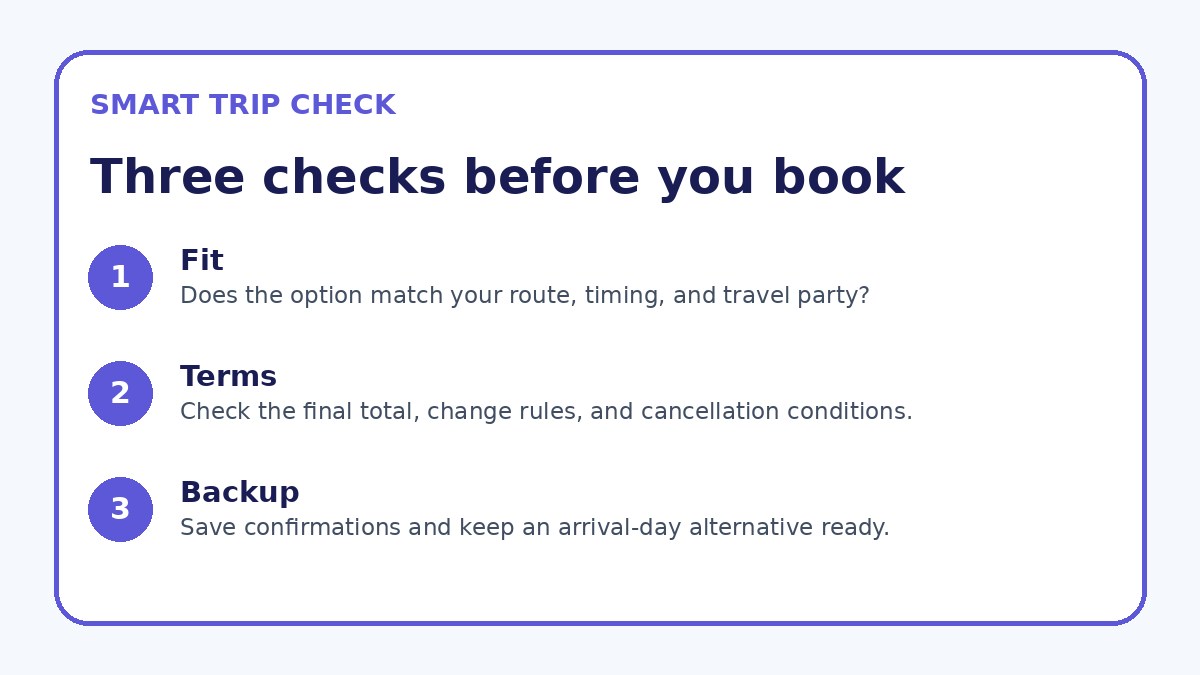
Schedule fit and same-day flexibility
Schedule fit is a practical measure of how a flight matches your day-to-day plans: arrival time, departure time from your Bangkok neighbourhood, and how late you want to fly. If you have important commitments in Phuket or tight onward connections, prioritize schedules with reliable arrival windows even at a small premium. For same-day needs, check whether the fare allows same-day confirmed changes or standby options and whether there are blackout periods for peak travel times.
Solo travelers should also consider contingency plans if flights are delayed or rescheduled. Verify whether the airline offers protected rebooking on later flights without reissue fees for covered disruptions. If working with a travel agent or aggregator (Trip.com can be used to view live offerings), read the provider’s final booking page to confirm whether rebooking is handled automatically or requires a phone call, and whether any reissue fees will apply depending on the ticketed fare class.
Flight details to verify
- Set exact travel dates, full traveler name as on passport, contact number, and frequent-flyer details before comparing booking pages.
- On each booking page, open the fare rules and copy the lines about change fees, fare differences, cancellation refunds, and credit expiry.
- Confirm whether the ticket is single-ticket for connections or separate tickets; if separate, plan buffer time and understand baggage reclaim procedures.
- Verify if baggage is included and whether adding or removing checked bags requires a ticket reissue or a simple add-on fee.
- Check the provider’s method for processing changes and refunds (online, app, or phone) and whether third-party seller fees apply.
- Take screenshots of the final price breakdown and fare rules before payment; save confirmation emails and the booking reference immediately.
Fare conditions and exactly what to verify
The most important habit before you hit purchase is to read the fare rules on the booking page: permitted changes, change fees, whether fare differences apply, cancellation refunds or credits, expiry of credits, and any non-refundable taxes or service charges. Look for explicit statements such as “changes allowed with fee” or “non-refundable,” but also expand your check to footnotes and the carrier’s contract of carriage, which sometimes contains essential details about how refunds are processed.
In addition to the headline fee, verify the operational steps required to make a change or cancel: is it possible online, or must you call the airline? Is the refund automatic to the original payment method or issued as travel credit? Also confirm whether any third-party booking fees apply when handling changes. If the booking page isn’t clear, take a screenshot and contact customer support or your payment card company to confirm protections before you finalize the booking.
Flight Guide questions travelers ask
How do I decide between a cheap non-flex fare and a flexible ticket for Bangkok to Phuket?
Decide based on how fixed your plans are. If your dates and times are unlikely to change, a non-flex fare can lower upfront cost but may charge for any amendment or cancellation. If there’s a real chance you’ll need to shift days or flights, a flexible ticket reduces the likelihood of expensive reissue fees and usually simplifies same-day changes. Also factor in baggage: if you need checked luggage, a slightly higher fare that includes it can be cheaper overall than buying add-ons after a change.
If I book two separate legs, how risky is that compared with a single-ticket connection?
Booking separate legs increases risk because each ticket stands alone; if the first flight is delayed and you miss the second, the second carrier is unlikely to rebook you without extra cost. Single-ticket connections typically include protection—airlines rebook passengers on the next available flight in case of disruption—so for tight transfers choose single-ticket itineraries. If you must book separately to save money, allow generous transfer buffer time or plan an overnight stay.
What exactly should I verify on the airline’s final booking page before I pay?
On the final booking page, confirm the fare class and its change and cancellation rules, the total price including taxes and fees, baggage allowances, and whether changes or refunds are processed online or require contacting customer service. Check the timing restrictions for changes (e.g., until how many hours before departure), whether credits expire, and any third-party fees if booked through an agent. If anything is unclear, contact the airline or seller and keep a screenshot of the displayed rules before completing payment.
Final decision note
For solo travelers flying Bangkok to Phuket, the practical path is simple: match the fare’s flexibility to your likelihood of change. If your dates are fixed and you travel light, a lower-cost fare can work well—just be ready for potential amendment fees. If your schedule is uncertain or you prefer peace of mind, pay up for better change and cancellation terms and clearer baggage inclusion. Always read the booking page’s fare rules in full, confirm whether connections are on a single ticket, and prepare your traveler details before checking live fares. Use those checks to avoid surprises and to ensure any change or refund is handled the way you expect.
Continue planning
Check current options and final conditions
Use the provider page to confirm live availability, the final total, cancellation terms, and every condition that matters to your trip.
This evergreen planning guide was created with AI-assisted drafting and a structured quality review. It does not display live prices, schedules, availability, visa guidance, or provider rankings. Verify current details before booking. Some links are affiliate links; we may earn a commission at no additional cost to you.