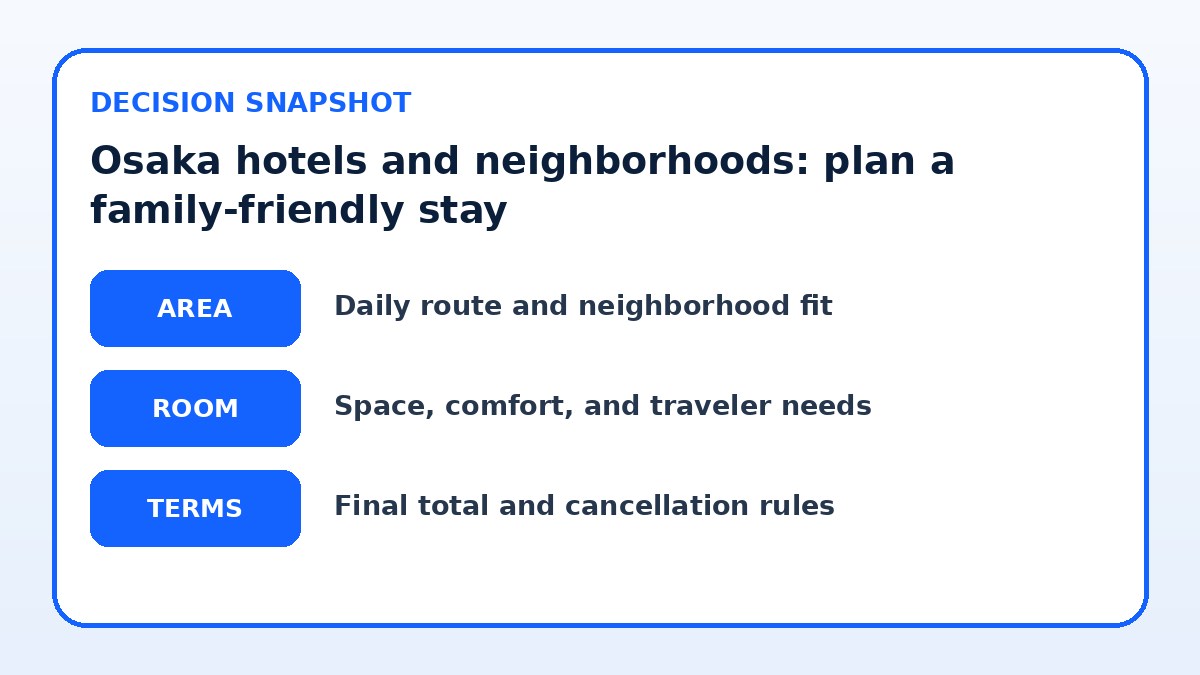
Choose the neighborhood first: that single decision shapes your family’s commute times, daily energy and what’s practical after a long day. For families visiting Osaka, the right area reduces wasted travel and makes it easy to return midday for naps, stroller breaks or gear swaps. This guide gives a direct recommendation up front, then unpacks the tradeoffs you’ll face: transit convenience, attractions within walking distance, room layouts for parents and kids, and practical booking terms to verify when you reserve. Read this to narrow your shortlist to one or two neighborhoods so you can open live hotel inventory and compare rooms with confidence. Practical next steps and check points are included so you can verify room sizes, bedding configurations, refundable terms, and onsite amenities before you commit.
Check live stays in the areas that fit
Use your dates and party size to compare current rooms after you narrow the neighborhood fit.
Neighborhood fit: pick the kind of base your family needs
Decide whether you want a base that feels like a city hub, a theme-park gateway, or a quieter residential area. Families who plan long days at Universal Studios Japan may prefer staying in the nearby Konohana or Tempozan areas to shorten late-night returns. If your trip mixes museums, shopping and food markets, central hubs such as Namba or Umeda put more options within walking distance and fewer transfers. Residential neighborhoods like Tennoji or Shin-Osaka can offer quieter evenings and larger apartment-style rooms, but expect longer walks or a short train ride to main attractions.
When assessing fit, think about routines: will you return midday for naps? Do you have a stroller or grandparents who prefer minimal walking? Map a typical day from hotel to morning activity, lunch, afternoon rest and evening plans. Note the number of transfers and whether transfers require stairs or long platform walks. Those steps quickly separate neighborhoods that look convenient on a city map from those that are genuinely family-friendly in practice.
Choose an area-selection strategy
| Area approach | Best for | Tradeoff to check |
|---|---|---|
| Stay in a central hub (Umeda/Namba) | Families prioritizing walking distance to shops, restaurants and many attractions. | Higher foot traffic and smaller hotel rooms versus convenience and shorter transfers. |
| Stay near Universal Studios (Konohana/Tempozan) | Families planning multiple long days at the theme park or with early starts/late returns. | Close park access but fewer evening dining and varied entertainment options nearby. |
| Stay near Shin-Osaka (train-focused) | Families making day trips by Shinkansen or prioritizing easy rail connections to other cities. | Quieter evenings and larger rooms often, but more transfers to central Osaka attractions. |
| Stay in residential areas (Tennoji or local neighborhoods) | Families wanting quieter nights, apartment-style lodging and a more local feel. | Longer walks or short train rides to main tourist hubs and fewer immediate attractions. |
Daily-route friction: how movement shapes your day
Count transfers, expected walking distances, and the availability of stroller-friendly subway exits. Osaka’s main hubs—Umeda and Namba—offer many attractions within short walks, which reduces the need to pack and unpack daily. However, popular areas can feel crowded at peak times; that matters if you’ll be navigating lunchtime queues or narrow streets with children. Consider where taxis gather near key stations; a short taxi from a slightly farther station can be worth the cost when traveling with tired kids or late at night.
Consider transit types: if you prefer surface trams or ferries that are more scenic and easier for young children to handle, identify neighborhoods with those options nearby. Also compare how easy it is to get to day trips from each area. For example, if you plan a day trip using the Shinkansen, staying near Shin-Osaka saves time at departure but might be less convenient for nightlife and some central attractions. Sketch two sample days for each candidate neighborhood to reveal friction you might otherwise miss.
Now compare like with like
Keep the same dates, guests, room needs, and cancellation preferences while you compare the final choices.
Room and party needs: choose layouts that suit your family
Decide on sleeping arrangements before hunting availability: do you need an extra bed, a family room, or communicating rooms for privacy? Japanese hotels range from compact twin rooms to larger family suites; some business hotels offer triple rooms but with limited floor space. Apartments and serviced residences often provide more living space and a kitchenette, which can be invaluable with small children for snack prep and flexible schedules. Always confirm exact bedding setups, whether rollaway beds are available, and if there are restrictions on child age for free occupancy.
Beyond beds, check for practical features: a bathtub for washing off a day’s sand or grime, space to store a stroller indoors, and blackout curtains for afternoon naps. If you need laundry, verify onsite facilities or a nearby laundromat—this matters more on longer stays. When comparing rooms, prioritize usable square footage over a view; an extra 10–15 square meters can make mealtimes and bedtime routines much easier with kids in tow.
Hotel booking check before payment
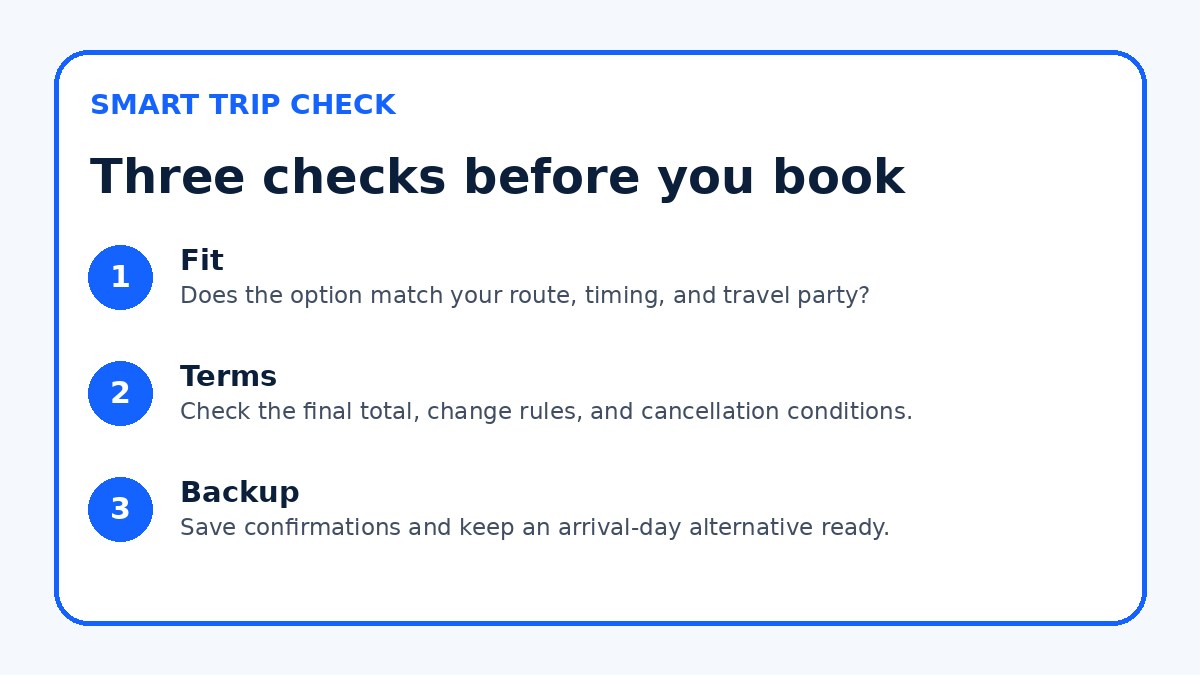
- Map your two most frequent routes from hotel to attractions and count transfers, stairs and outdoor walks.
- Confirm the exact room layout, bedding arrangement, and whether an extra bed or crib is possible for your dates.
- Check the hotel’s child policy and whether children under a certain age stay free or require a paid bed.
- Verify cancellation, modification and prepayment terms on the booking page you will use to reserve.
- Ask the hotel about elevator access, stroller storage and accessibility of the nearest subway exits.
- Confirm on the property’s page or by email whether breakfast, play areas or on-site amenities are available for your room type.
Final booking terms: what to check before you commit
Before you hit reserve, verify cancellation policy specifics, whether the rate requires prepayment, and how child occupancy is handled on the booking page. Hotels sometimes list ‘child policy’ and ‘extra bed’ details in small print or a separate policy section; confirm whether children share existing bedding for free or require a paid rollaway. If your travel plans may change, choose a rate with flexible cancellation or confirm whether dates can be modified without penalties. When you compare options on a booking site, open the hotel’s own page and the booking provider’s page to reconcile any differences in terms.
Also confirm arrival logistics: how to reach your hotel from the nearest major station or airport, whether elevators and accessible routes are available, and how late check-in is handled if you arrive on a delayed flight. If you’re traveling with a car seat or large stroller, ask whether the hotel offers assistance storing or transporting that equipment. For any specific amenity claims—breakfast hours, on-site restaurants, play areas—check the final provider page or contact the property directly to make sure the information is current and applicable to your room type.
Hotel Guide questions travelers ask
Which Osaka neighborhood is easiest for families with small children?
Central hubs such as Umeda and Namba are easiest for families with small children because many attractions, restaurants and department stores are within short walks, reducing the need for multiple train transfers. Those neighborhoods also usually have more family-oriented hotel options, easy taxi access near major stations, and readily available baby supplies in nearby stores. However, they can be busy; if your priority is quiet evenings or larger living space, consider nearby residential neighborhoods instead.
Should we choose a family room, two connecting rooms, or an apartment?
Choose based on your family composition and schedule. Family rooms or suites keep everyone under one roof and simplify supervision, while connecting rooms provide privacy for parents if children wake early. Apartments or serviced residences are best for meal flexibility and extra living space, particularly on longer stays or when you need a kitchenette. Always verify actual square footage, bathroom count, and bedding configuration on the booking page before committing.
What booking terms should families prioritize when reserving Osaka hotels?
Families should prioritize flexible cancellation and easy modification policies, clear child occupancy rules, and whether the rate requires immediate prepayment. Confirm who counts as a child for the property, whether rollaway beds or cribs are provided and if those add fees, and the check-in/late arrival policy. Also verify accessibility details—elevators, stroller-friendly routes to platforms—and that advertised amenities (breakfast, play areas) apply to your room type or rate.
Final decision note
Start by picking the neighborhood that reduces daily friction: fewer transfers and shorter walks will save energy and time when you’re traveling with children. Once you’ve selected one or two neighborhoods, compare rooms by usable space, bedding layout and amenities that matter—bathtub, kitchenette, elevator access—and read the booking page closely for child policies and cancellation terms. Use the checklist to verify the details that affect your family’s comfort, then open live hotel inventory from your preferred provider to compare availability and final terms. If you want a single quick check, search both the hotel’s official page and a booking site like Trip.com to reconcile room descriptions and cancellation rules before booking.
Continue planning
Check current options and final conditions
Use the provider page to confirm live availability, the final total, cancellation terms, and every condition that matters to your trip.
This evergreen planning guide was created with AI-assisted drafting and a structured quality review. It does not display live prices, schedules, availability, visa guidance, or provider rankings. Verify current details before booking. Some links are affiliate links; we may earn a commission at no additional cost to you.