If you have a short solo trip to Honolulu, decide first whether you want to be walk-everything-close (Waikiki) or centrally placed with easier transit to diverse neighborhoods (Kakaʻako or Downtown). For most solo travelers staying just a few nights, Waikiki is the practical default: high walkability to beaches, restaurants, and evening options; dense hotel supply; and simple short taxi or rideshare trips if you want to leave the neighborhood. If you prefer quieter evenings, more local food scenes, or better access to East Oʻahu or North Shore shuttle options, Kakaʻako or Ala Moana puts you closer to transit and grocery options while still keeping a short link to the beachfront. The rest of this guide explains daily-route friction, what room and safety needs to prioritize, and the booking terms and checks to make before you click reserve so you can shortlist an area and open inventory with confidence.
Check live stays in the areas that fit
Use your dates and party size to compare current rooms after you narrow the neighborhood fit.
Neighborhood fit: pick by what you’ll actually do each day
Decide what matters most: beach time, food exploration, galleries, or administrative needs. Waikiki wins for beach-first itineraries because you can step from your hotel to sand, surf rentals, and beachfront paths without a car. That convenience reduces friction if your stay is very short—less time lost to transfers and more reliable access to sunset or early-morning activities. Consider whether you’ll want an evening walk after arriving late; Waikiki’s density keeps options open and safe-feeling for solo travelers returning after dark.
If your plan leans toward eating at local restaurants, visiting farmer’s markets, or exploring modern Honolulu neighborhoods, Kakaʻako and Ala Moana provide a different rhythm. These areas are slightly farther from the shoreline but closer to distinctive cafés, street art, and transit corridors. Downtown has a quieter, more businesslike evening feel with museums and historic sites nearby, which can suit a solo traveler whose priorities are daytime appointments or cultural stops rather than nightlife. Match the neighborhood to your daily priorities to avoid wasted travel time.
Choose an area-selection strategy
| Area approach | Best for | Tradeoff to check |
|---|---|---|
| Waikiki walking-first approach | Solo travelers prioritizing beaches and nightlife with minimal daily transfers. | More tourist density and potentially higher foot traffic; less local neighborhood feel. |
| Kakaʻako local-core approach | Solo visitors wanting cafés, galleries, and quieter evenings while staying near transit. | A short extra travel step to reach the main beaches and beachfront attractions. |
| Ala Moana convenience hub | Those needing big-store access, mall services, and quick bus links across Oʻahu. | Not beachfront—requires a short transfer for ocean access and tourist hotspots. |
| Downtown business-cultural approach | Travelers focused on museums, government offices, or daytime appointments. | Evenings are quieter with fewer late-night dining options compared with Waikiki. |
Daily-route friction: how easy will moving around feel?
Ask how many times a day you’ll transfer from hotel to activity and whether transfers will be on foot, bus, or rideshare. Waikiki minimizes transfers for beach, restaurants, and most nightlife, but you may still need rideshares to reach other islands of interest like the North Shore—expect short, frequent rides rather than long, single transfers. Kakaʻako and Ala Moana add a short extra step to reach the beach but lower friction for reaching the Ala Moana Center, grocery stores, and some bus lines that head east or west across the island.
Consider access to TheBus and shuttle services. If you plan to use buses to reach Bishop Museum, Punchbowl, or Hanauma Bay, staying near a main bus corridor saves time and reduces waiting. Solo travelers should also weigh late-night options: if you expect late returns, pick an area with reliable rideshare pick-up spots or a 24-hour front desk. Wherever you choose, check current bus routes and ride estimates on the provider’s booking or transit pages before you commit, and use Trip.com or similar sites only to compare availability and general conditions.
Now compare like with like
Keep the same dates, guests, room needs, and cancellation preferences while you compare the final choices.
Room and party needs: what features matter for a short solo stay?
For a short stay, prioritize a comfortable, secure room and useful amenities over space. A clean private bathroom, secure door locks, reliable Wi‑Fi for maps and check-ins, and a 24-hour front desk or secure key system are top priorities. If you’ll be working or video-calling, confirm the hotel's Wi‑Fi policy and ask about a quiet corner or business center. A small fridge and safe for valuables are practical conveniences for one or two nights; larger suites or kitchen apartments are worth considering only if you plan to cook or host guests.
Think about luggage handling and arrival logistics. Solo travelers often arrive with only a carry-on, but you should verify whether early check-in or luggage storage is offered in case your flight schedules don’t align with standard check-in times. Also confirm how concierge or front-desk staff handle late arrivals and whether the property has a secure luggage hold. Finally, check the property’s cancellation and payment terms on the booking page so you know what flexibility you have if plans shift.
Hotel booking check before payment
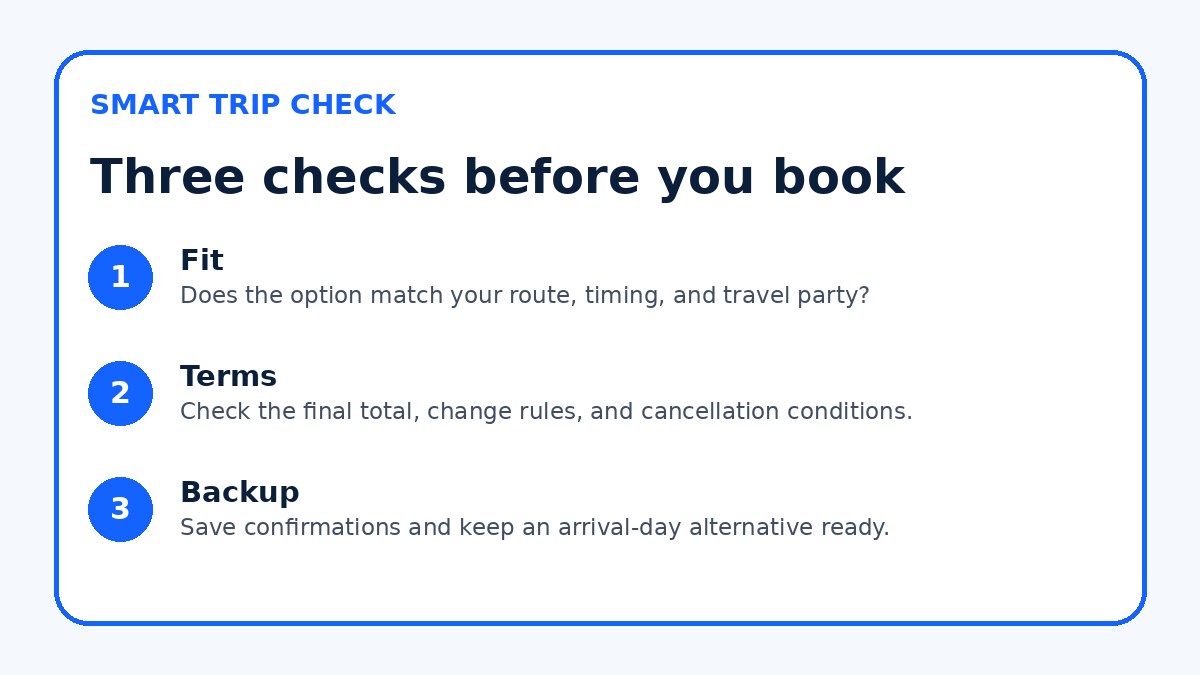
- Confirm the hotel’s cancellation and prepayment terms on the booking page to match your flexibility needs before finalizing payment.
- Verify whether the property charges resort or additional local fees and whether those are shown before checkout.
- Check the hotel’s front desk hours and luggage storage policy if you expect early arrival or late departure.
- Map the hotel to your top three activities and estimate walking time rather than relying on advertised distance labels.
- Ask the hotel about late-night pickup points for rideshares or taxis if you plan to return after dark.
- Confirm Wi‑Fi reliability and any work-friendly spaces if you need to do calls or remote work during your stay.
Booking terms and final checks before you reserve
Before booking, verify three things on the hotel's live booking page: the cancellation policy, whether taxes and resort fees are added at checkout, and the exact room type and bed configuration you’ll receive. Don’t assume a room labeled 'city view' or 'ocean view' meets your expectations—these tags vary. If you rely on early check-in, late checkout, or airport shuttle services, confirm those specific options directly with the hotel because they change more often than nightly rates. If you need to compare inventory quickly, Trip.com can be a useful place to see current availability, but always confirm terms on the hotel’s provider page.
Also check access and safety details that matter to solo travelers: whether the property has 24/7 staffing or keycard elevator access, and where the nearest transit stops and well-lit walk routes are. Look at recent guest photos and map the hotel to your planned activities to estimate walking times rather than trusting advertised distance labels. Finally, read cancellation and prepayment rules carefully—short trips are sensitive to delayed flights or sudden plan changes, so choose a rate that matches your risk tolerance.
Hotel Guide questions travelers ask
Is Waikiki the best place to stay for a very short solo trip?
Waikiki is often the most practical pick for short solo stays because it concentrates beaches, restaurants, and evening options in a compact area, reducing time lost to transit. For a one- to three-night trip where most activities are beach or sunset-based, staying within walking distance of the shore keeps logistics simple. However, if you prefer quieter evenings or easier grocery and transit access, Kakaʻako or Ala Moana might suit you better—so match the neighborhood to your priorities rather than defaulting to the most famous area.
How should I weigh price versus location when picking a Honolulu hotel for a short stay?
For short trips, location often outweighs small nightly savings because time is limited and transit eats into your schedule. If a cheaper hotel increases your daily transfers or cuts into an extra activity, the savings may not be worth it. That said, look for mid-block options within your preferred neighborhood where rooms can be cheaper than beachfront properties while still offering short walks. Always compare total booked cost including taxes and possible resort fees before deciding.
What safety and convenience features should solo travelers confirm before booking?
Confirm 24/7 staffing or secure keycard access, clear late-check-in instructions, and where to pick up rideshares or taxis. Check that the hotel offers luggage storage if you arrive early or leave late. Look for a private bathroom, in-room safe, and reliable Wi‑Fi if you need to work. Verify these specifics on the hotel’s live booking page or by contacting the property directly, and use recent guest photos and map views to assess surrounding lighting and walk routes.
Final decision note
For a short solo stay in Honolulu the clearest decision is to choose the neighborhood that minimizes the kind of friction you can’t afford: lost transit time, late-night uncertainty, or long walks to essentials. Waikiki is the simplest all-round base for beach-heavy plans, while Kakaʻako and Ala Moana offer quieter evenings and better access to transit and groceries. Downtown fits business or museum-focused itineraries. Once you’ve shortlisted an area, open live inventory and verify cancellation policies, added fees, and exact room features on the provider’s page so you know what you’re booking. Use the checklist to confirm logistics before you reserve and consider Trip.com as one option to compare availability quickly.
Continue planning
Check current options and final conditions
Use the provider page to confirm live availability, the final total, cancellation terms, and every condition that matters to your trip.
This evergreen planning guide was created with AI-assisted drafting and a structured quality review. It does not display live prices, schedules, availability, visa guidance, or provider rankings. Verify current details before booking. Some links are affiliate links; we may earn a commission at no additional cost to you.