If you’re arriving in Bali with oversized bags, surfboards, or a stroller, the first big choice is where to collect your rental car. For many travelers extra luggage makes a car more appealing than relying on taxis or buses, but where you pick up the vehicle changes how smoothly the transfer goes. Airport pickup minimizes transfers and typically gets you on the road faster; city pickup can save money or widen vehicle options but adds an extra baggage-moving step. Below I give the direct recommendation up front: choose airport pickup if you value single-step movement from plane to car and have unusual or heavy items; choose city pickup if you need a specific vehicle type, seek lower daily rates, or plan to stay centrally and don’t mind an extra transfer. Read on to weigh route value, what insurance wording to check, pickup/return friction, and solid non-driving alternatives if you decide not to drive in Bali.
Does driving improve your Bali itinerary?
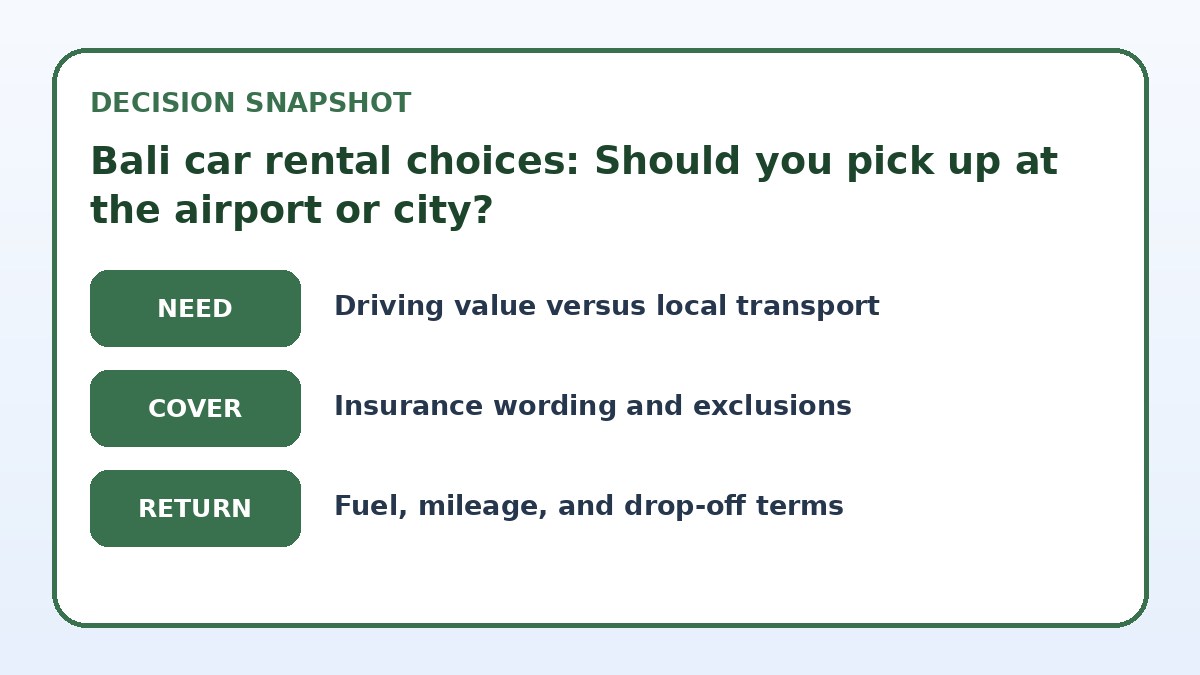
Ask whether driving materially improves your days in Bali. If your plan centers on moving between spread-out beach, rice-terrace, and temple areas, a car gives freedom to carry surfboards, camera gear, and extra bags on your own schedule. However, Bali’s traffic, narrow village streets, and occasional chaotic parking can turn short hops into slow segments—add the hassle of finding a secure space for bulky luggage at some guesthouses. Weigh the independent mobility against the extra time and attention you’ll spend loading and securing belongings when you stop frequently.
Consider shorter itineraries and concentrated bases differently: if you’ll base in one neighborhood and only make a couple of day trips, dealing with airport or city pickup once may be fine; if you plan many switches between towns, each pickup or drop-off becomes friction. Also think about your group size and how much luggage can fit comfortably in the trunk plus cabin; often two medium suitcases and carry-ons fit in a compact SUV, but anything larger pushes you toward a bigger vehicle or roof carriage—both of which affect fuel use, handling, and parking options.
Decide whether driving earns its place
| Mobility strategy | Best for | Cost or friction to check |
|---|---|---|
| Airport pickup (collect at terminal) | Arrivals with oversized or numerous bags who want one-step transfer to accommodation | Often higher convenience with possibly higher collection fees and fewer vehicle choices |
| City pickup (collect at office or hotel) | Travelers seeking specific vehicle types, lower daily rates, or who start in a central base | Requires an extra transfer of luggage and time before you hit the road |
| Airport pickup plus pre-arranged porter/meet-and-assist | Those who want terminal convenience plus help moving heavy gear to the car | Adds cost and you must verify porter availability and liability for baggage handling |
| No self-drive: private transfer or local driver services | Anyone uncomfortable driving Bali roads or with very bulky items | Less independence for day trips and higher per-trip cost compared with self-driving |
Check live rental choices only after the route test
Use the exact driver, dates, pickup point, and return plan to compare current conditions.
Route value: where you drive and what matters for luggage
Map the routes you expect to drive and how luggage will move during those legs. Airport pickup is best when your first destination is a single long transfer to a villa or hotel because it eliminates an extra shuttle or taxi move with heavy items. If you’re landing at Ngurah Rai (Denpasar) and heading east or west across the south coast, an airport-collected car lets you consolidate bags once and avoid multiple manual transfers from terminal to taxi to city desk to car.
On the other hand, if your trip plans include staying in central Ubud before heading to northern or eastern parts of the island, a city pickup near your first hotel can be advantageous. You can check into your base, confirm parking space and luggage handling with the accommodation, and then collect a car sized specifically for the remainder of the journey. For island drives with surfboards or atypical gear, verify whether the vehicle trunk plus backseat space actually accommodates the gear or if a roof rack is needed.
Compare the full rental conditions
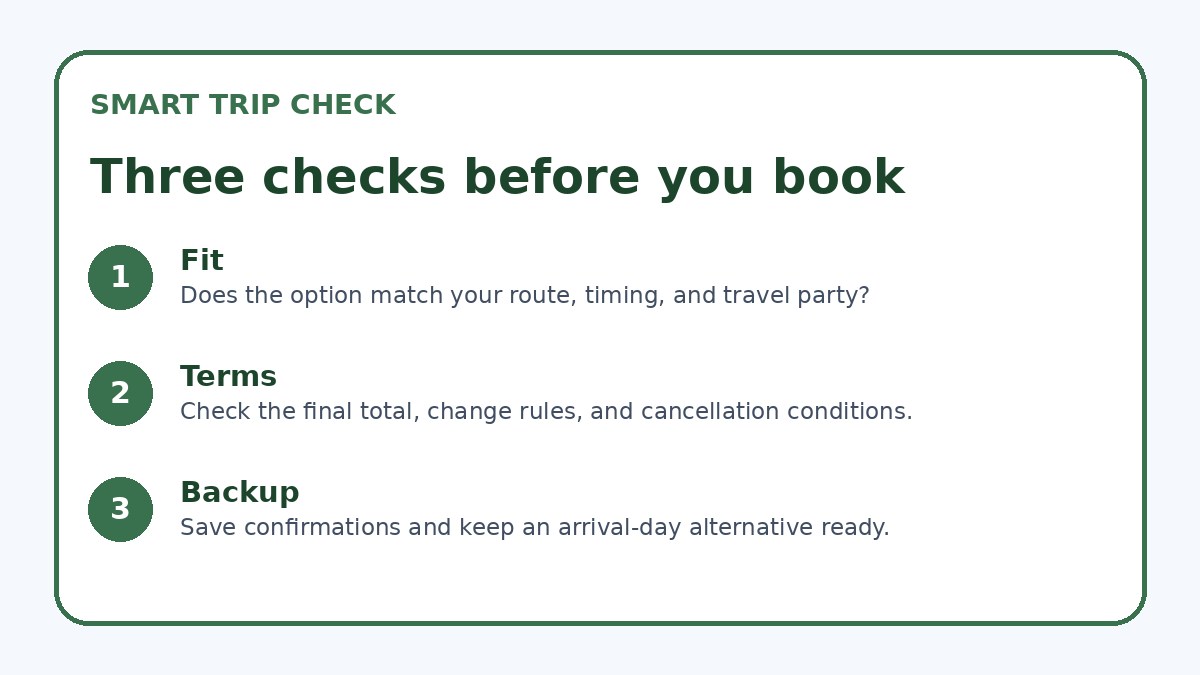
Confirm insurance wording, exclusions, deposit, fuel, mileage, and return terms on the final page.
Insurance wording and what to verify before booking
Insurance language often hides the most costly surprises; read policies slowly and compare the final booking page, not only summaries. Look for defined excess amounts (the deductible you pay for any damage), whether third-party liability limits are stated, and if theft coverage applies to personal items or only to vehicle components. For luggage specifically, confirm whether the rental company’s coverage extends to damage or loss of items stored in the car—many policies exclude personal effects entirely, putting the onus on your travel insurance.
Also verify how damage caused by road conditions, parking in unsecured spaces, or driving on unpaved rural roads is handled. If you plan to use a roof rack or tow a trailer to accommodate extra luggage, check whether that voids any parts of the policy. Always save screenshots or PDFs of the booking terms and the final page where excesses, optional waivers, credit-card hold amounts, fuel policy, and permitted driver lists are shown; you will need those if a dispute arises at pickup or return.
Car rental terms to verify
- Photograph vehicle condition and meter at pickup and save the rental agreement and insurance terms as screenshots.
- Confirm on the final booking page the exact insurance excess, liability limits, and whether personal effects are covered or excluded.
- Ask the provider how and where they meet at the airport arrivals area and whether they assist with luggage to the vehicle.
- Measure or list your luggage and compare combined dimensions against trunk and backseat capacity included in the vehicle description.
- Verify fuel policy, permitted drivers, and whether adding a roof rack or trailer requires extra insurance or fees.
- If you choose a non-driving fallback, pre-book a transfer or driver for at least your arrival to ensure baggage-friendly handling.
Pickup/return friction and realistic non-driving fallbacks
Pickup and return steps create real time costs when you have heavy bags. Airport pickup typically means a single handover at the terminal or an adjacent lot—check whether the vendor meets arrivals indoors, at the curb, or in a parking lot, and ask how they handle trolley assistance. For city pickups, confirm exact meeting points, whether vendors will deliver the vehicle to your hotel, and any charges for hotel-to-office transfers; these factors determine whether city pickup saves you physical effort or merely shifts it.
If driving still seems like more hassle than it’s worth, pick a non-driving fallback now so you aren’t stranded. Book a reliable airport-to-hotel transfer that allows space for oversized bags, or arrange local drivers for day trips with baggage-friendly vehicles. Many travelers combine an initial transfer with daily driver services for excursions—this avoids self-driving in dense traffic but keeps the convenience of private transport. Whichever fallback you choose, check cancellation and change terms so you can pivot if plans or luggage size change.
Car Rental & Road Trip questions travelers ask
Can I bring surfboards or long items in a Bali rental car?
You can often transport long items like surfboards, but you must verify vehicle suitability and any added fees. Check the final booking page and rental terms to see whether the vehicle has roof-rack options or allows oversized loads. If the company offers a roof box or rack, confirm whether installation, damage, and added insurance are included or extra. Also ask about speed or terrain limits that might affect use of roof-mounted gear. If in doubt, arrange a pickup with a vendor that explicitly supports surfboard transport or hire a driver with a vehicle equipped for equipment.
Will my travel insurance cover baggage left in a rental car in Bali?
Coverage for baggage inside a rental vehicle varies widely and depends on both your travel policy and the rental terms. Many rental companies exclude personal effects from their vehicle coverage, so your travel insurance is often the primary protection. Before you travel, read your travel insurance policy for theft-from-vehicle clauses, required documentation, and any exclusions for unattended items. If coverage is unclear, contact the insurer directly and save written confirmation. Also follow security best practices—lock bags out of sight and avoid leaving valuables unattended in parked cars—to prevent disputes with insurers.
What should I check about pickup and return locations to avoid surprises?
Confirm exact pickup coordinates and whether the company meets you inside arrivals, at the curb, or in an off-site lot; the same applies for returns—ask where to leave the keys and how they inspect damage. Check whether evening or late-night pickups incur extra charges and whether there are shuttle times to an off-airport office. On the booking page, find the listed meeting point, photos or maps if available, and any notes about luggage assistance. Keep a contact number for the provider and confirm arrival procedures so you can plan luggage handling and avoid last-minute delays.
Final decision note
For travelers arriving in Bali with extra luggage, airport pickup usually wins on convenience: fewer transfers, less heavy lifting, and a clear start to the journey. City pickup remains a smart choice when you need a particular vehicle, want to compare more models, or are starting from a central base where hotel-handled logistics reduce friction. Whatever you choose, read the final booking page carefully—confirm insurance excesses, what personal effects cover (if any), exact meeting points, fuel policy, and any fees for roof racks or airport/hotel delivery. If driving isn’t appealing, pre-booking an arrival transfer or hiring local drivers for luggage-friendly day trips offers a dependable fallback without unexpected handling stress.
Continue planning
Check current options and final conditions
Use the provider page to confirm live availability, the final total, cancellation terms, and every condition that matters to your trip.
This evergreen planning guide was created with AI-assisted drafting and a structured quality review. It does not display live prices, schedules, availability, visa guidance, or provider rankings. Verify current details before booking. Some links are affiliate links; we may earn a commission at no additional cost to you.