Practical answer first: for most couples the high-speed train will be the simplest door-to-door option, balancing station access in both cities, low transfer friction and frequent departures. If you favor lower cost and don’t mind longer travel time, an intercity coach can be a comfortable alternative with fewer luggage hassles and simpler ticketing. A ferry isn’t a direct contender for Rome–Florence as a point-to-point crossing, but coastal or mixed-mode itineraries (train plus ferry to a Tuscan port, then onward transfer) suit couples who want scenic detours. Finally, self-drive or private transfer offers ultimate flexibility for side trips and off-hours travel but increases navigation and parking work. Use the rest of this article to compare terminal fit, luggage/transfer friction, timing flexibility and a disruption backup so you can pick the approach that fits your priorities and energy levels as a couple.
Terminal fit and door-to-door practicality
How close your start and end points are to central terminals changes the real travel time. Rome’s main train stations sit inside the city, and Florence’s main station is similarly central, which usually means short taxi or tram rides at both ends. Coaches often use dedicated bus terminals that can be slightly outside historic cores; that can add a short taxi or local transit leg. For couples with limited mobility or heavy luggage, factor the convenience of ground-level station access versus coach terminals that may require steps or longer walks.
Ferries don’t serve the direct Rome–Florence corridor, so a ferry-inclusive plan always needs extra transfers: train or car to a port, then a boat, and another transfer to Florence. That adds complexity but can be rewarding for couples prioritizing scenery. Private transfers and rentals can deliver doorstep pickup and drop-off, eliminating terminal-distance worries, but remember central Florence has restricted-traffic zones where drop-off may be limited and parking will require planning. Always map your hotels relative to terminal exits before booking.
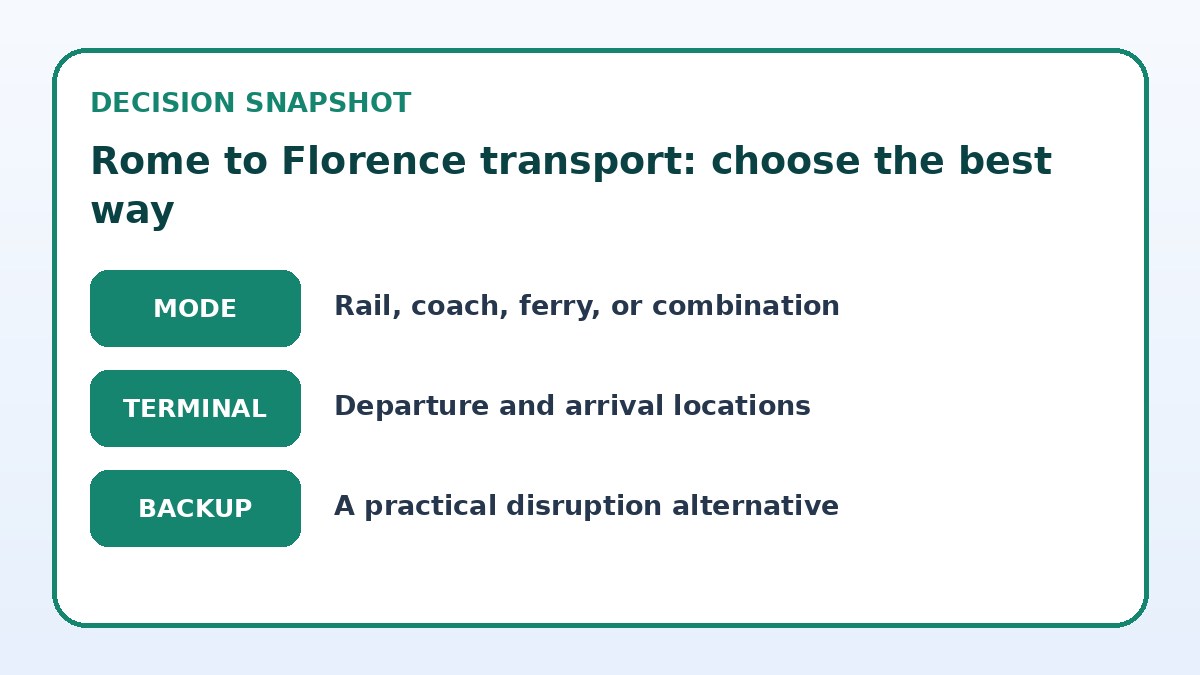
Choose the end-to-end journey plan
| Journey approach | Best for | Friction to check |
|---|---|---|
| High-speed train between city centers | Couples prioritizing speed, minimal transfers and comfortable luggage handling. | Less scenic flexibility and limited ability to stop in small towns en route. |
| Intercity coach services | Couples wanting lower-cost travel with a simple booking process and fewer schedule choices. | Longer door-to-door time and potentially less frequent departures. |
| Mixed train + ferry coastal detour | Couples seeking scenic, romantic routes and willing to add transfer complexity. | More handoffs, seasonal schedules and greater risk of missed connections. |
| Car rental or private transfer | Couples who want full flexibility, private space and the ability to sightsee off the main corridor. | Higher navigation, parking work and potential restricted-traffic zones in city centers. |
Check live intercity options
Look beyond the ride itself and compare terminals, transfers, luggage, and arrival fit.
Luggage, transfers and travel friction for couples
Trains generally offer the least friction: luggage racks and wide doors let two people juggle suitcases with ease, and you can sit together with easy access to restrooms. If you have oversized bags or instruments, check operator luggage rules on the booking page. Coaches usually allow carry-on and hold luggage but accessing stored bags during the trip is limited; agree who handles stowing and retrieval before boarding. For couples, sharing these chores in advance keeps stress low.
Driving hands the luggage problem to the vehicle but increases the tasks—parking, loading/unloading, and navigating narrow city streets. If you combine train and ferry, count extra handling: ferry terminals often require stair and ramp transfers, and luggage trolleys may be restricted. For an easier day, choose the option with fewer handoffs. Wherever you book, verify baggage limits, transfer specifics and accessibility information on the operator’s final booking page so you’re not surprised at pickup.
Timing flexibility, frequency and day planning
High-frequency rail services give couples flexible start times, making shorter mornings possible and allowing late departures without losing options. If your itinerary needs strict timing—dinner reservations or museum slots—pick services that match your schedule and allow buffer time for station transfers. Coaches can be less frequent; if you miss one you may wait longer. For multi-leg plans that include ferries, coordinate schedules carefully: ferries can run seasonally and may have narrow windows, so a missed link may cost hours.
Driving or private transfers provide the most schedule control and let you stop for views, photos or wineries at your own pace. That flexibility is valuable for couples who prioritize romance and the journey itself. But flexibility comes with responsibilities: traffic, tolls, and unexpected delays are on you. For any option, build a disruption buffer—aim for a 60–90 minute cushion around critical reservations in Florence such as timed-entry attractions, especially during high season.
Compare the practical alternatives
Use the final page to confirm what is actually offered on your dates and save a workable fallback.
Intercity travel checklist
- Map hotel addresses and the nearest station or terminal in both Rome and Florence before choosing your mode of transport.
- Confirm baggage allowances and any size limits on the operator’s final booking page to avoid surprises at boarding.
- Check frequency and earliest/latest departures for your chosen mode and build a 60–90 minute cushion for key reservations.
- If you plan a ferry segment, verify seasonal timetables and confirm terminal transfer times between modes.
- Save local taxi and transfer company contacts and a payment method that works in Italy in case of missed connections.
- If renting a car, confirm parking options near your Florence accommodation and research restricted-traffic zones ahead of arrival.
Disruption backups and sensible booking checks
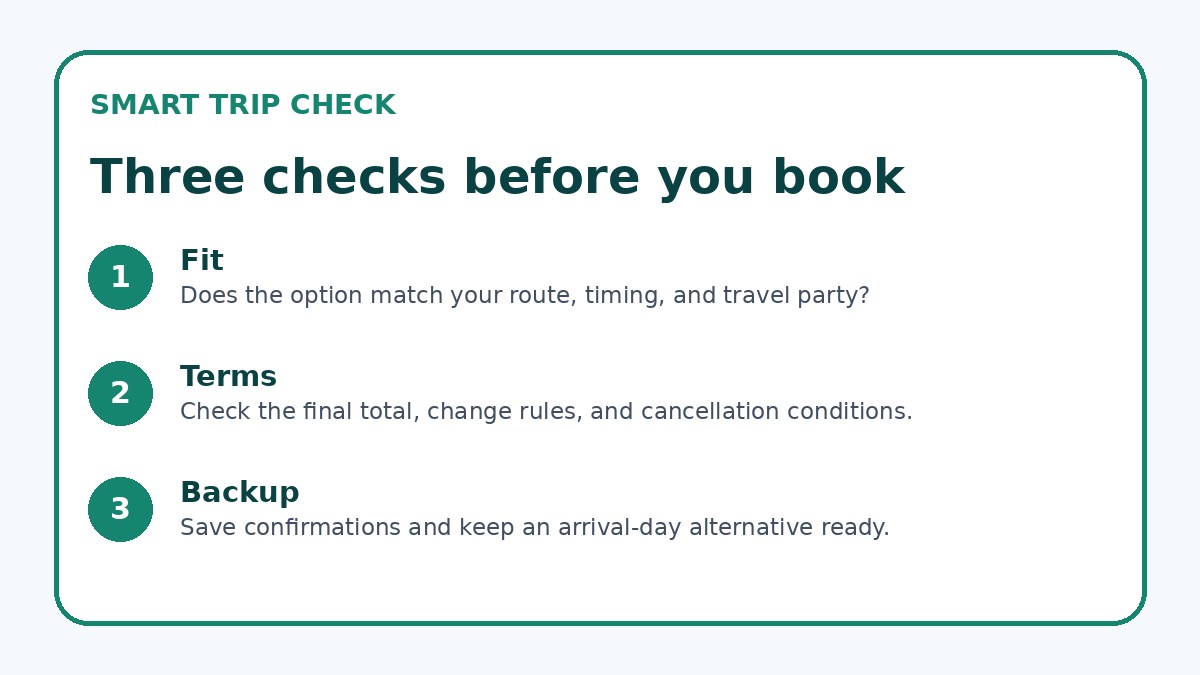
Every couple should plan a disruption backup: a second train or coach option, a shared taxi app saved on your phone, or a local private transfer vendor on standby. If you rely on a single tight connection—train to ferry, for example—identify the next feasible service and how long it takes to reach your Florence hotel if the connection fails. For trains, check alternative routings with one connection rather than a single direct service; sometimes a slightly longer route with more frequency is less risky.
Before you confirm any booking, verify refund and change policies and the provider’s real-time updates page. Don’t assume tickets are refundable or that platform changes won’t affect your transfer windows. For mixed trips, confirm that luggage transfer is possible between modes or arrange for a meet-and-greet transfer at the junction. You can compare current availability and practical details on providers’ booking pages or on an aggregator such as Trip.com, but always rely on the provider’s final terms when making decisions.
Rail & Intercity Transport questions travelers ask
Is the train always the fastest way from Rome to Florence for couples?
Trains are typically the fastest public transport option between central Rome and central Florence because they connect city-center stations with limited intermediate stops. However, total door-to-door time depends on how close your accommodation is to the station and how long it takes to reach the station from your lodging or the airport. If you have a hotel far from the station or a lot of luggage, a private transfer could be faster door-to-door. Always measure door-to-door time rather than ride time alone when deciding.
Can couples combine ferry and train for a scenic route without adding too much hassle?
Yes, couples can create a scenic mixed-route—train to a coastal town, ferry along the Tuscan coast, then transfer onward to Florence—but this adds transfers and potential waiting times. To keep hassle low, plan only one ferry hop, confirm synchronized schedules in advance, and pick ferry terminals with easy onward connections. Also check luggage rules for ferries and the walking distance between terminal and local transport. If you prefer minimal handling, stick to direct rail or a private car.
What disruption backup should couples rely on if their chosen service is cancelled?
Have at least two backups: a later train or coach on the same corridor and a local taxi or private transfer to bridge gaps. For mixed itineraries, identify alternate rail routings that add one connection rather than depend on a single direct service. Keep provider contact numbers, a method to download or update tickets on your phone, and a small local-currency buffer for last-minute taxis. Confirm any change or cancellation policy on the booking page so you know options and potential costs.
Final decision note
Choosing between train, coach, ferry and private options for the Rome–Florence route comes down to the tradeoff each couple is willing to make between convenience, scenery and control. Trains are the practical default for most couples: frequent, central and low on transfer friction. Coaches save money at the cost of time. Ferries add romance and scenery but require careful schedule alignment and extra transfers. Private cars or transfers give freedom to wander but add navigation and parking chores. Use the checklist to vet terminals, luggage rules and backups, and always verify timing and refund policies on the provider’s booking page before you commit.
Continue planning
Check current options and final conditions
Use the provider page to confirm live availability, the final total, cancellation terms, and every condition that matters to your trip.
This evergreen planning guide was created with AI-assisted drafting and a structured quality review. It does not display live prices, schedules, availability, visa guidance, or provider rankings. Verify current details before booking. Some links are affiliate links; we may earn a commission at no additional cost to you.