The practical answer up front: if you have a lot of luggage and plan to explore Oahu beyond central Honolulu—North Shore, windward beaches, or multi-stop surf and hiking days—renting a car will usually improve convenience, but only if you verify fuel and mileage rules and pick the right vehicle and contract. Heavy bags affect trunk space, weight limits, and sometimes vehicle class charges; long drives can trigger daily mileage limits or per-mile fees. Before you commit, compare total expected miles, whether the rental includes unlimited mileage, how fuel return policies are handled, and whether the agreement penalizes excess weight or oversized roof cargo. If driving seems marginally beneficial, a non-driving fallback—combining airport shuttle, rideshares, and targeted hourly rentals—keeps flexibility without committing to unknown fees.

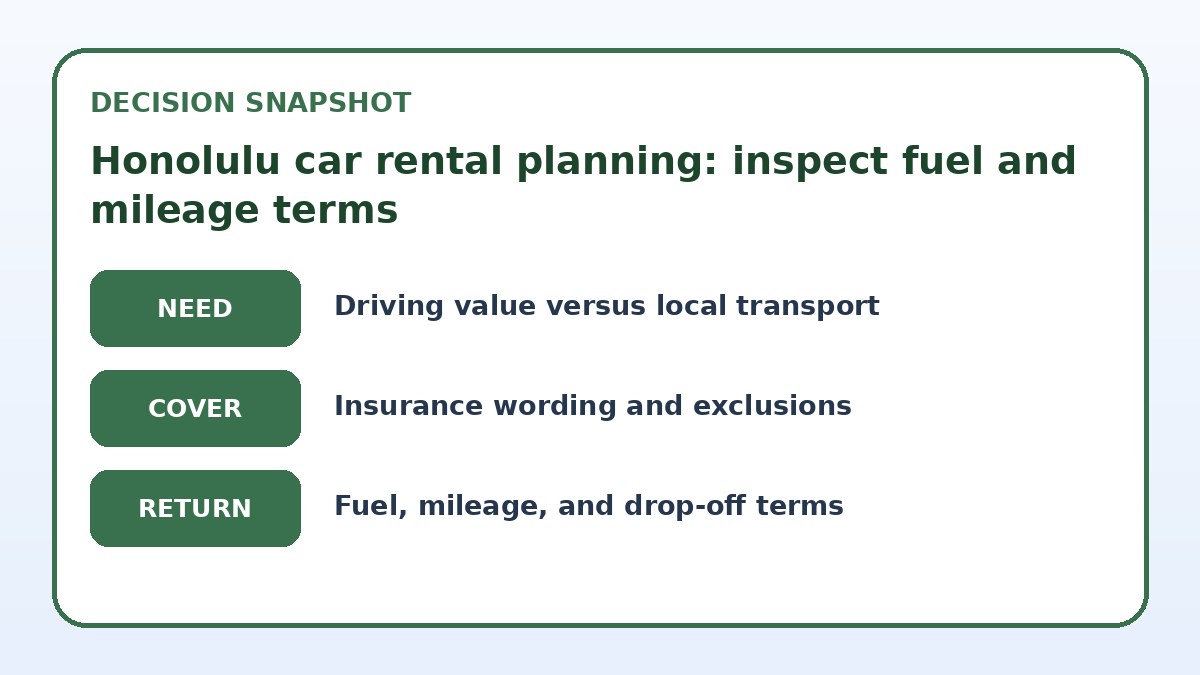
Does driving improve this Honolulu itinerary?
Decide whether having a car genuinely improves your plans by listing destinations and estimating drives. If your trip centers on Waikīkī, downtown Honolulu, and a couple of short transfers, public transit, shuttles, and rideshares may be simpler and less costly when you factor fuel, parking, and rental fees. But if you want to haul surfboards, hiking packs, or multiple suitcases to remote beaches and swap accommodations across the island, a car reduces transfer complexity and gives you a flexible rhythm—provided the vehicle can carry the load without incurring size or weight penalties.
To quantify value, estimate total driving miles for planned daytrips—North Shore loops, Kualoa Ranch area, Makapuʻu Lookout drives—and compare those miles to the rental’s mileage policy. Also factor parking expenses in Honolulu and at attraction lots, as long-term street parking is limited in some neighborhoods. If the math looks tight or the luggage plan adds substantial bulk, consider whether a larger vehicle or a roof box is worth the daily rate increase versus relying on punctual rideshares for the occasional distant outing.
Decide whether driving earns its place
| Mobility strategy | Best for | Cost or friction to check |
|---|---|---|
| Full-time rental (single vehicle for entire stay) | Travelers needing daily flexibility and multi-stop days with heavy luggage. | Higher base cost, parking and unlimited-mileage upgrade may be required to avoid overage. |
| Short-day rentals (rent only for long excursion days) | Visitors based in Waikīkī who only plan occasional long trips with lots of gear. | Requires repeated pick-ups and returns; may add shuttle time and logistical friction. |
| Rideshare + luggage-forwarding services | Those avoiding parking and long-term rental fees but with sporadic bulky transfers. | Rideshare fares can be high for long routes; luggage forwarding adds coordination and fees. |
| Public transit and targeted equipment rentals | Travelers on a tight budget or staying within central Honolulu who need occasional gear. | Less private flexibility and potential mismatch of rental gear availability at specific sites. |
Check live rental choices only after the route test
Use the exact driver, dates, pickup point, and return plan to compare current conditions.
Fuel rules, return options, and what to verify
Fuel rules vary and directly affect cost when you carry extra luggage and make long drives. Common approaches are full-to-full (you refill before return), pre-purchase fuel, or fuel service where the company refuels for you at a set rate. Full-to-full tends to be the fairest if you actually refill to the same level; pre-purchase can be convenient but often leaves unused fuel unrefunded. On the provider’s final booking page, verify the exact fuel policy language, how fuel level is documented at pickup and return, and the fuel type required for the vehicle.
Also confirm whether remote returns or late returns trigger refueling charges and whether airport return lanes impose additional refuel service fees. If you plan rooftop cargo, ask the provider how roof boxes affect fuel service and whether they require a separate fuel declaration because additional weight can change consumption. Always photograph fuel gauges and fill levels at pick-up and drop-off, keep receipts for purchased fuel, and save the rental agreement wording about fuel charges in case of dispute.

Compare the full rental conditions
Confirm insurance wording, exclusions, deposit, fuel, mileage, and return terms on the final page.
Mileage caps, fees, and insurance wording to check
Mileage policies can be unlimited, limited per day, or limited per rental with overage fees. Limited mileage models often suit short, local trips; long island loops and multi-site itineraries can quickly exceed allowances, producing per-mile charges that add up. On the booking page, verify whether mileage is calculated by day or total rental period, the exact overage rate per mile, and any geographic restrictions that could cause surcharges. If you expect to exceed limits, compare the cost of upgrading to unlimited mileage versus estimated overage fees.
Insurance and coverage language is critical when carrying gear or using roof racks. Standard liability and collision waivers may exclude damage to roof-mounted equipment or loss of items stored inside. Check whether supplemental coverage is needed for rooftop carriers, whether third-party drivers are covered, and whether bodily injury or property damage in a named area is excluded. Always note deductible levels, what constitutes 'loss' versus 'damage', and the provider’s process for claims involving cargo.
Car rental terms to verify
- Measure and weigh all luggage and gear; list dimensions for trunk and roof-rack compatibility before comparing vehicles.
- On the provider’s final booking page, confirm fuel policy wording, required fuel type, and any airport refuel or service fees.
- Verify mileage terms on the contract: unlimited, per-day limit, or total allowance, and the exact overage rate per mile.
- Ask whether rooftop carriers or trailers require declaration, extra insurance, or create exclusions in collision coverage.
- Photograph the vehicle’s fuel level, exterior condition, and roof attachments at pickup and save receipts for any fuel purchases.
- Plan a non-driving fallback: identify the nearest shuttle, rideshare pickup points, and a local hourly rental or equipment shop.
Pickup/return friction and non-driving fallback
Pick-up and drop-off logistics can make or break the convenience of renting with extra luggage. Airport counters may be crowded, shuttle transfers to off-airport lots can lengthen arrival time, and vehicle swaps or upgrades at pickup can complicate tight itineraries. Before you book, check the provider’s stated pick-up process—airport curbside, off-site shuttle, or terminal desks—and the estimated wait time for shuttle return. Also verify drop-off procedures, after-hours returns, and whether there are special handling rules for vehicles with roof boxes or trailers.
If driving looks marginal, plan a clear non-driving fallback: arrange an airport shuttle or public transit to your accommodation, use rideshare or local taxis for baggage-heavy transfers, and reserve hourly or daily rentals for specific days you need a vehicle. For surfboards or bulky gear, investigate sports-equipment courier services or rental outlets that allow gear pickup at target beaches. This hybrid approach keeps you nimble and avoids long-term rental commitments and unexpected fuel or mileage penalties.
Car Rental & Road Trip questions travelers ask
Will a roof box or surfboard rack increase fuel or mileage charges on my Honolulu rental?
A roof box or rack itself typically does not change the mileage rate, but it can increase fuel consumption by adding drag and weight. The financial effect shows up in higher fuel usage rather than on the mileage tally unless the rental agreement specifically restricts rooftop equipment. What to verify on the booking page: whether roof attachments are permitted, whether they must be provided or declared, any extra fees or insurance exclusions for roof-mounted gear, and whether the company will charge for damage caused by improperly secured loads.
How do fuel-refill service fees usually work at Honolulu rental desks and returns?
Fuel service fees occur when you don’t return the vehicle with the agreed fuel level and the company refuels it for you at a set rate. Providers differ in whether they charge per gallon plus a service surcharge or a flat refuel fee. Before booking, check the contract wording for the exact refill calculation, minimum fees, and any higher rates for airport returns. To avoid disputes, choose full-to-full when possible, keep fuel receipts, and photograph the fuel gauge at pickup and return.
What should I check in the insurance wording if I plan to carry expensive gear in the car?
Examine exclusions for cargo, roof-mounted equipment, and storage theft. Many basic waivers cover vehicle damage but not loss or damage to personal items stored in the trunk or on the roof. Confirm whether supplemental insurance or a special equipment protection plan is available to cover gear, whether third-party drivers are included, and the deductible amount for relevant claims. Also check the claims process timeline and documentation requirements—providers often require prompt police reports and inventory lists for theft claims.
Final decision note
If your Honolulu itinerary involves frequent long drives and substantial luggage, renting a car usually improves logistics—only if you validate fuel and mileage rules, vehicle capacity, and insurance wording before booking. Do the arithmetic: expected miles versus allowed miles, likely fuel usage, and whether rooftop equipment requires declarations or additional coverage. If the numbers look uncertain, adopt a hybrid plan: base yourself centrally, rely on public transit and rideshares for routine transfers, and reserve short-term rentals for specific heavy-gear days. Always save the final booking page text and photos at pickup and return to protect against disputes.
Continue planning
Check current options and final conditions
Use the provider page to confirm live availability, the final total, cancellation terms, and every condition that matters to your trip.
This evergreen planning guide was created with AI-assisted drafting and a structured quality review. It does not display live prices, schedules, availability, visa guidance, or provider rankings. Verify current details before booking. Some links are affiliate links; we may earn a commission at no additional cost to you.