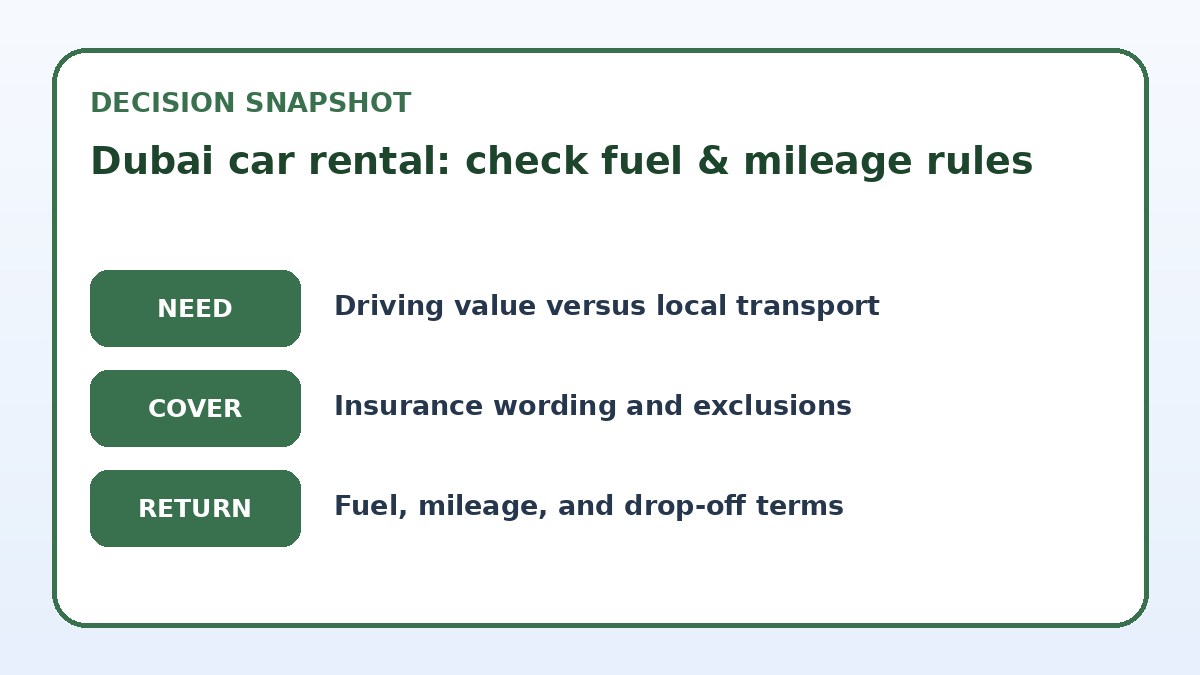
Practical answer first: driving in Dubai can improve your itinerary if you plan multiple day trips, want flexible timing, or are staying outside central Dubai, but only after you verify fuel policies, mileage caps, and insurance wording. For a first-time visitor the biggest surprises are the rental company’s fuel refill rule (full-to-full, pre-purchase, or return-as-you-received) and daily or total kilometre allowances; both affect cost and flexibility more than the car type. Before clicking Book, read the rental page’s exact language about how fuel is measured, how excess mileage is charged (per km or a tiered fee), and whether the quoted insurance covers third-party damage, theft, or cross-border driving. If any wording is vague, ask the provider directly and keep screenshots of answers. This article helps you decide whether to drive, what to verify on the final booking page, how to handle pickup and return friction, and a clear non-driving alternative.
Does driving in Dubai improve your trip?
Driving in Dubai makes sense when your plans include day trips to desert locations, coastal towns, or multiple attractions spread across the emirate and neighbouring areas. The city’s road network is modern and distances between popular sites can be longer than they appear on a map; flexibility to leave early or stay late is a clear advantage. However, central areas like Downtown Dubai, Dubai Marina, and parts of Deira are well served by the Metro, trams, taxis, and app-based ride services, which can be cheaper and less stressful for short stays or single-centre itineraries.
Decide by mapping the routes you really want to drive and estimating kilometres against rental mileage allowances. If you plan mostly inner-city sightseeing, parking costs, traffic and tolls may negate the benefit of a car. Conversely, if your lodging is remote, or you’ll be moving between distant hotels, a rental likely saves time. Use this section to weigh convenience versus cost, remembering that the crucial booking-stage checks (fuel policy and mileage rules) will determine whether driving is truly worthwhile for your schedule.
Decide whether driving earns its place
| Mobility strategy | Best for | Cost or friction to check |
|---|---|---|
| Self-drive rental | Flexible multi-stop itineraries and remote lodging | Must verify fuel policy, mileage caps, and insurance wording to avoid unexpected fees and disputes |
| Taxis and app rides | Short inner-city trips and easy point-to-point travel | Convenient but can add up for multiple long day trips; limited control over schedules for early departures |
| Public transport (Metro, tram) | Sightseeing within central Dubai and avoiding parking hassles | Covers major districts well but has limited reach for desert or coastal day trips without transfers |
| Organised day tours or private transfers | Single-day excursions to desert or regional highlights with no fuel or insurance concerns | Less flexible timing and route control; you pay for convenience rather than per-kilometre clarity |
Check live rental choices only after the route test
Use the exact driver, dates, pickup point, and return plan to compare current conditions.
What to verify about fuel rules before booking
Fuel policies are written in a few common formats: full-to-full (you collect and return full), pre-purchase (you buy a tank at pickup at set rates), and billed-on-return (company refuels and charges you per litre plus service fees). Each has tradeoffs: full-to-full is fair if you refill locally, pre-purchase can be convenient but wasteful if you return with fuel left, and billed-on-return often includes a premium. On the provider’s final booking page, look for exact wording and examples showing how charges are calculated; ambiguous statements are a red flag—ask for a clarification email or chat record.
Also check the fuel charge unit: some firms state per-litre charges or a flat refuelling fee. Verify whether fuel level is recorded in writing or via a digital check-in, and whether photographic evidence is accepted in disputes. When you pick up the car, confirm the odometer and fuel gauge readings and take time-stamped photos from multiple angles. These steps reduce the chance of unexpected refuelling bills at drop-off, particularly if the rental company’s return staff don’t agree with your version of the fuel level.
Compare the full rental conditions
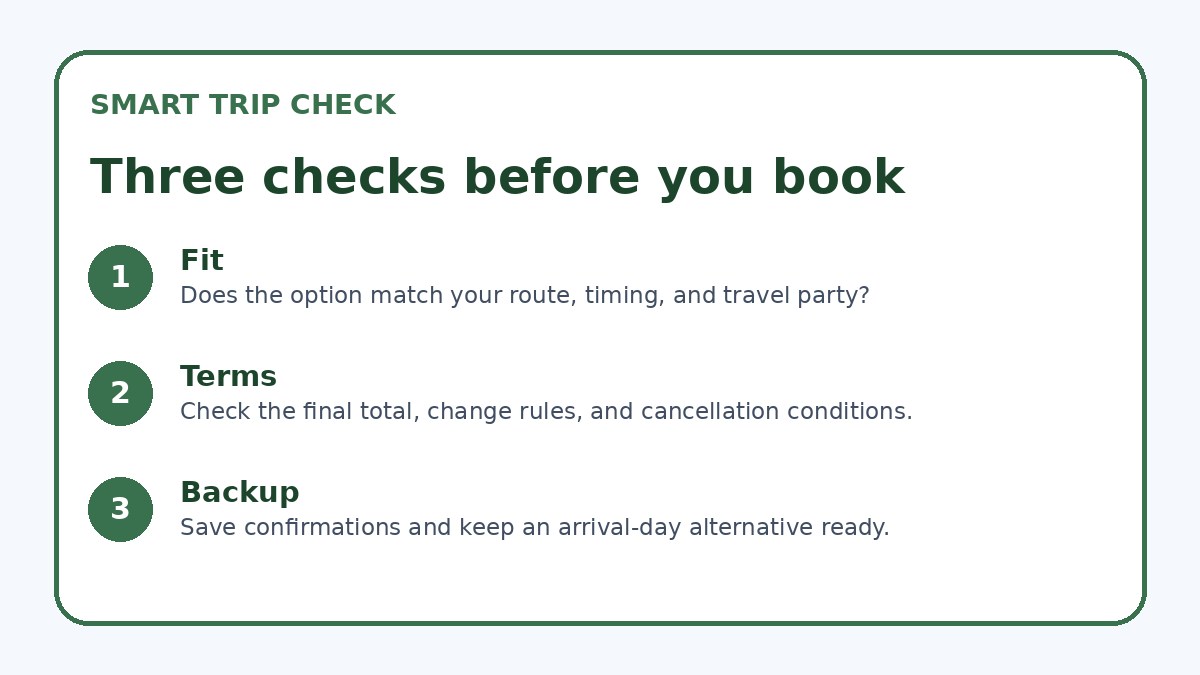
Confirm insurance wording, exclusions, deposit, fuel, mileage, and return terms on the final page.
Mileage limits, insurance wording, and cross-border rules
Mileage caps can be daily or overall for the rental period; exceeding them triggers excess-per-kilometre fees that quickly escalate on long drives. On the booking page, find the exact kilometre allowance and how overage is billed (per km, per day, or tiered). If you plan a one-way trip or excursions beyond Dubai to neighbouring emirates or Oman, check whether cross-border travel is allowed and what additional insurance or permits are necessary. These cross-border clauses are often buried in terms and can invalidate insurance if not disclosed.
Insurance wording matters more than headline coverage names. Look for the amount of the deductible, whether third-party liability is included to the minimum local legal requirement, and whether roadside assistance or keys-and-lockout events are covered. If the rental quotes a Collision Damage Waiver (CDW) or similar, verify whether it is automatic or optional and what exclusions apply (wear-and-tear, windscreen, tyres, or driving off-road). If language is unclear, request the provider’s sample contract or terms page and save a copy for pickup.
Car rental terms to verify
- On the rental booking page, locate and screenshot the exact fuel policy wording and any example fee calculations before you confirm.
- Confirm the total kilometre allowance (daily and overall) and note the stated excess-per-kilometre charge in writing.
- Read the insurance section and record deductible amounts, included cover types, and explicit exclusions; ask for written clarification on anything vague.
- At pickup, take time-stamped photos or a short video of the vehicle’s exterior, interior, odometer, and fuel gauge and keep copies.
- Ask staff to note any pre-existing damage on the rental agreement and request a signed or digital inspection report before you drive away.
- On return, wait for an inspection and obtain the final check-out note or transactional receipt showing fuel and damage status before leaving the desk.
Pickup, return friction and the non-driving fallback
Pickup and return are the moments disputes typically arise: staff may record higher damage or different fuel levels, or you may face queues and slow inspections. Minimise friction by arriving at pickup prepared: have your driver’s licence, payment card, printed or downloaded booking confirmation with the verified fuel and mileage wording, and photographs of the car’s condition and fuel level. Ask staff to timestamp their inspection report or request an inspection walk-through on video; if they refuse, document the interaction. For returns, allow time for inspection and insist on receiving a copy of the check-out note.
If driving proves inconvenient, there are strong non-driving alternatives that still give flexibility. Dubai’s Metro and tram cover major tourist districts, taxis and app-based rides are plentiful for point-to-point trips, and private day tours or airport transfers can handle longer excursions without you managing fuel and insurance. Later in this article you’ll find a side-by-side comparison of mobility approaches to help decide which fits your itinerary, budget, and comfort level with rental terms.
Car Rental & Road Trip questions travelers ask
What is the safest fuel policy to accept as a visitor to Dubai?
Full-to-full policies are the simplest and often fairest for visitors: you pick up a car with a full tank and return it full, paying only for fuel you actually use. Pre-purchase fuel can seem convenient but may leave you paying for unused litres if you return with fuel left. Billed-on-return arrangements can carry premium refuelling rates and service charges. Always verify in the booking terms how the company documents the initial fuel level and whether photographic proof will be accepted in any dispute.
How can I avoid mileage overage fees when planning longer drives from Dubai?
Estimate your planned routes and add a margin for detours, then compare that total with the rental’s mileage allowance to see if you might exceed it. If your trip is likely to be long, ask the provider about unlimited mileage options or a higher-mileage package—confirmed in writing. Alternatively, consider one-way rentals with included freeway routes or join a guided day tour for long-distance legs. Remember, excess-per-kilometre charges can quickly outstrip savings from a cheaper daily rate, so check the calculation method on the final booking page.
What insurance terms should I insist on before driving in Dubai?
Confirm the deductible (amount you pay in case of a claim), whether third-party liability meets UAE minimums, and whether damage to tyres, glass, undercarriage, or interiors is excluded. Find out if roadside assistance and theft protection are included or optional add-ons. If you plan to drive beyond Dubai’s borders, request explicit cross-border permission and documentation showing insurance coverage applies in those jurisdictions. Save screenshots or PDFs of the provider’s insurance terms and any clarifying correspondence to present at pickup if needed.
Final decision note
Driving in Dubai can be a practical choice for visitors who want flexible day trips, remote lodging access, or control over their schedule—but only when you confirm fuel and mileage rules and understand insurance limits. Before booking, read the rental page’s fuel-policy examples, mileage allowance details, and the exact insurance wording; if anything is unclear, request written clarification. At pickup and return, record odometer and fuel levels with time-stamped photos and obtain signed inspection notes. If the rental terms feel risky or the bookkeeping seems onerous, Dubai’s public transit, taxis, and organised tours provide reliable non-driving options that avoid potential disputes and hidden charges. For up-to-the-minute availability and provider terms, compare offers on Trip.com or the rental company’s official page and save the final terms for pickup.
Continue planning
Check current options and final conditions
Use the provider page to confirm live availability, the final total, cancellation terms, and every condition that matters to your trip.
This evergreen planning guide was created with AI-assisted drafting and a structured quality review. It does not display live prices, schedules, availability, visa guidance, or provider rankings. Verify current details before booking. Some links are affiliate links; we may earn a commission at no additional cost to you.