Practical answer first: for most first-time visitors to Amsterdam with children, driving adds convenience for day trips outside the city but is often unnecessary — and sometimes a liability — for getting around central Amsterdam. If your family plans a base inside the canals and you’ll mainly visit museums, parks and markets, leave the car at home. If you want to explore wider Holland or neighboring regions on a flexible schedule — think Zaanse Schans, Keukenhof-style gardens in season, or a multi-day coastal route — renting a car can improve your trip. This article helps you decide by weighing route value, pickup and return friction, insurance wording you must check, and a concrete non-driving fallback. It also lays out what to check before booking so your family’s rental actually saves time and stress instead of adding both.
Deciding whether to drive: route value and itinerary fit
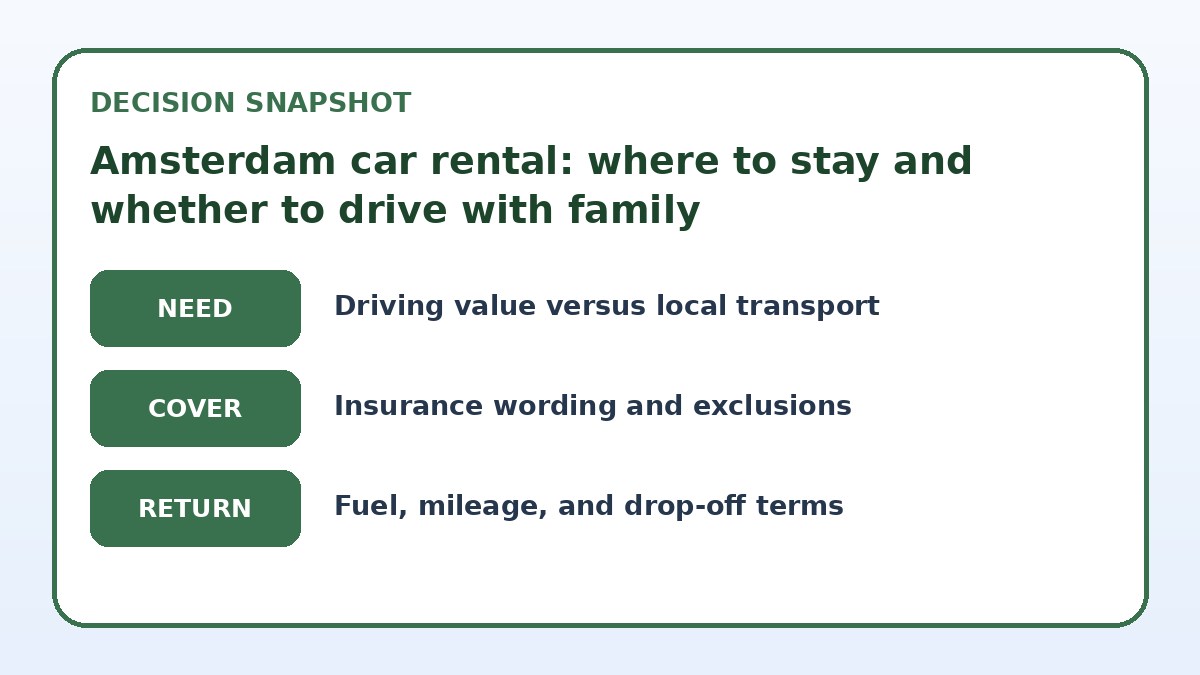
Start by mapping the trips you really want to take. Driving pays only when the time saved, luggage convenience, or access to rural attractions outweighs the hassles of traffic, parking fees and narrow city streets. For example, a half-day visit to a nearby windmill village or a full-day coastal loop will usually justify a car. Multiple sequential day trips to places not well served by direct trains — or a family with a lot of gear, small children, or mobility needs — are classic cases where the car adds demonstrable value.
If most attractions are inside the Amsterdam ring or within easy reach by train and tram, the car becomes dead weight. Trains in the Netherlands are frequent and fast to many regional highlights; combine them with local buses, organized day trips, or bicycle rentals for short distances. When evaluating route value, compare door-to-door travel time, door-to-door cost including parking, and how tiring the transfers will be for everyone in your party.
Decide whether driving earns its place
| Mobility strategy | Best for | Cost or friction to check |
|---|---|---|
| Rent a family car for the whole trip | Families planning multiple day trips outside Amsterdam and carrying lots of gear | Higher parking and city driving friction; more to manage during pickup/return and insurance review |
| Public transit plus occasional regional train trips | Families staying centrally who prefer fewer logistics and easier access to city sights | Less flexibility for rural or multiple remote stops; transfers with children may add time |
| Book guided day tours for off-city attractions | Families who want hassle-free excursions without driving or parking concerns | Fixed schedules and less privacy; may be more expensive per person and require advance booking |
| Private transfers for selected days (drivered car hires) | Families seeking door-to-door comfort for specific long transfers or airport runs | Higher cost than self-driving for multiple days; limited control over stops and route |
Check live rental choices only after the route test
Use the exact driver, dates, pickup point, and return plan to compare current conditions.
Pickup, return friction and practical logistics
Pickup location matters more than car class. Airport locations usually have the biggest fleets and longest opening hours, but they add city-to-airport transfer time and potential traffic when you collect or return the car. City-center branches can save time but often have limited spaces and stricter conditions for returning after hours. Expect an initial inspection that documents existing scratches and a final inspection that can delay your departure if staff are busy; take time-stamped photos from multiple angles and keep a copy of condition reports.
Also plan for parking: central Amsterdam has restricted zones, paid parking, and limited family-sized spots. If your leash on convenience is short, choose accommodation with a guaranteed parking space — and clarify whether that space is private, charged per night, or subject to reservation. For collection and return, verify the firm's fuel policy, after-hours key drop procedure, mileage limits, and any airport surcharges on the final booking page before you commit.
Compare the full rental conditions
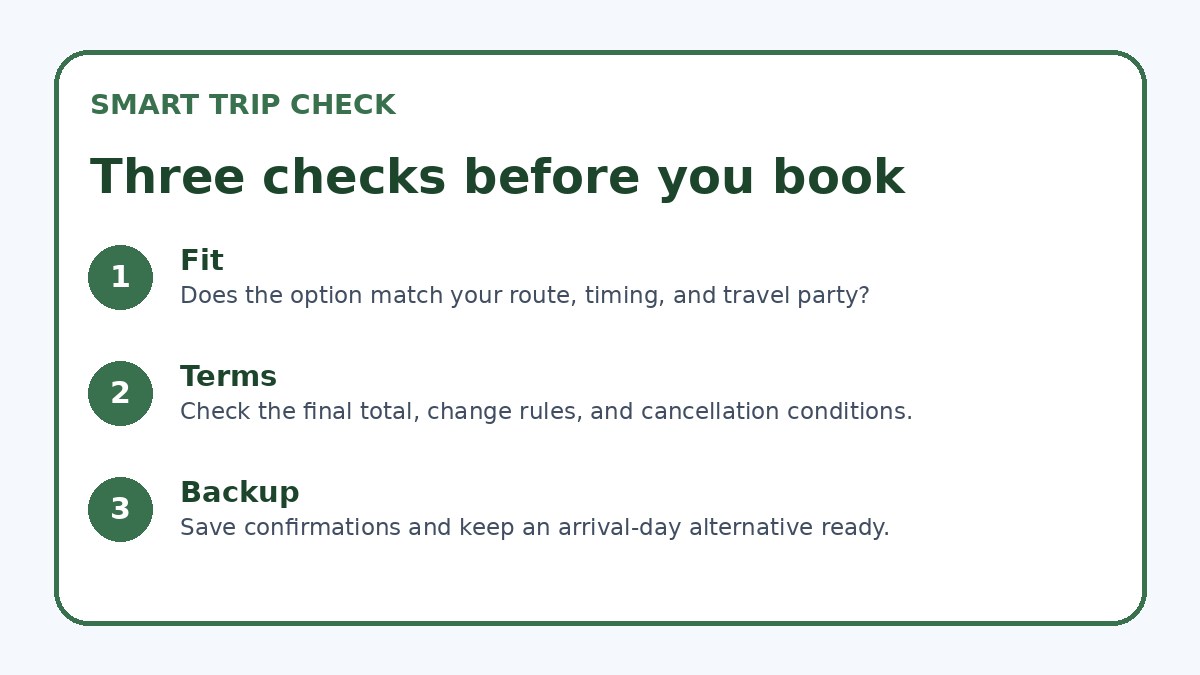
Confirm insurance wording, exclusions, deposit, fuel, mileage, and return terms on the final page.
Insurance wording you must verify before signing
Rental insurance descriptions can be compact but critical. Don’t rely on shorthand labels like 'full coverage' without reading the policy limits: check the excess (amount you pay per claim), whether young drivers or additional drivers are covered, and whether damage to tires, glass, undercarriage or roof is included. Confirm if roadside assistance is a separate product and whether it covers towing, replacement transport, or child-seat retrieval — specifics that matter when traveling with kids.
If you plan cross-border driving, verify geographic limits and whether additional cross-border insurance or permits are required. Also check whether the company accepts third-party insurance or credit-card coverage and what documentation they require to waive or reduce the excess. The booking page and insurance policy PDF are the definitive sources: print or save a copy of the exact terms that apply to your reservation so you can reference them at pickup.
Car rental terms to verify
- Map your planned daily destinations and calculate door-to-door travel time for driving versus public transit for each day.
- Confirm the rental's excess amount, what constitutes damage, and whether you need to buy an excess waiver or third-party coverage.
- Choose pickup and return locations that match your arrival or departure logistics, and note after-hours drop procedures.
- Verify parking availability and cost at your accommodation, and reserve a space if the property offers it.
- Take time-stamped photos of the vehicle at pickup and keep the inspection report; do a final walkaround at return and get a signed receipt.
- If you plan cross-border driving, check geographic permissions and required documents on the rental provider’s final booking page.
A non-driving fallback: how to build a car-free family plan
A solid non-driving fallback is essential. Build a realistic day-by-day plan that replaces car-dependent stops with alternatives: use intercity trains for longer journeys, combine regional buses for rural access, book family-friendly guided day tours for full-day outings, and rent bikes or cargo bikes for short local trips. Many museums and attractions are designed for families and are best reached without a car; this approach reduces parking stress and allows you to enjoy canals and pedestrianized areas safely.
Coordinate lodging near a major transit hub or a well-connected tram line to minimize transfers with children and luggage. Reserve child seats on train or transfer providers if available, and identify stroller-friendly routes between stations and hotels. Keep a lightweight backup: a day pack with snacks, a compact stroller, and a preloaded transit card or app will make non-driving options far more practical for daily life in Amsterdam.
Car Rental & Road Trip questions travelers ask
Can I drive in Amsterdam city center with a regular rental car, and is parking family-friendly?
You can drive into central Amsterdam, but many historic streets are narrow, often one-way, and heavily regulated. Parking is limited, mostly paid, and large family parking bays are uncommon in the dense canal ring. Many hotels advertise private parking but require advance reservation or have restricted access. For short stays, compare the time and cost of city parking to the convenience of staying car-free and using trams, buses or short taxi rides when needed. Always confirm parking arrangements directly with your accommodation before booking.
Are child seats available from rental companies or should I bring my own?
Most rental companies offer child seats for an extra fee, but availability varies and sizes may be limited. If you rely on a specific type (infant carrier, convertible seat, or booster) bring documentation or book the seat in advance and note the supplier’s age/weight fit on the booking page. Bringing your own guarantees fit and familiarity, but adds luggage and airline constraints. If you plan to use trains or transfers often, check whether providers can secure approved child seats for specific journeys.
What should I check on the supplier’s final page before completing an Amsterdam car rental booking?
On the final booking page verify the pickup/return addresses and opening hours, the exact insurance terms and excess amount, allowed drivers and age restrictions, fuel policy, mileage limits, cross-border permissions, and any additional fees (airport surcharges, young driver fees, or parking extras). Download the full rental agreement and insurance PDF. If anything is unclear, contact the supplier to get written confirmation. For a quick comparison of availability you can optionally check Trip.com, but rely on the supplier’s documentation for binding terms.
Final decision note
For first-time families in Amsterdam, the right choice depends on your priorities: pure city exploration is easier without a car; wider regional exploration is easier with one. Decide by listing the real trips you will make, then compare door-to-door time, parking realities, and the stress of transfers for children. If you rent, be meticulous about the contract: confirm insurance limits, cross-border permissions, pickup/return rules and parking options. If you choose not to drive, plan a transit-centric fallback with transit-friendly lodging, day tours for distant sights, and lightweight gear to ease transfers. Either way, prepare documentation and contingency plans so your family road trip — whether by car or by train and tram — runs smoothly.
Continue planning
Check current options and final conditions
Use the provider page to confirm live availability, the final total, cancellation terms, and every condition that matters to your trip.
This evergreen planning guide was created with AI-assisted drafting and a structured quality review. It does not display live prices, schedules, availability, visa guidance, or provider rankings. Verify current details before booking. Some links are affiliate links; we may earn a commission at no additional cost to you.