Short practical answer: for most couples staying in central Fukuoka, renting a car is optional; it helps for day trips outside the city but only if you understand four insurance terms — liability, collision damage waiver (CDW), theft protection, and supplemental liability — and how they apply to drivers who are partners on the rental contract. Read the policy wording before you book: confirm named drivers, cross-border restrictions, deductibles, and whether CDW excludes certain tires, windows, or off-road damage. If the wording is unclear, ask the rental company for a written clarification or consider buying third-party coverage that explicitly lists exclusions. This article explains route value, how to read insurance wording together, what to expect at pickup and return, and a non-driving fallback option for stress-free planning.
Does driving add value for a couple in Fukuoka?
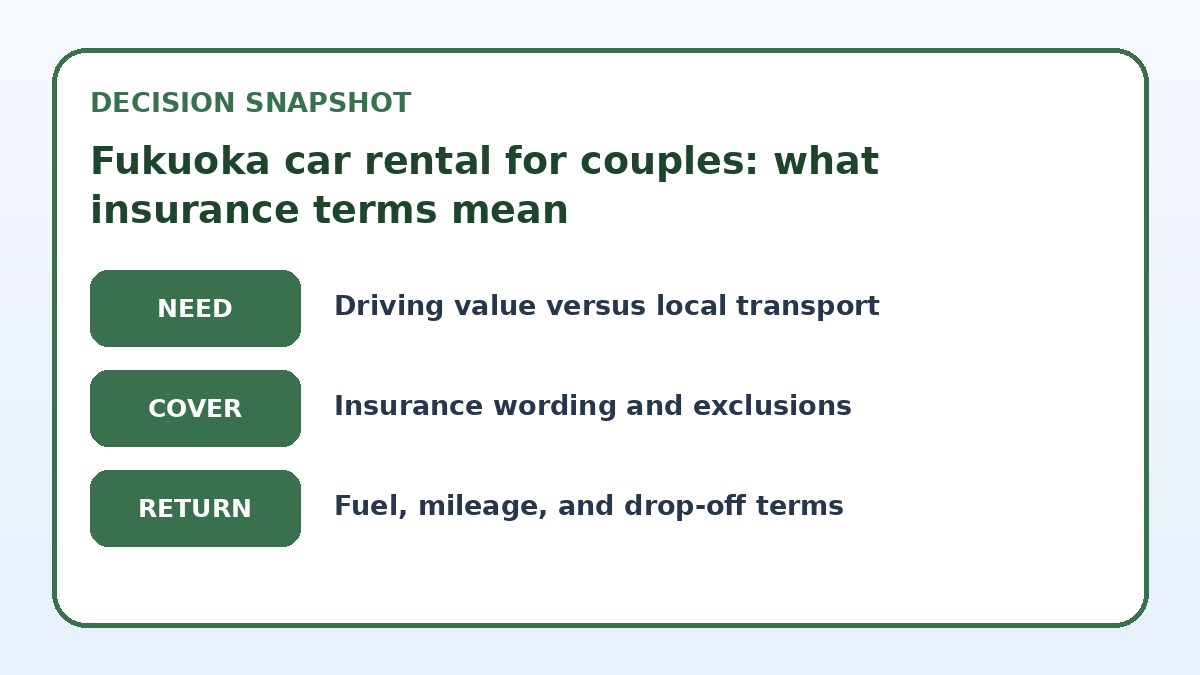
Deciding to rent a car as a couple depends on your priorities and itinerary. Fukuoka city itself is compact and well served by subway, buses, trams, and taxis; driving inside the central area can add parking stress and cost. A car becomes valuable if you plan day trips to coastal parks, rural shrines, regional hot springs, or remote observatories where public transport is infrequent. Consider whether those off-city destinations require flexible timing, scenic drives, or carrying luggage, because those factors increase the practical benefit of a rental.
Couples should weigh convenience against the extra steps that come with driving: finding parking, paying tolls, and aligning insurance coverage for both partners. If one partner prefers to drive and the other prefers to relax, confirm that the rental’s named-driver rules allow both of you to share driving without voiding coverage. If your plans include narrow mountain roads or long cross-prefecture legs, check whether the rental terms restrict usage in specified areas or on unpaved roads, and compare that against the alternative of guided day tours or localized car hire only for the outbound portion.
Decide whether driving earns its place
| Mobility strategy | Best for | Cost or friction to check |
|---|---|---|
| Rent a compact car under the rental’s standard insurance | Couples doing short rural drives with straightforward, well-explained policies | May leave you with a sizeable deductible and limited cover for tires or glass |
| Pay for the rental company’s premium zero-excess waiver | Couples wanting peace of mind and fewer disputes over small damages | Higher daily cost and potential exclusions that still require written confirmation |
| Buy third-party collision/liability insurance before arrival | Couples who want independent coverage and clearer written terms | You must verify compatibility with the rental contract and confirm claims handling procedures |
| Skip driving — use trains, taxis, and day tours | Couples preferring lower risk and simpler logistics in the city | Less flexibility for remote locations and possible higher per-trip costs for taxi legs |
Check live rental choices only after the route test
Use the exact driver, dates, pickup point, and return plan to compare current conditions.
How to read the insurance wording together
When couples sit down to compare rental insurance, make a short checklist of the policy terms you will read aloud and confirm together: named drivers and their age limits, the exact deductible amount, what CDW (collision damage waiver) covers and excludes, theft protection scope, and any extra liability limits. Read the definitions section first: many disputes arise because ‘damage’ can mean bodywork only, or it can extend to tires, mirrors, windshields, and undercarriage. If the wording uses legal or ambiguous phrasing such as ‘negligent operation’ or ‘unapproved roads,’ ask for precise examples in writing or seek a clearer alternative policy.
Pay special attention to how the contract treats additional drivers and how incidents are reported. Does the policy require every driver to be named on the rental agreement to be covered? Are young drivers subject to surcharges or exclusions? Also note reporting procedures—some policies void coverage if you don’t report an incident to the local police and the rental company within a short time window. Agree on a simple in-trip process: where to store the contract, how to photograph any damage, and whom to call first if something happens.
Compare the full rental conditions
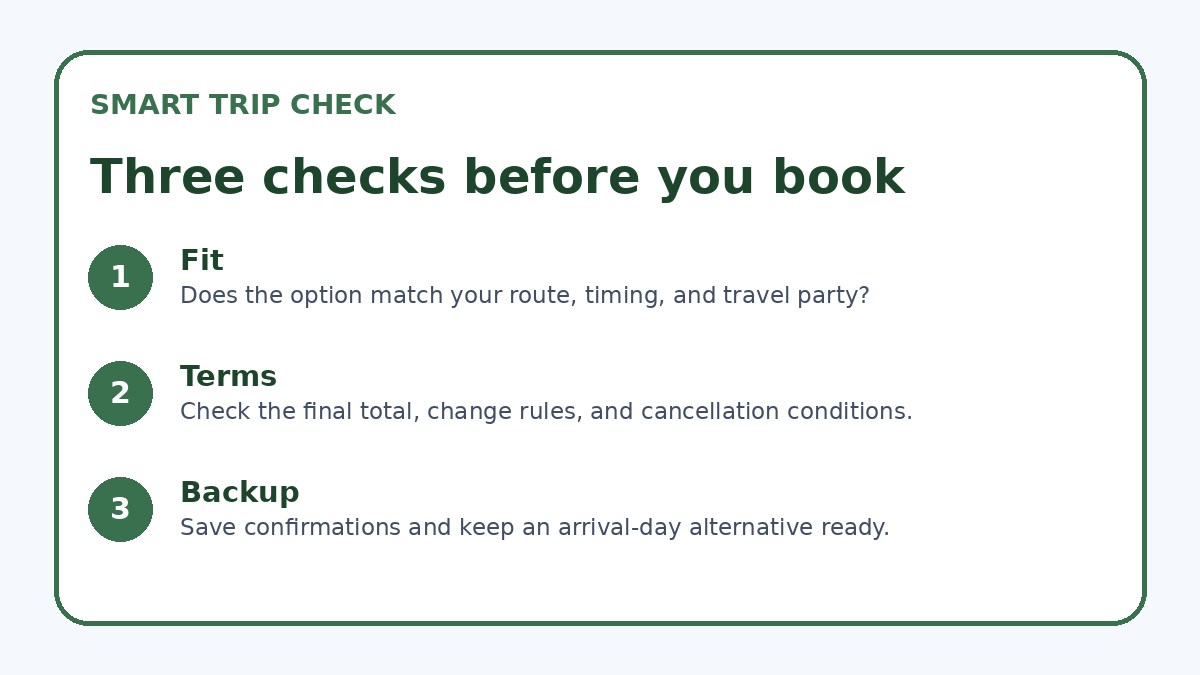
Confirm insurance wording, exclusions, deposit, fuel, mileage, and return terms on the final page.
Pickup and return friction: what couples should expect
Pickup often reveals differences between the advertised coverage and the in-person wording. Be prepared for upsell attempts that restate deductible levels or add collision protections with new exclusions. At the counter, request a line-by-line confirmation of any extra coverage the agent offers; don’t accept verbal promises without written inclusions. Before you sign, inspect the car together and take detailed photos of every panel, the bumper, mirrors, tires, and interior. Have the agent initial or sign any existing damage noted on the inventory form to prevent disputes on return.
Return pain points are similar: disagreements about pre-existing damage, fuel level disputes, and timing penalties. Keep evidence: timestamped photos, the checkout form, and any signed handover from the agent. If a problem arises after return—such as a later damage claim—your rental agreement should show when and how you were told; confirm whether the contract allows electronic claims and what documentation the company will require. If the insurance wording leaves questions, get the company’s escalation contact and record names and badge numbers at pickup and return.
Car rental terms to verify
- Ask the rental company to email the full insurance wording and any supplemental policy before you book so you can review it calmly together.
- Ensure both partners are listed as named drivers on the rental contract and verify any age-related surcharges or exclusions in writing.
- Photograph the vehicle inside and out at pickup with timestamps, and have the agent sign the damage checklist before you drive away.
- Confirm the deductible amount, which vehicle parts are excluded, and the exact steps required to report an incident or theft.
- If buying third-party coverage, obtain a confirmation letter stating it applies to rentals in Japan and that it acknowledges the rental company’s deductible arrangement.
- On return, request a signed receipt stating the vehicle condition and fuel level; retain contact names and copy any exit inspection paperwork.
If you decide not to drive: a practical fallback for couples
A clear non-driving plan keeps your trip flexible without the uncertainty of unclear insurance wording. Use Fukuoka’s efficient public transport for city days: subways and buses are frequent, and short taxi rides are inexpensive for late-night returns. For day trips, combine regional trains with short taxi legs to reach more remote sights; a rental for a single day at a trusted location can still cover specific outings without long-term exposure to unclear insurance clauses. Use online timetables and local tourist information centers to plan these mixed itineraries in advance.
Another fallback is to rely on scheduled shuttle services or bookable small-group tours for places with limited transport. These eliminate named-driver issues and usually include professional drivers experienced on local roads. If you still want the privacy of a car without insurance headaches, consider hiring a private driver for a day; this shifts liability to the operator but requires verifying that the operator holds appropriate commercial insurance. Whatever you choose, keep copies of confirmations and ask each provider what happens if plans change or a transfer is delayed.
Car Rental & Road Trip questions travelers ask
If my partner damages the rental car, will insurance always cover it?
Not always. Coverage depends on the policy wording: whether both drivers are named, whether the damage falls within covered categories (for example, bodywork versus windscreen or tires), and whether exclusions apply such as driving on unapproved roads or under the influence. Also check whether the policy includes punitive conditions like voiding coverage for non-disclosure of a prior incident. Before you drive, confirm written clarification from the rental company on how they handle partner-caused damage and what documentation they require for a claim.
Is the rental company’s zero-excess waiver worth it for a couple?
A zero-excess waiver can remove the stress of a deductible for minor incidents, which many couples value for convenience and emotional ease. However, read the waiver’s fine print: some waivers exclude certain parts (glass, tires), impose behavioral clauses, or still require local police reports and immediate notification. Balance the daily cost against your tolerance for paying a deductible and the likelihood of minor damage on scenic or rural roads. If the waiver’s wording is vague, ask for a written statement clarifying exclusions and how claims are processed.
What documents and evidence should couples always carry while driving?
Carry the rental agreement with insurance wording, driver licenses for both partners, passport copies, and any written confirmation of additional coverage or third-party insurance. Keep a small folder or phone folder with timestamped photos of the vehicle, the signed pickup checklist, and the agent’s contact details. Also note local emergency numbers and the rental company’s incident hotline. If you need to file a claim, these materials speed resolution and reduce the chance of disputes over responsibility or the vehicle’s condition.
Final decision note
Practical planning for couples in Fukuoka means starting with the simple question: will a car materially improve your plans? If much of your time is inside the city, public transport plus occasional taxis or a single-day hire for a rural excursion will usually suffice. If you opt to drive, read insurance wording together and insist on written clarifications for named drivers, deductibles, and exclusions before you sign. At pickup and return, work as a team—photograph, document, and collect signatures. If anything in the wording is vague or costly, use mixed mobility strategies or third-party coverage with clear claims procedures. Trip.com can show availability, but always verify the final insurance and contract terms on the rental company’s official booking page before you confirm.
Continue planning
Check current options and final conditions
Use the provider page to confirm live availability, the final total, cancellation terms, and every condition that matters to your trip.
This evergreen planning guide was created with AI-assisted drafting and a structured quality review. It does not display live prices, schedules, availability, visa guidance, or provider rankings. Verify current details before booking. Some links are affiliate links; we may earn a commission at no additional cost to you.