Practical answer up front: if you prioritize risk-free changes, book options with clear, refundable cancellation windows—even if that means paying a bit more—or buy refundable add-ons for key items (flights, accommodation). For first-time visitors to Cebu, the real question is not whether bundles are cheaper but whether the bundle’s combined cancellation terms match your tolerance for change. Compare the same travel dates, number of travelers, and inclusions (flight, hotel, transfers, tours) when judging a package versus separate bookings. Read the final provider page for exact penalties, refund timing, and which components are nonrefundable. This article walks through what to compare before you accept a bundle, how inclusions affect flexibility, traveler-specific value considerations, and which final terms to verify before you click buy.
Test package value fairly
| Booking approach | Best for | Tradeoff to check |
|---|---|---|
| All-in-one package (flight + hotel + transfers + tours) | Travelers wanting one point of contact and coordinated logistics for a simple trip experience. | May mix refundable and nonrefundable components; a single change can trigger multiple penalties and complex refund rules. |
| Separate bookings for flight and hotel, packaged tours bought separately | Travelers who need precise flight times or hotel loyalty benefits and want flexibility on major items. | Requires more time to manage and the risk that separate vendors have uncoordinated change policies. |
| Flight bundled with flexible change protection; other items booked separately | Time-sensitive visitors who prioritize flight flexibility while keeping freedom to choose hotels and activities. | Added cost for flight flexibility may reduce immediate savings and still leave tour/hotel terms restrictive. |
| Prepaid nonrefundable package with optional insurance | Travelers confident in fixed plans who want simplicity and potentially lower upfront cost. | Nonrefundable terms limit changes; insurance may not cover every cancellation scenario and has its own exclusions. |
Check current package and separate options
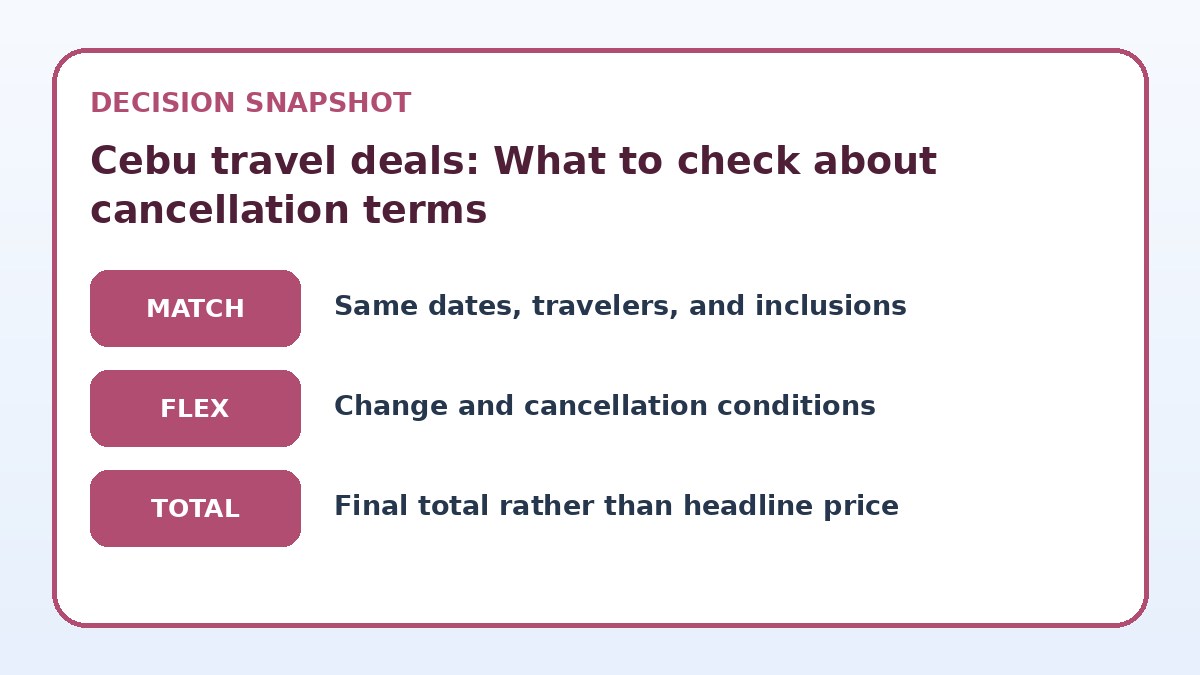
Use identical dates, travelers, room needs, baggage, and flexibility so the comparison stays meaningful.
What to compare before judging a bundle
Start by lining up the same underlying elements for both a package and separate-booking scenarios: exact flight options (times, connection count), hotel room type and board basis, airport transfers, and any planned excursions. A package can appear cheaper only because it uses a different flight or a lower room category. Make sure you compare the same travel dates, number of travelers, baggage allowances, and cancellation windows. If a package includes a group tour, confirm whether it is guaranteed to run or subject to minimum numbers—this affects cancellation risk.
Next, map the cancellation rules side by side. Providers often allow different rules for flights, hotels, and activities inside the same bundle: one component might be refundable up to 14 days, another nonrefundable. Note whether penalties are per traveler or per booking and how refunds are processed (original payment method, voucher, or credit). The final provider booking page is the authoritative source for these details; screenshot or save the terms before you complete a purchase so you can reference them if you need to change or cancel.
How inclusions change flexibility
Inclusions determine both convenience and risk. A bundle that rolls flights, hotel, and transfers into one booking simplifies changes when the provider offers a single-change policy covering all items, but that’s uncommon. More typical is mixed flexibility: refundable hotel, changeable flight for a fee, and nonrefundable tours. These mixed terms mean a single change—like shifting arrival by a day—can trigger multiple penalties. Assess whether the convenience of a one-stop booking outweighs the possibility of multiple separate penalties if your plans change.
Also consider which inclusions you can replace easily if cancelled: swapping a day tour is usually simpler than rebooking an international flight. If a package includes domestic ferries or island-hopping tours, check whether those vendors permit date changes. Some activities have strict no-refund policies due to limited capacity. If you value maximum optionality for spontaneous adjustments, favor refundable or changeable options for the most expensive or most likely-to-change components.
Look past the headline total
Compare inclusions and change conditions before deciding whether a package is genuinely useful for this trip.
Deal comparison checklist
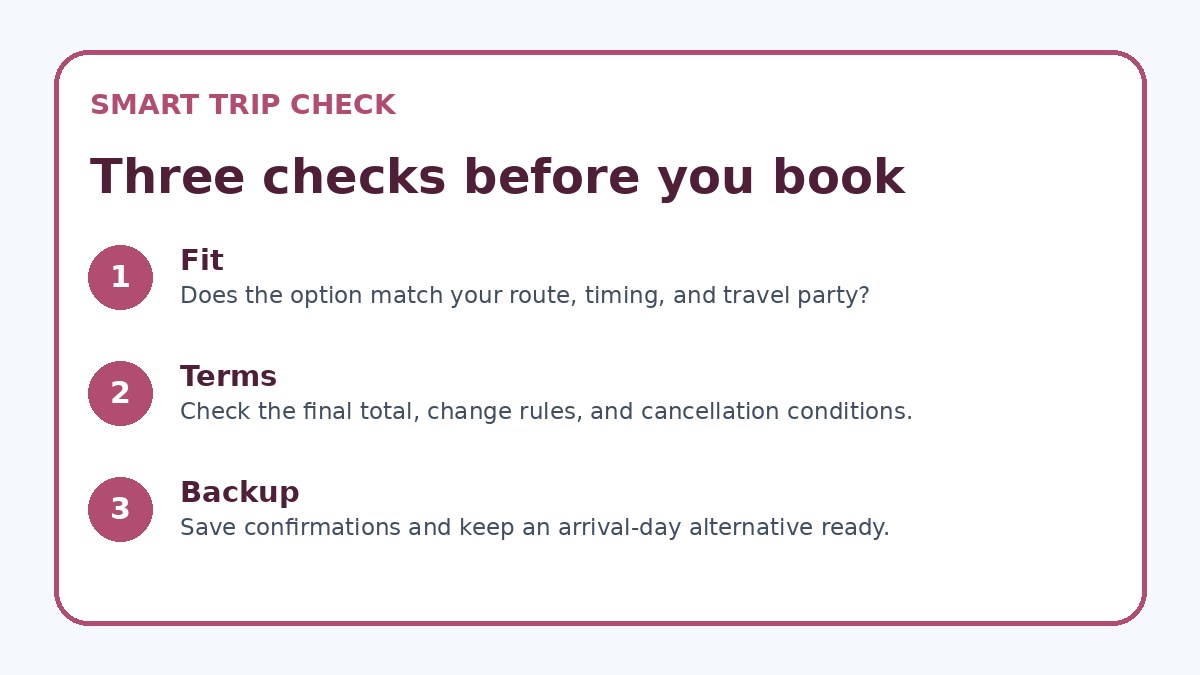
- Match the same travel dates, number of travelers, and room type when comparing package and separate booking options.
- Open and save the provider’s final booking page showing cancellation windows and penalties before you confirm payment.
- Verify which components (flight, hotel, transfers, tours) are refundable, refundable-with-fee, or nonrefundable.
- Confirm how refunds are issued (card refund, voucher, or credit) and how long the refund process typically takes.
- Check whether name changes, date changes, or partial cancellations are permitted and what fees apply.
- Compare travel insurance terms against the supplier cancellation policy to ensure coverage of your main risks.
Traveler-specific value: who benefits from bundles
Different traveler profiles change the value of a package. Solo travelers or those on tight, inflexible schedules may prefer to book flights and hotels separately to lock the exact flight times they want and choose a hotel with a clearly refundable rate. Families or groups who want the logistical simplicity of coordinated transfers and activities may accept slightly stricter terms in exchange for one-stop support, especially if one person manages bookings for everyone and managing multiple refunds would be a hassle.
If you’re visiting Cebu for leisure with flexible dates, a package containing prepaid tours may be attractive because it secures spots on popular excursions. But if your trip is time-sensitive—connecting flights, work commitments, or strict leave windows—prioritize refundable flights and hotels even if that requires assembling components separately. Frequent travelers who have status with an airline or hotel chain may also prefer separate bookings to retain elite benefits that a bundled reservation might not honor.
Final terms to verify on the booking page
Before you commit, check the provider’s final booking page for exact cancellation windows, penalty amounts, and refund method. Look for phrases that specify when free cancellation ends (for example, 'free until 48 hours before check-in') and whether penalties are a fixed amount or a percentage. Verify whether name changes are allowed, who pays change fees, and whether vouchers or credits are time-limited. If any component mentions third-party suppliers, ask whether cancellations involve a mediated refund process through that supplier.
Also confirm timeline details: how long refunds typically take, whether taxes and service fees are refundable, and which contact channels handle cancellations or disputes. If you buy travel insurance, check whether the provider’s cancellation terms affect eligibility for an insurance claim. For comparison shopping, you can optionally consult Trip.com to view current availability and provider-stated terms, but always rely on the final confirmation page from your selected seller as the definitive contract.
Travel Deals & Booking Strategy questions travelers ask
Can I rely on an all-in-one Cebu package to be easier if I need to change plans?
An all-in-one package can be easier in communication because you have a single point of contact, but ease depends on the provider’s change policy. Some providers handle adjustments centrally and may rebook components for you; others simply pass changes through to third-party suppliers and apply their penalties. Always read the booking’s terms to see whether changes are processed as one booking or per component. Saving screenshots of the final terms helps if you need to escalate a change or claim a refund.
If a package looks cheaper, how do I know the savings are real?
To test savings, build the exact itinerary separately: same flights, hotels, and included activities, and then add the supplier cancellation rules and fees. If the package uses different flight times, a lower room category, or stricter refund rules, the price gap can be misleading. Also factor in any convenience value—coordinated transfers or group bookings—that you would otherwise arrange yourself. The honest way to compare is to align all variables and then decide whether the combined cancellation exposure fits your risk tolerance.
Should I buy travel insurance if I choose a package for Cebu?
Insurance can make sense when components are nonrefundable or when cancellation risk is significant, but it won’t override supplier policies. Check whether the insurance covers cancellation for the reasons you care about (illness, travel restrictions, work). Note that insurers often require you to first claim refunds from the supplier and may only compensate remaining nonrefundable losses. Read the insurer’s exclusions and the supplier’s refund rules before purchasing both; reconcile timelines and documentation requirements so you can meet any claims conditions.
Final decision note
For first-time visitors to Cebu, cancellation flexibility should be a primary decision filter—not an afterthought. A package can streamline logistics, but mixed refund rules across bundled components can create unexpected exposure if plans change. Compare the exact same dates, inclusions, and traveler count before deciding; prioritize refundable options for the most costly or most likely-to-change items (typically flights and peak hotels). Verify every detail on the provider’s final booking page—cancellation windows, penalty amounts, refund method, and third-party supplier involvement. If you remain uncertain, favor options that let you alter the most critical components without cascading penalties, or add targeted travel insurance that aligns with the supplier’s terms.
Continue planning
Check current options and final conditions
Use the provider page to confirm live availability, the final total, cancellation terms, and every condition that matters to your trip.
This evergreen planning guide was created with AI-assisted drafting and a structured quality review. It does not display live prices, schedules, availability, visa guidance, or provider rankings. Verify current details before booking. Some links are affiliate links; we may earn a commission at no additional cost to you.