Driving in Singapore can be a smart choice for families who want flexible day trips, strollers and luggage, or easier access to parks outside the city. The practical answer: if your itinerary includes multiple stops outside core central areas—Pulau Ubin, western parks, or day trips across the Causeway—a rented car often improves convenience and schedule control. If your plan is museum-heavy days in the city or you prefer not to navigate tight parking, public transit and taxis are easier and usually faster. Below I explain the tradeoffs families need to judge: route value (what you’ll actually drive), insurance wording you must confirm, pickup and return friction at terminals or city locations, and what to do if you decide not to drive. Use this to decide before you book so you compare the right vehicles, coverages and pickup options on the provider’s final booking page.
Does driving add value to your family itinerary?
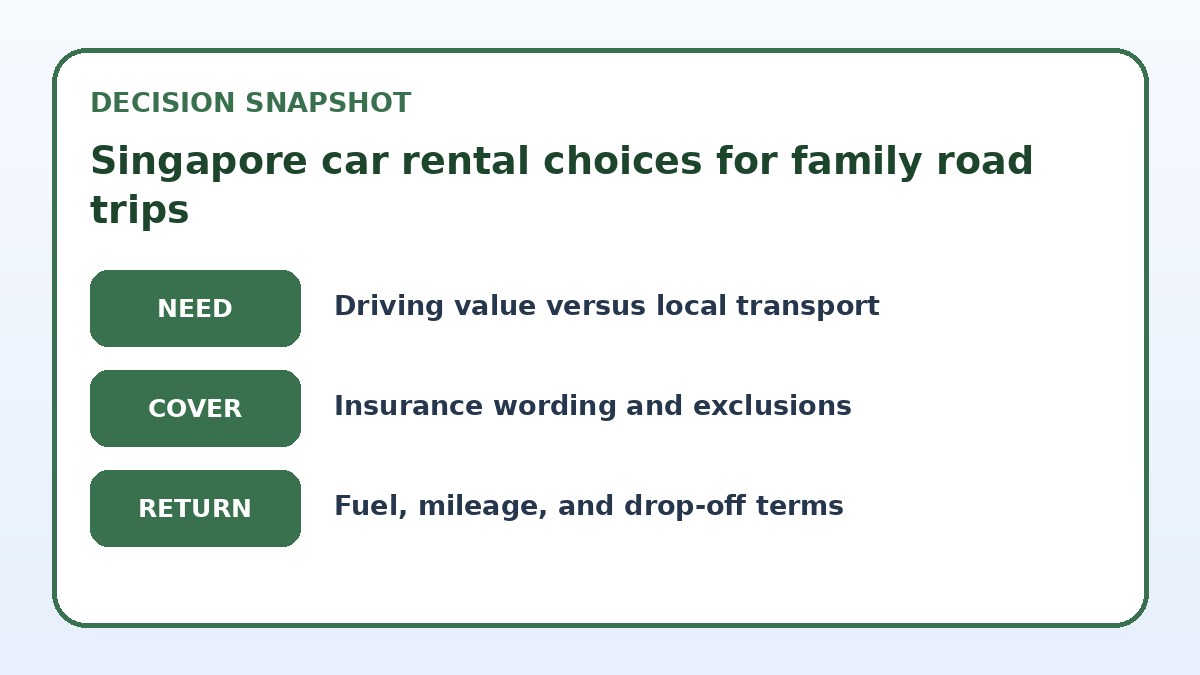
Decide by mapping where you want to go and how often you’ll stop. Central Singapore is compact and served by fast, reliable public transport; driving there can mean dealing with parking constraints, ERP tolls, and frequent one-way roads. Conversely, if your plan includes multiple outdoor destinations or island access points that sit off transit lines—places where carrying picnic gear, child seats, or bulky strollers would be a hassle—having a car saves time and energy. For families with infants or toddlers, a single-seat installation and trunk space for a stroller can make days much less stressful than multiple transfers on buses and trains.
Think about itinerary rhythm: are you doing several short hops in a single day or longer out-and-back trips? Multiple short hops inside the city rarely justify the hassles and cost of parking and congestion fees. For longer loops or cross-border plans, a car creates independence and earlier start times, which matter with young children’s nap schedules. Make a simple spreadsheet of destinations, estimated driving distances, and public-transit alternatives to see whether the time and comfort benefits of driving outweigh the administrative and financial tradeoffs.
Decide whether driving earns its place
| Mobility strategy | Best for | Cost or friction to check |
|---|---|---|
| Self-drive rental car | Families needing flexibility for multi-stop day trips, strollers, and luggage. | Higher admin, parking and toll costs, and insurance checks required. |
| Rental with a local driver | Families who want door-to-door comfort without navigating or parking. | More expensive than self-drive and requires scheduling a driver for each day. |
| Public transport plus taxis | City-centric itineraries prioritizing cost-efficiency and fast transit in downtown areas. | Less convenient for bulky gear or routes with limited bus service. |
| Mixed strategy (rent only on select days) | Families wanting occasional driving flexibility while minimizing rental days and fees. | Requires careful planning and coordination for pickup, drop-off, and child-seat logistics. |
Check live rental choices only after the route test
Use the exact driver, dates, pickup point, and return plan to compare current conditions.
Insurance, coverage wording, and what to confirm
Insurance language can hide key differences that matter to families. On the booking page, verify whether the standard rate includes third-party liability and what limits apply; check whether collision damage waiver (CDW) reduces your excess/deductible and what remains payable after a claim. Families should confirm whether child seats are available, whether they are included or extra, and whether installation assistance is offered. Also check whether the policy explicitly permits additional named drivers and what documentation each driver must present at pickup.
If your route crosses into Malaysia via the Causeway, confirm cross-border or territorial restrictions in the rental agreement; many insurers require a special permit or additional insurance for Malaysia and may refuse coverage if you don’t declare it. Read the policy about roadside assistance response times and what services are included—tire changes, towing, or on-site repairs. Finally, make sure to verify on the provider’s final booking page the exact terms, covered territories, deductible amounts, and the process for filing claims; don’t rely on marketing summaries alone.
Compare the full rental conditions
Confirm insurance wording, exclusions, deposit, fuel, mileage, and return terms on the final page.
Pickup, return friction and practical vehicle choices
Pickup location affects convenience and cost. Airport counters can make pickup immediate after arrival but often come with higher surcharges or required shuttle waits; city center pickups reduce airport fees but may require arranging public transit with children to reach the office. Check whether the provider offers meet-and-greet service, whether child seats are fitted before you arrive, and what identification and credit card requirements exist for additional drivers. For families, favour vehicles with easy-access rear doors, sufficient boot capacity for a stroller and luggage, and built-in ISOFIX anchors for secure child-seat installation.
Return rules matter as much as pickup. Verify whether late returns incur hourly charges, whether fuel policies require full-to-full refuels, and whether drop-off at different locations is permitted (and at what cost). If you plan a one-way drive across the Causeway, confirm cross-border drop-off options and any import/export paperwork for the vehicle. Before finalizing, read the provider’s exact instructions on the booking page about where to leave keys after hours, how inspections are conducted, and how deposit holds are released so your departure day isn’t slowed by administrative surprises.
Car rental terms to verify
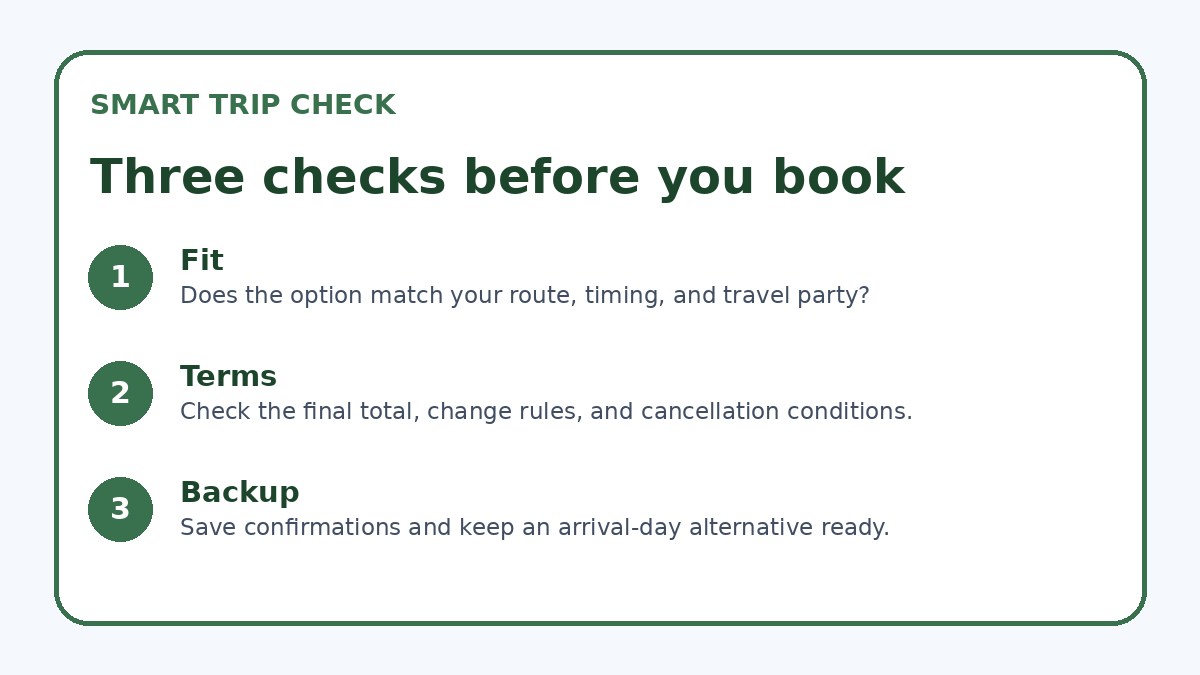
- Map each day’s destinations and mark which are outside easy MRT reach to decide actual driving days.
- Confirm on the provider’s final booking page the exact insurance wording, deductible amount, and covered territories.
- Reserve the correct child seats in advance and request ISOFIX fitting or professional installation at pickup.
- Compare pickup and return locations for added fees, airport surcharges, and after-hours key drop procedures.
- Verify fuel and mileage policies on the rental confirmation to avoid unexpected refuelling or distance charges.
- Plan a non-driving backup using MRT routes, bus options and taxi apps, and note transfer times for each day.
Non-driving fallbacks and mixed strategies for families
If you decide not to drive, plan a robust non-driving itinerary: use MRT for core city attractions, buses for routes the MRT doesn’t cover, and pre-booked taxis or private transfers for parks and outer areas. Many family-friendly attractions are accessible by public transport; combining an easy public-transit backbone with on-demand taxis for heavy loads or late returns balances cost and convenience. For excursions where a car would be handy—beach days, hilltop parks, or border trips—consider booking a single-day private transfer or driver so you get door-to-door convenience without renting for the whole trip.
A hybrid approach often works best: rent a car only for the days you need it. That reduces insurance exposure and parking hassles while giving you flexibility for specific outings. If you’re unsure which days will require a vehicle, choose providers with flexible cancellation or daily rates and confirm pickup options that let you activate the rental mid-trip. Whatever you pick, write down the alternative transit plan so you can switch without scrambling, and make sure child seats and stroller storage are arranged ahead to avoid last-minute surprises.
Car Rental & Road Trip questions travelers ask
Is driving in Singapore difficult for foreign families?
Driving in Singapore follows left-hand rules and is on well-maintained roads, but urban driving involves many one-way streets, congestion zones and electronic road pricing (ERP) during peak hours. For families, the most important adjustments are understanding local signage, preparing for tight car parks in central areas, and complying with child-seat and seatbelt laws. If you’re not comfortable with dense city driving, consider using a driver or sticking to transit for city days and renting a car only for outings outside the urban core.
What should families check about cross-border travel to Malaysia?
If you plan a Causeway or cross-border day trip, check the rental contract for explicit permission to drive into Malaysia, any required cross-border permits, and whether additional insurance or fees apply. Confirm the process for notifying the rental company, and check how roadside assistance works across the border. Also verify vehicle documents like the international insurance card (if required) and the return location specified by the provider—some rentals prohibit cross-border drop-off or require pre-approval on the booking page.
How do I choose the right vehicle size for a family?
Choose a vehicle with enough boot space for your stroller(s), luggage and any infant gear, and ensure rear doors and seats are easy to reach for quick child-seat changes. Look for cars with ISOFIX anchor points and ask whether the rental provider will fit seats for you. Consider a compact SUV or large hatchback for most families; if you need room for extended family members or extra cargo, compare multi-row options and verify passenger seat counts and seatbelt availability on the final booking page.
Final decision note
For families, renting a car in Singapore can be a clear win when your days include destinations beyond central transit lines or when managing strollers and luggage would make public transit impractical. The decision hinges on route value—how often you’ll need a car—plus clear acceptance of the insurance terms and awareness of pickup/return friction. If you choose not to drive, prepare a hybrid plan that uses transit for city days and hires a driver or private transfer for specific outings. Before booking, read the rental agreement and insurance wording on the provider’s final page, confirm child-seat availability, and map a fallback using MRT and taxis so the whole family travels with confidence.
Continue planning
Check current options and final conditions
Use the provider page to confirm live availability, the final total, cancellation terms, and every condition that matters to your trip.
This evergreen planning guide was created with AI-assisted drafting and a structured quality review. It does not display live prices, schedules, availability, visa guidance, or provider rankings. Verify current details before booking. Some links are affiliate links; we may earn a commission at no additional cost to you.