Practical answer up front: for families, prioritize a connection that minimizes total travel time while giving a longer minimum connection time at the transfer airport and clear baggage transfer rules. Choosing between a single-carrier itinerary, an airline alliance connection, or self-connects will trade convenience against potential savings. Before you search, gather exact travel dates, the ages of all children, luggage counts, and any mobility or meal needs. That lets you filter by connection duration, aircraft seatmap, and fare conditions. In the sections below I’ll walk you through routing choices, how to assess baggage and connection risk, matching schedules to family rhythms, and the fare conditions that affect changes and refunds. Use these criteria to shortlist options and then check live availability and the carrier’s final booking page for verified details.
See live routes for your exact travel day
Compare direct and connecting choices with the same baggage and traveler details.
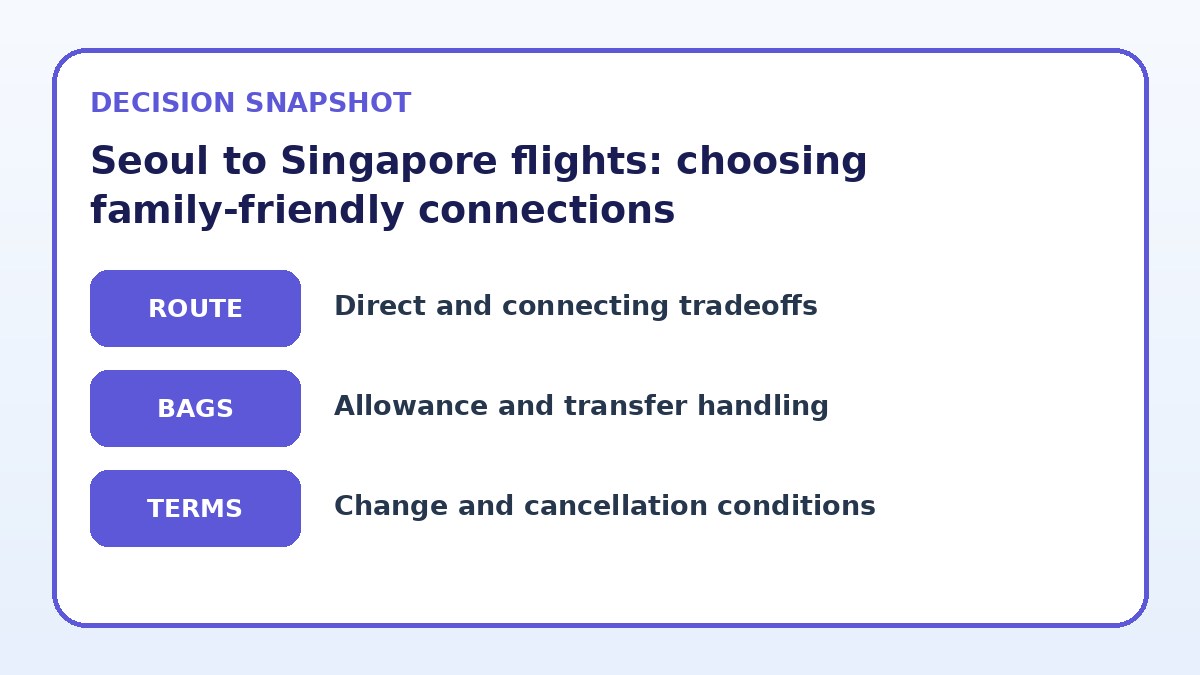
Routing: direct versus connecting options and family tradeoffs
Direct flights are the simplest option for families because they remove the stress of transferring between flights, reduce the chance of lost luggage, and avoid the need to manage children through security, immigration, or terminal transfers. If a nonstop option is available for your dates, weigh the convenience against the schedule: a late-night departure may be tiring for young children, while daytime nonstops can be long for toddlers who need activity breaks. When direct flights aren’t available or are significantly more expensive, a single-connection itinerary on one ticket—ideally with the same airline or alliance—gives the next-best balance of protection and ease.
For connecting itineraries, prefer a single-ticket connection because airlines accept responsibility for missed connections and baggage transfer when flights are on the same booking. When comparing different connections, check the total travel time, the length of the transfer (not just the scheduled layover), and whether terminals require shuttle transfers or immigration. If you must consider self-connects to save money, factor in the time needed to reclaim and recheck baggage, re-clear security, and the likelihood your family can make the second flight if the first leg is delayed.
Baggage and connection risk: how to verify what’s covered
Before you commit, confirm on the booking page whether checked baggage will be transferred between flights on your itinerary. For single-carrier and many alliance itineraries this is standard, but lower-fare classes or codeshare legs may come with restrictions. If baggage does not transfer automatically, plan extra transfer time and consider packing a carry-on with essentials for children—diapers, a change of clothes, snacks, and medication—so a late arrival of checked bags won’t derail the first day.
Also confirm whether your fares include infant/child allowances and whether any seat assignments are blocked until check-in. If the connection requires switching terminals, look up the airport map and transport options in advance to estimate walking time, elevator availability for strollers, and whether baby-changing facilities are convenient. When in doubt, call the airline or check Trip.com for current terms, but always verify final baggage and transfer promises on the carrier’s official booking page before purchase.
Compare flight-selection strategies
| Flight strategy | Best for | Risk to check |
|---|---|---|
| Single nonstop ticket (direct flight) | Families wanting the least stress and no transfers | Often higher fares or limited schedule choices compared with connecting options |
| Single-ticket one-stop with same-carrier or alliance | Balance of protection and potential savings on longer routes | May add a transfer and longer total travel time despite baggage protection |
| Self-connect using separate tickets | Travelers prioritizing lower fares and willing to manage connections | Higher risk of missed second flights and no guaranteed baggage transfer |
| Multi-carrier booked as a single itinerary via partner agreement | Families seeking specific routing or aircraft types within a protected booking | Complex rules and possible limitations on changes or refunds depending on partners |
Recheck the complete itinerary
Confirm airports, connection handling, baggage, and change conditions before deciding.
Schedule fit: planning around sleep, meals, and airport time
Families travel better with predictable rhythms. For young children, mid-evening departures can align with bedtime if the flight offers bassinet availability and seat recline; for toddlers, daytime travel with activity breaks may be preferable. When you compare options, consider the local time of arrival in Singapore and how it aligns with hotel check-in and daylight. A late-night arrival might require an extra night in a nearby airport hotel or managing jet lag on the first day, while an early arrival can let you settle quickly and start the day refreshed.
Also build in extra buffer at both ends of the connection: arriving at the Seoul airport two to three hours before departure for international flights gives you time for family check-in, security, and last-minute needs. On connections, prefer scheduled layovers that leave at least 90 minutes for domestic-to-international transfers and 120 minutes when terminals change. If you are booking multi-carrier travel and the schedule board shows tight turns, choose a longer cushion or opt for a single-ticket solution to reduce the stress of rushing with children.
Flight details to verify
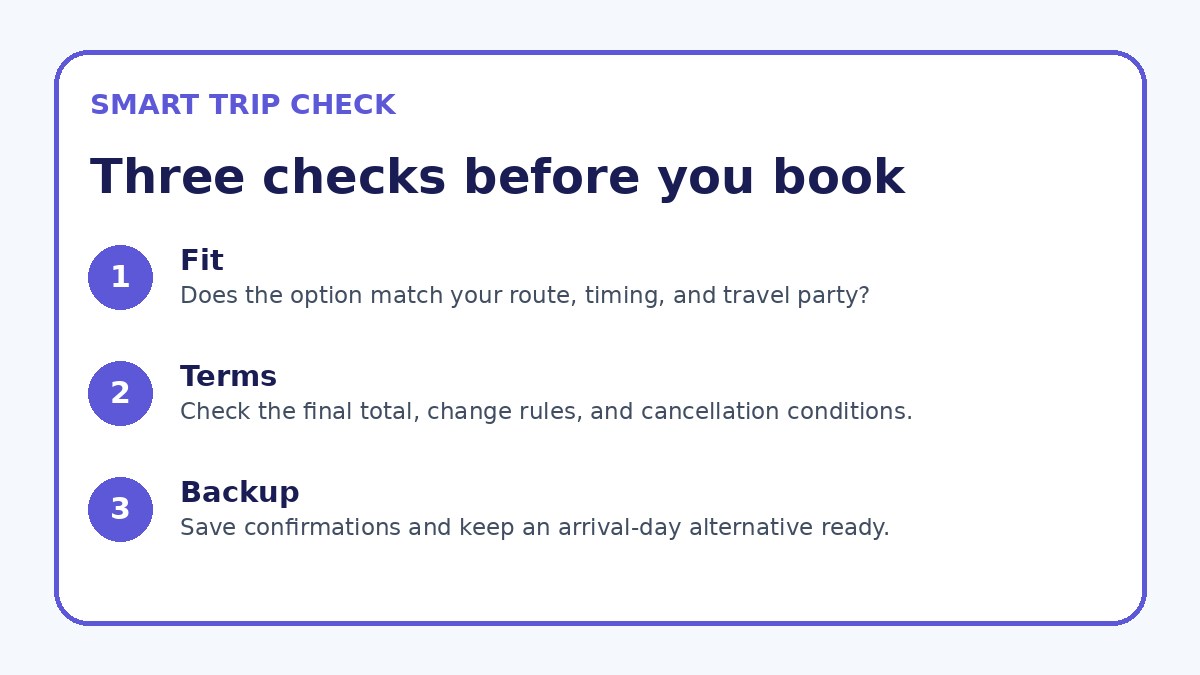
- Confirm exact travel dates, full names, ages of all children, and any mobility or dietary needs before searching fares.
- Check whether checked baggage transfers automatically between legs on the airline’s booking page and note any weight or piece limits.
- Verify minimum connection times and terminal transfer requirements at layover airports on official airport or airline pages.
- Reserve seats together and request bassinets or child meals early if needed; note any fees or eligibility conditions shown during booking.
- Compare fare rules for changes and cancellations; save screenshots or PDFs of the fare conditions and booking terms at purchase.
- Plan carry-on packing for a connection day: diapers, change of clothes, medications, entertainment, and chargers in case checked bags are delayed.
Fare conditions and seat choices that matter for families
Before buying, review the fare rules for changes, cancellations, and baggage allowances. Flexible fares let you adjust travel if a child falls ill or plans shift, and paid seat selection helps ensure families sit together—very important for long-haul comfort. Note which fare classes include refundable or changeable tickets, and whether those options come with extra baggage or priority boarding. If your plan requires bassinets, reserve them early and verify weight and length limits with the airline because these allocations are usually limited on a flight-by-flight basis.
If saving on fare is a priority, compare what’s lost when choosing a cheaper class: fewer or no free seat assignments, strict change fees, and reduced or nonexistent refundability. Factor in the value of peace of mind for families—sometimes paying slightly more for a protected connection, assured baggage transfer, and the ability to change dates without steep penalties is worth the added cost. Always confirm the exact fare inclusions and change/cancellation policy on the airline’s final booking page before committing.
Flight Guide questions travelers ask
How much connection time should I allow when traveling with kids between Seoul and Singapore?
Aim for at least 90 minutes for same-terminal international connections and 120 minutes when terminals or security lanes change. Families need extra time for restroom breaks, stroller handling, and calming anxious children. If your itinerary requires leaving the secure area to reclaim and recheck baggage, add at least an extra 45–60 minutes to cover immigration and baggage reclaim, then more time for security lines. Always check the minimum connection times quoted by the airline and the airport map for realistic walking and transport times between gates.
Can I expect checked baggage to transfer automatically on a connecting Seoul–Singapore itinerary?
Checked baggage usually transfers automatically on single-ticket itineraries operated by the same carrier or airline partners, but exceptions exist for certain fare classes or when an itinerary mixes uncoordinated carriers. Before booking, look for confirmation on the airline’s booking page that baggage will be checked through to your final destination and verify any size or piece limits. If the booking does not confirm through-check, plan to travel with carry-on essentials for children and allow extra time during your connection to reclaim and re-check luggage.
What seat and onboard options should families prioritize on long-haul flights?
Prioritize seating that keeps the family together—bulkhead rows can offer extra space and may accommodate bassinets, though availability is limited. If traveling with infants, confirm bassinet eligibility and reserve early. For toddlers, aisle seats near the lavatory might make restroom trips easier, while window seats help with naps and view-based entertainment. Also check whether the fare includes pre-selected meals for children and whether the aircraft offers inflight entertainment or USB power; if not, bring portable entertainment and chargers in carry-on bags.
Final decision note
For families planning Seoul to Singapore flights the right connection is the one that reduces stress, protects your baggage, and fits your children’s rhythms. Start by collecting exact travel dates and traveler details, then shortlist nonstop options first and single-ticket connections second. Verify baggage transfer promises, minimum connection times, seat availability, and fare-change rules on the airline’s final booking page before purchase. If you consider self-connects for savings, plan extra buffer time and pack essentials in carry-on to manage delays. Use the checklist above to prepare and then compare live options—Trip.com can be one place to view availability, but always confirm final terms with the carrier.
Continue planning
Check current options and final conditions
Use the provider page to confirm live availability, the final total, cancellation terms, and every condition that matters to your trip.
This evergreen planning guide was created with AI-assisted drafting and a structured quality review. It does not display live prices, schedules, availability, visa guidance, or provider rankings. Verify current details before booking. Some links are affiliate links; we may earn a commission at no additional cost to you.