If you travel to San Francisco for work, price alerts are a great early-warning tool — but they often trigger impulse bookings that complicate schedules. The practical answer: set alerts with precise parameters, compare a bundled package against separate bookings on the same dates, and keep refundable or change-friendly options where your schedule is uncertain. Before you click "buy," confirm exactly what’s included (taxes, baggage, transfers), the supplier’s change and cancellation rules, and whether the bundle restricts your ability to modify components independently. This article walks business travelers through what to compare when you get a promising alert, how to spot false savings, and an easy decision flow you can use between seeing an alert and committing to a reservation.
Test package value fairly
| Booking approach | Best for | Tradeoff to check |
|---|---|---|
| All-in-one travel package | Travelers with fixed dates who want one checkout and support for package issues. | May lock components together and limit changes; verify component-level terms and loyalty impacts. |
| Separate flight + hotel bookings | Travelers needing maximum flexibility to change flights or rooms independently. | Requires more time to compare individual terms; may miss modest bundled conveniences like transfers. |
| Flight through corporate TMC + separate hotel | Workers whose company enforces travel policy and needs centralized support for flight disruptions. | May reduce choice or price flexibility on hotel side; ensure hotel meets meeting location needs. |
| Bundle with refundable hotel but restricted flight | Trips where lodging certainty is more important than a fixed flight schedule. | Can expose you to higher flight change costs if meeting times move; compare total cost of rebooking. |
Check current package and separate options
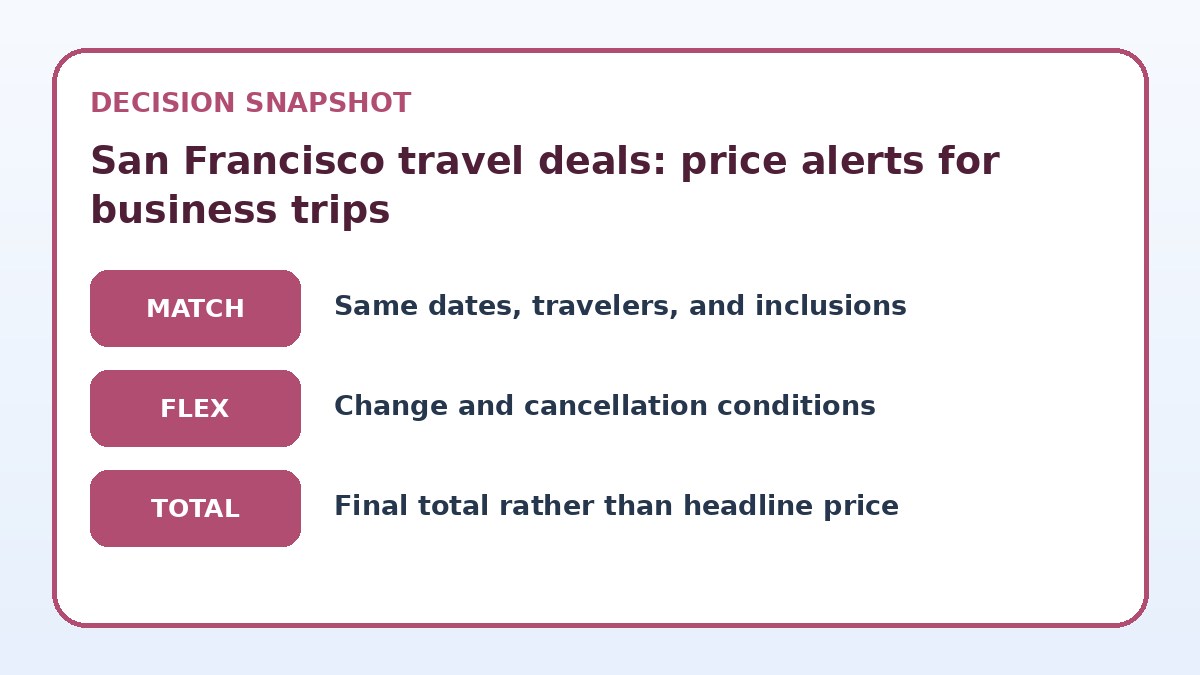
Use identical dates, travelers, room needs, baggage, and flexibility so the comparison stays meaningful.
What to compare before judging a bundle
When an alert flags a package for San Francisco travel, the first step is to ensure you’re comparing apples to apples. Match the same calendar dates, number and type of travelers, flight times or classes, and exact hotel room type. Don’t assume a package’s headline rate includes the same baggage allowances, seat selection, or Wi‑Fi access that you would book separately — these small differences can change the trip cost and convenience for a business traveler.
Next, compare fees and taxes, loyalty program earnings, and any corporate booking policy impacts. A bundle may show a lower headline rate but exclude hotel occupancy taxes or charge nonrefundable fees that conflict with your company’s travel rules. Finally, check the supplier change and cancellation terms for each component rather than the package’s aggregated language; some bundled suppliers lock components so you can’t change a flight without canceling the hotel portion.
Inclusions: verify what you actually get
Inclusions are where apparent savings often evaporate. Open the package’s full terms and itemized breakdown to confirm whether airport transfers, early check‑in, breakfast, or meeting-room credits are included. For flights, verify the fare class and baggage allowance; a cheaper economy fare with no checked bag will cost more if you need to travel with one, and seat selection fees can add up for teams flying together.
Also check loyalty treatment and receipts. Some packages book through third-party consolidators that don’t earn hotel points or count for elite status; that matters if your employer values loyalty benefits for upgrades, lounge access, or late checkout. If the package includes travel insurance or waiver protections, read the policy exclusions and provider contact details so you know what to claim in case of a schedule change or medical issue.
Look past the headline total
Compare inclusions and change conditions before deciding whether a package is genuinely useful for this trip.
Deal comparison checklist
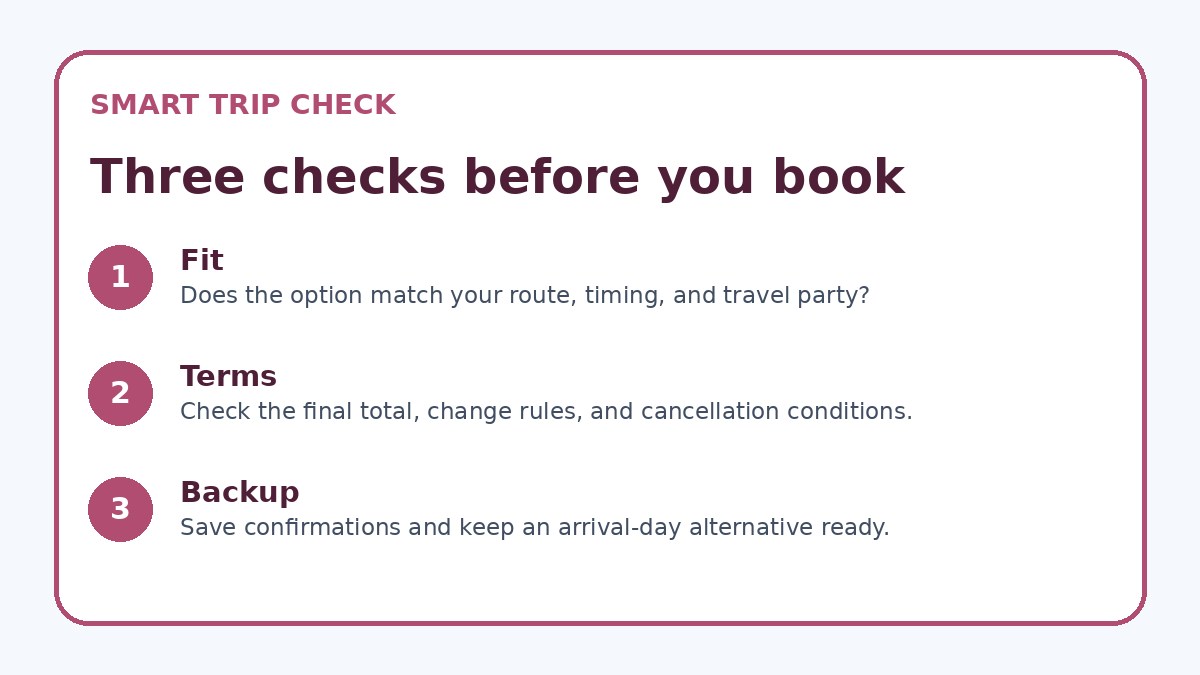
- Set price alerts for exact travel dates, traveler count, flight cabin and hotel room type before evaluating any deal.
- When an alert triggers, open the package’s itemized breakdown and copy the component details for side-by-side comparison.
- Check baggage allowances, seat selection rules, and loyalty‑earning eligibility for any flight included in a deal.
- Confirm the hotel’s cancellation policy, check‑in time, and whether corporate rates or receipts will be provided for expense reporting.
- Ask the provider: will changing one component (flight or hotel) cancel the entire package, or can elements be modified independently?
- If your employer has a travel policy, verify the bundled rate aligns with allowable suppliers, payment method, and rebooking procedures.
Flexibility: avoid locked-in plans for uncertain meetings
Business travel often carries schedule risk. A nonrefundable package can look cheap until a meeting moves by a day or a flight time shifts. Prioritize options that allow free changes within a reasonable window or that separate flight and hotel change penalties. If your company requires travelers to be able to rebook last-minute, factor the cost of that flexibility into the comparison rather than assuming the lowest fare is the better choice.
Also consider partial flexibility: sometimes you can secure a refundable hotel while buying a cheaper, restricted flight — or vice versa — and balance cost and adaptability. Confirm whether changing one component in a package forces cancellation of the whole booking. If that’s the case, splitting the booking might cost a little more but save time and headaches when schedules change.
Traveler-specific value and final terms to verify
Different business travelers value different things. A salesperson with client dinners will prioritize hotel location and refundable arrival times; an analyst on a tight schedule may value the earliest possible departure. Decide which components are mission‑critical for your trip and weight them when evaluating a package. For example, a closer hotel that saves local travel time may trump a slightly cheaper bundled rate that puts you across the Bay from your meetings.
Before booking, verify the final terms on the provider’s booking page: exact cancellation windows, change fees, refunds processing time, any required documentation for reimbursements, and contact channels for emergency changes. If you’re booking through a corporate travel tool, confirm policy compliance and whether the platform will handle itinerary changes or if you must contact the vendor directly. Trip.com can be one place to compare current availability and terms, but always validate details with the provider that will issue the ticket or voucher.
Travel Deals & Booking Strategy questions travelers ask
How should I set price alerts so they’re useful instead of tempting impulse bookings?
Create alerts that target exact travel dates, traveler counts, cabin or fare classes, and specific hotel room types. Narrow alerts to your likely travel windows to avoid being notified about irrelevant cheap fares on other dates or solo traveler fares when you’re booking for a team. Set alert thresholds that require a minimum percentage change or a specific fare class, and schedule a short evaluation period (for example, 24–48 hours) after an alert before making a decision. That buffer turns alerts into prompts to research rather than triggers to buy.
If a bundle looks cheaper, how do I avoid a false saving?
Compare the exact same dates, number of rooms, traveler types, and inclusions when evaluating a bundle. Itemize taxes, fees, baggage, transfers, and loyalty impacts for both the bundle and separate bookings. Calculate the total out‑of‑pocket cost for realistic scenarios, including likely change fees or the cost of adding a checked bag. If changing one component would cancel the whole package, add the expected rebooking cost to the bundle price when deciding.
What are the key provider terms to check on the final booking page?
On the provider’s final booking page verify cancellation and change windows, exact refund processing times, any nonrefundable fees, and how changes are handled for each component. Confirm who issues the travel documents, the contact method for urgent changes, and whether your reservation will earn loyalty points. For corporate travelers, also ensure the payment method and supplier meet company policy and that receipts include itemized charges for expense reporting.
Final decision note
Price alerts are powerful for San Francisco business travel when used deliberately: configure alerts narrowly, treat notices as signals to compare rather than commands to buy, and always verify inclusions and flexibility on the provider’s booking page. Match dates, traveler counts, and component-level terms to reveal true savings, and weigh the value of refundable options against small headline savings. By following a short evaluation checklist and understanding your priority (schedule flexibility, proximity to meetings, or loyalty benefits), you can use alerts to improve your itinerary without inviting last-minute disruptions or expense headaches.
Continue planning
Check current options and final conditions
Use the provider page to confirm live availability, the final total, cancellation terms, and every condition that matters to your trip.
This evergreen planning guide was created with AI-assisted drafting and a structured quality review. It does not display live prices, schedules, availability, visa guidance, or provider rankings. Verify current details before booking. Some links are affiliate links; we may earn a commission at no additional cost to you.