Decide where to stay in Rome before hunting for flexible booking deals. For solo travelers, neighborhood choice shapes daily safety, how many attractions you can reach on foot, and whether a hotel’s booking terms actually fit your plans. Look for short free-cancellation windows, options to pay at the property, and accessible check-in times if you arrive late. Prioritize hotels that clearly state what happens for no-shows, last-minute changes, or early departures. This guide compares four area-selection approaches—historic center walking base, transport-hub convenience, trendy local neighborhoods, and budget-conscious outskirts—so you can shortlist an area and then compare flexible cancellation, payment methods, and front-desk support on the provider’s final booking page.

Check live stays in the areas that fit
Use your dates and party size to compare current rooms after you narrow the neighborhood fit.
Neighborhood fit: choose the stay that matches your daily plan
Start by mapping your priorities: museum-heavy days, evening dining and nightlife, or relaxed neighborhood strolls. If your plan is museum-focused and you’ll spend mornings at Vatican or Capitoline museums, being near central stops reduces transfers and the chance you'll miss a flexible check-in window due to delays. Solo travelers who want evening freedom may prefer lively, well-lit neighborhoods with late-hour amenities. Consider how pocket-sized your daily radius will be—staying where most activities sit within 20–30 minutes walking keeps transit variables low and makes flexible cancellation less likely to be needed.
Think about safety and comfort as part of fit: quieter streets at night and a reliable 24-hour reception help solo guests who arrive late or change plans. Neighborhoods with plenty of cafes, pharmacies, and transport nodes provide fallback options if a booking needs to be adjusted on short notice. If you prioritize social opportunities, choose an area with hostels or small hotels that list communal spaces. Match your expected daily rhythm to the neighborhood to minimize friction and reduce the number of contract changes you might request from a property.
Choose an area-selection strategy
| Area approach | Best for | Tradeoff to check |
|---|---|---|
| Historic-center walking base | Sightseeing-focused solo travelers who prioritize walking to major attractions. | Higher nightly rates and busier streets, so flexible policies matter more; confirm cancellation windows and late-checkin options. |
| Transport-hub convenience | Solo travelers arriving late or making day trips by train or bus. | Noise and bustle; verify 24-hour reception, luggage storage, and payment-at-hotel options to avoid penalties. |
| Trendy local neighborhoods | Those seeking nightlife, cafes, and a more local feel with social opportunities. | Smaller properties may have stricter policies—confirm guest and visit rules plus clear modification terms. |
| Budget outskirts with metro links | Cost-conscious solo travelers willing to trade convenience for savings and quieter nights. | Longer daily commutes increase risk of schedule changes; prioritize generous cancellation and flexible payment terms. |
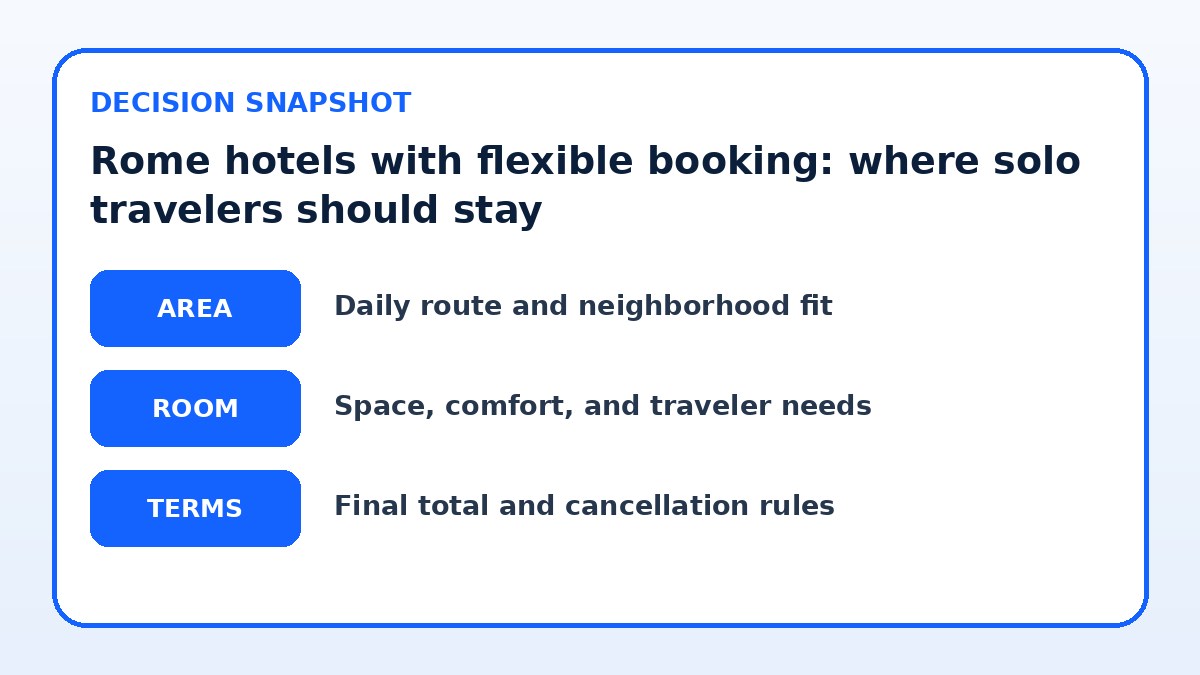
Daily-route friction: how transit and walking affect flexible needs
Daily-route friction is the extra time and stress created by transfers, waiting for buses or trains, and lugging luggage between stops. Solo travelers should realistically estimate walking distances with luggage and the reliability of public transit during the times they’ll travel. If you have a late arrival, longer transfers increase the chance you’ll need to alter check-in times. When comparing hotels, note whether the property documents late-checkin procedures and offers luggage storage—both lower the risk of paying penalties if travel delays force you to arrive outside standard check-in.
Also examine the likely pace of your daily routes: are you planning multiple neighborhoods per day or one home base with short walks? Single-base days reduce exposure to delays and make free-cancellation windows more useful because changes typically affect only one booking. When routes are multi-location and timed tightly, prioritize bookings with lenient change policies and pay-at-stay options so you can adjust without upfront financial penalties. Keep a realistic buffer for transport strikes or schedule changes; confirm provider policies on unexpected arrival disruptions before booking.
Now compare like with like
Keep the same dates, guests, room needs, and cancellation preferences while you compare the final choices.
Room and party needs: sizing flexible terms to solo traveler realities
Solo travelers usually need a safe private room, reliable Wi-Fi, and a clear policy on single-occupancy pricing. Look for rooms that explicitly list the number of guests included, any extra-person fees, and whether booking platforms or the property itself handles disputes. If you plan to meet other travelers, ask whether the property permits short visits from guests and whether there are curfews or overnight guest fees. These rules can affect whether you need to change a reservation mid-trip and should be checked on the booking page or by contacting the property directly.
Payment methods and deposits are critical for single travelers managing a budget or flexible itinerary. Prefer properties that offer pay-at-hotel or free prepayment cancellation—especially if your arrival date is uncertain. Where prepayment is required, check whether refunds are processed by the hotel or via the booking platform and how long refunds usually take. Verify identification and security deposit requirements so you’re not surprised at check-in; when details are unclear online, message the hotel before confirming and save written replies for reference.
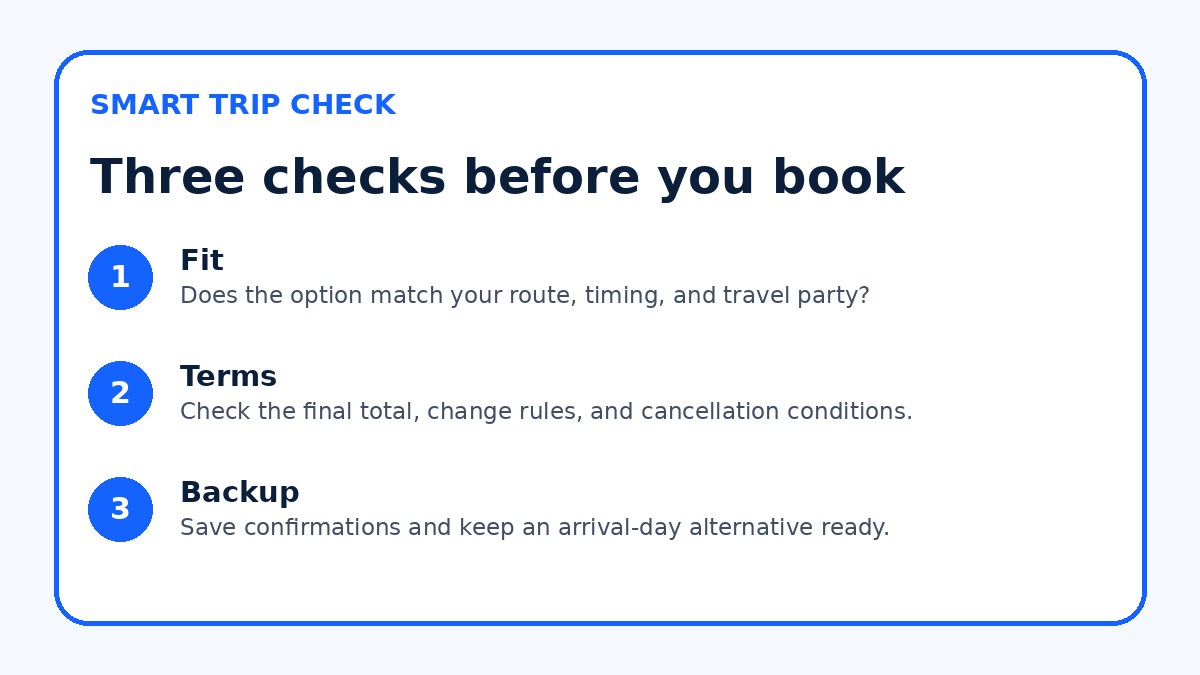
Hotel booking check before payment
- Choose a shortlist of 2–3 neighborhoods that match your daily plan and list the top three sites you want within walking distance of each.
- On each hotel listing, copy the exact cancellation deadline and penalty wording into your notes or take a screenshot before booking.
- Confirm whether payment is required up front or at the property and record who handles refunds—the hotel or the booking platform.
- Message the property to ask about late-checkin, luggage storage, and emergency contact procedures; save their reply for reference.
- Verify guest and overnight-visitor rules if you expect to meet people; ask explicitly about any additional fees or curfews.
- Check whether the property offers travel insurance options or accepts third-party protections, and compare those terms with your card benefits.
Final booking terms: what to compare before you click reserve
Before booking, compare four contract elements: cancellation windows and penalties, prepayment versus pay-at-hotel, modification policies for dates and guest counts, and check-in/arrival procedures including late arrivals. Don’t assume standard hotel policies; platform listings sometimes summarize terms differently than the property’s own terms. When flexibility is a priority, prioritize options that state a free cancellation period with a clear deadline, allow limited changes without penalty, and accept payments at the property. If a listing is ambiguous, contact the property or the booking platform to get the exact wording.
Also confirm who processes refunds and how long the refund timeline is; this affects how quickly you’ll get money back if plans change. If insurance or third-party travel protections are part of your plan, check whether refunds are reduced by unrecoverable fees. Verify the hotel’s policy for no-shows and early departures, and whether emergency arrivals outside normal check-in are handled with additional charges. Save screenshots or PDFs of the final terms and any email confirmation so you can reference the exact conditions if you need to request a change.
Hotel Guide questions travelers ask
How far in advance should a solo traveler book a hotel in Rome if they want flexible cancellation?
Book once you’ve chosen a neighborhood but before the flexible-cancellation window you want closes. Many properties offer free cancellation up to a defined deadline—often several days before arrival—but that period varies by property and rate type. If your plans are uncertain, choose a rate that explicitly lists free cancellation and pay-at-hotel where possible. When availability is tight, balance the need for flexibility with realistic travel certainty; always save the cancellation terms and contact the property if you need to extend or change that window.
What payment and deposit practices should solo travelers expect and verify?
Expect a range: some hotels require full prepayment, others take a card guarantee with payment at check-in, and some allow pay-at-hotel without pre-authorization. Verify whether a security deposit is held on your card, the method used to process refunds, and whether third-party platforms or the property itself issues refunds. These differences affect how quickly you’ll recover money if you cancel. If the listing isn’t clear, contact the hotel and request written confirmation of payment, deposit, and refund procedures before confirming your reservation.
If my arrival is delayed, what booking terms should I have confirmed in advance?
Confirm the hotel’s late-checkin policy, whether the reception is 24 hours, and if they accept after-hours check-in with extra instructions. Also verify luggage storage availability and any fees for storing baggage before check-in. If you expect a significant delay, inform the property with your updated arrival time and keep the message thread. Check the no-show terms so you know how long the hotel will hold your reservation without arrival. When in doubt, pick properties with explicit, written procedures for late arrivals and flexible reassignment of rooms.
Final decision note
For solo travelers in Rome, neighborhood choice is the foundation of a low-stress trip: it shapes daily walking distances, evening safety, and how often you’ll need to amend bookings. Once you’ve shortlisted 2–3 neighborhoods that match your itinerary, compare hotels primarily on four contract points—cancellation deadlines, payment method and refund handling, modification policies, and arrival procedures. Don’t rely on summary blurbs: copy exact terms, message the property with specific questions, and save confirmations. If you want a single site to check live availability, Trip.com is one option to compare current listings, but always verify the final terms on the hotel’s booking page before you pay.
Continue planning
Check current options and final conditions
Use the provider page to confirm live availability, the final total, cancellation terms, and every condition that matters to your trip.
This evergreen planning guide was created with AI-assisted drafting and a structured quality review. It does not display live prices, schedules, availability, visa guidance, or provider rankings. Verify current details before booking. Some links are affiliate links; we may earn a commission at no additional cost to you.