Practical answer first: don’t judge a Singapore travel deal on headline price alone. For business travelers the total cost includes flights, hotels, local transport, meals, visa or arrival documentation requirements, and—critically—flexibility to change plans without punitive fees. A bundled package can simplify bookkeeping and approvals, but only if its inclusions match your priorities and its change/cancellation policy fits likely itinerary shifts. Before you commit, create a single comparison line that holds the same dates, traveler names, meeting schedules, and baggage needs. Then compare four things: what’s included, how changes are handled, who the provider is and the provider’s final booking terms, and the out‑of‑pocket costs for likely plan changes. This article walks through those comparisons, shows common tradeoffs, and gives a clear checklist to run through before sending that purchase request.
Test package value fairly
| Booking approach | Best for | Tradeoff to check |
|---|---|---|
| Pre‑packaged bundle (flight + hotel + transfers) | Travelers needing a single confirmation and simplified expense reporting | May lock you into less flexibility or lower loyalty accrual; verify change rules and exact inclusions. |
| Book flight and hotel separately through corporate channels | Maximizing loyalty benefits and flexible amendment options | Requires more time to assemble; you must separately manage transfers and sync schedules. |
| Use an online agent’s custom package | Groups and multi‑stop itineraries where coordination reduces admin work | Agent fees or constraints on directly changing components can add delay or extra cost. |
| Lowest‑fare split booking with upgrades added separately | Cost‑sensitive travelers who can tolerate complexity and downgrade risk | Apparent savings may vanish with change fees, upgrade costs, or mismatched terms across suppliers. |
Check current package and separate options
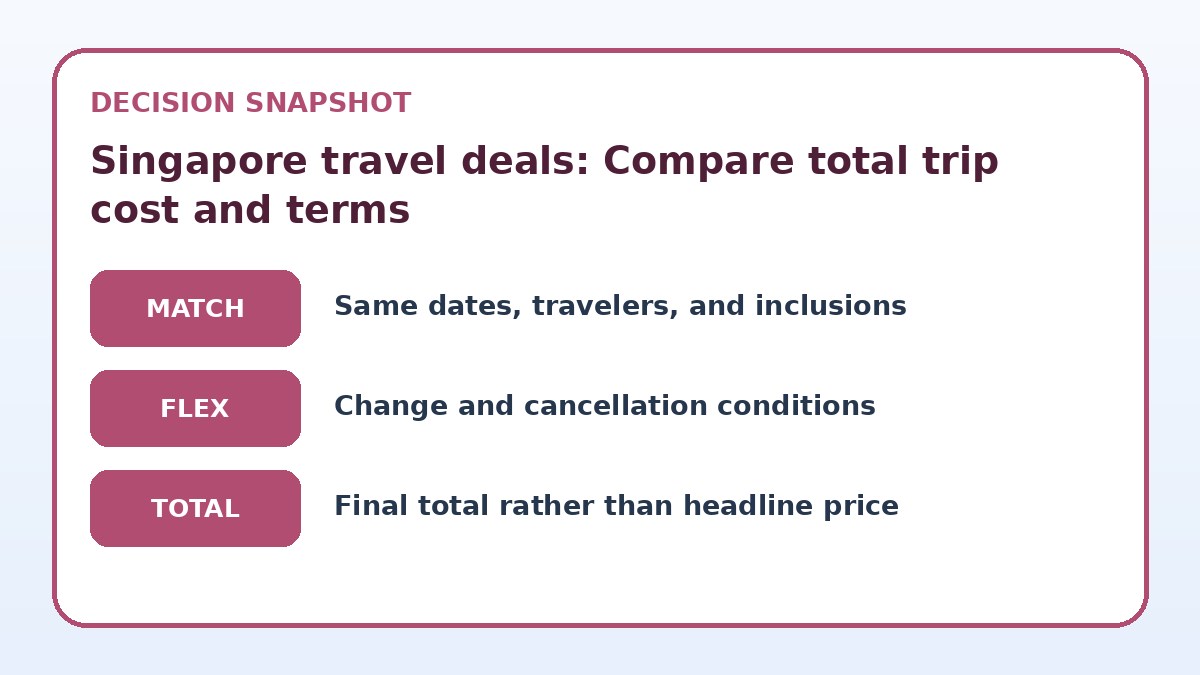
Use identical dates, travelers, room needs, baggage, and flexibility so the comparison stays meaningful.
Inclusions: list and quantify what you really need
When comparing Singapore travel deals, start by inventorying everything you need for a business trip: flights (including class and baggage), hotel room type and board basis, airport transfers, local transport allowance, meals, and any meeting or conference fees. Put these line items into a simple spreadsheet or expense template so you compare like for like. Don’t assume the same label means the same service—an “airport transfer” might be a shared shuttle, a private car, or a voucher for ride‑hail credit. Note whether any component is conditional (for example, a hotel breakfast included only on certain rates) and mark those conditions.
Quantify the business value of each inclusion. A hotel closer to your client can save an hour of commuting per day, which might be more valuable than a cheaper rate farther away. If your company requires premium seating or extra baggage for demos, those must be priced in. For meals, consider per diem rules or corporate card limits. For each inclusion, record who pays refunds or change fees and how credits are issued; knowing whether vouchers are transferable or time‑limited will affect the deal’s real worth.
Flexibility: change and cancellation rules you must verify
Flexibility is the linchpin for most business travelers. Large employers often have shifting meeting dates or last‑minute approvals, so a non‑refundable bundle can become expensive. Don’t rely on third‑party summaries—go to the provider’s final booking page and read the exact change, name‑change, and cancellation terms for each component. Confirm whether fees are per passenger, per segment, or a flat fee; whether refunds are cash or travel credit; and the timeline for making changes without penalty. Make note of any blackout dates or conditions under which refunds are disallowed.
Also check who you contact to request changes. Bundles booked through an agent may require you to use that agent for changes, which can add wait time and service fees. If your company requires fast rebooking, prefer options with direct airline and hotel amendment paths. Finally, estimate likely change scenarios—a delayed flight, a canceled meeting, or a one‑day extension—and calculate the out‑of‑pocket cost for each scenario so you can compare expected value rather than sticker price.
Look past the headline total
Compare inclusions and change conditions before deciding whether a package is genuinely useful for this trip.
Deal comparison checklist
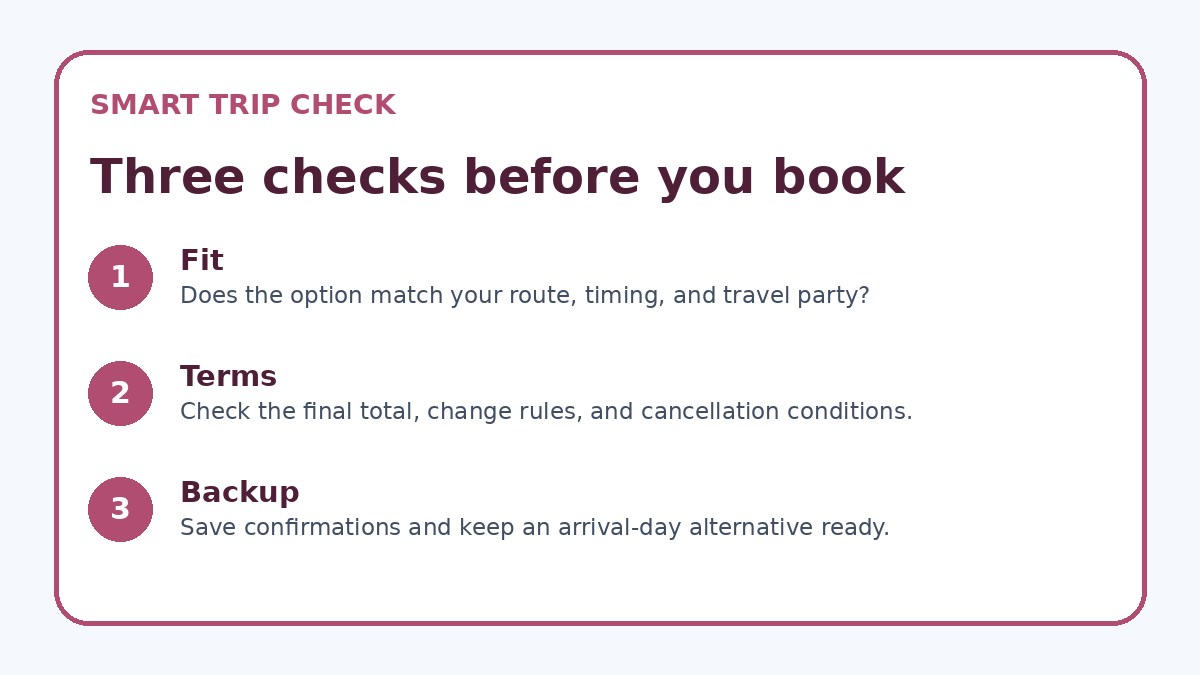
- Match the same travel dates, traveler names, and meeting schedule across every quote before comparing prices.
- Open the provider’s final booking page and copy the exact change and cancellation rules for flights and hotels.
- Confirm baggage allowance, seat selection rules, and whether the fare qualifies for loyalty points or corporate rates.
- Estimate the cost of three likely change scenarios (one‑day shift, one‑passenger cancellation, extended stay) and add to the quote.
- Check who handles amendments (agent or supplier) and how long refunds or credits typically take to post.
- Save PDFs or screenshots of the exact terms and attach them to the corporate approval or expense form.
Traveler-specific value: corporate rules, loyalty, and productivity
Every business traveler has different priorities. Some travelers must remain within corporate per diem; others aim to maximize loyalty program accrual or require elite benefits like lounge access and flexible check‑out. When comparing Singapore travel deals, map each option against your company’s travel policy and the traveler’s status. If a bundled rate impedes loyalty accrual or doesn’t qualify for corporate allowances, any short‑term savings may be offset by lost benefits or out‑of‑pocket charges for upgrades.
Think also about productivity impacts. A slightly higher hotel rate that reduces commute time or offers a quiet workspace can be worth it for important meetings. Consider local connectivity—does the hotel have reliable business facilities or a fast, secure Wi‑Fi? If you regularly need meeting rooms or printing, check whether those are included or charged separately. Assign a dollar value to productivity gains where possible and fold that into the total trip cost comparison.
Final terms: verification steps before you authorize payment
Before you book, run through a final verification checklist: match traveler names and dates; confirm baggage, seat assignments, and hotel room category; and validate change and cancellation rules on the supplier’s live page. If the deal includes third‑party partners, check whether the liability for mistakes or service failures falls to the agent or the underlying provider. For corporate approval, collect screenshots or PDF copies of the final terms to attach to the expense or purchase request.
If a travel policy requires pre‑approval for non‑refundable purchases, prepare an estimated worst‑case cost for changes and include it in your justification. When possible, include contact information for emergency assistance and note the timeframe for refunds or credits. As a last step, check current availability on a site such as Trip.com to confirm dates and conditions, but always rely on the provider’s final booking page for contract terms and fees.
Travel Deals & Booking Strategy questions travelers ask
Is it cheaper to buy a Singapore package or book components separately for business travel?
There’s no universal answer—savings depend on matching inclusions and flexibility to your needs. A package can reduce time spent reconciling invoices and may bundle airport transfers or breakfast that you would otherwise buy separately. However, separate bookings often preserve loyalty accrual and allow selective upgrades. The correct approach is to compare identical traveler names, dates, baggage, and change rules, and then estimate the likely cost of one or two realistic changes. That gives you a practical total cost rather than a misleading headline rate.
What specific terms should corporate bookers verify on the supplier’s final page?
Always verify change and cancellation fees, refund timing and format (cash versus credit), transferability of vouchers, baggage and seating rules, and exact room category or meal plan. If seats or rooms are held pending payment, check the hold deadline and deposit requirements. Also confirm whether the booking is ticketed immediately or if name changes are allowed later. These are contractual details that determine real exposure if plans change.
How do I account for productivity and convenience when comparing Singapore travel deals?
Assign a monetary or qualitative value to factors like reduced commute time, guaranteed workspace, reliable Wi‑Fi, and proximity to meetings. For example, a closer hotel might save hours and reduce risk of late arrivals—translate that into a value per hour for decision makers. Include anticipated ground‑transport time and local traffic impact. Add these values to the pure monetary comparison so your choice reflects both cost and business effectiveness.
Final decision note
For business travelers booking Singapore travel deals, the smartest choice comes from comparing total, realistic costs—not just headline prices. Inventory inclusions, confirm flexibility and amendment paths on the provider’s final booking page, and estimate the cost of typical itinerary changes. Factor in corporate rules, loyalty impacts, and productivity‑related benefits like location and business facilities. Use the checklist to create documented comparisons that will satisfy approvers and protect your company against surprise fees. When in doubt, prefer options that let you change plans quickly with minimal cost, because schedule certainty often matters more than a small upfront saving.
Continue planning
Check current options and final conditions
Use the provider page to confirm live availability, the final total, cancellation terms, and every condition that matters to your trip.
This evergreen planning guide was created with AI-assisted drafting and a structured quality review. It does not display live prices, schedules, availability, visa guidance, or provider rankings. Verify current details before booking. Some links are affiliate links; we may earn a commission at no additional cost to you.