Practical answer first: pick a hotel neighborhood close to your arrival hub (LAX, Van Nuys, or a central rail/bus station) with 24-hour front desk options, easy pickup/drop-off, and flexible luggage handling. If you land late with extra bags, prioritize neighborhoods with straightforward late-night ground transport, on-site or nearby luggage storage, and simple walking routes to meals and essentials. That narrows many options quickly: choose airport-adjacent for minimal transfer effort, Hollywood or West Hollywood for late-night dining and short taxi rides if you want city energy, Downtown L.A. for transit connections and dense services, or Westside neighborhoods like Santa Monica or Culver City if you prefer an easier next-morning start. Below you’ll find the practical tradeoffs, daily-route friction to expect, room and party considerations, and the exact booking terms to check before you finalize a Los Angeles hotels reservation.

Check live stays in the areas that fit
Use your dates and party size to compare current rooms after you narrow the neighborhood fit.
Neighborhood fit: pick the right base for a late, luggage-heavy arrival
Begin by matching your arrival point and energy level to a neighborhood. If you arrive at LAX late and want to minimize time moving bags, target airport-adjacent areas or neighborhoods with short, direct rides from the airport. If you prefer to land and immediately be in a city-centre atmosphere with late-night dining and 24-hour services, Downtown L.A., Hollywood, and West Hollywood offer more around-the-clock options. For a quieter next morning and easier parking or vehicle access, think about Westside neighborhoods like Culver City or Santa Monica—though they may require longer transfers from the airport after midnight.
Also consider what you’ll do first thing the next morning. If you need to reach a specific business district, event, or rental-car pickup, choosing a neighborhood that shortens that first-day commute reduces friction. For example, staying near union stations or major bus corridors makes returning to transit easier. Finally, check whether the neighbourhood has visible 24-hour services—pharmacies, convenience stores, or eateries—so you can handle any immediate needs without navigating multiple rides with heavy luggage.
Choose an area-selection strategy
| Area approach | Best for | Tradeoff to check |
|---|---|---|
| Airport-adjacent neighborhoods | Minimizing transfer time and handling multiple heavy bags immediately after arrival. | Less urban character and fewer late-night dining options within short walking distance. |
| Downtown urban core (DTLA) | Access to 24-hour services, transit hubs, and late-night amenities for immediate needs. | Can be busy, with more street-level navigation and occasional longer rides from the airport. |
| Hollywood/West Hollywood | Late-night dining and short taxi rides; good for solo travelers or small groups who want nightlife. | Heavier traffic and fewer large on-site parking or storage options at some boutique hotels. |
| Westside neighborhoods (Santa Monica, Culver City) | A calmer morning and easy daytime access to beaches or business districts. | Potentially longer transfers from major arrival points late at night and fewer 24-hour services. |
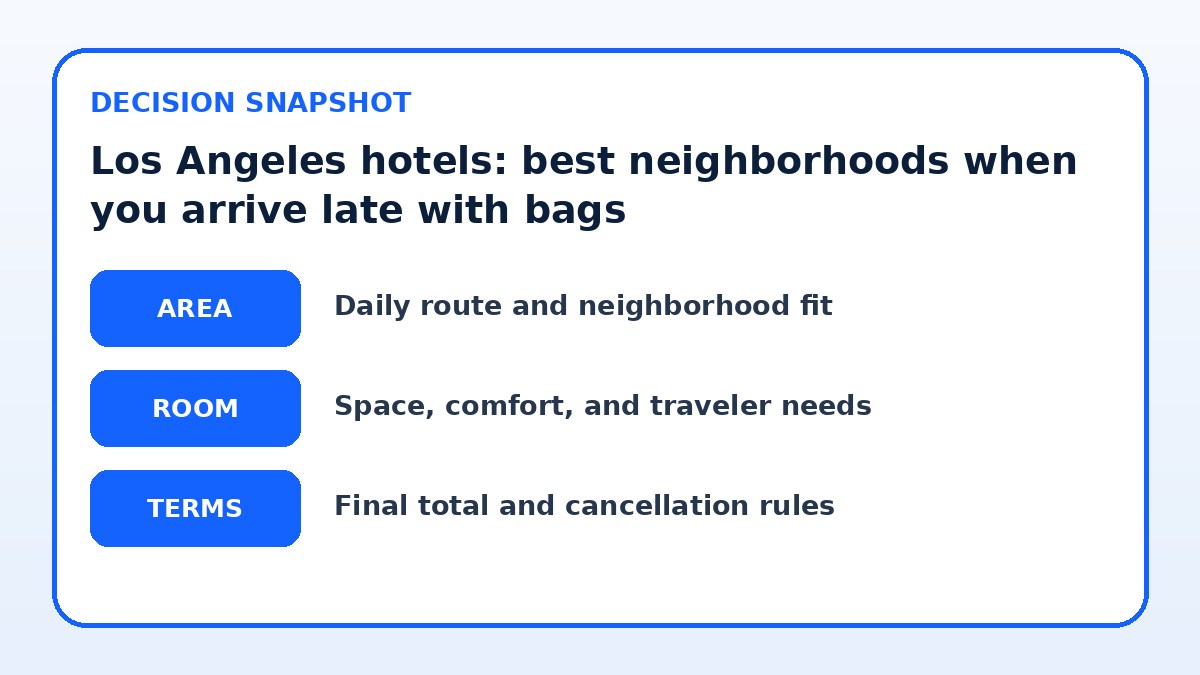
Daily-route friction: how late arrival choices shape the rest of your day
Your late-night neighborhood decision affects the next 24 hours. A hotel near transit hubs reduces the stress of moving large bags onto crowded trains or buses; conversely, a quieter residential area may mean a cleaner sleep but a longer morning transfer. Consider the typical door-to-door sequence: plane to taxi/rideshare to hotel, then hotel to breakfast, then your planned daytime activities. Each extra taxi or shuttle increases the handling of heavy luggage and adds coordination time. If you plan to use public transit the next day, prioritize hotels within a short, luggage-friendly walk to the nearest metro or major bus stop.
Think about last-mile logistics: does the hotel offer covered drop-off areas, luggage carts, or a bell desk that will accept late arrivals? If you intend to rent a car the next day, neighborhoods with easy road access and straightforward parking matter more than proximity to nightlife. Also weigh safety and well-lit walking routes if you expect to walk from a late-night ride share. These small frictions add up—pick the neighborhood that minimizes the kind of movement (walking with bags, stair navigation, platform transfers) you most want to avoid after a late arrival.
Now compare like with like
Keep the same dates, guests, room needs, and cancellation preferences while you compare the final choices.
Room and party needs: sizing rooms and services for extra luggage and companions
Match room size and layout to how much luggage you have and who’s traveling with you. Larger suites, connecting rooms, or rooms with extra closet and floor space make staying with multiple checked bags easier—look for explicit mentions of rollaway availability or extra wardrobes on the property listing. If you travel with instruments, sports equipment, or multiple suitcases, request a ground-floor room or one near the elevator to reduce stair-carrying. For groups, connecting rooms can be more convenient than a single cramped room, but verify the door configuration and whether the hotel charges for additional guests or rollaway beds.
Services matter as much as square footage. Confirm that the hotel’s front desk can accept a late check-in and whether bell service or luggage storage is available before check-in and after check-out. If you plan to arrive before standard check-in time the next day, ask about securing bags overnight. If family members or older travelers are in your party, prioritize accessible rooms and properties that explicitly list wheelchair accessibility, elevators, and low-threshold entries. On the booking page, verify the exact room bedding, occupancy limits, and any policies about extra beds or large items so you avoid surprises when you arrive late.

Hotel booking check before payment
- Confirm the hotel’s official late check-in policy, and save a contact number to call if your arrival is delayed.
- Ask the hotel if they provide luggage storage or bell service for late arrivals, and where to drop bags if needed.
- Request a ground-floor room or a room near the elevator if you have oversized suitcases or mobility needs.
- Check transportation options from your arrival hub and estimate taxi or rideshare pickup points versus shuttle stops.
- Verify the hotel’s policy on extra guests or rollaway beds and whether there are additional fees before booking.
- Note the hotel’s exact address and safe drop-off point for driver instructions to avoid long walks with heavy luggage.
Final booking terms: what to verify on the hotel page before you reserve
Before you hit confirm, check four things on the hotel’s booking page: late check-in policy and contact number, luggage-handling options (bell service or storage), any additional fees for late arrivals or extra guests, and the exact address for planning your ride. Don’t rely on assumption—property descriptions and photos can mislead about accessibility and service hours. If the page is unclear, call or message the property to confirm how they handle arrivals after local midnight. Trip.com can be a place to compare availability and conditions, but always verify the final details on the hotel’s own booking page or by contacting the property directly.
Also confirm cancellation and modification terms so plans can flex if your arrival time changes. Note whether the property requires a security deposit or pre-authorization at check-in, and whether they offer a luggage-hold after checkout. Finally, read guest instructions about after-hours check-in—many hotels use lockboxes, key codes, or night reception staff, and these differ widely. Knowing the exact process in advance prevents long waits outside with heavy bags and keeps your late-night arrival simple.
Hotel Guide questions travelers ask
Can I book a late check-in at most Los Angeles hotels if my flight lands after midnight?
Many Los Angeles hotels accept late check-ins, but policies vary widely by property. Before booking, look for explicit late-arrival or 24-hour front desk statements on the hotel’s booking page and save their after-hours contact. If the policy isn’t clear, contact the hotel directly and explain your expected arrival time; ask how they handle key delivery or if they use lockboxes or night reception. Be prepared to provide a flight or arrival estimate and follow any specific instructions the hotel gives to avoid waiting outside with luggage.
What’s the safest way to handle oversized luggage during a late arrival in Los Angeles?
Plan to use a vehicle with a convenient drop-off point to minimize walking with large bags: taxi, rideshare, or an airport shuttle with curbside service. Choose a hotel that confirms bell service or on-site luggage storage for late arrivals, and request assistance when you make the reservation. If you arrive before check-in and cannot access your room, ask the front desk to hold bags securely rather than leaving them unattended. Always verify the hotel’s storage hours and any documentation they require to collect stored items.
Should I prioritize proximity to LAX or being in a central neighborhood when I arrive late?
That depends on your priorities. Prioritize proximity to LAX if minimizing transfer complexity and time with heavy luggage is most important. Choose a central neighborhood—Downtown, Hollywood, or Westside—if you value immediate access to restaurants, evening services, or specific next-day plans. Balance the tradeoffs: airport-adjacent hotels reduce late-night transfers, while central neighborhoods reduce next-morning commutes. Verify transport availability and the hotel’s late-arrival procedures on the booking page before deciding.
Final decision note
When you arrive late in Los Angeles with extra luggage, the right hotel neighborhood reduces stress and saves time. Shortlist by matching your arrival hub, desired first-night amenities, and the amount of luggage you’ll handle: airport-adjacent options minimize transfers, downtown hotels ease access to services, Hollywood offers late-night life, and Westside stays buy you a quieter next morning. Before booking, confirm late check-in procedures, luggage handling, room layout, and any extra-guest rules on the hotel’s booking page or by calling the property directly. With those checks done, you’ll be able to book a Los Angeles hotels stay that keeps a late-night arrival straightforward rather than frazzling.
Continue planning
Check current options and final conditions
Use the provider page to confirm live availability, the final total, cancellation terms, and every condition that matters to your trip.
This evergreen planning guide was created with AI-assisted drafting and a structured quality review. It does not display live prices, schedules, availability, visa guidance, or provider rankings. Verify current details before booking. Some links are affiliate links; we may earn a commission at no additional cost to you.