If you and your partner are booking Seoul to Osaka flights that include a long-haul connection, make comfort the organizing principle: prefer routing with one manageable overnight or a well-timed daytime connection, prioritize through-checked bags and clear minimum connection times, and pick fare conditions that let you recover from delays without expensive penalties. Start by choosing the tradeoff you want most—short total travel time, fewer changes, lower fare, or more legroom and flexible rebooking. Then gather exact travel dates, passport names, seat preferences, and whether you need checked luggage or special assistance. With those details in hand you can compare direct versus connecting itineraries, check baggage transfer rules, and confirm cancellation/rebooking terms before you commit. This guide walks couples through the core routing, baggage/connection risk, schedule fit and fare-condition decisions so you can book confidently and focus on enjoying the trip together.
See live routes for your exact travel day
Compare direct and connecting choices with the same baggage and traveler details.
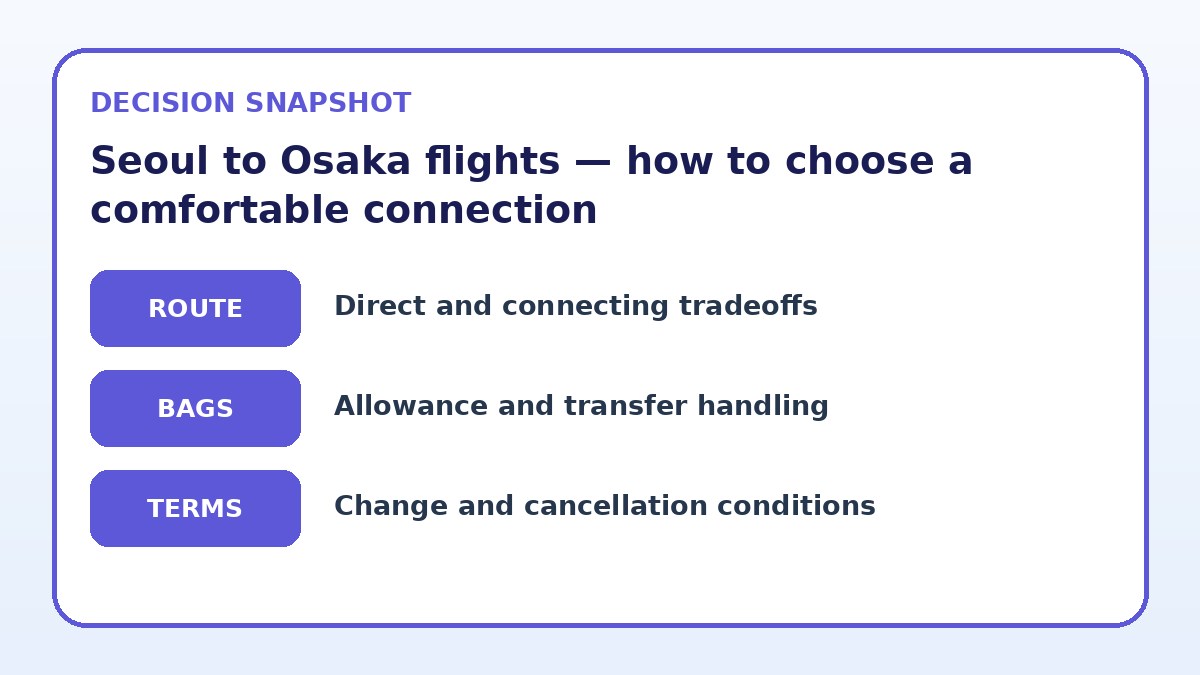
Routing: direct versus one-stop connections
On the Seoul–Osaka corridor you’ll often see a mix of direct and one-stop itineraries. For a comfortable long-haul connection as a couple, treat routing as a comfort-versus-time decision: direct flights reduce the stress of transfers but sometimes route options require a longer total travel time if departure windows don’t match your schedule. One-stop itineraries can be arranged to give a long comfortable transit layover—useful if you want to rest in an airport lounge, leave the terminal briefly, or split the journey into daytime and overnight segments.
When comparing routes, look at the hub where you connect and the airport layout: terminals that require long transfers or security rechecks add fatigue, while compact transfer airports make a tight schedule more feasible. Also check if the connection is overnight in the same terminal and whether lounges, couple-friendly seating areas, or nearby hotels exist if you want privacy between flights. Gather exact flight times and terminal details before you commit so you can visualize the transfer experience together.
Baggage and connection risk for couples
Baggage rules can change how comfortable a connection feels. A through-checked bag that automatically transfers between flights reduces the need to rush and lets you move through the airport unencumbered. If you book separate tickets for each leg, you risk having to collect and re-check baggage—add travel time and stress. Before booking, confirm on the carrier’s or booking page whether checked luggage is included across both legs, whether it will be transferred, and what happens if a connection is missed.
Couples should also plan for contingencies: pack an easily accessible bag with essentials (medication, chargers, a change of clothes) in carry-on so either partner can handle an unexpected delay or bag issue. If one traveler needs special assistance or reduced mobility seating, verify both the assistance procedures and how transfers are managed at the connecting airport. These checks cut the chance of a rushed separation, missed connections, or a long wait for reclaimed baggage.
Compare flight-selection strategies
| Flight strategy | Best for | Risk to check |
|---|---|---|
| Direct nonstop flight | Couples prioritizing the fewest transfers and simplest baggage handling | May offer less convenient departure times or higher fares compared with multi-leg options |
| One-stop with long layover (rest option) | Couples who want a relaxed break to refresh, use a lounge, or split travel into two restful periods | Longer total travel time and potential extra cost for transit amenities or overnight accommodation |
| Tight-connection one-stop (time-saving) | Couples aiming to minimize total travel time and willing to trade stress for speed | Higher risk of missed connections and possible need to rebook at your expense if delays occur |
| Separate-ticket mix (lowest fare focus) | Couples prioritizing the lowest upfront cost and comfortable with managing their own transfers | No through-check protection—higher baggage and missed-connection risk unless you build ample buffer time |
Recheck the complete itinerary
Confirm airports, connection handling, baggage, and change conditions before deciding.
Schedule fit: syncing sleep, meals and time zones
Comfort for couples often comes from shared routines during travel. Choose connections that let you align sleep windows so both partners can rest at the same time—this may mean preferring a nighttime long-haul leg or ensuring a daytime layover with access to quiet lounges. Eating together is another comfort factor: check meal service timing on the long leg and whether you can reserve adjacent seats, so you don’t have to coordinate food and rest separately.
Also consider how arrival time in Osaka will affect your first day. An early-morning touchdown lets you start sightseeing sooner but may require shifting sleep on the outbound leg; a late arrival could justify booking a hotel near the airport for immediate rest. When comparing itineraries, simulate a typical day for you both on arrival and the day after to judge which schedule will leave you feeling rested and ready to enjoy the destination.
Flight details to verify
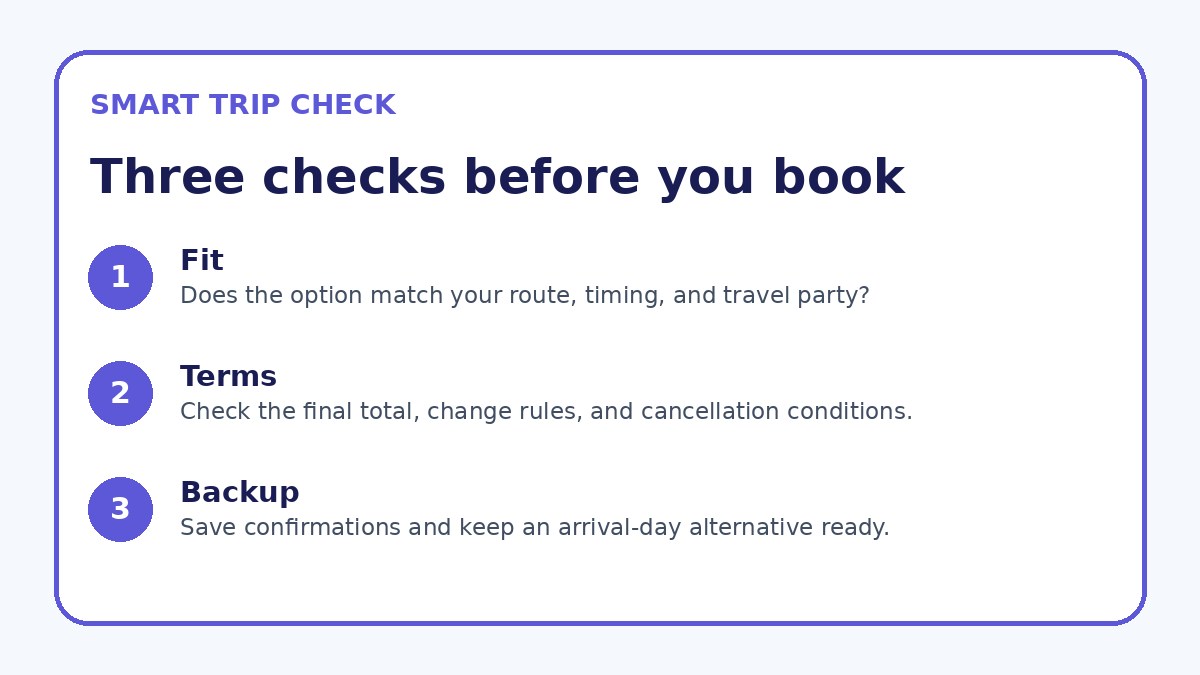
- Write down exact travel dates, full passport names, frequent flyer numbers, and seat preferences before searching fares.
- Confirm on the final booking page whether checked luggage is through-checked between legs and what happens if a connection is missed.
- Choose seats together during booking or immediately after to secure adjacent seating and aligned rest windows.
- Note terminal and transfer procedures for your connecting airport and add at least the airline’s published minimum connection time plus a safety buffer.
- Review the fare conditions on the carrier’s final booking page for change fees, rebooking rules, and refund eligibility.
- Pack a shared carry-on with essentials—medication, chargers, spare clothes, and travel documents—to handle unexpected delays.
Fare conditions and what to verify before booking
Fare rules determine how easy it is to recover from delays or to change plans. For couples, flexibility often trumps the smallest fare savings: look for tickets with at least one free or low-cost change option, a reasonable cancellation window, and clear rules about refunds. Read the carrier’s fare conditions on the final booking page—confirm how rebooking works, whether the fare difference applies, and any change fees. If you mix carriers or book separate tickets, verify who bears responsibility for missed connections.
Also confirm seat assignments and upgrades at the time of booking. Some low-fare classes block advance seat selection or upgrade eligibility which can harm comfort if you need adjacent seats or extra legroom. If you rely on transfer protection from an airline alliance, check the exact coverage and whether the alliance will assist with re-accommodation if one leg is delayed. Use these checks to decide whether to buy a slightly higher fare that includes ticket flexibility and seating choices.
Flight Guide questions travelers ask
Should we book a direct flight or a one-stop connection between Seoul and Osaka?
Choose based on whether you value a simpler transfer or a specific schedule. A direct flight reduces transfer stress and baggage handling, which is comfortable for couples who want a straightforward journey. A one-stop connection can offer more scheduling choices and the chance for a restful layover, especially useful if you want to split the trip into two shorter segments. Compare total travel time, departure/arrival times, and the transfer airport layout; then pick the option that best preserves both partners’ comfort and rest.
How much layover time should we allow to stay comfortable and safe for connections?
Allow at least the carrier’s published minimum connection time plus a safety buffer for walking between gates, security rechecks, or baggage transfer. For couples who prefer to move slowly or use lounges, choose a longer layover to eat, freshen up, or rest without rushing. If terminals are distant or require immigration and re-checking bags, add more time. Always verify terminal transfer procedures on the airline’s booking page and account for both your walking pace and any mobility needs when selecting a layover.
What fare features matter most for couples booking a long-haul connection?
For comfort-minded couples focus on refundable or flexible-change fares, included seat selection for adjacent seating, and through-checked baggage. Flexibility reduces stress if a delay forces rebooking; included seat selection lets you sit together or reserve extra legroom; through-checked baggage avoids carrying luggage between flights. Before paying, read the fare conditions on the final booking page to confirm change fees, refund rules, baggage allowances, and whether the carrier will assist with missed connections when flights are on the same ticket.
Final decision note
Booking Seoul to Osaka flights as a couple is about aligning priorities: do you want the fewest transfers, the most flexible fare, or a gentle layover to rest? Start by collecting exact travel dates, passports and seating needs, then compare direct and connecting itineraries with attention to baggage transfer rules, terminal layouts, and fare change conditions. Choose the itinerary that preserves both partners’ routines—sleep, meals and movement—and pick fare flexibility that reduces rebooking stress. Before you finalize, verify baggage transfer, terminal procedures and the carrier’s rebooking policy on the final booking page. For a quick inventory of current options, Trip.com can show available schedules, but always confirm the carrier’s conditions before payment.
Continue planning
Check current options and final conditions
Use the provider page to confirm live availability, the final total, cancellation terms, and every condition that matters to your trip.
This evergreen planning guide was created with AI-assisted drafting and a structured quality review. It does not display live prices, schedules, availability, visa guidance, or provider rankings. Verify current details before booking. Some links are affiliate links; we may earn a commission at no additional cost to you.