If you’re traveling from Dubai to Doha with more than the typical carry-on or checked bag, your immediate concerns are routing choices and realistic airport time. The right combination of fare conditions, checked-baggage allowances, and connection margins will decide whether you breeze through or spend hours resolving overweight or missed-connection headaches. Start by confirming exact dates, traveler counts, luggage weight and piece counts, and any mobility needs before you shop. With those details you can compare direct versus connecting options, view fare rules that cover baggage, and slot arrival and check-in times into a schedule that absorbs delays. This guide gives a practical plan: how to sort routing and fares, how to decide minimum safe airport time for check-in and transfer, common baggage risks on this route, and the precise items to verify on airline and airport pages before you finalize a booking.
See live routes for your exact travel day
Compare direct and connecting choices with the same baggage and traveler details.
Routing: direct versus connecting when you have extra luggage
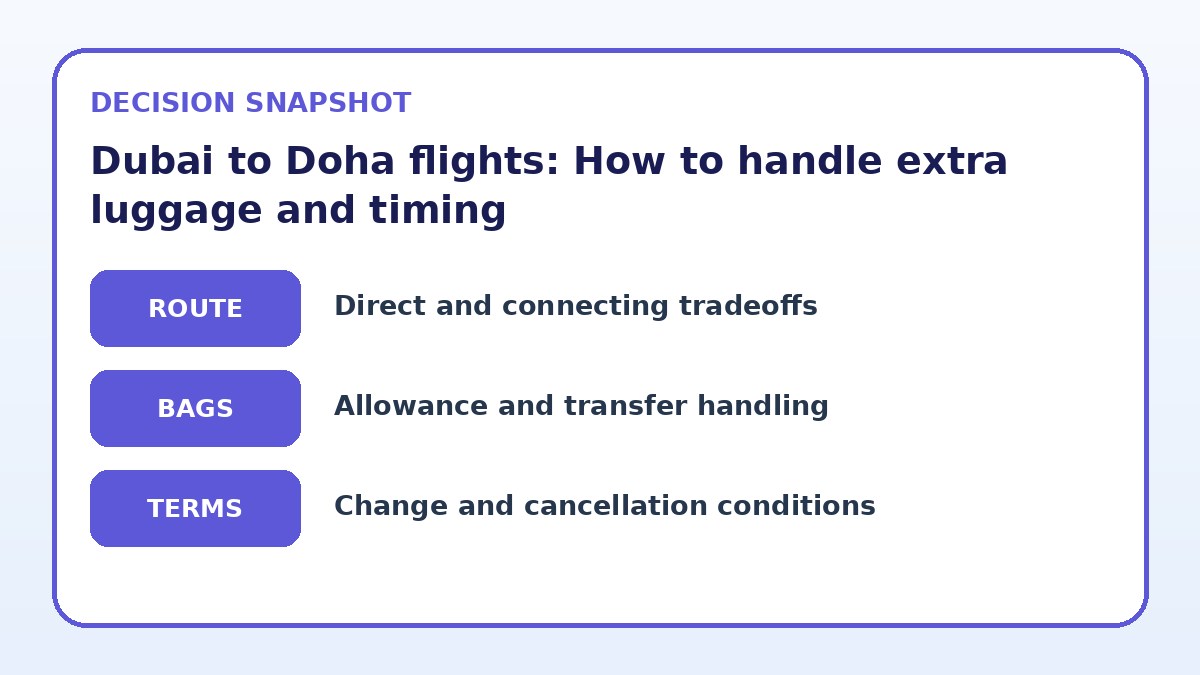
Direct flights reduce the number of times your luggage is handled and lower the chance of a missed connection causing rebooking or delayed baggage. For passengers with bulky items — sports gear, multiple checked pieces, or musical instruments — a nonstop routing usually translates to simpler logistics at both origin and destination and fewer separate baggage attachments. However, direct services may be scheduled at less convenient hours, and available fare classes on those flights may not include the baggage allowance you need. When considering a direct option, always compare the included baggage allowance with what you intend to carry and verify the airline’s size and weight limits for each checked item.
Connecting itineraries can offer more flexibility in price and departure times, but they require careful attention to bag-transfer rules and minimum connection times. If you book separate tickets for legs, you may have to claim and re-check baggage between carriers, increasing both time on the ground and the risk of missed connections. If all legs are on a single ticket with the same airline or interline partners, baggage is usually transferred through, but you should confirm that explicitly. For connections, prefer schedules with ample layover time and check whether the transfer requires changing terminals or re-clearing security, which increases the airport time you must allow.
Baggage and connection risk: what to verify and why it matters
Start by checking the published baggage allowance on the airline’s official booking page for the exact fare class you are considering; do not rely on generic statements. Look for both weight and piece limits, permitted dimensions, and any per-piece maximums, because some carriers enforce a strict piece limit even when total weight would otherwise fit. If you have oversized or heavy items, search the carrier’s special/bulky baggage rules — sports equipment, instruments, and fragile cargo often require advance notice and a separate fee or booking code. When rules are unclear, contact the airline’s baggage team and request written confirmation of allowances and handling instructions so you have evidence at the airport.
Connection risk rises when baggage must be re-checked or when tight transfer windows leave no margin for delays. Confirm whether your itinerary is on a single ticket or separate tickets; single-ticket itineraries usually include through-checked baggage and re-accommodation protections if you miss a connection. If you’re given a through-check promise during booking, note the terminal transfer details and whether you must re-clear immigration; both change how much time you need on the ground. For separately ticketed flights, plan time for baggage pickup, customs if needed, and re-drop, and consider booking protective travel insurance that covers missed connections caused by delays on the first leg.
Compare flight-selection strategies
| Flight strategy | Best for | Risk to check |
|---|---|---|
| Book a direct flight with included baggage | Travelers wanting minimal handling and fewer transfer risks | May limit departure options and could be pricier than connecting fares without baggage included |
| Choose a connecting itinerary on a single ticket with transfer protection | Those needing schedule flexibility while keeping baggage through-checked | Requires longer layovers and careful terminal-transfer checks despite through-check protections |
| Buy the cheapest fare and add baggage online | Travelers who can confirm add-on availability and prefer lower base fares | Risk that online add-ons aren’t available or are more expensive than upgrading fare class |
| Purchase separate tickets for each leg to access specific carriers | Flexible itineraries or combining carriers when schedules are otherwise unsuitable | You may need to reclaim and re-check bags, increasing time and connection risk |
Recheck the complete itinerary
Confirm airports, connection handling, baggage, and change conditions before deciding.
Schedule fit: how much airport time to build in for Dubai to Doha travel
Estimate time at both airports based on your baggage profile: add extra minutes for check-in with oversized luggage, manual tagging, and special handling. For departures, plan to arrive earlier than standard guidance if you expect to pay at the desk, process oversized items, or need gate-check paperwork. Also allow additional time if you must use special counters or cargo/oversized-item facilities, which may be located away from regular check-in rows. At your destination, consider whether overweight or damaged-baggage procedures could delay your exit, and factor extra time for customs queues if you must declare or inspect large shipments.
For connections, accept only itineraries with a realistic buffer beyond published minimum connection times when carrying extra goods. Minimum times often assume typical checked baggage and seamless transfers — not the manual handling bulky items require. If your itinerary involves changing terminals, re-checking bags, or clearing immigration, add at least an hour or more depending on airport layout and peak periods. Finally, keep an eye on flight times relative to road traffic to the airport in Dubai and transport options in Doha; late pickups or ground delays can erode your carefully built buffer and turn a manageable transfer into a stressful one.
Flight details to verify
- Confirm exact travel dates, passenger full names as in passports, and the number and weight of each bag before searching fares.
- On the airline’s final booking page, verify the fare class code and the detailed baggage allowance for that exact class.
- If you carry oversized items, contact the carrier’s special baggage team and request written instructions for check-in and handling.
- For connecting itineraries, confirm whether baggage is through-checked on a single ticket or must be claimed and re-checked on separate tickets.
- Build extra buffer time: add allowance for oversized-baggage processing, terminal transfers, and possible customs checks.
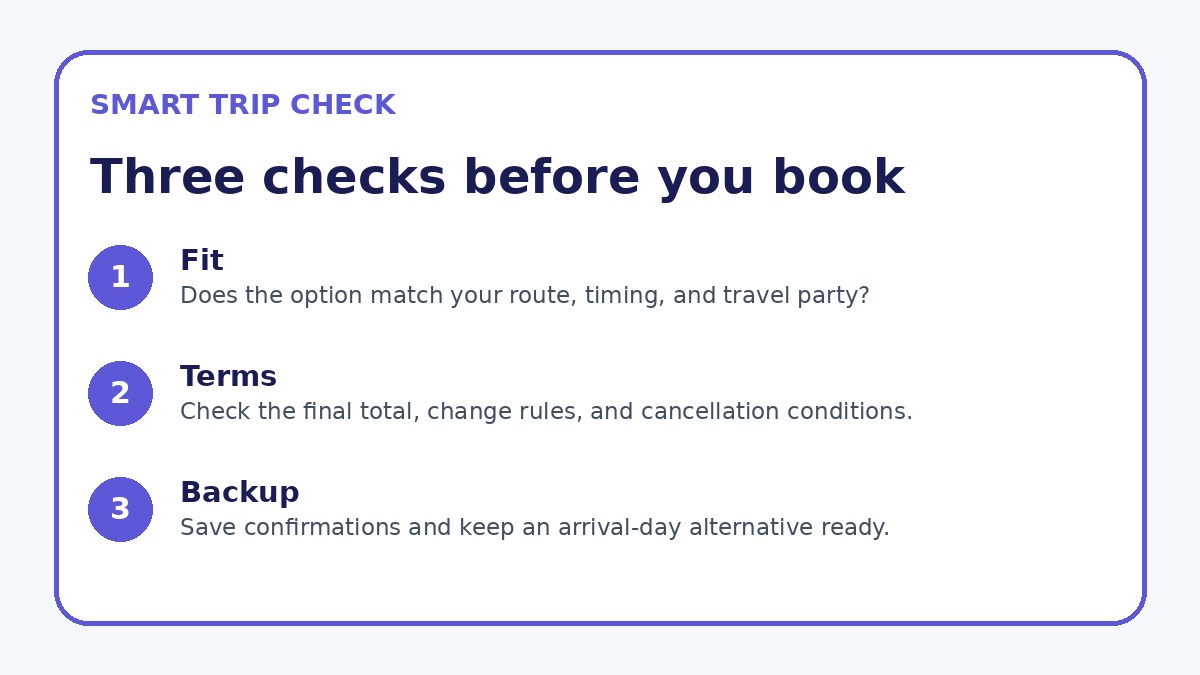
- Save or print booking confirmations and any written baggage permissions; carry a copy at check-in in case counter staff need evidence.
Fare conditions and booking checks to avoid surprises
When comparing fares, look beyond the headline price and read the fare rules for baggage, changes, and cancellations. Some low-fare buckets show a low base fare but exclude all checked baggage or only permit a very small allowance — an upgrade fee at the airport can exceed the cost difference to a higher fare class that includes the baggage you need. Check if the fare permits online add-ons for extra pieces or overweight items and whether those add-ons are available during booking or only at the airport. Also verify whether the ticket is on a single reservation for all legs, which affects through-checking and re-accommodation policies.
Before you click ‘book’, record the exact fare class code, the baggage allowance listed for that class, and any add-on fees shown on the airline’s final booking page. If using a third-party site, cross-check the carrier’s official page because some agents do not display special-baggage restrictions or terminal-transfer notes. For itineraries that require special handling, contact the airline to obtain confirmation and guidance for drop-off procedures. Confirm also whether seat selection is linked to checked-luggage privileges on that carrier — some fare families restrict both together — and print or save all confirmation messages and baggage receipts.
Flight Guide questions travelers ask
How much earlier should I arrive at the airport in Dubai if I have multiple checked bags or bulky items?
If you have multiple checked bags or bulky items, add a significant buffer to standard arrival guidance. Allow extra time for manual weighing, oversized-item handling, and possible cargo or special-counters that operate differently from regular check-in. Consider arriving earlier than typical recommendations so staff can process paperwork, print special tags, and pass any items to a separate handling area. If you’re unsure whether a separate counter is used, call the airline ahead and ask where to present oversized items and whether an appointment or early arrival is suggested.
Will my baggage be transferred automatically on a connecting booking between different carriers?
Automatic transfer depends on whether your legs are on a single ticket and whether carriers have an interline or alliance arrangement. Single-ticket itineraries commonly include through-checking, though exceptions apply for certain carriers and equipment types. If the parts of your journey were booked separately, you should assume you will need to claim and re-check your bags unless the airlines have explicitly confirmed otherwise. Always verify transfer arrangements at booking and get written confirmation if through-checking is critical to your plan.
What documentation or proof should I bring to avoid baggage disputes at the counter?
Bring printed or saved copies of your booking confirmation showing the fare class and stated baggage allowance, plus any email or written confirmation from the airline about special-baggage handling. Carry receipts for purchased add-ons, a list of item weights if you have pre-weighed bags, and photos of any fragile items for claims. If your journey includes items requiring permits or declarations, bring paperwork for those goods as well. Presenting clear documentation at check-in reduces the chance of unexpected fees or disagreements.
Final decision note
Traveling from Dubai to Doha with extra luggage is manageable if you plan deliberately: pick routing that reduces manual handling, verify fare-class baggage rules on the airline’s final booking page, and build generous time buffers for check-in and transfers. Decide early whether the convenience of a direct flight or the flexibility of a connecting itinerary matters more, and then confirm whether baggage will be through-checked or needs re-handling. Before booking, gather exact traveler details and luggage weights, request written confirmations for special items, and save all booking pages. A methodical check of fare conditions and operational procedures will help you avoid last-minute fees and stress at the airport.
Continue planning
Check current options and final conditions
Use the provider page to confirm live availability, the final total, cancellation terms, and every condition that matters to your trip.
This evergreen planning guide was created with AI-assisted drafting and a structured quality review. It does not display live prices, schedules, availability, visa guidance, or provider rankings. Verify current details before booking. Some links are affiliate links; we may earn a commission at no additional cost to you.