Practical answer first: for solo travelers aiming to snag better value in New York City, focus on shoulder seasons—late winter (February–March) and late spring (April–May) or early autumn (September–October)—and compare package bundles to separate bookings on identical dates and traveler counts. Before you accept a package, line up the exact flight times, baggage and transfer rules, hotel room type and cancellation policy, and any included activities so you compare apples to apples. Shoulder-season travel often shifts availability and vendor flexibility rather than guaranteed savings; your goal is to turn slightly lower demand into better timing, fewer crowds, and hotel upgrades or flexible fares. This guide walks you through what to check in inclusions, where solo-specific value appears, how to keep plans flexible, and the final contract terms to read before you hit pay.

Test package value fairly
| Booking approach | Best for | Tradeoff to check |
|---|---|---|
| All-in-one package (flight + hotel + transfers) | Travelers who want one checkout and fewer logistics to manage. | Can hide solo supplements or restrictive timing; verify identical dates, occupancy, and baggage rules before assuming savings. |
| Flight-plus-hotel bundle from an online marketplace | Those seeking convenience with some booking flexibility and marketplace protections. | Marketplace rates may not reflect supplier refund policies; always compare the supplier’s final terms for the same dates and room type. |
| Separate bookings: book flight, then hotel and transfers | Solo travelers prioritizing flexibility, exact room choice, and control over cancellation options. | More time to assemble but easier to match single-occupancy pricing and refundable options; monitor calendar alignment carefully. |
| Flight-only with third-party hotel/attraction vouchers | Travelers who want low commitment on lodging and freedom to mix providers for better local deals. | Potentially lower upfront cost but greater risk of mismatched timings and nonrefundable elements; compare same dates and conditions. |
Check current package and separate options
Use identical dates, travelers, room needs, baggage, and flexibility so the comparison stays meaningful.
What to compare before judging a package
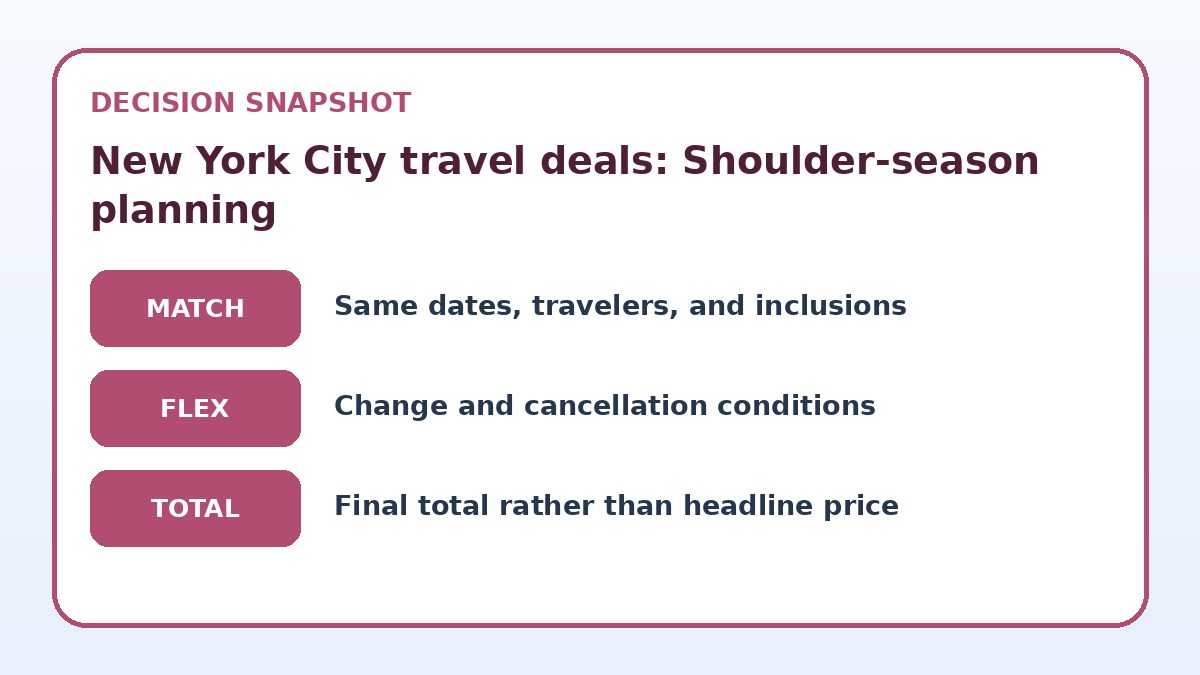
Start by lining up every concrete element you would get if you booked components separately: flight times and fare class, checked and carry-on baggage rules, exact hotel room category and taxes, and any transfers or attraction tickets. For solo travelers, the difference between a basic economy fare and a refundable economy seat is meaningful: baggage rules or change fees can erase any marginal package discount. Write down the same dates and traveler count and then request or view the package’s full itinerary and the separate supplier rules so you can compare identical conditions.
Next, verify timing and connections. A package might bundle a low-cost flight with a hotel whose check-in window or shuttle schedule doesn’t match your arrival, imposing extra costs or long waits. If transfers are included, confirm provider, pick-up windows, and whether solo travelers might share shuttles—which affects privacy and timing. Always go to the provider’s final booking page (airline, hotel, transfer company) to confirm cancellation terms, baggage allowances, and any optional extra fees the package doesn’t state clearly.
Inclusions and traveler-specific value for solo visitors
Assess inclusions through a solo lens: does the package include single-occupancy room pricing or does it assume double occupancy and charge a solo supplement? Some bundles average rates across two people, producing deceptive per-person rates that don’t apply to solo travelers. Also check whether included activities are timed group tours or flexible vouchers—group tours may offer safety and company but reduce solo freedom. Prioritize packages that explicitly list single-room rates, solo-friendly transfers, and flexible vouchers rather than fixed-time group inclusions.
Look for solo-focused conveniences like centrally located hotels that reduce extra transit costs, or hotel options with 24-hour front desk and secure luggage storage that support late arrivals and early departures. Some bundles bundle city passes or attraction tickets; these can save time, but if the pass locks you into specific entry windows or requires reservations, the supposed convenience could restrict the spontaneous exploration many solo travelers prefer. Decide whether the included items increase your mobility and peace of mind or limit your desired pace.
Look past the headline total
Compare inclusions and change conditions before deciding whether a package is genuinely useful for this trip.
Deal comparison checklist
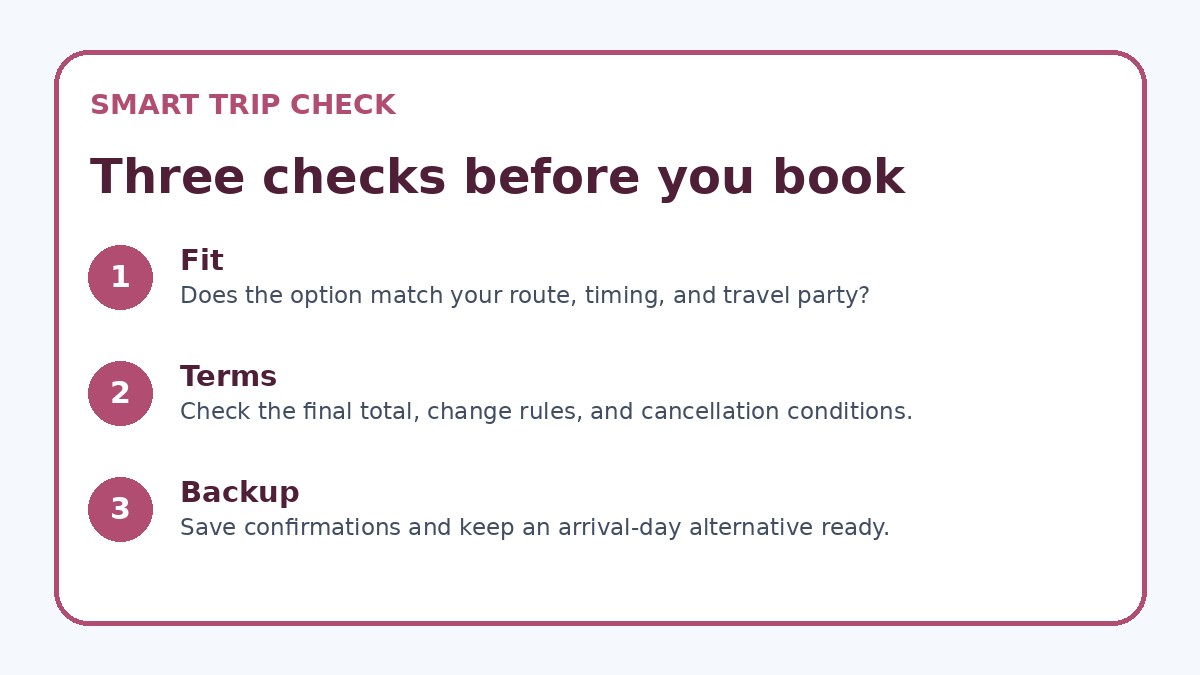
- Write down the exact travel dates, single traveler count, and desired hotel room category before comparing any package or separate booking.
- Compare baggage rules and fare classes for the same flights to ensure a package’s flight terms match supplier pages.
- Confirm whether the package rate assumes single or double occupancy and calculate any solo supplement before assuming savings.
- Check cancellation and change fees on the provider’s final booking page for flights, hotels, and included transfers or activities.
- Verify pick-up windows, voucher validity, and whether included activities require advance reservations that might limit flexible days.
- If uncertain, opt for refundable or changeable hotel nights and travel insurance that covers trip interruption and weather-related changes.
Flexibility: cancellations, changes, and weather-smart planning
Shoulder seasons in New York City can include unpredictable weather and seasonal event shifts; prioritize flexibility. When evaluating a package, compare change and cancellation terms against separate bookings that offer refundable hotels and tickets. Refundable or low-fee change options may cost more up-front but protect you from having to rebook costly alternatives. For flights, check whether the fare class allows date or routing changes without heavy penalties—if your calendar is uncertain, that flexibility is often more valuable than a small immediate saving.
Also think about practical flexibility: can you extend your stay if you meet people or shorten it if plans change? A package that locks you into nonrefundable hotel nights or bundled attraction days can create costly restrictions. If you expect to adapt your itinerary, favor bookings where hotel nights and key activities are either refundable within a reasonable window or transferable. Always read the provider’s final cancellation policy and the timeline for fee-free changes, and check whether your payment method or travel insurance covers interruptions or weather-related changes.
Final terms to verify on the provider’s booking page
Before committing, verify the exact terms on the supplier’s final booking page. Confirm what counts as the official room type, the fare bucket for flights, baggage inclusions, taxes, service fees, and whether the quoted rate assumes single or double occupancy. If transfers or activities are included, confirm the operating partner, pick-up/drop-off windows, and whether you will be charged for no-shows. When provider-specific facts may change, the final booking page is where you can see the enforceable policy—write down cancellation penalties, blackout dates, and any mandatory local fees you must pay on arrival.
Also check documentation and contact details: does the package provide printable or mobile vouchers, 24/7 emergency support, and clear refund timelines? For solo travelers, having a clear support line or local partner listed on the booking page matters if plans go awry. If you use a third-party marketplace, cross-check directly with the airline and hotel to confirm seat assignments, room availability, and any unilateral vendor policies; Trip.com can be one place to compare current availability but always confirm final terms with the named providers.
Travel Deals & Booking Strategy questions travelers ask
Are shoulder-season travel deals in New York City actually cheaper for solo travelers?
Shoulder-season travel often reduces crowding and increases availability, which can lead to better upgrade or flexibility options, but it doesn’t automatically mean lower prices for solo travelers. Packages may average rates across two people or bundle nonrefundable inclusions that erode value for a single traveler. To determine whether a shoulder-season deal is truly cheaper, compare the exact same dates, single-occupancy room type, and flight fare class between bundled and separate options. Also factor in weather-related risks and potential change fees—sometimes paying a bit more for refundable terms is the smarter choice for solo travelers.
How should a solo traveler decide between a bundled package and separate bookings?
Decide by comparing inclusions, flexibility, and the real cost for one person on the same dates. If a package consolidates logistics, offers single-room pricing, and lists clear, flexible transfer and activity terms, it can save time and reduce coordination stress. If the package assumes double occupancy, has strict cancellation rules, or includes timed group activities that limit your freedom, separate bookings give more control. Always verify supplier pages for cancellation terms and baggage rules; if flexibility is your priority, refundable or change-friendly separate bookings often win for solo travelers.
What specific provider details should I verify on booking pages before paying?
On each provider’s final booking page check the fare class and baggage allowances for flights, the exact hotel room type and whether the rate is single-occupancy, taxes and mandatory fees, and the refund/change policy with any applicable timelines. For transfers and activities, verify the operating partner, pickup/drop-off windows, voucher expiration, and no-show penalties. Also note contact information for after-hours support. Use these confirmed details to run a side-by-side comparison of the package and separate bookings to avoid surprises after payment.
Final decision note
For solo travelers, shoulder-season New York City travel can offer softer crowds and more flexible options—but only if you compare like-for-like terms. Start by documenting your exact dates, single-occupancy needs, and nonnegotiable conveniences (like refundable nights or private transfers). Use that checklist to compare an all-in-one package, a marketplace bundle, and separate bookings on identical conditions, and verify every fare class, baggage rule, and cancellation term on the provider’s final booking page. If a bundle delivers the same or better flexibility and lists single-room pricing, it can simplify the trip. Otherwise, separate bookings usually give solo travelers the control they need to manage uncertainty and enjoy the city on their own schedule.
Continue planning
Check current options and final conditions
Use the provider page to confirm live availability, the final total, cancellation terms, and every condition that matters to your trip.
This evergreen planning guide was created with AI-assisted drafting and a structured quality review. It does not display live prices, schedules, availability, visa guidance, or provider rankings. Verify current details before booking. Some links are affiliate links; we may earn a commission at no additional cost to you.