If you’re traveling from Osaka to Kyoto with suitcases, the simplest approach is to pick the combination of speed, station access, and luggage friction that matches your arrival point and final address. For many first-time visitors that means choosing a train if you want frequent departures and easy walking transfers, choosing a highway coach if you want a single seat with luggage stowed underneath, or booking a private transfer for door-to-door convenience. Don’t overlook local luggage-forwarding services (takkyubin) to eliminate carrying bags entirely between hotels. This article gives practical criteria to compare options for terminal fit, transfer steps, luggage handling, scheduling flexibility, and a clear backup plan for disruptions so you can book an end-to-end journey, not just a ride.

Choose by terminal fit: where you start and where you end
An effective choice starts with the exact pickup and drop-off points. Osaka has several major rail terminals and bus stations; Kyoto’s main terminals are in different neighborhoods. If your hotel is closest to a particular Kyoto station, favor services that stop nearby to avoid last-mile taxis. Consider how much walking you and your companions will tolerate from a platform or bus stop to your accommodation—cobbled streets, stairs, and narrow sidewalks in historic Kyoto can make even a short distance cumbersome with large suitcases.
If you’re starting at Kansai Airport, weigh the benefit of an express train to a central Osaka station versus transferring to a direct airport-to-Kyoto coach. Likewise, if arriving at a downtown Osaka hotel, a short taxi to a main station for a direct train may be faster than hauling bags across busy streets to an outlying coach terminal. Always map the precise station exits and hotel entrances before you commit so you know whether a chosen service truly saves walking and stairs.
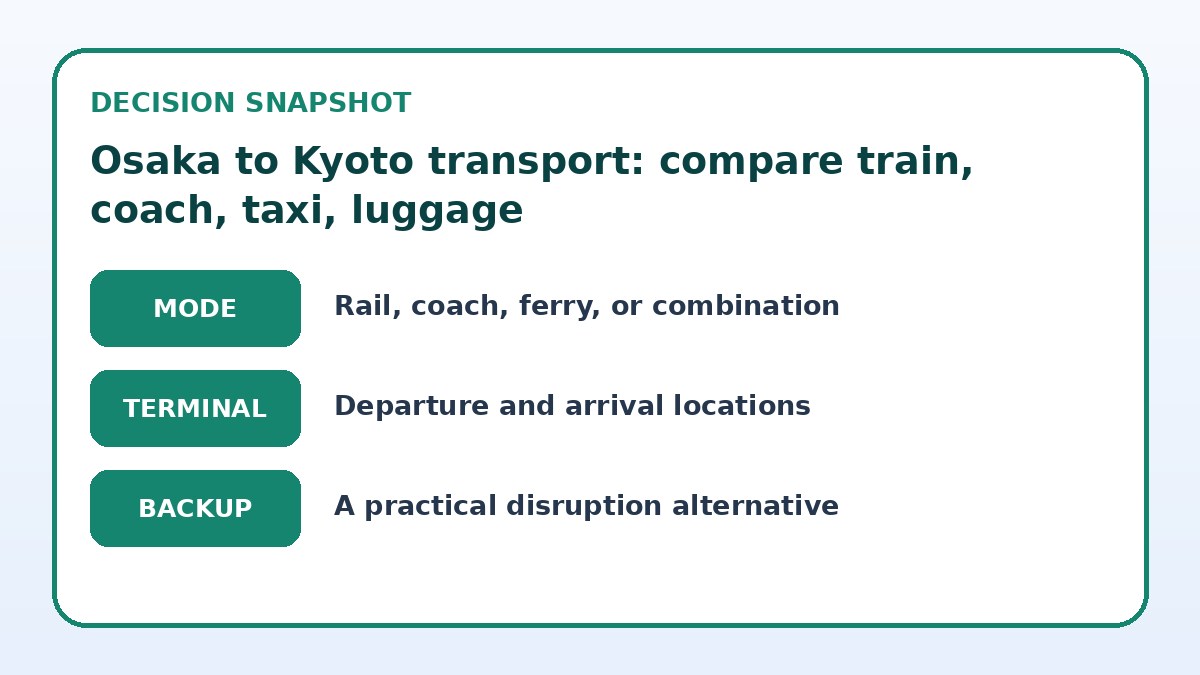
Choose the end-to-end journey plan
| Journey approach | Best for | Friction to check |
|---|---|---|
| Frequent trains to central stations | Travelers wanting flexible departure times and short walks to major Kyoto hubs | May involve carrying luggage up/down platforms and navigating crowded carriages at peak times |
| Scheduled highway coaches | Those who prefer a single-seat journey with large suitcases stored under the vehicle | Stops may not be near your final address and services are less flexible if your arrival time shifts |
| Private taxi or door-to-door van | Groups, families, or travelers with many or heavy bags seeking minimal transfers | Generally more expensive and subject to road traffic, so confirm pickup details and buffer time |
| Luggage-forwarding combined with local transit | Visitors who want to travel light between stations and explore Kyoto immediately on arrival | Requires advance drop-off and delivery timing; not ideal for same-day delivery without verification |
Check live intercity options
Look beyond the ride itself and compare terminals, transfers, luggage, and arrival fit.
Luggage and transfer friction: practical handling considerations
Think about number, size, and mobility of your bags. Trains provide space for a few large suitcases in designated areas but those spots fill quickly on crowded departures and may require lifting onto overhead racks. Coaches typically stow large suitcases in a hold beneath the passenger cabin, which reduces the number of times you handle your bags but means you can’t access checked luggage mid-journey. Private transfers put luggage handling responsibility on the driver and minimize lifts and steps between vehicle and door.
If stairs, narrow sidewalks, or long platform walks are a concern, luggage-forwarding (takkyubin) is worth investigating: you drop bags at a hotel or convenience store and they arrive at your Kyoto hotel the next day. Verify cut-off times, delivery windows, and size/weight limits on the provider’s booking page before relying on it. For same-day needs, check whether the train or coach you plan to use has sufficient luggage space or whether a short taxi for the last mile is a better option.
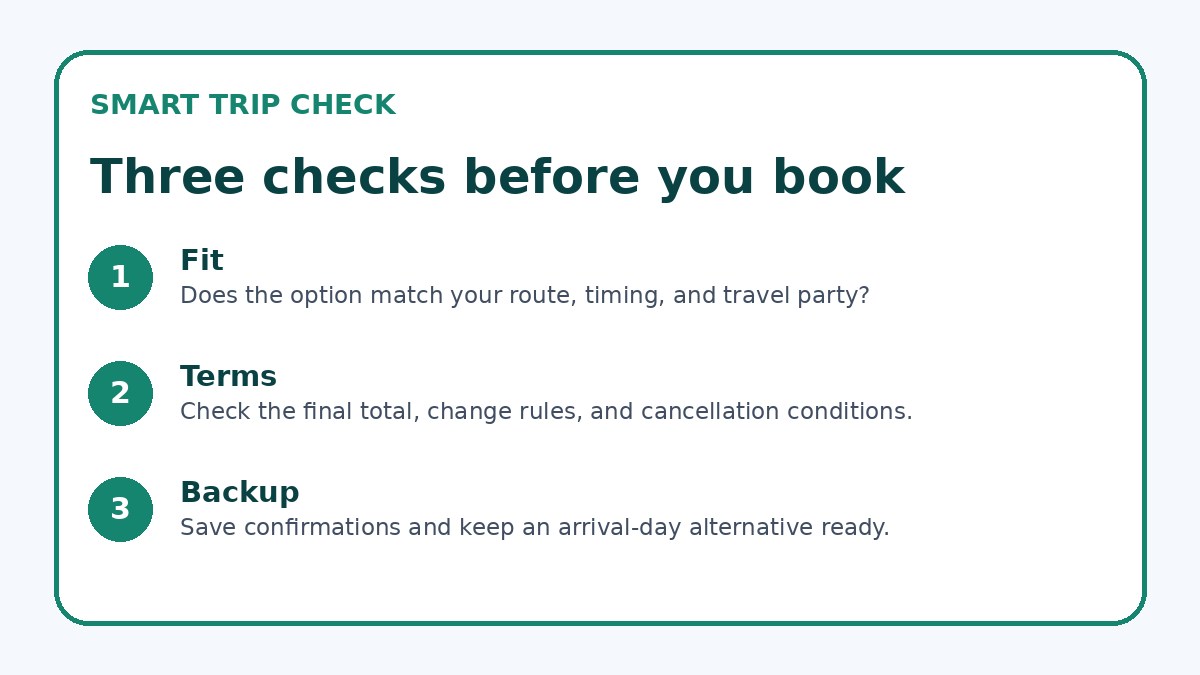
Timing flexibility and booking strategy
Decide whether fixed-departure services or on-demand options suit your schedule. Trains run frequently and offer flexible departure times that make them forgiving if your flight or arrival into Osaka is uncertain. Coaches and private transfers often require a set booking time; they can provide certainty, but less flexibility if your inbound schedule shifts. When you have tight connections, prefer options that minimize transfer points—fewer handovers mean lower risk of missing the next leg.
If you must plan to the minute, leave buffer time for immigration or traffic delays before any fixed coach or booked transfer. When using luggage-forwarding, factor in the drop-off deadline and expected delivery window so your bag isn’t en route when you need it. For all bookings, verify cancellation and change rules on the provider’s final booking page; those details can determine whether a flexible train ticket or refundable transfer is preferable for your situation.
Compare the practical alternatives
Use the final page to confirm what is actually offered on your dates and save a workable fallback.
Intercity travel checklist
- Map exact station exits and your hotel entrance to choose the stop with the shortest walk and fewest stairs.
- Measure and weigh your main bags and verify size/weight limits on the carrier’s luggage policy page before booking.
- Decide whether you need door-to-door service; if so, get a written pickup address and a flexible buffer for traffic.
- If using luggage-forwarding, confirm the drop-off cutoff time and the expected delivery window on the provider’s site.
- Keep a small carry-on with essentials and valuables in case checked luggage is delayed or forwarded to a different hotel.
- Save contact details and a backup route (nearest train station or taxi rank) in case your reserved service is disrupted.
Disruption backup: practical fallbacks when plans change
Always choose a simple, low-friction backup you can execute under stress. For example, if your planned coach is cancelled or delayed, know the nearest train station and the cost of a short taxi to get there with your luggage. If a delayed flight makes your reserved transfer impractical, have the operator’s contact info handy and a backup list of local taxi companies. If relying on luggage-forwarding, keep a small overnight bag separate so you have essentials if delivery is delayed.
Consider combining approaches: book a flexible train or leave space in your plan to take a taxi for the last kilometer into Kyoto. If you prefer to avoid doing this research on arrival, keep screenshots or printouts of station maps, exit numbers, and hotel directions. Finally, check live conditions on the provider’s official pages before traveling; Trip.com can be used to compare current availability, but always confirm times and luggage rules on the carrier’s own booking page.
Rail & Intercity Transport questions travelers ask
Is it better to take the train or a coach from Osaka to Kyoto when I have big suitcases?
For big suitcases, coaches reduce the number of times you handle your bags because large items go into an underfloor hold; however, coaches stop at specific terminals that may not be near your hotel. Trains offer more departure choices and often drop you at central stations closer to many hotels, but you may need to lift and store luggage on platforms or in designated train spaces. Compare the walk from the coach or train stop to your final address and check luggage-space guidance on the provider’s booking page before choosing.
Can I avoid carrying luggage between stations and hotels?
Yes. Luggage-forwarding services (takkyubin) are widely used in Japan: you drop bags at a counter or arrange pickup and they deliver to your hotel the next day or on a specified date. This lets you travel between Osaka and Kyoto light and start sightseeing immediately. Before relying on this, verify cut-off times, exclusions for certain item sizes, and the delivery confirmation procedure on the forwarding company’s site and ensure your Kyoto hotel accepts incoming deliveries.
What should I check on the provider’s final booking page before confirming my trip?
Check departure and arrival locations with exact exit numbers if provided, the luggage size and weight policy, cancellation and change rules, and pickup/drop-off procedures for transfers. If you booked a coach or private transfer, confirm where the vehicle will stop and who to contact if delayed. If using luggage-forwarding, verify drop-off deadlines and delivery windows. Use the carrier’s official pages for these details; Trip.com can be used to compare options but always confirm operational specifics with the provider.
Final decision note
Choosing the right Osaka to Kyoto transport when you have luggage depends on where you start and end, how many bags you have, and how much walking or lifting you’re willing to do. Trains are flexible for timing; coaches minimize handling en route; private transfers offer door-to-door ease; and luggage-forwarding removes bags from the equation. Balance terminal fit, luggage friction, and schedule flexibility when you compare options, and keep a simple backup plan (nearest station or taxi) in hand. Verify luggage rules, pickup details, and change policies on the provider’s booking page before you finalize your reservation.
Continue planning
Check current options and final conditions
Use the provider page to confirm live availability, the final total, cancellation terms, and every condition that matters to your trip.
This evergreen planning guide was created with AI-assisted drafting and a structured quality review. It does not display live prices, schedules, availability, visa guidance, or provider rankings. Verify current details before booking. Some links are affiliate links; we may earn a commission at no additional cost to you.