Practical answer first: use flexible date ranges to compare identical itineraries—same travelers, same nights, same inclusions—so you can judge whether a package or separate booking actually saves money or adds value. Start by picking a 3–5 day span around your intended travel dates and compare options for flights, hotels, and must-have extras (airport transfers, museum passes, guided tours). Flexible dates expose weekday versus weekend pricing, low-season pockets, and short local events that affect availability. For first-time visitors to Barcelona, this approach reduces surprise costs and helps you choose the right neighborhood, transit connections, and cancellation terms. Below you’ll find how to evaluate inclusions, flexibility, traveler-specific value, and the final contract terms—and a checklist to use while you compare.

Test package value fairly
| Booking approach | Best for | Tradeoff to check |
|---|---|---|
| All-in-one package (flight + hotel + extras) | Travelers who want one checkout and basic protection for multi-component trips. | May bundle nonrefundable elements or fixed dates that reduce flexibility and complicate individual changes. |
| Book flights and hotels separately | Experienced planners who want to mix carriers or handpick a specific neighborhood hotel. | Requires more time to compare and manage separate cancellation policies and possible timing mismatches. |
| Hotel plus attractions, flights separate | Visitors prioritizing on-the-ground convenience and curated local experiences. | Can miss combined airfare savings and creates multiple suppliers to contact if plans change. |
| Flights with flexible date fares; book hotel later | Travelers who must secure outbound transport early but want freedom to shop hotel deals. | Flexible air fares cost more and hotel availability may tighten as dates approach. |
Check current package and separate options
Use identical dates, travelers, room needs, baggage, and flexibility so the comparison stays meaningful.
What to compare before judging a bundle
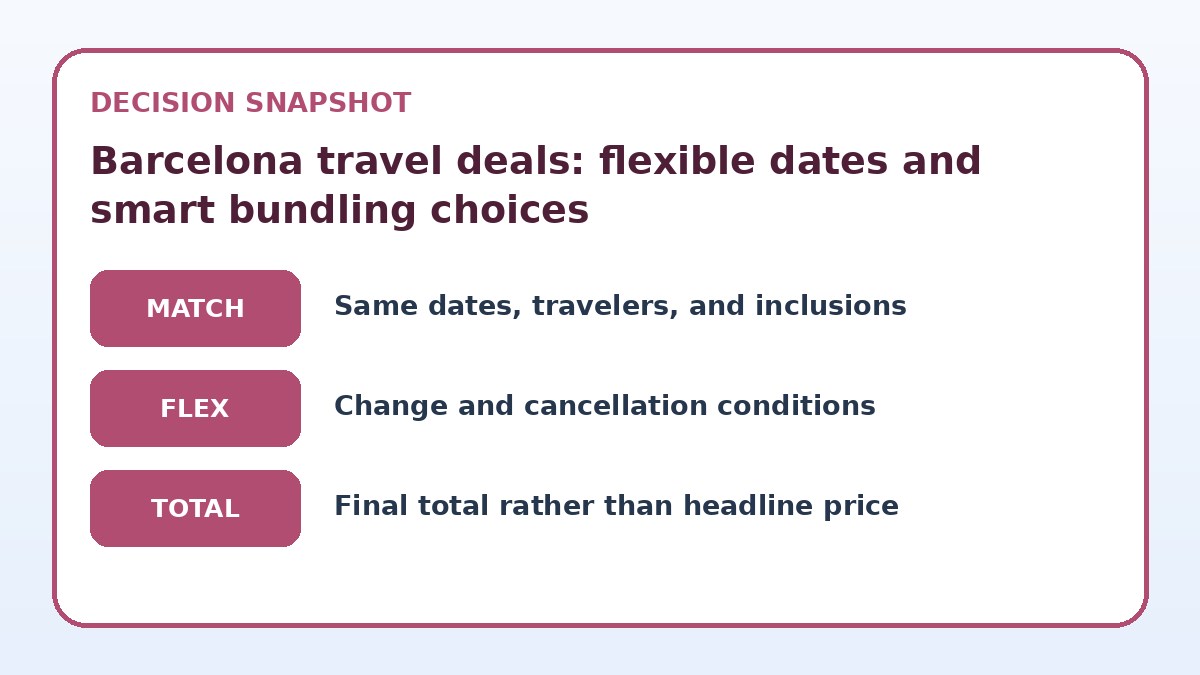
Before deciding whether a bundled Barcelona package is useful, line up the exact elements you would buy separately and bundle them mentally: the same flight times or connections, the exact hotel room category and nights, ground transfers, and any tours or attraction passes. Use flexible date windows (for example, three days before and after your target dates) so you can see how shifting arrival or departure by a day or two changes prices and availability. This reveals whether a package’s apparent savings come from optimal dates or from a lower-quality inclusion that wouldn’t suit you.
Also compare the conditions that matter most: baggage allowances, whether a hotel rate includes taxes and city fees, and if attraction tickets are timed-entry. Confirm the refund and change rules for each component because a bundled price isn’t helpful if it locks you into nonrefundable elements. Make a simple spreadsheet or note to compare identical traveler counts, room types, and transfer options so you avoid being misled by bundles that mix different service levels.
Inclusions: what a package actually covers
Packages often advertise flights and hotels together, sometimes with extras like guided tours or transfer services. For Barcelona, pay attention to whether the hotel room is an identifiable category (standard double, superior, etc.) and whether municipal tourist taxes, breakfast, or Wi‑Fi are included. Attractions may be offered as vague 'entrance tickets'—verify which museums or timed-entry sites are covered and whether the tickets permit flexible dates or specific time slots.
When you compare, write down each inclusion precisely and ask if substitutions are allowed (for example, a different hotel in the same category). If an inclusion is unclear on the package page, look for the provider’s final booking page or terms and conditions to confirm. Don’t assume that 'breakfast included' means the same thing across hotels: check meal hours, whether it’s continental or buffet, and if breakfast is per person or per room.
Look past the headline total
Compare inclusions and change conditions before deciding whether a package is genuinely useful for this trip.
Deal comparison checklist
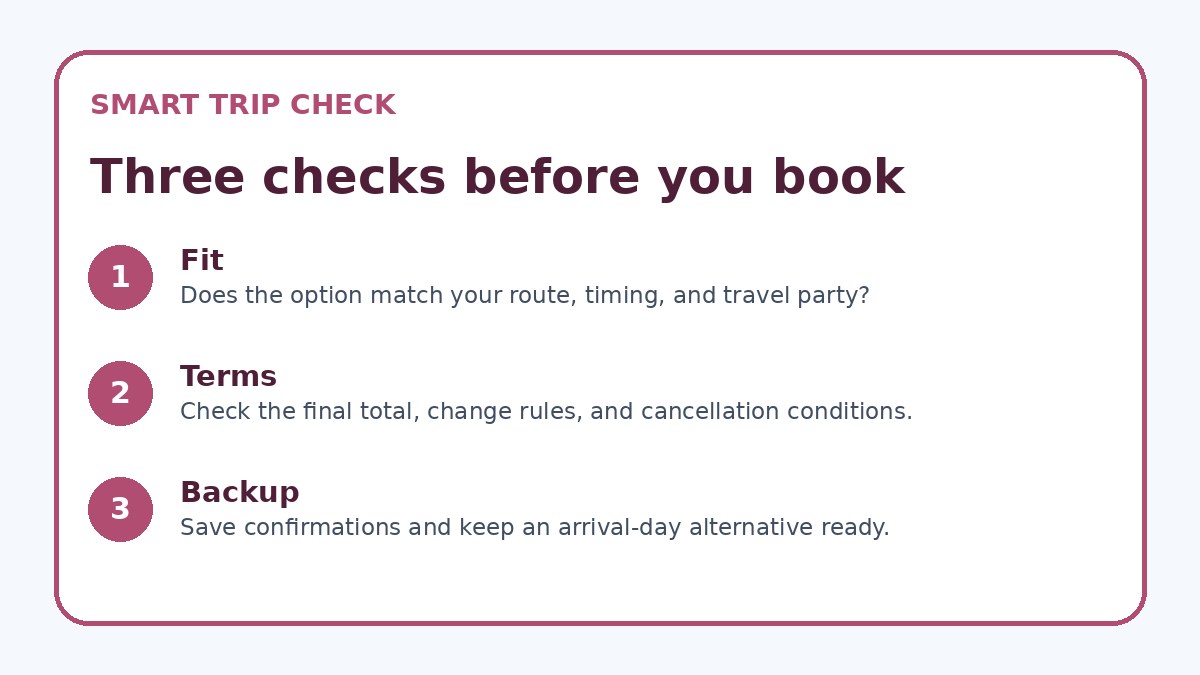
- Create a comparison sheet listing identical traveler counts, room types, and included extras for each option.
- Search a 3–5 day flexible date window to see how shifting arrival or departure changes costs and availability.
- Open the supplier’s full terms and verify cancellation, name-change, and refund policies before adding payment information.
- Confirm exactly which attractions, transfers, or meals are included and whether they require timed reservations.
- Compare baggage allowances and connection minimums if flights are separate or include transfers in the package.
- If a package seems unclear, request written confirmation of inclusions and cancellation terms from the provider before paying.
Flexibility: date, cancellation, and change rules
Flexible dates are your friend when evaluating Barcelona travel deals. Look for rates that allow date changes with minimal fees or that offer refundable options—especially for long-haul flights or trips booked months ahead. Compare the change and cancellation policies for each element: a hotel with free cancellation until a week before arrival is valuable only if your flight can also be moved without excessive penalties. Note blackouts, peak-season restrictions, and different policies depending on whether a booking is part of a package or made separately.
When a provider advertises flexible dates, verify exactly what that means on the booking page: are change fees waived, or are only certain date shifts allowed? Check if transfers and attraction tickets are refundable or transferable; many third-party tour bookings have stricter rules. If you find conflicting language between a package summary and the final terms, rely on the supplier’s booking terms and ask customer service for written confirmation before you pay.
Traveler-specific value and final terms to verify
Value depends on who’s traveling. Solo travelers may prioritize low-cost flights and central hostels, while families might value a hotel with larger rooms and included transfers. Active travelers could prefer flexibility to add last-minute day trips to Montjuïc or the Girona region, whereas museum-focused visitors should check whether skip-the-line tickets are genuinely included and timed appropriately. Match the package inclusions to your priorities rather than chasing a headline price.
Before booking, read the final contract closely: taxes and city tourist fees, how name changes are handled, and what proof you’ll receive for included attractions. Confirm pickup points and times for transfers and whether flight schedules are guaranteed or subject to change. If anything is ambiguous, request clear written terms from the seller. Use Trip.com or provider sites to compare current conditions, but always confirm the supplier’s booking page for the ultimate terms and refund rules.
Travel Deals & Booking Strategy questions travelers ask
How can flexible dates help me find better Barcelona travel deals?
Flexible dates let you compare weekday and weekend pricing, spot low-demand pockets, and avoid local events that drive rates up. By checking a range of dates—typically three days before and after your target—you’ll see whether moving your trip by a day or two reduces costs or improves availability. This is especially useful for first-time visitors who want a balance of lower prices and convenient arrival times. Always compare identical traveler and room details across the date range so you’re comparing true like-for-like options.
Are bundled packages usually more convenient than booking elements separately?
Bundles can offer convenient single-point booking and sometimes simpler customer service, but that convenience isn’t automatically better value. You must compare the actual inclusions and the flexibility you need: a package with nonrefundable tickets might be cheaper upfront yet riskier if plans change. Conversely, booking elements separately allows more control over specific carriers, hotels, and refundable options. For first-time visitors, consider whether you prefer the simplicity of a package or the control of separate bookings tailored to your neighborhood and pace.
What final booking page details should I always verify before paying?
On the supplier’s booking page, check cancellation and change penalties, exact room category and occupancy limits, included taxes and city tourist fees, baggage rules for flights, and the refundability or timed-entry conditions for attraction tickets. Also note pickup points and times for transfers and whether any extras are described as 'subject to availability.' If the booking page language differs from the package summary, request clarification in writing. Trip.com can be used to compare availability, but rely on the supplier’s final terms for contract specifics.
Final decision note
Using flexible dates is a simple but powerful habit for first-time visitors to Barcelona. It helps you spot genuine savings, avoid packages that trade flexibility for a lower headline price, and choose the mix of inclusions that matches your travel priorities. Compare identical itineraries across date windows, read final booking terms carefully, and verify what’s actually included—especially for transfers, attraction tickets, and cancellation rules. With those checks in place, you’ll make a confident choice between a bundled package and separate bookings that fits your budget and travel style.
Continue planning
Check current options and final conditions
Use the provider page to confirm live availability, the final total, cancellation terms, and every condition that matters to your trip.
This evergreen planning guide was created with AI-assisted drafting and a structured quality review. It does not display live prices, schedules, availability, visa guidance, or provider rankings. Verify current details before booking. Some links are affiliate links; we may earn a commission at no additional cost to you.