If you’re traveling for business between Busan and Gyeongju and managing briefcases, rolling suitcases or small equipment, the practical choice comes down to how much door-to-door friction you can tolerate. For most business travelers with standard luggage, a direct train or a private car transfer minimizes handling and saves time getting to meetings. Coaches are economical and simple but can have more luggage handling and limited drop-off flexibility. A combined approach — train to a central station and a taxi for the final leg — often balances travel time, predictable arrival, and fewer luggage transfers. Decide by ranking priorities: minimize transfers, reduce walking with heavy bags, or keep costs low. Below you’ll find comparisons of terminal fit, luggage and transfer friction, timing flexibility, disruption backups, and an actionable checklist so you can pick and book the best option for your schedule and baggage.
Terminal fit: where you arrive and how that affects the last mile
Matching the arrival point to your meeting or hotel in Gyeongju is the first practical filter. Trains typically arrive at central stations with easy taxi ranks and short walking distances to downtown hotels and business addresses. Coaches usually stop at bus terminals that may be farther from some corporate areas, requiring an additional taxi or shuttle. Private car transfers can deliver you directly to your hotel or office entrance, removing any concern about trolley ramps, stairs, or long walks with luggage. When booking, check the exact arrival point on the operator’s confirmed itinerary so you know whether a short taxi or shuttle is required after the main leg of travel.
For business travelers, the convenience of the drop-off location can outweigh small differences in travel time. If your meeting is near the station, a train that arrives downtown will save taxi time and cost. If your destination is outside the historic center, a private transfer that goes straight to the door may be worth the extra cost because it saves time and reduces luggage handling. Verify cargo access at each terminal: inquire whether there are covered walkways, elevators, or curbside assistance for heavy bags. If you’ll need a courier or same-day parcel pickup, check local service availability in advance so your luggage needs are covered.
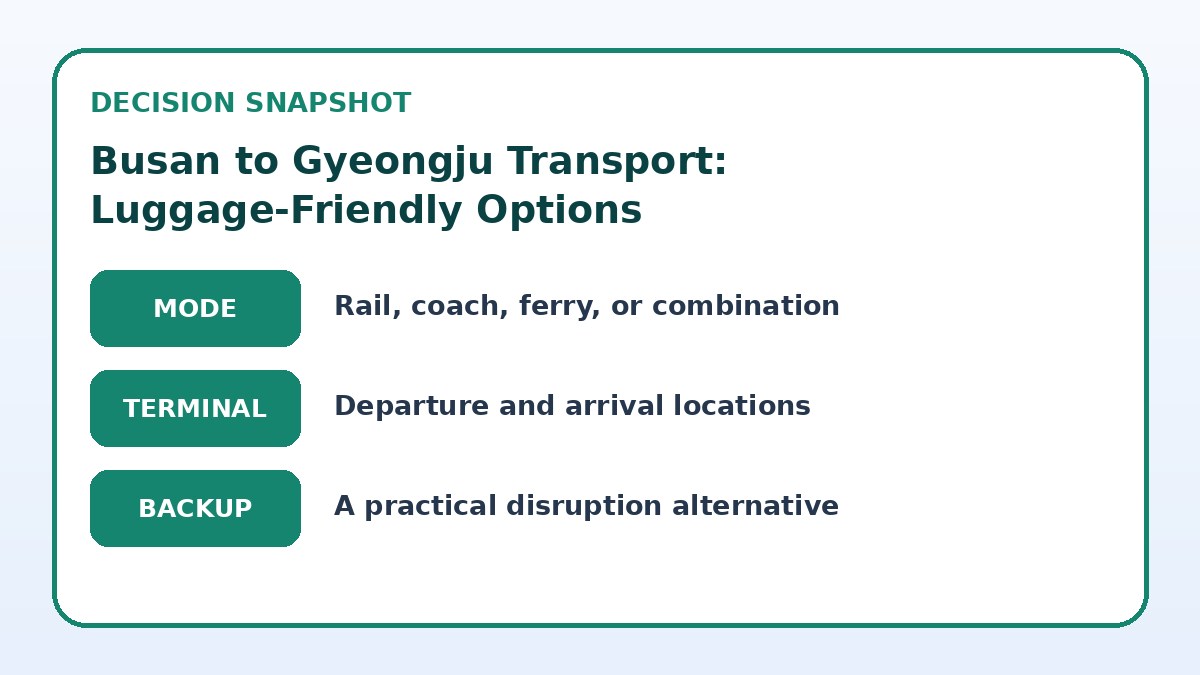
Choose the end-to-end journey plan
| Journey approach | Best for | Friction to check |
|---|---|---|
| Direct train (station to station) | Travelers who want predictable schedules and minimal in-vehicle luggage constraints | You may still need a taxi for the final leg and handle bags in stations and on platforms |
| Coach / intercity bus | Cost-conscious travelers who can lift luggage into underfloor compartments | Fixed stops and compartment loading add handling and last-mile taxi time |
| Private car transfer | Business travelers prioritizing door-to-door delivery with zero intermediate handling | Higher cost and potential traffic delays; verify pickup/dropoff points and booking terms |
| Mixed rail plus short taxi | Those balancing speed, predictability, and reduced luggage moves | Still requires one luggage transfer and depends on taxi availability at arrival |
Check live intercity options
Look beyond the ride itself and compare terminals, transfers, luggage, and arrival fit.
Luggage and transfer friction: handling your bags from door to door
Count every time you will lift, move, or load luggage when choosing your option. Trains often allow rolling luggage in carriages and provide station elevators, but you still have to move bags from a taxi to the platform or down a concourse. Coaches typically require placing larger suitcases in underfloor compartments and retrieving them on arrival, which means handling staff and possible queues. Private cars mean almost no handling beyond loading and unloading at each end, which is ideal for fragile equipment or heavier cases. If you travel with a rolling suitcase, consider the surface type at each terminal—cobblestones, steps, or long ramps change how easy it will be to steer a trolley.
If minimizing transfers is crucial, prioritize options that reduce node count: door-to-door transfer beats train-plus-taxi in handling but may cost more. For moderate luggage, plan a mixed option: rail for the main stretch and a single short taxi to your final address; you keep luggage moves to two and still gain speed. When you book, confirm whether assistance is available for stairs or lifting at the station and whether prior notice is required for oversized items. If you have bulky samples or technical equipment, ask the carrier about advance notification rules and whether they recommend courier services instead of passenger carriage.
Timing flexibility and business schedules: syncing travel with meetings
Business travelers need predictable arrivals more than absolute journey speed. High-frequency trains give schedule choices that let you adjust departure times around meetings, while fixed coach timetables can be less flexible. Private transfers offer the most door-to-door predictability by leaving at an agreed time, but traffic variability may still affect arrival. When planning, allow buffer time for check-in at your meeting location and consider earlier arrivals so you can freshen up and set up presentations. Also, confirm the latest recommended booking cutoffs for your chosen mode to avoid being stranded by sold-out trains or full coaches during peak periods.
Think in blocks: travel time plus buffer for transfers, luggage handling, and building security where your meeting is held. If you must arrive at a specific time, a private transfer or an express train followed by a short taxi is usually the safest path. For multi-meeting days or back-to-back appointments, arrange forward luggage options when possible — leave nonessential items at your hotel in Busan or arrange for same-day hotel transfers of additional bags. Always factor in local traffic patterns: peak commuting times around major cities can stretch a short taxi ride into a significant delay, so build an extra 20–40 minutes into tight schedules.
Compare the practical alternatives
Use the final page to confirm what is actually offered on your dates and save a workable fallback.
Intercity travel checklist
- Check the exact arrival and departure addresses on the provider’s booking page and note the walking distance to your hotel or meeting location.
- Confirm luggage allowances and any advance-notification rules for oversized or special equipment on the carrier’s final booking page.
- If minimizing handling, book a private transfer for door-to-door service and ask about curbside assistance for loading heavy bags.
- When using trains or coaches, plan a single taxi for the final leg to reduce transfers and pre-load the ride-hailing app you prefer.
- Allow a buffer of at least 30–45 minutes for luggage handling, station navigation, or possible traffic when scheduling meetings.
- Save contact numbers and booking confirmations offline, and share your arrival plan with your meeting host or hotel concierge.
Disruption backup: practical alternatives if your plan changes
No plan is immune to delays. Prepare a pragmatic backup: if your train or coach is delayed, know the next rail or coach times and the approximate taxi fare to your destination. For critical meetings, book refundable or changeable tickets where possible and have a list of local car service providers that can offer immediate transfers. Keep digital copies of confirmations and contact numbers for your hotel and the meeting host so someone can adjust the arrival plan or receive you if you are delayed. If carrying time-sensitive cargo, consider a dedicated courier that provides tracking and guaranteed delivery windows rather than relying solely on passenger transport.
When possible, map two alternative routes before departure: one that prioritizes speed with more handling (express train plus taxi), and one that prioritizes minimal handling but may take longer (private off-peak transfer). Save the contact details of a few taxi or ride-hailing apps and learn how to request an English-capable driver if language is a concern. Finally, decide on a latest-departure cutoff time for your outbound leg that still allows reasonable recovery in case of disruptions. Inform your meeting host of the cutoff — it reduces stress and helps them plan a small adjustment if needed.
Rail & Intercity Transport questions travelers ask
Should I bring large suitcases on the train from Busan to Gyeongju?
Trains typically accommodate rolling luggage but require you to handle bags through station concourses and platforms. For a single large suitcase, a train is usually practical if you are comfortable moving it through stations and boarding in a timely manner. If your case is oversized, fragile, or you want zero handling, consider a private transfer or a courier service. Before you book, check the carrier’s luggage policy on their official booking page regarding size limits and whether advance notice is needed for large items.
Is it better to take a coach or a train when I have several pieces of luggage?
Coaches can be convenient for multiple bags because luggage goes into underfloor compartments staffed by personnel, but this still involves lifting and possible queues. Trains keep luggage with you inside the carriage, which may be preferable if you want continuous access during travel. Think about how many times you want to load and unload: coaches add a handling moment at each end, while trains require moving bags through the station. Verify the specific baggage rules and compartment space on the operator’s final booking page.
How can I avoid last-mile delays when traveling for a meeting in Gyeongju?
Prioritize arrival points close to your meeting location, choose options with short transfer distances, and allow an additional buffer for taxi rides and check-in. If time is tight, a private transfer reduces handoffs and walking, delivering you directly to the building entrance. If using public services, pick an arrival that has a reliable taxi rank or book a pickup in advance through a ride-hailing app. Confirm pickup procedures and waiting policies on the booking confirmation and communicate any expected delays to your meeting host.
Final decision note
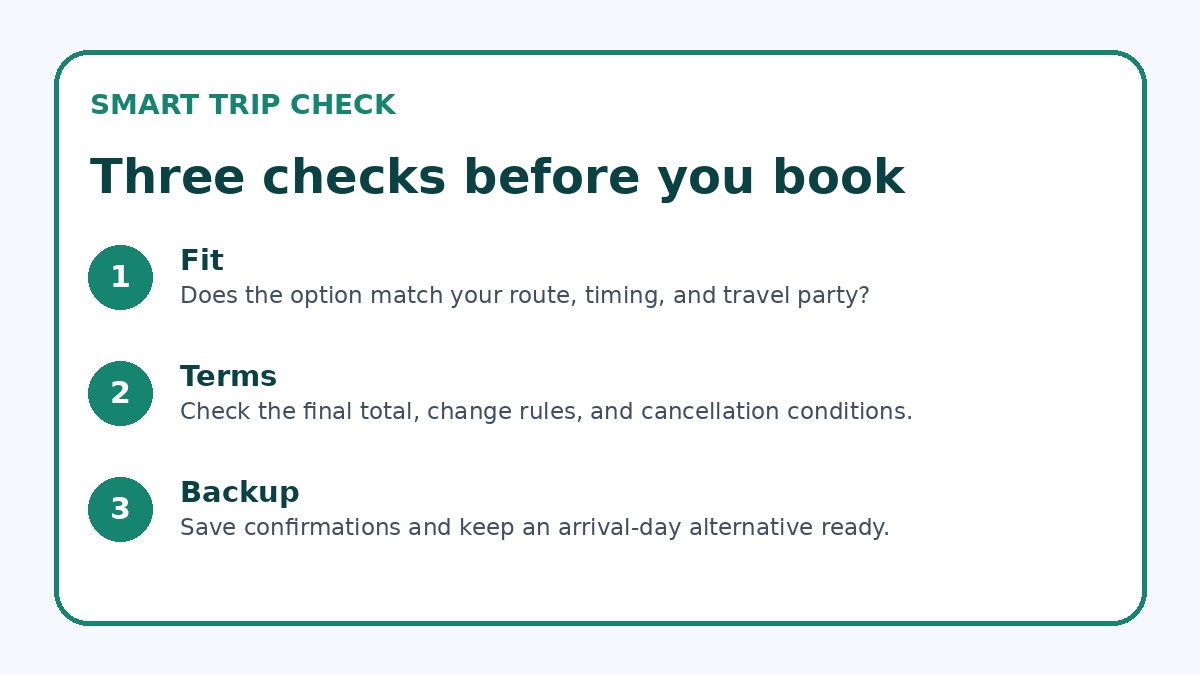
For business travelers moving between Busan and Gyeongju with luggage, the right option balances door-to-door convenience against cost and schedule flexibility. Private transfers minimize handling and address arrival-point friction, while trains offer predictable times and straightforward station-to-city access. Coaches remain practical for lighter schedules or when cost is a priority but expect extra luggage handling and an added last-mile taxi. A mixed plan — fast rail plus a single short taxi — often gives the best compromise for most travelers carrying typical business luggage. Before booking, verify exact pickup/drop locations, luggage rules, and change/cancellation terms on the provider’s booking page, and keep a disruption fallback ready to protect your meeting schedule.
Continue planning
Check current options and final conditions
Use the provider page to confirm live availability, the final total, cancellation terms, and every condition that matters to your trip.
This evergreen planning guide was created with AI-assisted drafting and a structured quality review. It does not display live prices, schedules, availability, visa guidance, or provider rankings. Verify current details before booking. Some links are affiliate links; we may earn a commission at no additional cost to you.