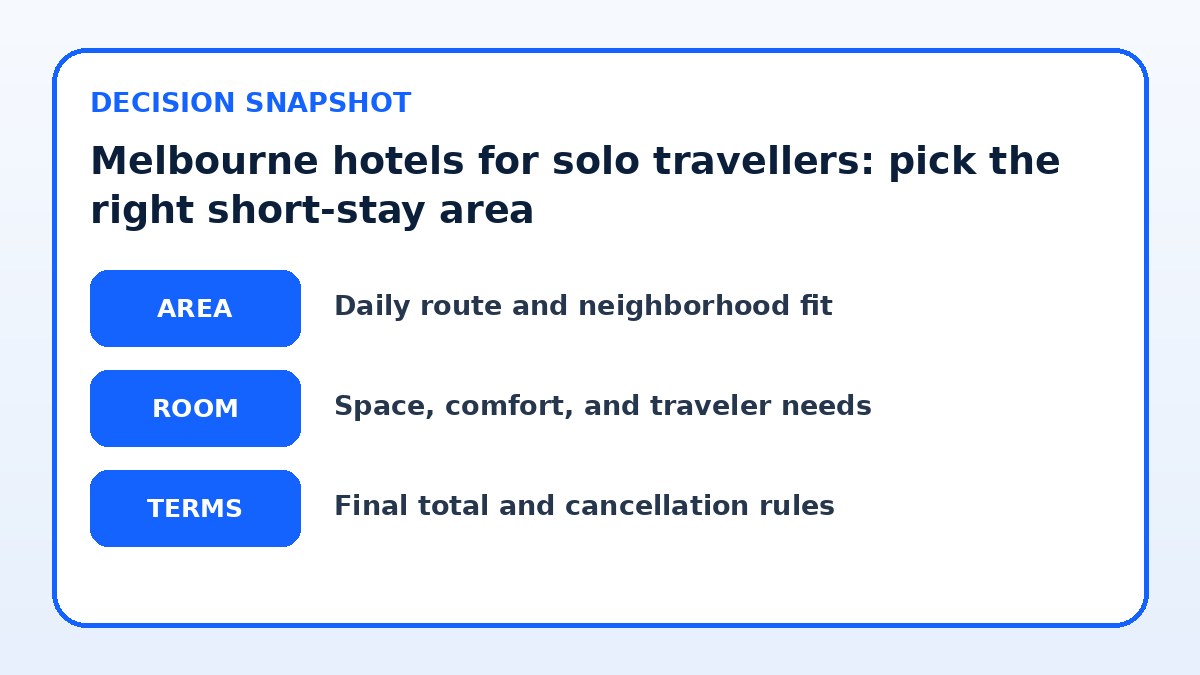
Pick your neighbourhood first: for a short solo stay in Melbourne the area you base yourself in shapes how much you actually see and how smoothly each day runs. If you want fewer transfers and sensible evening options, choose from one of four practical bases described below — inner-city CBD for transport links and convenience, Southbank or Docklands for riverside walks and galleries, Fitzroy for cafés and nightlife, or St Kilda for beach access and compact attractions. This article gives a clear shortlist method: assess daily-route friction, your room and privacy needs, evening safety and late options, and final booking terms to verify before you commit. Read the quick comparison rows to narrow to one area, then use the section checklists to match hotel features to your travel rhythm so you can shortlist without opening live inventory first.

Check live stays in the areas that fit
Use your dates and party size to compare current rooms after you narrow the neighborhood fit.
Neighbourhood fit: match what you’ll actually do each day
Start by listing the top three things you want to do in Melbourne during a short stay and map them roughly. The CBD (central business district) puts you in walking distance of Federation Square, Flinders Street Station and many tram routes, which is strong when your plan is to tick off central museums, laneways and a theatre night. Fitzroy and Collingwood feel very different: they are livelier for café culture, vintage shopping and late bars, but you trade some direct access to bigger tourist hubs and may need a tram or short rideshare to return late.
St Kilda and Port Melbourne shift the balance toward seaside time, casual restaurants and an easier pace—ideal if your short trip is about a beach walk, a pier or a sunset. Southbank and the Docklands cluster around riverside promenades and a few larger galleries and event venues; they work well if you prefer a quieter hotel strip with easy riverside walking and predictable tram connections. Decide whether you prefer waking within walking distance of your main goal, or don’t mind a daily short hop by tram or train.
Choose an area-selection strategy
| Area approach | Best for | Tradeoff to check |
|---|---|---|
| Base in the CBD | Maximising central walking access and quick connections to transport hubs | Less local nightlife personality; some rooms face busy streets |
| Stay in Fitzroy/Collingwood | Cafés, bars and independent shopping within an artsy neighbourhood vibe | Requires short tram rides to central tourist sights and some galleries |
| Choose St Kilda/Port Melbourne | Beach walks, a relaxed pace and compact seaside attractions | Further from central museums and some nightlife hubs; may need tram or rideshare |
| Pick Southbank/Docklands | Riverside promenades, predictable hotel strips and easy access to event venues | Quieter evenings and fewer independent bars within immediate walking distance |
Daily-route friction: avoid wasting hours on transit
For a trip of only a few days, each transfer costs disproportionate time. Choose a base that minimizes changes: hotels within the CBD let you reach many central attractions by foot or a single tram, while Fitzroy/Collingwood need one short tram ride to central museums. If you plan longer single-route excursions such as a day trip out of town, staying near Flinders Street or Southern Cross station is helpful because both are the city's major rail hubs for onward services and coach departures.
Look at typical patterns rather than theoretical fastest routes: check which tram lines stop closest to prospective hotels and whether you’ll cross the river often. If you expect to move between galleries, restaurants and nightlife in one evening, staying in an area with frequent trams or a dense walkable grid reduces the need to book rideshares repeatedly. For late nights, confirm how easy it is to get back after the last tram or whether you’ll rely on rideshares—this affects both safety and cost.
Now compare like with like
Keep the same dates, guests, room needs, and cancellation preferences while you compare the final choices.
Room and party needs: what matters most for solo comfort
Solo travellers often need more than a bed: consider a workspace, luggage space, and secure storage if you plan short day trips with most luggage left at the hotel. If you value quiet privacy, choose a hotel offering internal-facing rooms rather than those overlooking busy laneways or main roads. Look for explicit bed configuration information and whether single travellers have access to single rooms, or if the property primarily lists doubles—this affects both comfort and what you’ll pay when booking.
If meeting friends or attending small local events matters, check whether your hotel has a lobby or bar open in the evenings, or easy nearby options within a short walk. Some solo travellers prefer boutique hotels with personal service; others want predictable chains with consistent amenities like secure key-card access, luggage hold, and 24-hour reception. Decide which amenities will make your stay feel efficient and secure, then use those as must-haves when you shortlist specific properties.
Hotel booking check before payment
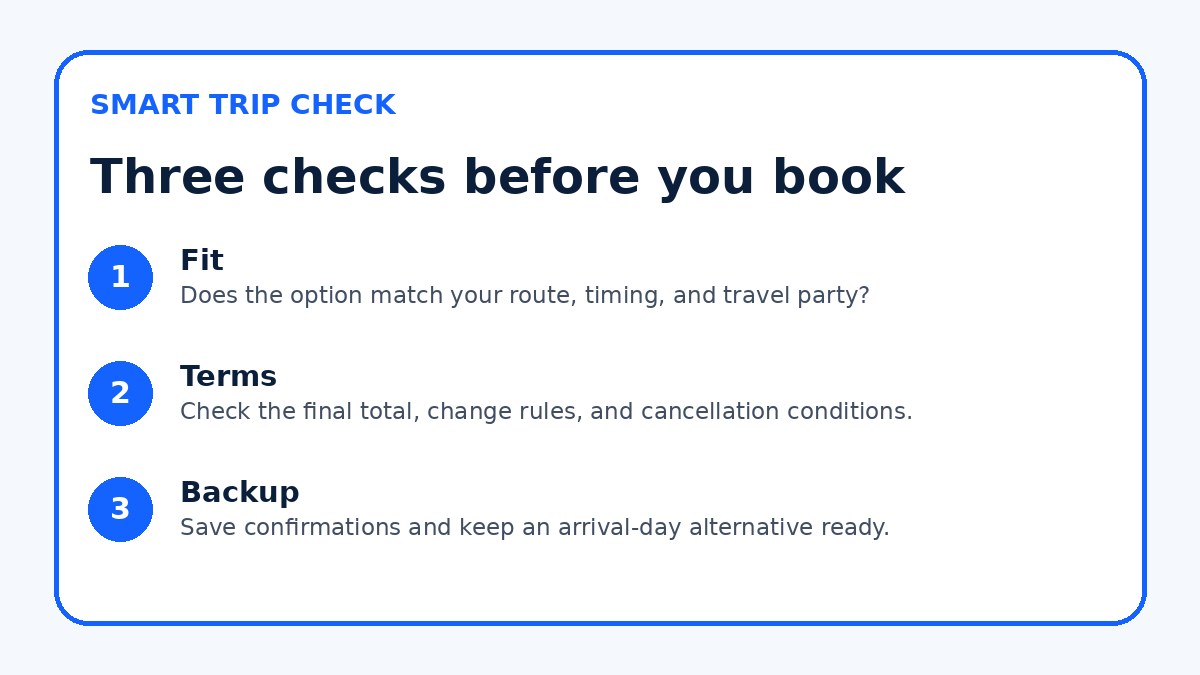
- List your top three priorities for the trip (e.g., museums, beach, nightlife) and choose the neighbourhood that puts most priorities within walking distance.
- Check the hotel’s proximity to the nearest tram or train stop by name and compare suggested routes on the official public transport site.
- Confirm the room type and bed configuration on the booking page and note whether the rate includes breakfast or Wi‑Fi.
- Read the cancellation policy and any deposit or hold terms on the hotel’s final booking page before entering payment details.
- Verify front-desk opening hours and whether the hotel offers luggage storage or a late check-in option in case your arrival is delayed.
- Search for recent guest photos and recent reviews for information about noise, street conditions, and accuracy of advertised amenities.
Final booking terms: what to verify before you hit confirm
Before booking, read the provider’s final page carefully. Verify cancellation policy specifics, check-in and check-out times, whether the hotel charges for late check-in or early check-out, and any deposit or incidental hold policy. Confirm whether the rate includes breakfast, free Wi-Fi, or city taxes. If you need airport transfers or luggage storage, confirm availability and any extra charges on the hotel’s live booking page rather than relying on third-party summaries.
Also verify the exact room type and bed configuration, whether the property has secure key access, and if the hotel offers a 24-hour desk—these matter when you arrive late after short trips. If transport convenience was the reason you picked an area, check the hotel listing for the nearest tram or train stop name and then cross-reference timetables on official transport sites. Optionally compare current inventory on Trip.com to see availability, but treat what you find there as a snapshot and verify terms on the hotel’s booking page.
Hotel Guide questions travelers ask
Which Melbourne area is safest for a solo traveller on a short visit?
Safety depends less on a single suburb and more on street-level activity, lighting and transport availability at night. The CBD, Southbank and Docklands typically have steady foot traffic and 24-hour transport nearby, making them straightforward choices for solo travellers. Fitzroy and St Kilda are lively but consider where you’ll be returning from late at night and how you will get back—tram lines and rideshare availability matter. Always check recent local reviews and confirm how you’ll travel late at night before booking.
How do I balance being close to attractions with quieter evenings for sleeping?
Look for hotels with internal-facing rooms or higher floors if you want central location without street noise. Prioritise properties listed as set back from main thoroughfares or having soundproofing if a quiet room matters. Alternatively, choose a base with convenient public transport to cover daytime sightseeing while staying in a slightly quieter nearby area. When you shortlist, check guest comments about noise and ask the hotel directly about room placement and evening street activity.
Should I book near Flinders Street or Southern Cross station for short stays?
Staying near a major station is convenient if you plan day trips or fast transfers to outlying areas because both stations connect to regional and suburban services. If your itinerary stays mostly within the city, being near a tram hub or in the CBD gives the same convenience with more walking options. Before booking near a station, confirm whether the room faces the station or a quieter side street and verify check-in times so you can coordinate arrivals from trains or coaches.
Final decision note
For a short solo stay in Melbourne, the neighbourhood you pick defines how much you actually do, how comfortable evenings feel and how efficient each day will be. Narrow the field quickly by naming your primary goal—central sights, nightlife, beach or riverside calm—and then select one of the four practical bases described here. Use the daily-route friction test and room-need checklist to refine your shortlist, and always verify cancellation, check-in, and bed details on the hotel’s final booking page before completing a reservation. With that small amount of homework you can book a convenient, calm base that lets you make the most of a brief Melbourne visit.
Continue planning
Check current options and final conditions
Use the provider page to confirm live availability, the final total, cancellation terms, and every condition that matters to your trip.
This evergreen planning guide was created with AI-assisted drafting and a structured quality review. It does not display live prices, schedules, availability, visa guidance, or provider rankings. Verify current details before booking. Some links are affiliate links; we may earn a commission at no additional cost to you.