If you’re planning your first trip to Paris, the practical short answer is this: use flexible dates to compare like-for-like options — same number of travelers, identical nights, and identical cancellation rules — before choosing a packaged deal or booking separately. Flexible-date tools let you spot weekday versus weekend swings, cheaper connecting flights, and hotel rate changes tied to local events or school holidays. Start by locking the number of travelers and your must-have neighborhood, then search a week on either side of ideal dates for both bundled packages and separate flight-plus-hotel options. Note the fine print: inclusions, change fees, and refund rules often make or break a “deal.” Later sections walk through what to check on provider booking pages, how to value traveler-specific benefits like transfers or breakfast, and a simple comparison method to avoid being misled by headline savings.

Test package value fairly
| Booking approach | Best for | Tradeoff to check |
|---|---|---|
| All-in-one package (flight + hotel + extras) | Travelers wanting convenience and predictable logistics | May be less flexible and can include nonrefundable elements that reduce change options |
| Book flights and hotel separately | Travelers seeking maximum control and the ability to mix fare types | Requires more planning and risk management if schedules change mid-trip |
| Hybrid: package for hotel/transfer, separate flight | Those who value ground convenience but want flight choice | Can protect against local logistics problems but complicates change handling across suppliers |
| Low-cost carrier + flexible hotel rate | Price-sensitive travelers comfortable with basic fares and potential add-ons | Cheaper ticket perks may be minimal; add-on fees and itinerary changes can erase savings |
Check current package and separate options
Use identical dates, travelers, room needs, baggage, and flexibility so the comparison stays meaningful.
What to compare first: the essentials before judging a bundle
Before you treat a package as a bargain, line up the apples-to-apples comparisons. Fix the travel party size, room type (single, double, or twin), total nights, and any must-have arrival or departure times. For first-time visitors, neighborhood choice is critical — staying centrally can reduce local transit costs even if the nightly rate looks higher. Also decide whether you need airport transfers, morning breakfast, or guided introductions to museums; those inclusions change the value equation. Only after those core variables are fixed should you test package and separate options across flexible dates.
Next, check vendor flexibility: what changes are allowed and at what cost. Some bundled packages offer low headline rates but charge for name changes, date swaps, or seat assignments on the airline leg. Separate bookings can let you mix a low-cost flight with a more flexible hotel rate, or vice versa, but that also shifts responsibility for rebooking if plans change. Use a matrix — dates across the top, package versus separate down the side — to record total cost including predictable extras so you can decide which tradeoffs you accept.
Inclusions and exclusions: reading the fine print
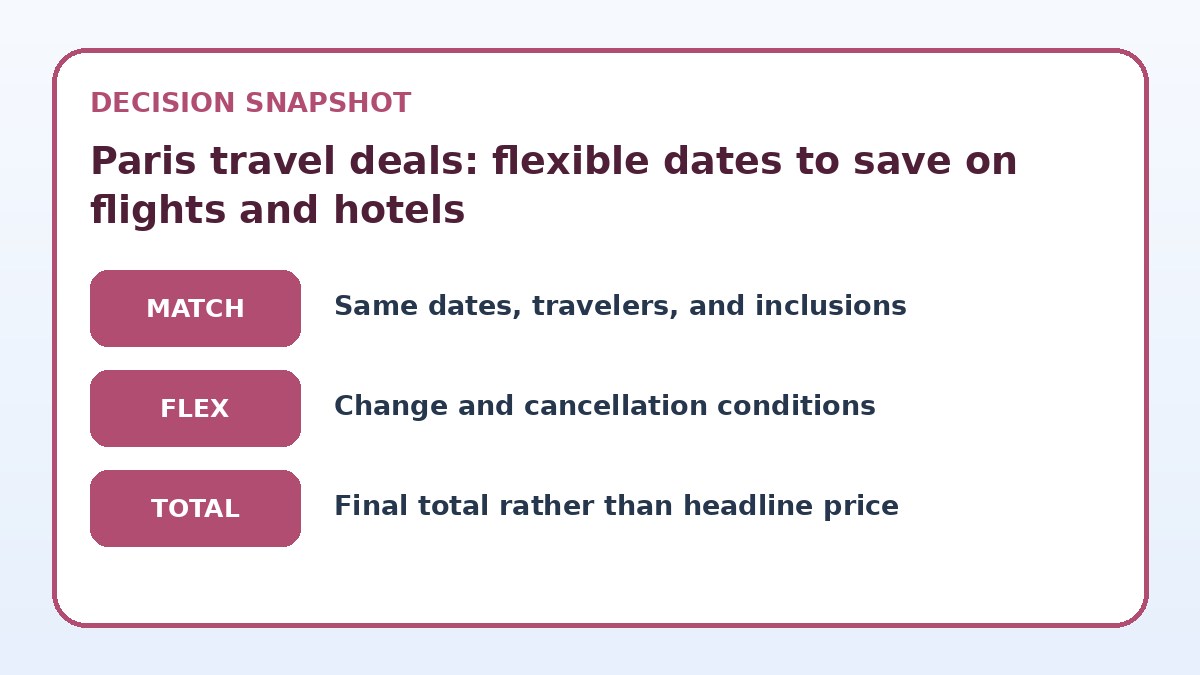
Inclusions often determine whether a package is genuinely useful. Common inclusions are baggage allowance, transfers, breakfast, and guided tours. Equally important are exclusions: low-cost airline fares may exclude checked bags or seat selection, and some hotels list breakfast as a nonrefundable add-on. For first-time visitors, a single prepaid transfer can be worth the premium if it reduces jet-lag stress and time navigating stations. When comparing, list every included item and assign a modest market cost to each — that helps you see if the packaged components really add value compared with booking similar items separately.
On provider booking pages verify what is described as ‘included’ versus ‘optional’ because marketing language can be ambiguous. Look specifically for cancellation and change terms for each included element; a package might be nonrefundable while its separate parts would be partly refundable. If a provider mentions free changes, click through to the exact policy page and note any blackout dates or per-ticket fees. Trip.com can be useful as a place to view combined availability and terms, but always confirm the final cost and policy on the booking provider’s own checkout page before completing a reservation.
Look past the headline total
Compare inclusions and change conditions before deciding whether a package is genuinely useful for this trip.
Deal comparison checklist
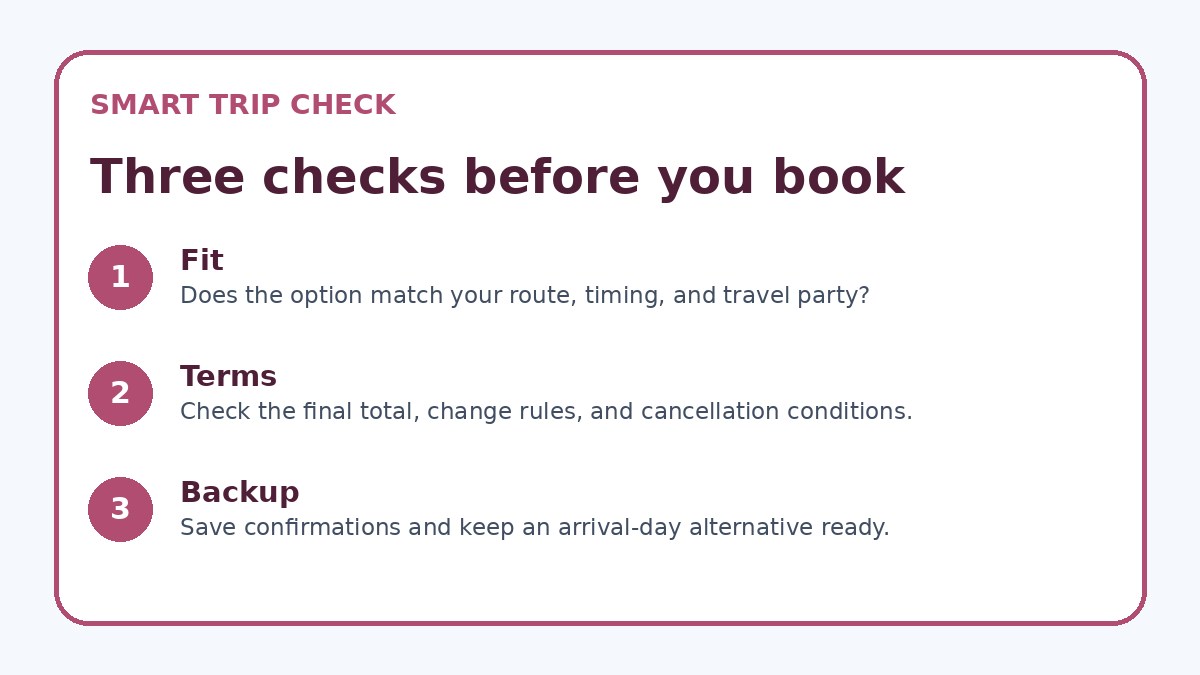
- Fix the number of travelers, room type, and total nights before running flexible-date comparisons.
- Search a 7–14 day window on both package and separate options to expose weekday and event-driven price swings.
- Itemize every inclusion (transfers, baggage, breakfast) and assign a market value to compare true cost.
- Read the provider’s final booking page for exact cancellation and change fees before confirming any purchase.
- Compare the same arrival and departure times, or note additional costs if connections extend travel time.
- If mixing suppliers, note who is responsible for rebooking if a flight delay breaks your hotel or transfer plans.
Traveler-specific value: families, seniors, and solo visitors
Different traveler types extract different value from flexible dates and bundle features. Families often benefit from predictable room adjacency and included transfers; a package that guarantees family rooms or free child breakfasts may save hassle even if it costs a little more. Seniors may prioritize refundable fares and minimal walking from station or airport, so bundles with private transfers matter. Solo travelers might find separate bookings let them target cheaper single rooms or share rides. When you test flexible dates, filter results by traveler count and room setup so the comparison reflects real needs rather than an idealized two-adult standard.
Also consider mobility and pacing. First-time visitors who want relaxed arrival days and guided orientation may assign higher value to airport pickup and an organized first-day tour. Those who prefer to roam unstructured might prefer the freedom of separate bookings, which can make switching hotels mid-trip easier. For all traveler types, create a short prioritized list of nonnegotiables (e.g., a ground-floor room for mobility reasons or a hotel with an elevator) and use those filters in every search to ensure the flexible-date results are comparable and truly relevant to your party.
Final terms and avoiding false savings
A headline lower total cost can be misleading when change fees, baggage charges, or restrictive cancellation terms are added. To avoid false savings, always compare the full cost under realistic scenarios: one where plans are fixed and one where you need to change dates. Calculate worst-case change or cancellation fees and add them to the baseline quote. If a package’s low fare requires nonrefundable airline tickets, estimate the potential cost to rebook and factor that into your decision. This approach tells you whether apparent savings remain worthwhile under plausible plan changes.
Before you click purchase, verify the final booking page for the provider shows the same components and prices you compared. Confirm the airline fare basis (refundable or not), hotel cancellation window, whether transfers are private or shared, and any seat or baggage restrictions. If you’re using a third-party site to compare packages, cross-check the provider’s checkout terms for any last-minute changes. Doing this prevents unpleasant surprises at check-in and ensures the flexible-date search you performed actually matches the purchased product.
Travel Deals & Booking Strategy questions travelers ask
How can flexible dates help me save on a first trip to Paris?
Flexible dates let you compare weekday versus weekend patterns and spot lower fares on nearby days, which is especially useful in Paris where tourist flows and business travel create peaks. Search a rolling 7–14 day window for both flights and hotels; you’ll often find cheaper midweek stays or flights that connect with minimal inconvenience. Flexible-date searches also reveal whether a package’s savings depend on specific nights or if the lower price holds across a range of dates. Use that visibility to choose dates that fit your schedule and reduce the chance of paying a premium for fixed calendar days.
Is a package better for first-timers who don’t speak French?
Packages can be helpful for travelers who prefer hands-off logistics because they often include transfers and an initial orientation, reducing stress on arrival. That convenience can offset a higher nominal cost if it saves time and confusion. However, check the terms: a package’s included transfer might be shared, and refundable options may be limited. If language support or guided orientation matters, value those inclusions explicitly and compare them to the cost of booking a private transfer or a hotel with multilingual staff separately to see which approach truly meets your needs.
What should I verify on the booking page before paying?
On the final booking page confirm the exact components you compared: total price breakdown, fare basis or refund rules for flights, hotel room type and cancellation window, transfer details (private vs shared), and any baggage or seat restrictions. Look for change-fee amounts and blackout dates. If the package is from a third-party seller, verify whether changes are handled by the seller or passed to the airline or hotel. Only finalize payment after you’re confident the checkout terms match the scenario you tested during your flexible-date comparisons.
Final decision note
Using flexible dates is the most practical tool for first-time visitors deciding between bundled packages and separate bookings for Paris travel deals. Start by fixing the number of travelers, room type, and must-have inclusions so every option you test is directly comparable. Use a 7–14 day flexible window to reveal cheaper weekdays and connecting flights, and assign real value to inclusions like transfers or breakfast. Always verify cancellation and change rules on the provider’s final booking page and add any potential penalties into your cost comparison. This disciplined approach reduces surprises and lets you choose the combination of price, convenience, and flexibility that best suits your first Paris visit.
Continue planning
Check current options and final conditions
Use the provider page to confirm live availability, the final total, cancellation terms, and every condition that matters to your trip.
This evergreen planning guide was created with AI-assisted drafting and a structured quality review. It does not display live prices, schedules, availability, visa guidance, or provider rankings. Verify current details before booking. Some links are affiliate links; we may earn a commission at no additional cost to you.