Practical answer first: before you search fares, have exact travel dates, ages and passport details for every family member, a clear maximum for total travel time, and a ranked priority list (cheapest, fewest stops, most flexible change/cancellation policy). With those four items locked in, you can compare direct and connecting options on equal terms and avoid surprises like separate baggage fees or long overnight connections that unsettle kids. This article walks families through a pre-booking checklist tailored to Sydney–Auckland travel, explaining the key tradeoffs — route versus fare, baggage and connection risk, schedule fit, and fare conditions — and shows how to prepare the exact details you need before checking live availability. Follow the checklist to speed booking, reduce stress, and make a confident choice for your family’s trip to New Zealand.
See live routes for your exact travel day
Compare direct and connecting choices with the same baggage and traveler details.
Routing: direct versus connecting choices
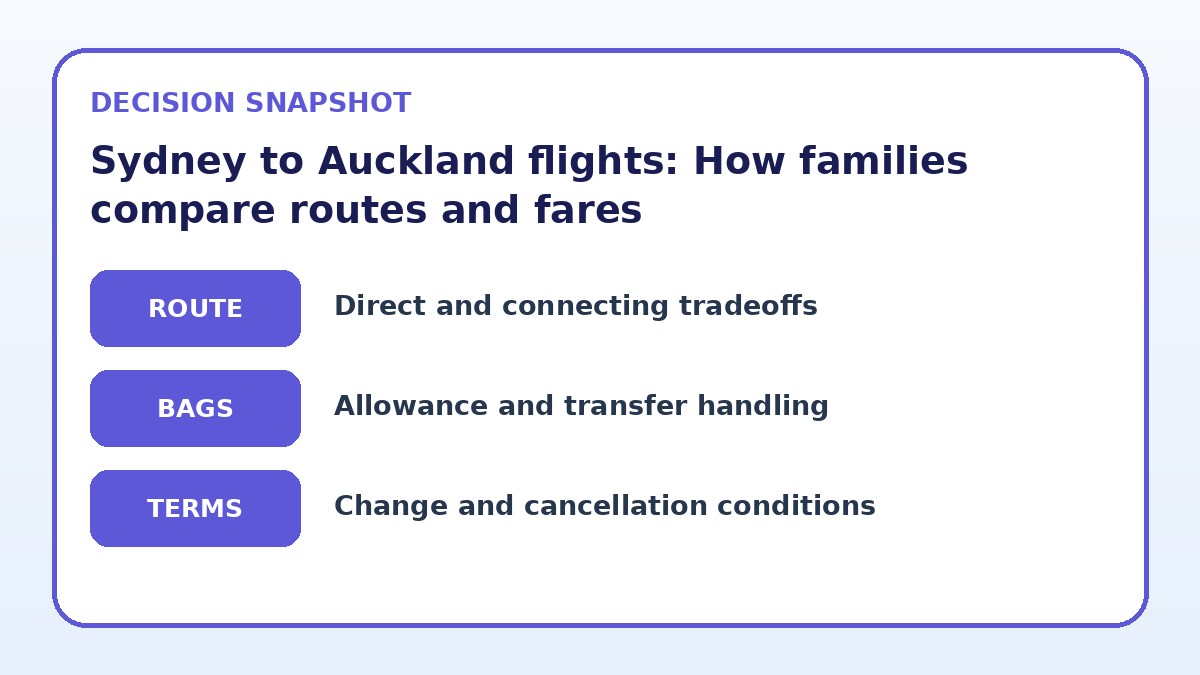
The key routing decision for families is whether to prioritize a direct flight (if available) or accept a connection that lowers ticket cost. Direct services reduce door-to-door uncertainty and typically mean fewer security lines, no transfer between terminals, and less risk of missing a next flight with children. If a direct option exists, weigh how much extra travel time, cost, and convenience it buys your family. Keep in mind that “direct” can sometimes still include a technical stop; always check whether you stay on the aircraft or must change planes on that stop.
If you consider connecting itineraries, map the connection points and minimum connection times. Look for single-airline itineraries or those on partners that protect your checked bags through to Auckland and provide protected connections in case of delay. For independent tickets or tight layovers, plan contingencies: pack essentials in carry-on, choose longer legal minimum connections if flying with infants or toddlers, and verify airport terminals to estimate transfer time and level of hassle.
Baggage and connection risk for families
Families often travel with more luggage: stroller, car seat, extra clothes, snacks, and child entertainment. Before booking, note each carrier’s checked-bag allowances, fees for additional bags, and carry-on size limits so you can compare total trip cost accurately. Also check rules for special items like car seats and strollers — some airlines allow gate check without fee, others count them as a checked item. Remember that budget carriers frequently separate the base fare from any checked baggage or seat assignments, making a perceived low fare expensive once family baggage needs are included.
Connection risk increases with the number of segments. When comparing flights, treat the risk of missed connections as a cost: longer layovers reduce stress but add waiting time and may require airport meals or lounges. If a tight connection is the only cheaper option, ensure it is booked on a single ticket where the airline is responsible for rebooking. If you must mix tickets, leave generous buffer time and be prepared to pay for priority services or fast-track transfers at larger airports to protect your schedule.
Compare flight-selection strategies
| Flight strategy | Best for | Risk to check |
|---|---|---|
| Lowest-fare hunting across carriers | Families prioritizing cost over convenience | More stops, longer travel time, and extra baggage or seat fees can erode savings and increase stress. |
| Single-carrier direct or minimal-stop bookings | Families valuing simplicity and lower connection risk | Usually higher upfront fare; check included baggage and seat rules to compare total cost. |
| Mixed-carrier or open-jaw itineraries | Families combining multi-city plans or price advantages on different legs | Higher risk with separate tickets; you may need to manage transfers and recheck luggage yourself. |
| Flexible or refundable fare selection | Families needing schedule flexibility or traveling with infants/toddlers | Typically more expensive; evaluate whether flexibility outweighs the added fare premium. |
Recheck the complete itinerary
Confirm airports, connection handling, baggage, and change conditions before deciding.
Schedule fit: matching flights to family routines
Assess flight times against your children’s routines. Early-morning departures can be manageable if you can get to the airport quickly and the kids sleep on the plane; late-night arrivals may disrupt the first day of your holiday. For toddlers and babies, mid-morning departures often hit a sweet spot between pre-flight prep and nap schedules. Consider airline seat policies for bassinets and whether the aircraft type commonly used on the route has the configuration you need; verify seat maps during the booking flow to ensure family seats are adjacent.
Also factor in pre-departure logistics: travel time to Sydney airport, morning rush-hour traffic, childcare or school drop-off adjustments, and the need for visas or entry documentation. For return legs, align arrival times in Sydney with transport availability and the family’s next-day commitments. If you plan to spend an evening after arrival, a later arrival could be preferable; otherwise, aim for a schedule that gives everyone time to rest and adjust without a cramped connection.
Flight details to verify
- Gather full legal names, passport numbers, dates of birth, and nationalities for every traveler and save them in a single document before searching fares.
- Decide on acceptable total journey time and maximum number of stops; mark preferred departure and arrival time windows for both outbound and return legs.
- Estimate required baggage: number of checked bags, carry-on needs, and any child-specific items (car seats, strollers), then check each airline’s baggage fees and policies.
- Check seat availability and whether bassinet seats, adjacent rows, or extra-legroom seats can be reserved at booking; note any associated fees.
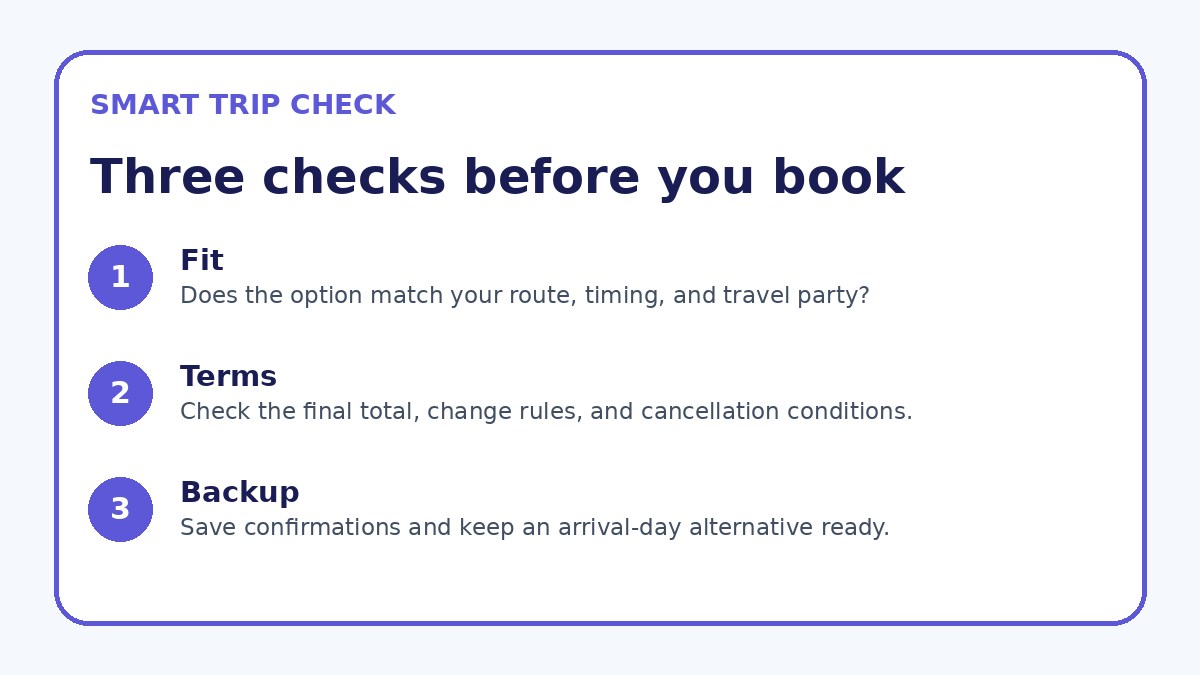
- Compare fare conditions on the carrier’s final booking page: change and cancellation rules, refundability, name-correction policies, and included ancillaries.
- Plan connection buffers: set a minimum layover time for each connection and confirm whether through-checked baggage and protected connections apply on multi-leg itineraries.
Fare conditions: what to verify on the booking page
Before you hit purchase, read the fine print on fare conditions. Key items: change and cancellation fees, refundability, how name corrections are handled, whether seat selection and checked bags are included, and whether infant fares or child discounts apply. If you rely on flexible travel plans, prioritize fares allowing free or low-cost date changes; if not, a restricted lower fare might still be economical but with higher risk. Always confirm what travel credits or vouchers you receive if a flight is canceled and which contact channels the airline uses for rebooking families.
Also verify what the final checkout page displays for total cost, including ancillary fees. Airlines sometimes show a headline fare and add mandatory taxes or carrier surcharges later in the booking flow; luggage or preferred-seat fees can be optional until you add them. When provider-specific facts could change, check the airline’s final booking page or the live aggregator you prefer (Trip.com can be used as one place to compare current availability) before confirming. Note payment protection, travel insurance add-ons, and any clause about promotional fares or bundled packages.
Flight Guide questions travelers ask
Should I always choose a direct Sydney to Auckland flight for my family?
A direct flight reduces transfer hassle and the chance of missed connections, which many families find worth a higher fare. But direct options may cost more and sometimes have less convenient departure times. Compare the total door-to-door travel time, not just airborne time, and weigh whether the extra cost buys you meaningful comfort or a schedule that fits your children’s routines. If a direct flight significantly shortens travel time and simplifies logistics, it’s often the right choice, but a well-timed one-stop itinerary can work if it aligns with family priorities.
How far apart should connections be when traveling with small children?
Allow more buffer than the absolute minimum: plan at least 90–120 minutes for domestic-to-international or international-to-international connections with children, and consider longer if you must change terminals or re-clear security. Minimum times vary by airport and whether your luggage is checked through. Longer layovers reduce stress, give time for restroom breaks and snacks, and provide a cushion for small delays. If you must accept a tighter connection, pack an essentials carry-on with snacks, medication, a change of clothes, and entertainment for quick contingencies.
What fare rules matter most when booking family tickets between Sydney and Auckland?
Prioritize flexibility and clarity: confirm change and cancellation fees, whether tickets are refundable, and how name corrections and date changes are handled. Understand included baggage allowances, whether infant fares require a different booking, and whether seat assignments are guaranteed at purchase. Also check the airline’s policy for travel disruptions and family rebooking procedures. Before final payment, verify the complete price breakdown on the airline’s checkout page, including taxes and optional fees, so there are no unexpected charges after booking.
Final decision note
Families booking Sydney to Auckland flights should prepare exact traveler details, a clear travel-time tolerance, and a ranked list of priorities before searching. Use the checklist to compare direct and connecting options on equal footing: factor in total door-to-door time, baggage needs, connection risk, and fare flexibility. When you review live options, verify the carrier’s final booking page for baggage rules, seat reservation availability, fare change and cancellation conditions, and total payoff including ancillaries. With those pieces in place, you’ll be able to pick an itinerary that balances cost against comfort and stress — and arrive ready to enjoy your time in New Zealand instead of managing surprises at the airport.
Continue planning
Check current options and final conditions
Use the provider page to confirm live availability, the final total, cancellation terms, and every condition that matters to your trip.
This evergreen planning guide was created with AI-assisted drafting and a structured quality review. It does not display live prices, schedules, availability, visa guidance, or provider rankings. Verify current details before booking. Some links are affiliate links; we may earn a commission at no additional cost to you.