Pick the neighborhood first: for couples planning a New York City stay, that single choice determines your daily rhythm and the kinds of experiences you'll share. Choose Midtown if you want short walks to major theaters and iconic landmarks; choose the West Village or Greenwich Village for quieter evenings, boutique hotels and easy dinner walks; choose Dumbo or Williamsburg in Brooklyn to trade skyline views and relaxed cafes for longer subway rides into Manhattan; choose the Upper West Side for museums and park mornings. This article gives the practical answer up front and then lays out tradeoffs — daily-route friction, room and party needs, and final booking terms — so you can confidently shortlist one area and only then check live New York City hotels inventory on a booking site like Trip.com or a hotel’s own page.

Check live stays in the areas that fit
Use your dates and party size to compare current rooms after you narrow the neighborhood fit.
Which neighborhood fits your couple style?
Start by naming what matters to both of you: short walks to shows, late-night neighborhood bars, skyline views, or leafy park breakfasts. If your ideal day is a museum morning, lunch at a nearby cafe and a long Central Park walk, then the Upper West Side or Upper East Side aligns well. If you imagine hopping between galleries, coffee shops and independent boutiques with dinner at intimate restaurants, Greenwich Village or the West Village will better match that pace. For couples who want the iconic Manhattan skyline in photos and relaxed waterfront strolls, Brooklyn neighborhoods like Dumbo or Brooklyn Heights make an appealing base, with more space and a slightly calmer evening vibe.
When choosing, consider shared routines: are you early risers who’ll use subway lines first thing? Do you want to be within walking distance of one main attraction each day, or are you planning to move across the city frequently? Map out two typical days — one daytime-heavy, one evening-heavy — and highlight likely start and end points. That simple map will reveal whether a central Midtown location saves time, or whether a village or Brooklyn base will better serve your preferred rhythms and budgets. Avoid picking a neighborhood because it looks charming in photos if the commute pattern doesn’t fit your pair’s real habits.
Choose an area-selection strategy
| Area approach | Best for | Tradeoff to check |
|---|---|---|
| Pick Midtown for minimal transit time | Couples prioritizing theater, major attractions and quick daytime logistics | Busier streets, less intimate neighborhood atmosphere and smaller boutique feel |
| Choose Greenwich/West Village for atmosphere | Couples wanting walkable dinners, neighborhood charm and quieter evenings | Longer transit times to major Midtown attractions and museums |
| Base in Dumbo/Williamsburg in Brooklyn | Couples seeking skyline views, waterfront strolls and creative dining scenes | Commutes into central Manhattan tend to be longer, requiring planning for mornings and theater nights |
| Stay Upper West Side for parks and museums | Couples who value mornings in green space and close museum access | Fewer late-night neighborhood hotspots; some hotels have smaller rooms than Midtown counterparts |
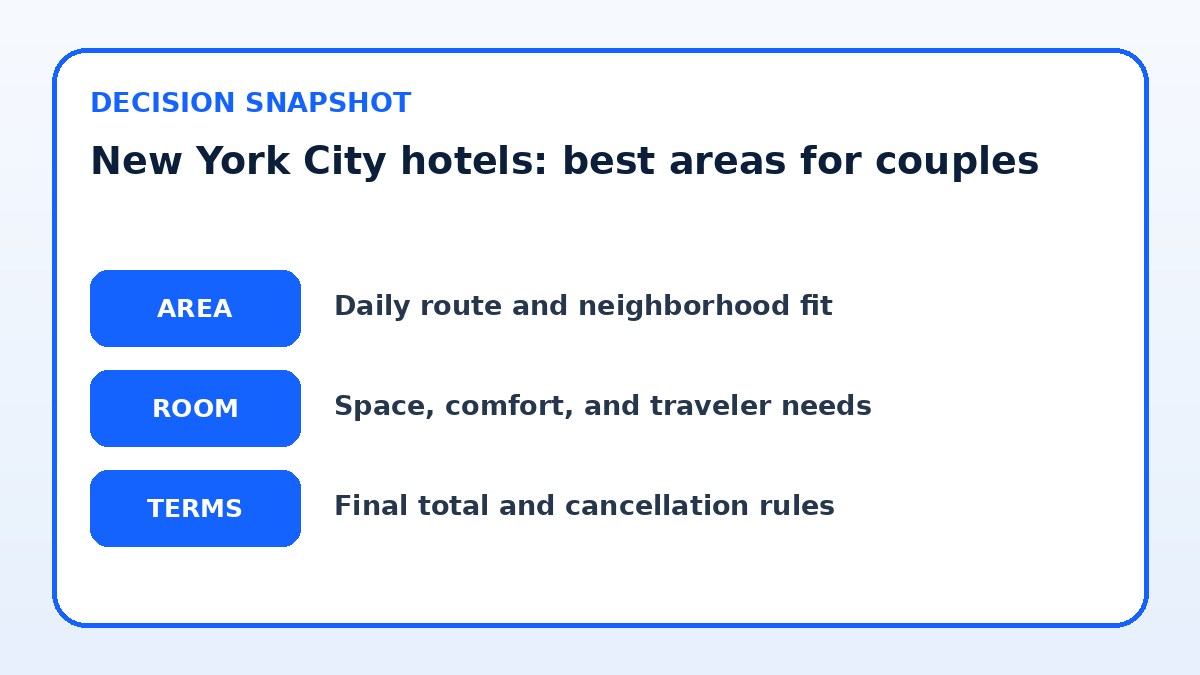
Daily-route friction: transit and evening logistics
Every neighborhood has a different kind of friction: Midtown minimizes transit times to central attractions but increases street noise and crowded sidewalks at night. Villages cut down on taxi and subway reliance for evening plans because many restaurants and bars are within walking distance, which can make late nights more relaxed and romantic. Brooklyn choices often mean fewer hotel options directly by subway lines that run express into Midtown; that’s a tradeoff if you plan morning theater or daytime Manhattan sightseeing. Consider where you’ll arrive and depart: trips to or from airports, cruise terminals, or intercity stations may add transfer steps depending on neighborhood selection.
Think about who’s carrying luggage and how you like to move between activities. If one partner prefers not to ride subways, look for neighborhoods with strong surface transit (ferries, frequent crosstown buses, or plentiful rideshares). For evening timing, check whether your chosen area has late-night options within walking distance to avoid paying for rides home. Also consider staircases in older boutique hotels versus larger chain properties with elevators and luggage assistance; these amenities reduce friction after long days and can be part of the neighborhood assessment when comparing New York City hotels.
Now compare like with like
Keep the same dates, guests, room needs, and cancellation preferences while you compare the final choices.
Room and party needs: size, privacy and in-room features
Couples often underestimate how much room layout and in-room amenities affect the stay. If you plan to spend relaxed mornings or late evenings in the room — breakfast in bed, stretching between activities, or working remotely for an hour — prioritize larger rooms or suites and hotels advertising separate seating areas. Boutique village hotels frequently have atmospheric rooms but smaller footprints, whereas Midtown and Upper West Side hotels often offer more standardized room sizes and clearer information about bed configurations and accessible rooms. If one partner needs a desk or strong Wi-Fi for work calls, confirm those specifics before booking rather than assuming business-friendly features are standard.
Privacy and noise are also neighborhood-dependent. Busy thoroughfares and neighborhoods near nightlife can introduce late-night noise; ask about room orientation (street vs. courtyard) and double-glazing on the provider’s booking page. For a romantic stay, look for in-room extras you both value: minibars or tea kettles, room service hours to match your evening plans, and blackout curtains for late mornings after a night out. When you shortlist New York City hotels, compare room photos, bed types, and the exact cancellation and check-in terms so the room supports your shared needs.

Hotel booking check before payment
- Map two typical days with start and end points to see which neighborhood minimizes transit for your plans.
- Check room layout photos and verify bed configuration, seating areas, and Wi‑Fi details on the hotel’s official booking page.
- Confirm cancellation and change policies, plus any extra fees or incidental holds before finalizing a reservation.
- Compare walking distances to at least two restaurants or bars you’re likely to visit at night to avoid frequent rideshares.
- Ask the hotel about soundproofing or request a courtyard-facing room if late-night noise matters to your couple’s sleep quality.
- If accessibility or mobility is a concern, call the hotel to confirm elevator access, room entry dimensions, and bathroom facilities.
Booking terms, what to verify, and the final shortlist
Before you hit reserve, compare the specific booking terms that affect couples: check-in and check-out times, cancellation policies, whether the rate includes breakfast, and how taxes and incidental holds are handled. Do not rely on third-party descriptions alone; confirm room amenities, airport transfer options, and whether the hotel charges an additional resort or facility fee on the provider’s final booking page. If either of you needs accessible features, verify accessible room availability and specifications directly with the hotel to avoid surprises after arrival.
Make a shortlist of two neighborhoods and then two hotels per neighborhood to compare these practical items side by side. Prioritize the items that change your trip quality most: noise level, room size, and cancellation flexibility. Use a map view to confirm walking distances to the two places you’ll most visit, and check local transport options for the days you’ll travel farther. For live rates and availability compare options on trustworthy booking sites such as Trip.com, then always confirm key provider details on the hotel’s own reservation page before finalizing.
Hotel Guide questions travelers ask
How do I decide between Manhattan and Brooklyn neighborhoods for a romantic stay?
Start by prioritizing what will make your days together easiest. If you prefer being steps from Broadway, museums and landmark sights, Manhattan neighborhoods such as Midtown or the West Village cut travel time between daytime and evening activities. If skyline views, waterfront walks and quieter evenings appeal, Brooklyn neighborhoods like Dumbo or Brooklyn Heights offer a more relaxed pace. Compare typical transit needs for the days you’ll visit Manhattan attractions: longer commutes from Brooklyn are acceptable if you plan fewer Manhattan-heavy days, but less so if you’ll commute into Midtown each morning.
Should couples pick a boutique hotel or a larger chain in New York City?
Boutique hotels often provide personality, quieter streets and atmosphere that suit romantic stays, but they may have smaller rooms, narrow staircases and limited services. Larger hotels usually offer clearer information about room sizes, consistent service, elevators, and on-site amenities like 24-hour desks and in-house dining, which reduce friction after long days. Choose based on how much in-room time you want and whether amenities like 24-hour reception, luggage service, or an on-site restaurant matter — verify those features on the hotel’s booking page before reserving.
What room features matter most for couples, and what should I check before booking?
Prioritize room size, bed configuration and noise control. If you plan long mornings together or need a workspace, request a room with a separate seating area and reliable Wi‑Fi. Verify whether the hotel shows room photos of the actual room category you’re booking, and confirm orientation (street vs courtyard) to assess likely noise. Also check check-in/out times that match your travel schedule and whether breakfast is included if you prefer hotel mornings. Always confirm these specifics on the provider’s final booking page rather than relying solely on third-party summaries.
Final decision note
Shortlist by neighborhood, then compare hotel room details and booking terms. For most couples, choosing the right area determines daily stress and the kinds of memories you’ll make: pick Midtown to minimize commuting for major attractions, choose the Villages for intimacy and walkable evenings, select Brooklyn for skyline views and relaxed waterfront time, or opt for the Upper West Side for park mornings and museum access. Once you’ve narrowed to two neighborhoods, pick two hotels each and compare room size, noise orientation and cancellation rules on the hotel’s booking page. Use a booking site such as Trip.com to check real-time availability, but always confirm the provider’s final terms before you commit.
Continue planning
Check current options and final conditions
Use the provider page to confirm live availability, the final total, cancellation terms, and every condition that matters to your trip.
This evergreen planning guide was created with AI-assisted drafting and a structured quality review. It does not display live prices, schedules, availability, visa guidance, or provider rankings. Verify current details before booking. Some links are affiliate links; we may earn a commission at no additional cost to you.