If you’re traveling from Seoul to Bali with extra luggage—surfboards, diving gear, gifts, or bulky checked bags—you should plan your route and airport time differently than a light-packer. The practical answer: decide first whether you want one-ticket protection (fewer transfer risks) or the lowest fare even if it means separate tickets; then buy the correct checked/oversize allowance before check-in and add minimum connection time suited to gear handling and customs. That combination—route choice plus confirmed baggage purchases plus conservative airport time—reduces the chance of delays, surprise fees, or missed connections. Below I’ll walk through the routing tradeoffs, how to confirm and pay for excess baggage, realistic airport timelines in Seoul and Bali, plus fare-condition checks to keep your heavy-luggage trip smooth.
See live routes for your exact travel day
Compare direct and connecting choices with the same baggage and traveler details.
Route choices: direct, one-stop, or separate tickets
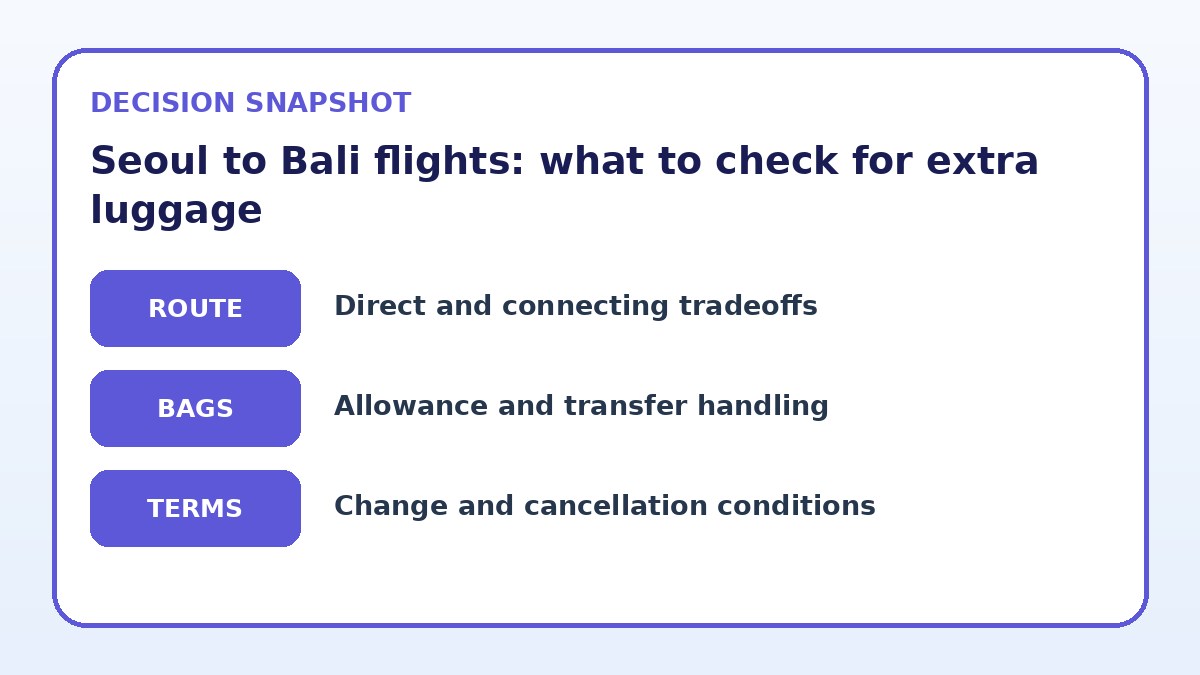
Choosing between direct flights, single-airline connecting itineraries, or separate-ticket combinations is the first and biggest decision for travelers with extra luggage. Direct or single-ticket itineraries usually let the airline transfer checked bags through to the final destination—reducing the need to recheck or carry heavy items between connections. That matters when you have bulky gear that is awkward to move through terminals or when you want protection if a connection is delayed and a bag misses the next flight.
By contrast, separate tickets or itineraries with different carriers can be cheaper but increase handling and connection complexity: you may need to collect checked luggage, clear customs, and recheck with the next airline. For each potential itinerary, confirm on the airline booking page whether interline baggage transfer is offered, whether oversized items require prior notice, and what the transfer desk policy is at your connecting airport.
Baggage allowances, oversize items, and how to buy space
Airlines and fare types define weight, piece limits, and maximum dimensions for checked baggage. Low-fare cabins often exclude checked bags or include only one small checked piece; premium or flexible fares usually allow heavier or more pieces. For oversize or heavy items—surfboards, musical instruments, scuba equipment—many airlines require a separate baggage charge, advance notice, and sometimes crate requirements. Confirm the permitted dimensions and weight for each item on the carrier’s final baggage policy page before booking.
When adding extra allowance, buy it through the airline’s official site or the booking platform’s final confirmation page to ensure it’s linked to your reservation. Pre-purchasing checked baggage is usually cheaper than paying at the airport and secures space allocation for large items. Also check whether the airline requires items to be declared as special baggage, carries maximum per-item weights, or will refuse transport without prior approval—information you must verify on the carrier’s booking or support pages.
Compare flight-selection strategies
| Flight strategy | Best for | Risk to check |
|---|---|---|
| Single-ticket itinerary with checked-through bags | Travelers who want lower transfer risk and simpler airport flow with bulky luggage. | Typically higher fare; must book with carriers that support interline transfer for oversize items. |
| Cheaper connecting fares on separate tickets | Price-sensitive travelers willing to manage baggage rechecks and longer layovers. | Higher connection and baggage-handling risk; you must collect and recheck luggage and allow extra time. |
| Direct flight (when available) | Those who prioritize the fewest handoffs and the shortest total travel time with heavy or fragile gear. | May be more expensive or have stricter baggage limits; direct options may not exist on all dates. |
| Low-cost carrier with add-on baggage | Travelers who want to control costs by paying only for the baggage they need. | Baggage purchased separately, limited flexibility, and potentially strict size/weight enforcement at the airport. |
Recheck the complete itinerary
Confirm airports, connection handling, baggage, and change conditions before deciding.
Airport time: check-in, oversized handling, and minimum connections
Start by increasing your check-in lead time in Seoul. For standard checked luggage many airlines request arrival 2–3 hours before international departures; with extra or oversize baggage add another 60–120 minutes to allow for crate checks, overweight processing, and possible oversized-item counters or cargo areas. If you’re dropping surfboards or other special items, airline desks often divert you to a different counter or cargo handling area that takes more time. Arrive with measurement and weight documentation if you used a private shipper.
If you have a connecting flight, build minimum connection time buffers that account for baggage recheck, immigration, and security. For single-ticket itineraries where bags are checked through, you still need to allow time for long transfer walks, secondary screenings, and potential delay recovery. If tickets are separate, assume you must clear immigration, collect baggage, recheck, and pass security—plan at least three or more hours depending on terminal layouts and peak periods.
Flight details to verify
- Decide whether to prioritize single-ticket protection or lowest fare and note this before searching for flights.
- Measure and weigh every oversized item and photograph dimensions to speed check-in and cargo acceptance.
- Check the carrier’s final booking page for per-segment baggage limits and buy additional allowance before payment.
- Allow at least 60–120 extra minutes at Seoul departure airport for oversized- or special-baggage processing.
- If using separate tickets, add at least three hours for transfer, baggage recheck, and immigration between flights.
- Save and screenshot booking confirmations that show baggage purchases and any special-baggage approvals or instructions.
Fare conditions, cancellations, and what to verify before booking
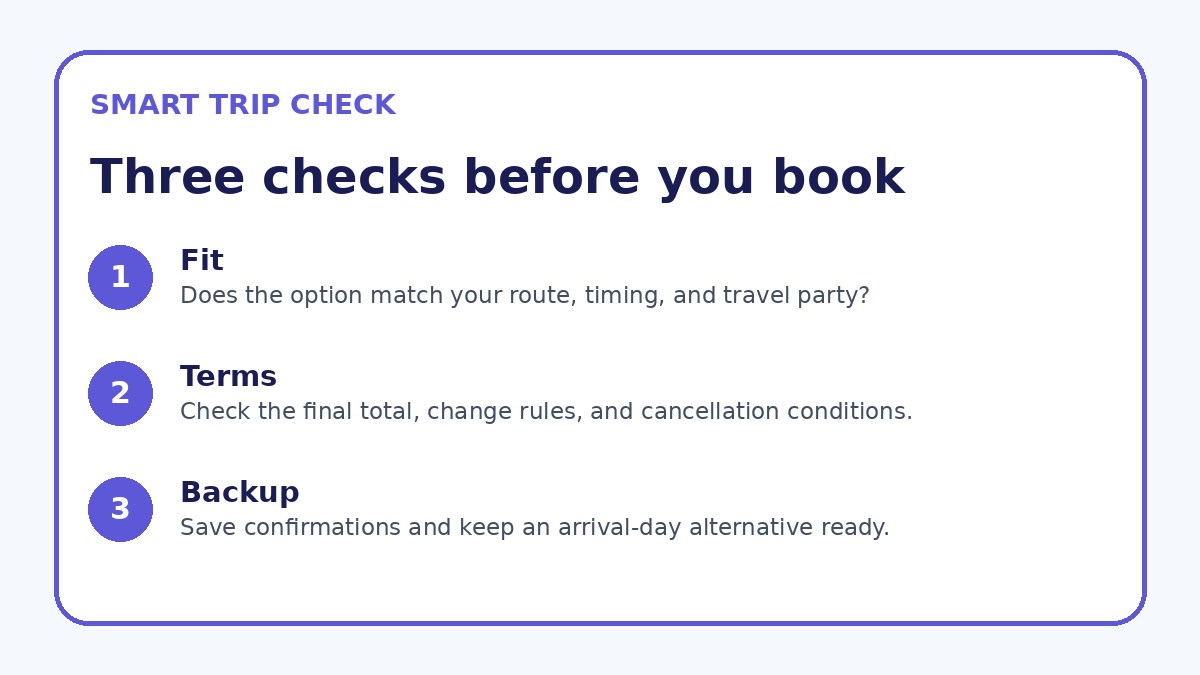
Fare rules matter when you carry extra luggage because you may need flexibility to change flights if a connection fails or if baggage is delayed. Carefully read the fare conditions on the carrier’s final booking page for change fees, rebooking rules, and refund eligibility. Also confirm exactly which fare class the ticket belongs to and whether your purchased baggage allowance is refundable or transferable if you change flights—these specifics appear only on the airline’s published fare rules.
Before confirming payment, verify the booking page shows the baggage allowances you purchased applied to your specific flight segments, and check whether the carrier requires any additional paperwork for oversized items. If you plan to use separate tickets, check the transit and visa requirements at each airport and whether you need to enter the country to collect baggage. Where practical, save screenshots of the final confirmation pages that display baggage items and allowances.
Flight Guide questions travelers ask
Should I ship oversized items to Bali ahead of my flight or check them on the plane?
Deciding to ship or check oversized items depends on cost, timing, and risk tolerance. Shipping via a freight forwarder lets you avoid airline oversize charges and the hassle of moving bulky gear through airports, but it requires more planning, reliable pickup/delivery timing, and possibly customs paperwork. Checking the item on your flight keeps everything together with your trip but may mean high airline fees, size/weight limits, or the need to crate items to airline standards. Compare transit times, documented delivery windows, and the carrier’s baggage rules; verify customs requirements for shipped goods to Bali before choosing.
How much extra airport time should I realistically add for surfboards or sports equipment when leaving Seoul?
For surfboards or similar sports equipment, add a conservative buffer on top of standard international check-in: plan an extra 60–120 minutes beyond the airline’s published recommendation. The additional time covers moving items to a specialized counter or cargo handling area, measuring and weighing, payment of oversize fees, and possible crate checks. Peak periods, aircraft changes, and special handling procedures at your carrier can increase processing time. Check the airline’s special baggage instructions and call the airline or airport cargo desk in advance to confirm where you should present the item.
What exactly should I verify on the airline’s final booking page related to baggage?
On the airline’s final booking page, confirm the exact number of included checked pieces, weight and size limits per piece, any per-item maximum weight, and specific rules for oversized or sports equipment. Ensure any purchased extra allowance is displayed and linked to each relevant flight segment. Look for notes about special-baggage bookings, mandatory advance notice, crating requirements, or prohibited items. If anything is unclear, contact the airline’s baggage or reservations team and keep screenshots of the final page showing the allowances and paid extras.
Final decision note
Traveling from Seoul to Bali with extra luggage is manageable with straightforward preparation: pick a routing strategy that matches your tolerance for transfer risk, buy the right baggage allowance on the booking page, and give yourself a wider airport time buffer for oversized items. Single-ticket itineraries minimize handoffs; direct flights minimize total handling; separate-ticket savings might be attractive but require extra time and effort to recheck luggage. Before you book, measure and weigh items, confirm baggage rules on the carrier’s final page, and factor in extra processing time at both ends. When in doubt, call the airline to confirm special-equipment requirements and secure written confirmation of any purchased allowances.
Continue planning
Check current options and final conditions
Use the provider page to confirm live availability, the final total, cancellation terms, and every condition that matters to your trip.
This evergreen planning guide was created with AI-assisted drafting and a structured quality review. It does not display live prices, schedules, availability, visa guidance, or provider rankings. Verify current details before booking. Some links are affiliate links; we may earn a commission at no additional cost to you.