Short answer: pick the routing that balances time in the air, overall journey time, and the lowest personal risk for missed connections or baggage loss. Solo travelers headed from Seoul to Busan who need a long-haul connection should treat the trip like two linked reservations: choose a connection city and airline alliance that minimize transfers, allow realistic connection times, and have clear baggage-throughcheck rules. Before you search, gather exact travel dates, mobility needs, checked-bag plans, and your minimum acceptable arrival time in Busan. This article explains the route-versus-fare tradeoffs, how to evaluate baggage and connection risk, schedule fit, and fare conditions so you can make a comfortable, defensible booking decision.
See live routes for your exact travel day
Compare direct and connecting choices with the same baggage and traveler details.
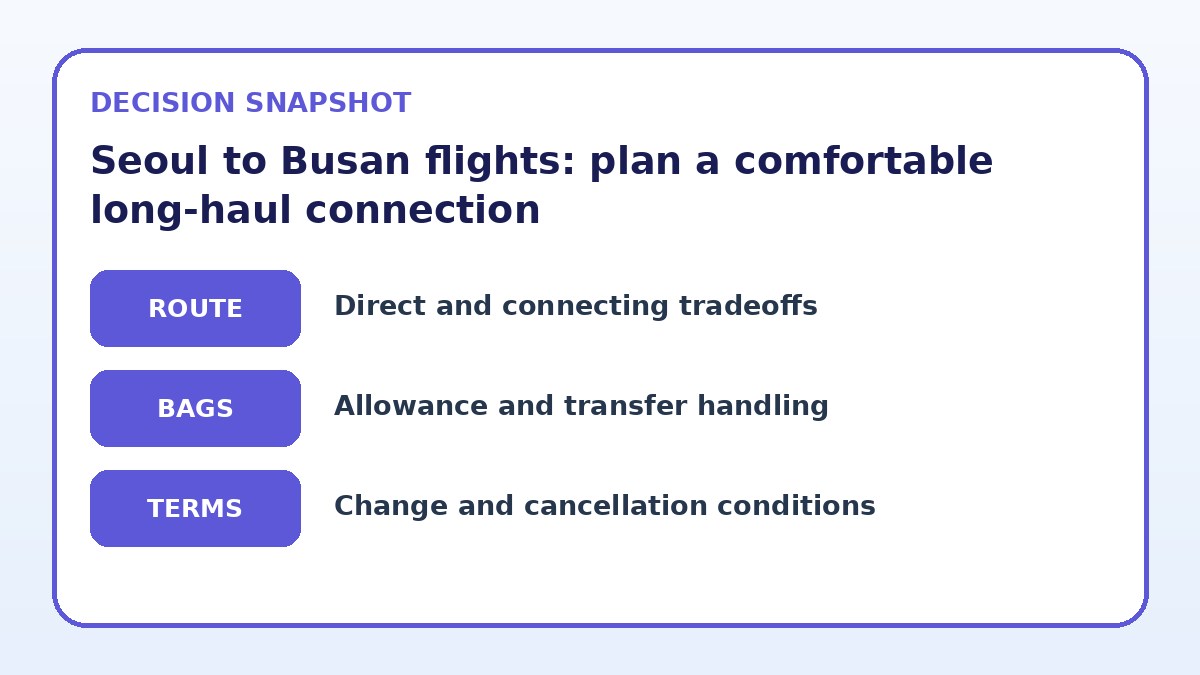
Routing: direct vs. single-connection vs. multi-stop
For a Seoul to Busan journey that requires a long-haul connection, the core routing choice is whether to book a single through-ticket with one connection or to break the trip into separate tickets. Single-connection itineraries usually route you through a major airport where the same carrier or alliance handles both legs; that reduces baggage transfer risk and increases protection if a delay causes a missed connection. Multi-stop or self-connection combinations can lower fares but transfer responsibility to you, requiring more buffer time between flights and a willingness to re-check bags and possibly clear security or immigration.
When evaluating routes, consider airport layout and how easy transfers are at the connecting hub. Factor in the number of transfers and whether each leg is on the same ticket. A longer single-connection itinerary with one quality layover can be more comfortable than a quicker-looking itinerary that forces you to run between terminals or re-check luggage. Always check the provider’s booking page to confirm whether your baggage is checked through to Busan and what happens if the inbound leg is delayed.
Baggage and connection risk: how to protect your checked items
Checked baggage is the biggest comfort and risk factor on linked itineraries. If you buy a through-ticket that includes both legs, many carriers will transfer your checked bag automatically and accept responsibility if the first flight causes a missed connection. But policies vary: some low-cost or interline connections require you to claim and re-check bags. Before booking, read the fare rules and the airline’s baggage transfer policy on the final booking page and confirm whether the itinerary is on a single ticket or two separate tickets.
As a solo traveler, consider traveling with a carry-on only if you want the simplest transfer and the least stress. If you must check a bag, add at least 60–90 minutes of scheduled connection time for domestic transfers and longer for international-to-domestic pathing that may involve immigration. Purchase a fare that includes protection for missed connections or look for an option with flexible rebooking to avoid paying full reissue fees if the schedule changes.
Compare flight-selection strategies
| Flight strategy | Best for | Risk to check |
|---|---|---|
| Single through-ticket with one connection | Solo travelers who want lower risk for checked baggage and airline rebooking protection | Often costs more than separate tickets but reduces the chance you’ll need to rebook or re-check bags |
| Self-connection using two separate tickets | Budget-conscious travelers comfortable managing transfers and re-checking baggage | Lower ticket price offset by higher missed-connection risk and no airline obligation to rebook you |
| Itinerary with a long scheduled layover | Travelers prioritizing stress-free transfers and time to manage delays or collect bags | Longer total travel time, possible extra expense for transit or lounge access during layover |
| Higher fare refundable or flexible ticket | Solo travelers who value schedule flexibility and simple rebooking with minimal fees | Higher upfront cost but fewer surprises if you must change plans due to delays or personal reasons |
Recheck the complete itinerary
Confirm airports, connection handling, baggage, and change conditions before deciding.
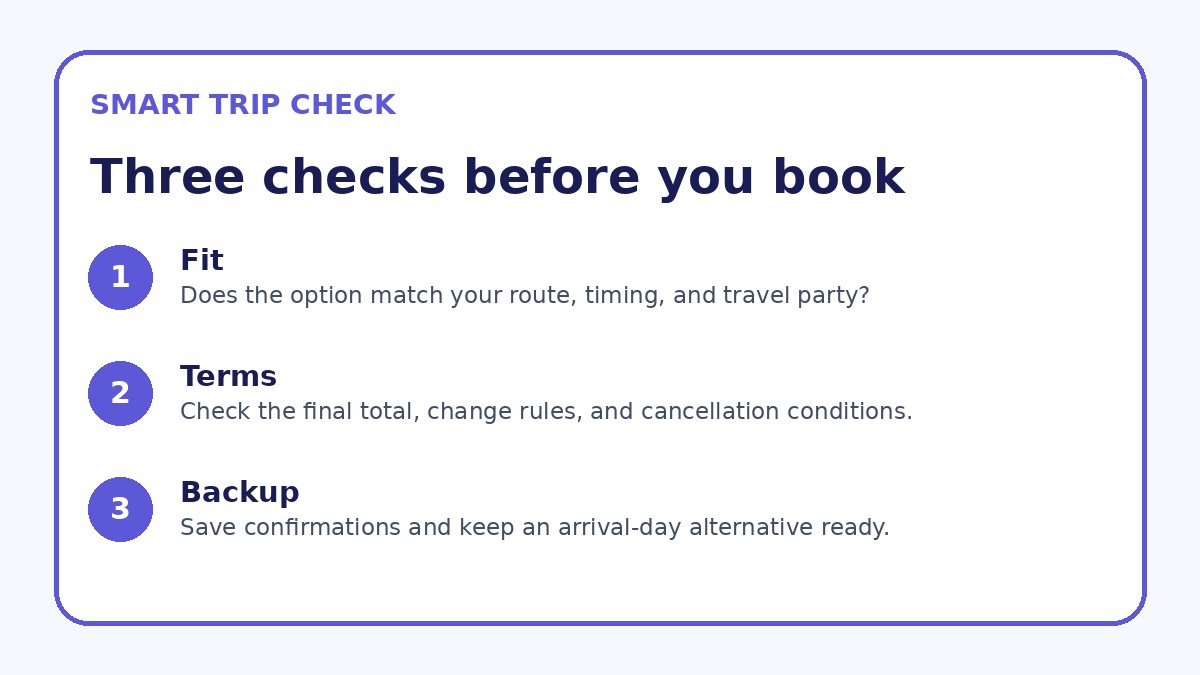
Schedule fit: departure, arrival, and realistic connection windows
Comfort is largely about realistic schedules. Choose departure times that suit your energy levels and local transport options in Seoul, and arrival times in Busan that leave you with safe onward options. When you have a long-haul connection, don’t let computerized shortest-travel-time results dictate your choice; calculate total door-to-door time including transfer walking, security, and potential delays. Solo travelers should add cushion time for immigration and unexpected waits, especially during busy travel periods or inclement weather.
When comparing schedules, note whether the connection requires a terminal change or bus transfer — that adds minutes and stress. Also check the minimum connection time stated by the airline for the connecting airport and add extra time if you plan to collect bags or move between domestic and international terminals. Finally, verify on the airline’s final booking page how rebooking works if the carrier cancels or significantly delays a flight, and whether that protection applies to your itinerary type.
Flight details to verify
- Before searching, note exact travel dates, preferred airports, passport name and number, and how many checked bags you'll bring.
- Filter search results for single-ticket itineraries and confirm on the booking page whether baggage is checked through to Busan.
- Choose connection times that exceed the airline’s minimum by at least 30–60 minutes for same-ticket transfers and more for separate tickets.
- Compare fare conditions on the carrier’s final booking page: change fees, refundability, and whether seat selection is included.
- If booking separate tickets, plan for carry-on only or allow ample time to reclaim and re-check bags through customs and security.
- Save or screenshot the booking confirmation and the fare rules so you can show them to airline staff if a rebooking issue arises.
Fare conditions and protections: refundability, change fees, and baggage rules
Fare conditions determine how flexible and comfortable your trip will be if plans shift. Cheap fares often come with strict change or cancellation fees and limited seat selection; that can be uncomfortable for solo travelers who value certainty. When you’re comparing options, prioritize fares that include reasonable change allowances, seat assignments for comfort, and a clear baggage allowance that matches your needs. Remember to verify the fare rules on the carrier’s final booking page — including whether changes are permitted without a fee, or only with a fare difference plus administrative charges.
Also consider travel disruption protections: some through-tickets and alliance bookings explicitly offer rebooking at no extra cost if a missed connection is the airline’s responsibility. This protection is far less reliable with separate tickets. If avoiding rebooking hassle matters, choose an itinerary that bundles both legs on one ticket or opt for a flexible fare class. Always document what the carrier promises on the booking confirmation and keep a screenshot or PDF of the relevant fare rules.
Flight Guide questions travelers ask
How much connection time should I allow when planning a Seoul to Busan long-haul connection?
For single-ticket connections where baggage is checked through, allow at least the airline’s stated minimum connection time plus 30–60 minutes for unexpected delays and walking between gates. If your itinerary is on separate tickets or requires you to collect and re-check luggage or pass immigration, plan substantially more cushion — often two to three hours or whatever time lets you comfortably clear customs and reach the departure terminal. Verify terminal transfer requirements and minimum connection times on the airline’s booking page before you finalize the reservation.
Can I rely on the airline to rebook me if I miss my connection?
If both legs are on the same ticket and the airline controls the delay, carriers typically rebook passengers onto the next available service, but policies and timelines vary. If you booked two separate tickets, the airline for the first leg has no obligation to rebook you for a missed second leg. Always check the airline’s disruption or rebooking policy on the confirmed itinerary page and consider buying a flexible fare or travel protection if rebooking certainty matters to you.
Should I travel carry-on only on a long-haul connection between Seoul and Busan?
Traveling carry-on only simplifies transfers because you avoid collecting and re-checking bags and reduce the risk of delayed luggage. For solo travelers who value speed and lower stress, carry-on only is often the most comfortable choice. If you need to check a bag, choose a single-ticket itinerary that confirms checked-bag through-transfer, or add generous layover time if you must collect and re-check. Always verify baggage allowances and size/weight rules on the airline’s booking page before you finalize your purchase.
Final decision note
Plan with the assumption that comfort costs something in time or fare. For solo travelers on Seoul to Busan routes with a long-haul connection, a single through-ticket with an appropriate layover gives the best balance of baggage protection and lower rebooking stress. If you need to economize, accept the additional buffer time and the task of re-checking luggage that separate tickets demand. Before you hit buy, collect exact travel dates, passenger details, and baggage plans; read the carrier’s final booking page for baggage-throughcheck rules, change and refund conditions, and minimum connection times. Consider Trip.com or airline sites to compare live availability, but always verify the critical protections on the carrier’s confirmed itinerary to ensure a comfortable journey.
Continue planning
Check current options and final conditions
Use the provider page to confirm live availability, the final total, cancellation terms, and every condition that matters to your trip.
This evergreen planning guide was created with AI-assisted drafting and a structured quality review. It does not display live prices, schedules, availability, visa guidance, or provider rankings. Verify current details before booking. Some links are affiliate links; we may earn a commission at no additional cost to you.