Practical answer: if you value schedule freedom, easy luggage transfers, and a simple disruption backup, choose a rail ticket with flexible change or a coach ticket that explicitly permits same-day exchanges; if you are optimizing for few transfers and minimal walking, a direct high-speed rail with a refundable or changeable fare is often the best single-ticket approach. For solo travelers who prefer buffer time, look for flexible fare classes, open-date or changeable tickets, and stations that match your arrival/departure neighborhoods. This article compares rail, highway coach, mixed rail+coach, and planning-by-segment approaches on how they perform for terminal fit, luggage friction, timing flexibility, and backups. I’ll explain tradeoffs, what to verify on provider booking pages, and the practical end-to-end decisions you’ll make from your door in Taipei to your door in Kaohsiung.
Terminal fit: start and end points that matter
When picking between rail and coach, think beyond the ride: where will you actually arrive and depart in Taipei and Kaohsiung? Some rail services use centrally located stations that connect directly with metro lines and taxis; others may require a short transfer by local train or bus. For solo travelers, station accessibility — how far you must walk with luggage, whether there are elevators, and taxi ranks — should influence which ticket flexibility you need. A flexible ticket lets you switch to a different departure time or nearby terminal if your hotel location or late arrival makes another station more sensible.
Coaches often stop at terminals that are easier for direct ground transportation links or suburbs, shifting the balance if your lodging is not near the main train station. If your chosen terminal is farther from where you stay, plan whether you’ll take a taxi, local metro, or an extra short train; factor that additional step into the total journey time and into how much schedule leeway you want. On the provider’s booking page, verify the exact stop name and its address, plus notes on station facilities and transfer options; this prevents surprises at either end of the journey.
Choose the end-to-end journey plan
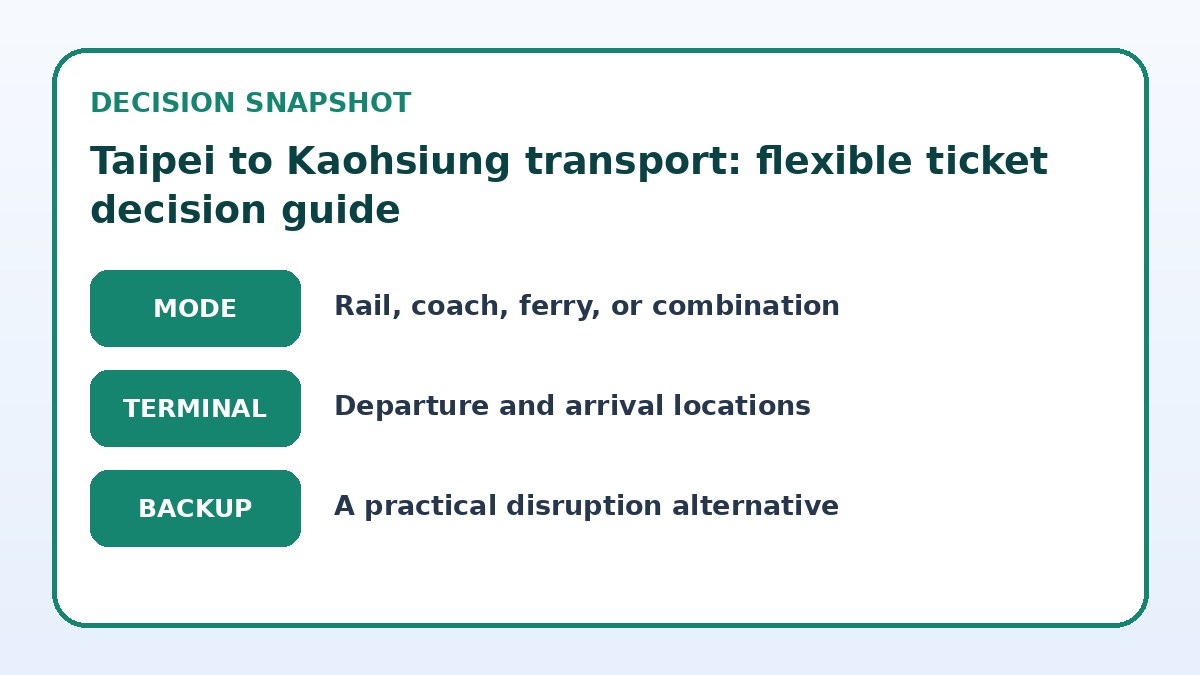
| Journey approach | Best for | Friction to check |
|---|---|---|
| Book a flexible rail fare (changeable/refundable) | Solo travelers who want few transfers and easy rebooking at main stations | Higher upfront cost and variable refund/change rules to verify on the booking page |
| Buy a coach ticket with same-day exchange policy | Travelers prioritizing simple luggage handling and forgiving timetables | Potentially longer door-to-door time and need to confirm exact stop locations |
| Mix rail and coach segments for routing flexibility | Those needing alternate terminals or better fits to specific neighborhoods | More handoffs increase disruption risk and require buffer time for transfers |
| Plan by segment (separate tickets for each leg) | Travelers who want full control over each connection and individual fare rules | No interline protection — missed connections may mean buying new tickets |
Check live intercity options
Look beyond the ride itself and compare terminals, transfers, luggage, and arrival fit.
Luggage and transfer friction: how many times you’ll handle bags
Solo travelers often underestimate how handling luggage affects their tolerance for tight connections. A direct intercity rail or coach that loads and unloads luggage at a single terminal reduces physical friction and the need for flexible changes. If your plan requires switching between modes, a flexible ticket or an open-change fare gives you room to pick a later connection if loading or transfers take longer than expected. When comparing options, consider platform-to-platform transfers, whether luggage storage is available at stations, and whether the ticket rules allow last-minute seat or time changes without punitive fees.
If you’re travelling with a lot of gear, check the provider’s stated luggage limits and whether there’s assistance (porters or staff) at the stations. Mixed itineraries can force you to carry bags through metro stations or onto local buses where elevator access can be limited. On booking pages, look specifically for luggage policies, allowed bag dimensions, and any notes about ground handling. Those details help you decide whether to pay for a flexible fare that lets you avoid tight, bag-heavy transfers or to book a single-seat option and accept the physical tradeoff.
Timing flexibility: change, refund, and same-day options
Ticket flexibility is primarily about how easy it is to change departure times or get a refund when plans shift. Flexible fare classes or open-date tickets let you adapt without buying a new seat; however, terms vary widely between carriers and fare types. For solo travelers who value spontaneity or who are connecting from an unpredictable arrival, select fares that permit free or low-fee changes or same-day exchanges. When booking, read the provider’s change and refund rules carefully on their official booking page — that’s the legal source, not summaries in third-party descriptions.
If you need both low cost and some adaptability, compare the penalty structure: is there a flat change fee, a percentage refund, or only credit toward future travel? Also verify how changes are processed — some carriers allow online same-day changes, others require in-person or phone handling. If you use third-party comparison sites (Trip.com can be used to check current availability), confirm on the carrier’s site that the fare rules match what you saw, so you aren’t caught off guard at the station.
Compare the practical alternatives
Use the final page to confirm what is actually offered on your dates and save a workable fallback.
Intercity travel checklist
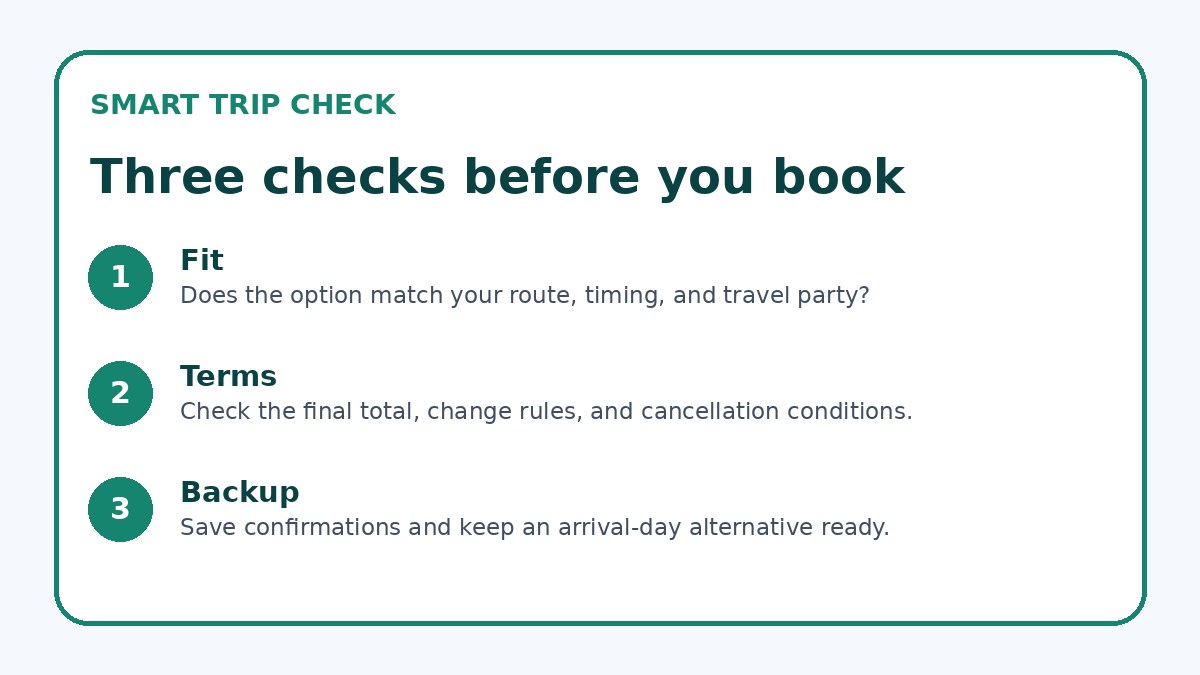
- Confirm exact station or stop names and addresses on the carrier’s official booking page before purchasing.
- Compare fare rules: change fees, same-day exchange options, and refund penalties for each ticket type.
- Map door-to-door time including transfers, luggage handling, and local transport to and from stations.
- Check luggage allowances and whether assistance or elevators are available at departure and arrival points.
- Identify at least two disruption backups (later services or alternate carriers) and note how to rebook.
- Save carrier contact details and screenshot ticket terms so you can show them at counters or to staff.
Disruption backup: practical recovery options on the route
A realistic plan for disruptions reduces stress. On the Taipei–Kaohsiung corridor, map alternative services and local transfer options before you leave. Flexible tickets that permit rebooking to the next available service or allow partial refunds give you breathing room when delays, strikes, or weather affect schedules. For solo travelers, identify at least two realistic bypasses: a later rail departure or an express coach that uses a different corridor. Knowing how to get a refund or change a ticket at a counter, kiosk, or online is essential; note whether the carrier’s policy requires you to act within a specific timeframe.
Also prepare a physical contingency: where would you stay if a full-day delay forces an overnight? Which taxi or local transfer services run late? Keep a list of alternative station names, platform areas, and customer service contact options so you can pivot quickly. Confirm any procedural details — whether unused segments are refundable or require documentation — on the provider’s final booking page before you finalize tickets.
Rail & Intercity Transport questions travelers ask
How do I decide if a flexible ticket is worth the extra cost for a solo trip?
Decide by balancing your tolerance for risk and the complexity of your door-to-door journey. If you have tight onward plans, late-night arrivals, heavy luggage, or a single daily window for arrival, flexibility reduces stress and can save you time that would otherwise be spent rebooking. Calculate the potential cost of a missed connection — taxis, overnight stays, or buying a new seat — versus the incremental fare difference for a changeable ticket. Finally, verify the carrier’s exact change and refund rules on their booking page; that ruleset defines whether the flexibility is practical for your itinerary.
Can I rely on station staff to help rebook if I miss my connection?
Station staff can often assist with rebooking, but the level of help varies by carrier and station, and some policies require online or ticket-office action. If you buy a flexible fare, it frequently includes easier rebooking at counters or kiosks; if you use separate tickets, staff may be limited in changing other carriers’ seats. Always keep your booking reference and a screenshot of fare rules, as staff will process changes according to the ticket’s terms. Check the carrier’s support channels listed on the booking page so you know whether in-person, phone, or web changes are supported.
Is booking segments separately safer or riskier for solo travelers?
Booking segments separately gives you maximum control over each leg but is riskier in terms of missed-connection protection: if the first segment is delayed, the second carrier is not obliged to accommodate you. This approach works well if you build generous buffer time, are prepared to be flexible, and keep tickets that allow changes. For less risk, choose a single flexible-ticket itinerary that covers both legs or pick services with frequent departures so you can rebook to the next available option without high penalties.
Final decision note
For most solo travelers moving between Taipei and Kaohsiung, the right ticket is the one that matches your door-to-door priorities rather than the lowest headline fare. If minimizing transfers, luggage handling, and on-the-ground friction matters most, opt for a flexible rail fare tied to centrally located stations; if you prefer simpler exchanges and can accept longer transit time, a coach with same-day exchange rules is a reasonable alternative. Mixed or per-segment bookings provide routing freedom but require more buffers and careful attention to separate change policies. Before finalizing anything, read the carrier’s exact fare rules on its booking page, verify stop locations, and note backup options so you can recover quickly from disruptions. Use a comparison site such as Trip.com to check current availability, but always confirm terms with the provider before you pay.
Continue planning
Check current options and final conditions
Use the provider page to confirm live availability, the final total, cancellation terms, and every condition that matters to your trip.
This evergreen planning guide was created with AI-assisted drafting and a structured quality review. It does not display live prices, schedules, availability, visa guidance, or provider rankings. Verify current details before booking. Some links are affiliate links; we may earn a commission at no additional cost to you.