Practical answer up front: for first-time visitors carrying luggage between Dubai and Abu Dhabi, choose the option that matches how much you have, where you need to finish your trip, and how much transfer work you want to avoid. A direct taxi or pre-booked private transfer gives the simplest door-to-door experience for bulky bags and hotels away from major terminals. Intercity coaches are the most straightforward public option if your luggage is compact and you can handle a short walk or hotel shuttle at each end. Rail is not a primary factor on this route today, so treat it only if a future rail link runs and you verify luggage rules. Below are clear tradeoffs, terminal fit, luggage friction, timing flexibility and backup plans to help you pick and book with confidence.
Choosing between taxi/private transfer, coach, rail, or mixed options
Start by matching luggage volume and door-to-door needs to each transport mode. Taxis and pre-booked private transfers accept large suitcases, sports gear and multiple bags with minimal transfers: the vehicle picks you up at your accommodation in Dubai and drops you at your destination in Abu Dhabi. Intercity coaches run on set schedules between main bus terminals; they work well if your bags fit in under-bus compartments and you’re staying near either terminal. Rail options may exist or be planned in the future—if you consider rail, check whether the route involves additional shuttle transfers and what luggage limits the operator enforces before relying on it.
A mixed approach—coach to a central hub plus a short taxi or hotel shuttle—is often the practical compromise when you want lower cost but not to carry bags far. That requires factoring transfer time and the physical act of moving luggage between modes. Before booking, list exactly how many pieces you have, their approximate sizes, and whether you’ll need assistance loading or storing them. That inventory will make the differences between modes concrete and steer you to the option that minimizes friction for your situation.
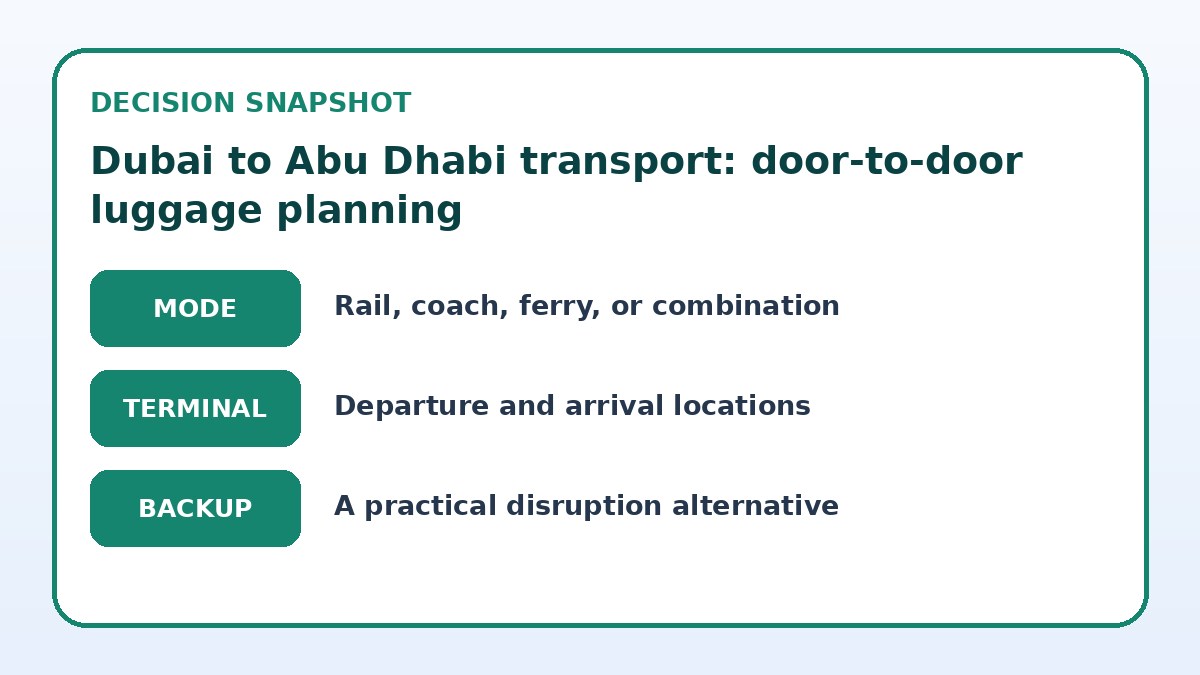
Choose the end-to-end journey plan
| Journey approach | Best for | Friction to check |
|---|---|---|
| Taxi or pre-booked private transfer | Travelers with bulky or multiple suitcases needing door-to-door convenience. | Higher cost but minimal handling and no terminal transfers; verify vehicle size and pickup access in advance. |
| Intercity coach | Passengers with compact luggage staying near major bus terminals at both ends. | Lower interaction and predictable schedule, but requires handling luggage at terminals and possible last-mile taxi. |
| Mixed: coach plus short taxi/hotel shuttle | Budget-minded travelers who accept a brief luggage transfer for lower cost. | Saves money but adds transfer tasks and timing coordination; ensure sufficient buffer time between legs. |
| Future rail link or rail-plus-transfer | Those prioritizing smooth, scheduled journeys if a verified rail option exists with clear luggage policies. | Check luggage limits and whether rail requires additional shuttles; verify rules and station access before booking. |
Check live intercity options
Look beyond the ride itself and compare terminals, transfers, luggage, and arrival fit.
Terminal fit and where your luggage will be handled
Understand where each operator loads and unloads luggage. Taxi and private transfers typically load at your building entrance or hotel lobby—confirm whether the driver can enter a gated compound or needs a public pickup point. Coaches use bus terminals with baggage bays; you’ll hand luggage to staff for under-bus storage or carry it onto the passenger area depending on the service. If your final address is away from a terminal, add a short last-mile taxi or hotel transfer to your plans to avoid lugging suitcases long distances.
If you’re staying at an airport hotel or a property with a shuttle, verify shuttle pickup points and whether the hotel will hold bags beyond check-in or late arrivals. When booking any public or shared service, read the provider’s luggage size and weight rules on the booking page; verify whether there are fees, limits on number of items, or restrictions on sports equipment. For multi-leg trips, confirm where you must claim and re-check bags so you can plan rest breaks or hire assistance when needed.
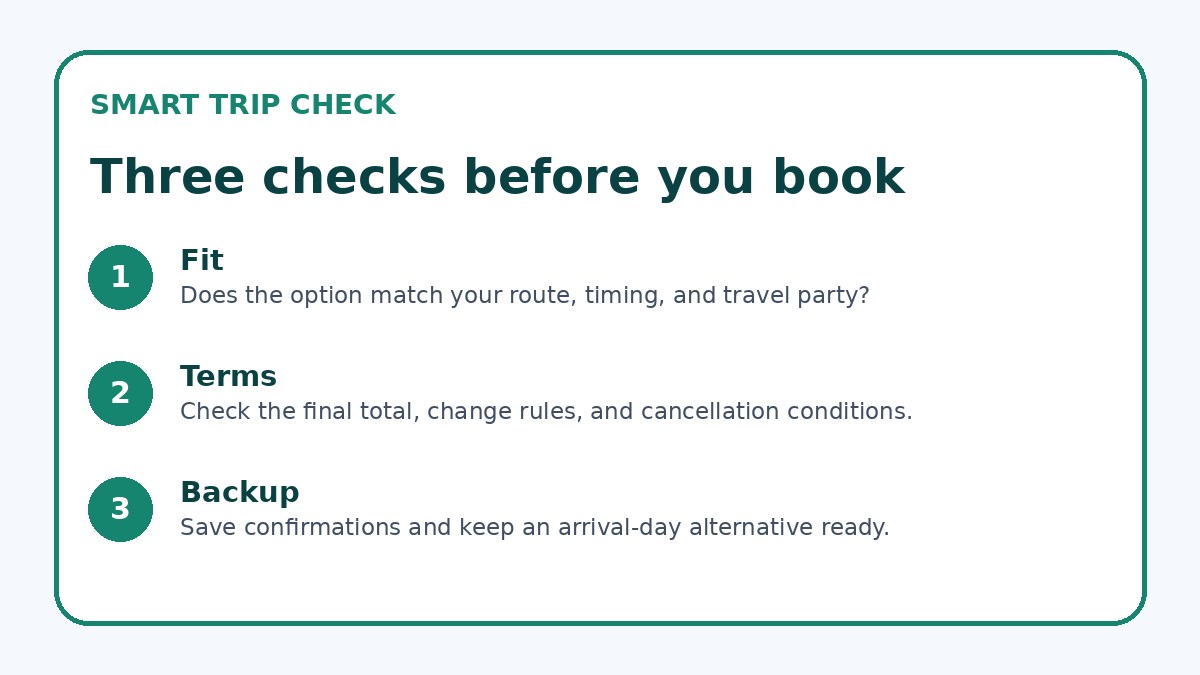
Timing flexibility and planning buffer for luggage transfers
Allow extra time for loading and unloading when you travel with luggage. A direct private transfer’s advertised travel time might be similar to a taxi’s driving time, but factor in slower boarding for multiple bags and potential traffic peaks. Coaches run to schedules, so you need to be at the terminal early enough to store luggage and board; arriving late risks waiting for the next service. If you’re connecting between coach and taxi, build at least 30–60 minutes buffer depending on the complexity of the terminal layout and your mobility.
For morning or evening travel, consider local traffic patterns and hotel check-in or check-out times: leaving luggage at a hotel is an option to avoid early transfers. If you have tight onward connections from Abu Dhabi (for example to flights or long-distance buses), choose a mode with more predictable door-to-door timing and longer cancellation or delay protections. Always confirm pick-up windows and terminal meeting points directly with the operator prior to departure.
Compare the practical alternatives
Use the final page to confirm what is actually offered on your dates and save a workable fallback.
Intercity travel checklist
- Inventory your luggage: count pieces, note dimensions, and flag awkward items (sports gear, instruments) before choosing a mode.
- Confirm pickup/drop-off locations and whether drivers can enter your hotel compound or need a public curbside point.
- Check the operator’s luggage policy on the final booking page for size, weight limits, permitted items and any extra fees.
- Build at least 30–60 minutes transfer buffer for mixed-mode journeys and allow more time during peak traffic.
- Save contact numbers, booking confirmations, and screenshots so you can show proof of reservation when collecting luggage.
- Have a short local-plan B (cash/card for a taxi or local transfer company contact) in case your booked service is disrupted.
Disruption backup: what to do if your plan changes
Plan a simple backup that preserves luggage ease. If your booked coach is cancelled or delayed, having cash or a card ready for a taxi allows immediate door-to-door replacement. For large groups or many bags, identify a local transfer company that can be contacted quickly if the primary provider fails to show. Save essential contact numbers and screenshots of booking confirmations to show staff if there’s a dispute over luggage allowances or pickup points.
If heavy traffic or an incident blocks your route, communicate with your accommodation to delay check-in or ask them to hold baggage. For critical onward connections, consider rebooking to a later service rather than rushing and risking lost items. When using third-party booking platforms, check the provider’s stated change and cancellation procedures on the final booking page so you know exactly what refunds or rebook options exist in case of disruption. Trip.com can be used to compare availability, but always confirm conditions on the operator’s own page before relying on them.
Rail & Intercity Transport questions travelers ask
Can I take a lot of luggage on an intercity coach between Dubai and Abu Dhabi?
Most intercity coaches accept luggage in under-bus compartments or allow limited carry-on inside the cabin, but policies vary by operator. Before booking, check the carrier’s final booking page for explicit size and weight limits, the number of allowed items, and procedures for bulky or special items. If your bags are unusually large or you have multiple pieces, a direct taxi or private transfer may save you time and effort even if it costs more. Also verify how far the terminal is from your accommodation to avoid long walks with heavy suitcases.
Is it better to book a private transfer in advance or take a taxi on arrival?
Booking a private transfer in advance guarantees a vehicle suited to your luggage needs and gives you a known pickup time and price structure, which can reduce stress for first-time visitors. Hailing a taxi on arrival can be flexible and sometimes quicker, but you may face smaller vehicles, limited trunk space, or detours as drivers collect fares. If you choose taxi-on-arrival, confirm the vehicle’s capacity before loading and be ready to request a larger car or call a local transfer company if necessary.
How should I plan if I’m connecting to a flight from Abu Dhabi with checked luggage?
Allow extra buffer time between your Dubai departure and your flight check-in time, because ground travel with checked luggage can be affected by traffic and terminal procedures. If you arrive at Abu Dhabi with large suitcases, confirm whether your airline or airport has early check-in or bag drop services and how far from your drop-off point the airport drop desks are located. For critical connections, pick a door-to-door transfer to minimize the number of manual bag handlings and verify any luggage handling rules on provider booking pages to avoid surprises.
Final decision note
Choosing how to travel from Dubai to Abu Dhabi with luggage comes down to a few simple tradeoffs: convenience versus cost, and how much handling you’re willing to do. Taxis and private transfers minimize lifting and door-to-door friction, coaches lower interaction and are practical for lighter suitcases, and mixed options let you save money if you can manage a short transfer. Always inventory your bags, confirm luggage policies and pickup/drop-off rules on the operator’s booking page, and plan a straightforward backup. With those checks in place, you’ll reduce stress and reach your Abu Dhabi destination with your luggage accounted for and under control.
Continue planning
Check current options and final conditions
Use the provider page to confirm live availability, the final total, cancellation terms, and every condition that matters to your trip.
This evergreen planning guide was created with AI-assisted drafting and a structured quality review. It does not display live prices, schedules, availability, visa guidance, or provider rankings. Verify current details before booking. Some links are affiliate links; we may earn a commission at no additional cost to you.