Pick the right Hong Kong neighborhood first, then compare flexible booking terms. For business travelers the trade isn’t just price — it’s how a booking handles last-minute schedule changes, city transfers, and extended work hours. Choose an area that minimizes daily commute friction to your meeting cluster, then match room features (work desk, quiet façade, fast Wi‑Fi) to your party and itinerary. After that, focus on cancellation, date-change policies, and whether the rate includes breakfast or flexible check-in. This guide helps you shortlist an area before you open live inventory: you’ll learn the neighborhood fit, how daily routing affects your day, what room and party needs to prioritize, and which booking terms to verify on the provider’s final page. If you compare options on an OTA like Trip.com, use it only to view current availability and then confirm flexible terms directly with the hotel where possible.

Check live stays in the areas that fit
Use your dates and party size to compare current rooms after you narrow the neighborhood fit.
Neighborhood fit: match location to meeting geography
Start by mapping the addresses of your primary meetings and the airport or ferry terminals you’ll use. Hong Kong’s business hubs cluster in Central, Admiralty, and Wan Chai on Hong Kong Island, while Kowloon’s Tsim Sha Tsui and Kowloon East serve finance, trade fairs, and some corporate offices. If most meetings are on the island, staying in Central or Admiralty cuts transfer times to a minimum. For events at the Hong Kong Convention and Exhibition Centre, Wan Chai or Causeway Bay are the most convenient options. Choosing an area that sits near the bulk of your appointments reduces stress, keeps travel time predictable, and preserves evening work time.
Also weigh hotel proximity to MTR stations and cross-harbour links. If your schedule spans both Kowloon and Hong Kong Island, pick a location with quick access to the Star Ferry, MTR cross-harbour lines, or reliable taxi routes. Business travelers who expect after-hours travel should factor in late-night transport options: some neighborhoods offer 24-hour taxi access and short rides, while others rely more on daytime public transit. Finally, consider nearby dining and printing services for last-minute needs; a short walk to a cafe or business center can be decisive when a meeting runs long.
Choose an area-selection strategy
| Area approach | Best for | Tradeoff to check |
|---|---|---|
| Stay near primary meeting cluster | Minimizing daily commute and predictable routing for back-to-back appointments. | May sacrifice evening entertainment choices or higher rates for location convenience. |
| Choose a transport-hub base (MTR/interchange) | Flexibility to reach diverse parts of the city quickly across varying schedules. | Longer walk times to specific meeting addresses and potentially noisier streets. |
| Book near the convention or exhibition center | Trade show attendees and clients at large events who need immediate access to venues. | Hotels can be busier during events and may limit flexibility for non-event days. |
| Pick a quieter business residential neighborhood | Focused remote work with quieter rooms and local dining for individual travelers. | Longer transit to central clusters and fewer late-night business services. |
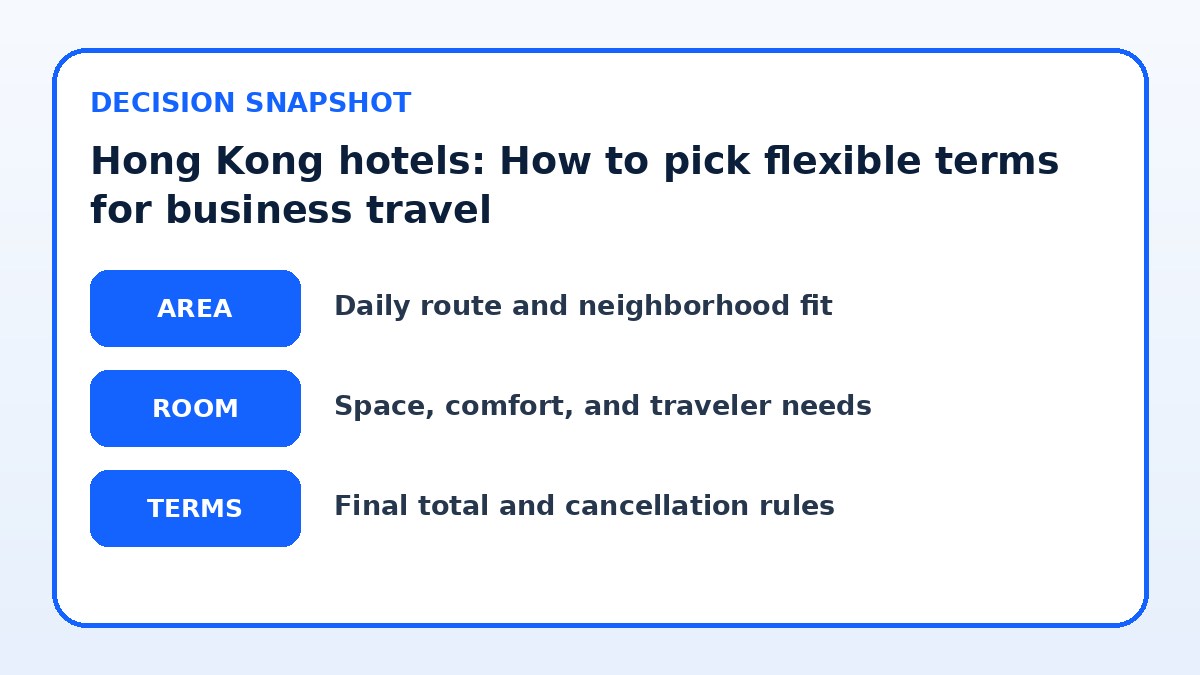
Daily-route friction: minimize wasted travel and delays
Think beyond straight-line distance and consider peak-hour congestion, elevator waits in high-rise hotels, and check-in queues. A hotel that is technically close but on the wrong side of a busy junction or with a long footbridge climb can cost you minutes every trip that add up across several meetings. If you’ll be crossing Victoria Harbour frequently, give preference to hotels near MTR interchange stations or piers to avoid traffic variability. For airport transfers, decide whether you prefer proximity to Hong Kong International Airport for early flights or convenient access to the airport express and luggage services for efficient day-of travel.
Factor in the tempo of your day: lunch meetings in Central demand places with quick food and fast billing; evening networking may need a hotel near bars and restaurants. Confirm whether the hotel has express check-out and on-site business facilities like meeting rooms or printing to avoid heading offsite. Also check whether transport options align with your work hours—late-night routes and taxi availability vary—and verify limousine or shuttle services, if you plan to rely on them, on the hotel’s booking page.
Now compare like with like
Keep the same dates, guests, room needs, and cancellation preferences while you compare the final choices.
Room and party needs: choosing the right space and services
Decide who is traveling and what space is required. A solo traveler usually needs a quiet room with a firm desk, reliable broadband, and easy power access. If you’re bringing a colleague, prioritize rooms with a sofa or connecting doors and beds large enough for shared rest. For short on-site client meetings, consider booking a room with a separate seating area or reserving an on-property meeting room; verify capacity, seating configuration, and AV support on the hotel’s page. If work requires extended hours, check whether the property supplies blackout curtains and soundproofing for daytime rest.
Evaluate services that reduce friction: early breakfast options for 6–7 a.m. departures, luggage hold for flexible arrival times, and laundry or express pressing for back-to-back meetings. If you plan to host an informal client meeting in the room, look for hotels that permit business visitors and confirm any visitor policies on the hotel’s terms. For multi-night stays, check whether the rate includes daily housekeeping or if you need to request it to maintain a dependable workspace.
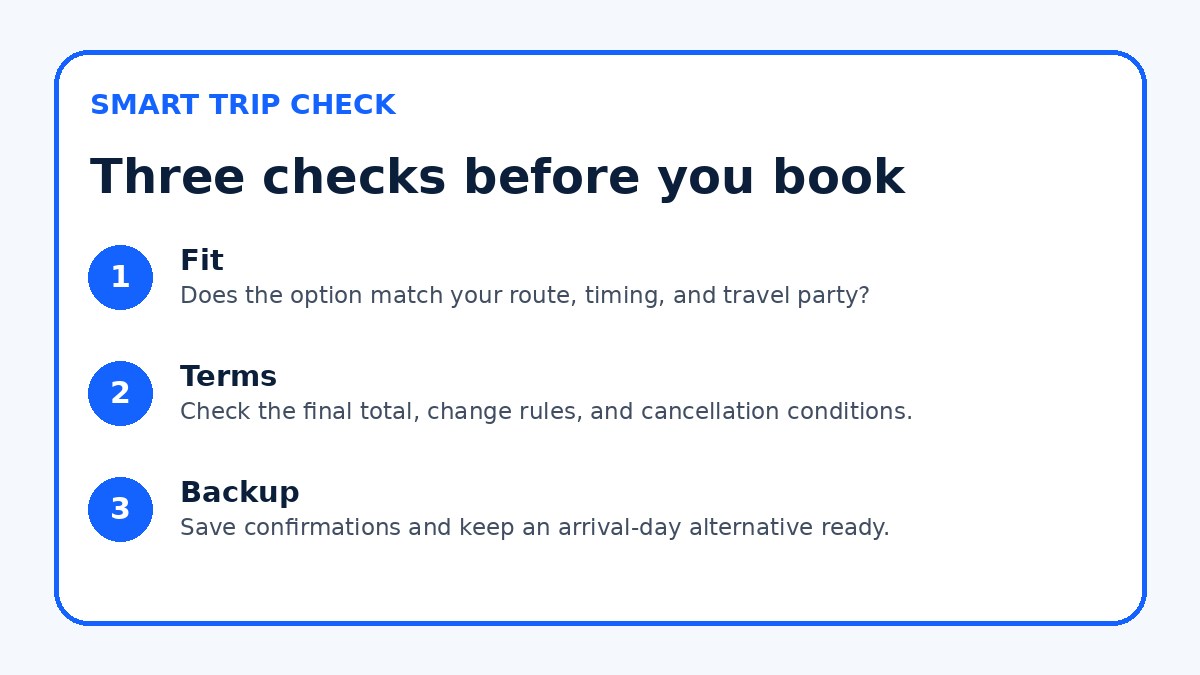
Hotel booking check before payment
- Map your meeting addresses and shortlist two neighborhoods that minimize average travel time.
- Choose a room type with a documented work desk, reliable Wi‑Fi, and soundproofing listed on the hotel page.
- Compare cancellation and date-change windows side-by-side on the hotel’s official policy page before booking.
- Confirm check-in/out times, early check-in or late-check-out fees, and any deposit requirements in writing.
- Request confirmation of airport transfer, shuttle availability, or limo services if you plan to use them.
- Verify included services—breakfast, Wi‑Fi, business center access—and any extra charges before payment.
Final booking terms: what to verify before you hit reserve
Once you’ve shortlisted an area and a room type, scrutinize cancellation and change conditions. Confirm the last date you can cancel without penalty, how date changes are handled, and whether refunds are issued to the original payment method or as hotel credit. If your schedule is uncertain, refundable or fully flexible rates are often worth the premium; if your plan is firm, a semi-flexible rate that allows one free change might be sufficient. Always check the provider’s final booking page and the hotel’s own policy statement because OTA summaries can omit key restrictions.
Check additional terms that affect day-to-day operations: check-in and check-out times, early check-in or late check-out fees, and whether breakfast, Wi‑Fi, or business center access is included. Confirm deposit requirements and the hotel’s identification policy on arrival. If you rely on specific services—like an airport shuttle, laundry turnaround, or meeting-room setup—ask the hotel to confirm availability and any extra charges in writing. For final comparison shopping, catalog the policies side-by-side before you commit, and use Trip.com or another OTA only to surface current availability and then verify conditions directly.
Hotel Guide questions travelers ask
Should I always pick a refundable rate for business travel to Hong Kong?
Not always. Refundable rates give you maximum flexibility if meetings shift, but they tend to cost more. If your schedule is stable and changes are unlikely, a semi-flexible or non‑refundable rate can be sensible — provided you’re comfortable with the penalty terms. Compare the total cost difference against the risk of a cancelled or moved meeting. Whatever you pick, read the hotel’s cancellation and change policy on the provider’s final booking page to understand deadlines, refund mechanics, and whether changes are free or incur fees.
How important is proximity to an MTR station versus being near a meeting location?
Proximity to an MTR interchange matters if your appointments spread across Hong Kong Island, Kowloon, and New Territories because the MTR offers the most reliable travel times. However, if most meetings cluster in one area, staying near that cluster can be faster and less stressful than relying on the MTR. Balance a short walk to key meetings with overall network access for contingency travel. Prioritize MTR access when you expect to travel across multiple districts in a single day or during peak hours when road traffic is unpredictable.
What room features matter most for productive remote work during a business stay?
For remote productivity, prioritize a firm, ergonomic work surface with easy power outlets, reliable high-speed internet (confirm any speed guarantees), good natural light, and effective soundproofing. A comfortable chair and adequate lighting for video calls reduce fatigue. Check whether the hotel offers printing and scanning, meeting-room booking, or 24-hour business center access if you’ll need physical documents. Always verify these amenities on the hotel’s official amenities list or ask the property directly if details are not explicit on the booking page.
Final decision note
For business travel in Hong Kong, start by choosing the neighborhood that aligns with your meeting geography and daily tempo. Once you’ve narrowed the area, match room features to your work needs and then compare booking terms with an emphasis on cancellation windows, date-change rules, and included business services. Don’t rely solely on an OTA summary—always verify flexible terms and any service guarantees on the hotel’s official booking confirmation or direct policy page. With a short, purposeful checklist and a clear comparison of neighborhood tradeoffs, you’ll be able to shortlist the right area and make a confident booking that supports both your meetings and contingency plans.
Continue planning
Check current options and final conditions
Use the provider page to confirm live availability, the final total, cancellation terms, and every condition that matters to your trip.
This evergreen planning guide was created with AI-assisted drafting and a structured quality review. It does not display live prices, schedules, availability, visa guidance, or provider rankings. Verify current details before booking. Some links are affiliate links; we may earn a commission at no additional cost to you.