Short answer: driving in and around Chiang Mai can add flexibility for day trips to temples, countryside and waterfalls, but only if you understand the insurance wording in your rental contract. For couples, this isn’t just legalese — it determines who is covered when you switch drivers, what happens after dark, and whether damage during off-road detours is paid. Read the policy definitions (driver, authorised driver, collision vs. comprehensive, deductibles, excess reduction, third-party liability and territorial limits) before you sign. If any term is unclear, ask the agent to show the exact clause on the rental page or the insurer’s certificate, and keep a photographed copy of every page. This guide helps you decide whether driving genuinely improves your Chiang Mai plans, explains the insurance vocabulary to watch for, covers pickup/return friction, and offers a clear non-driving fallback for couples.
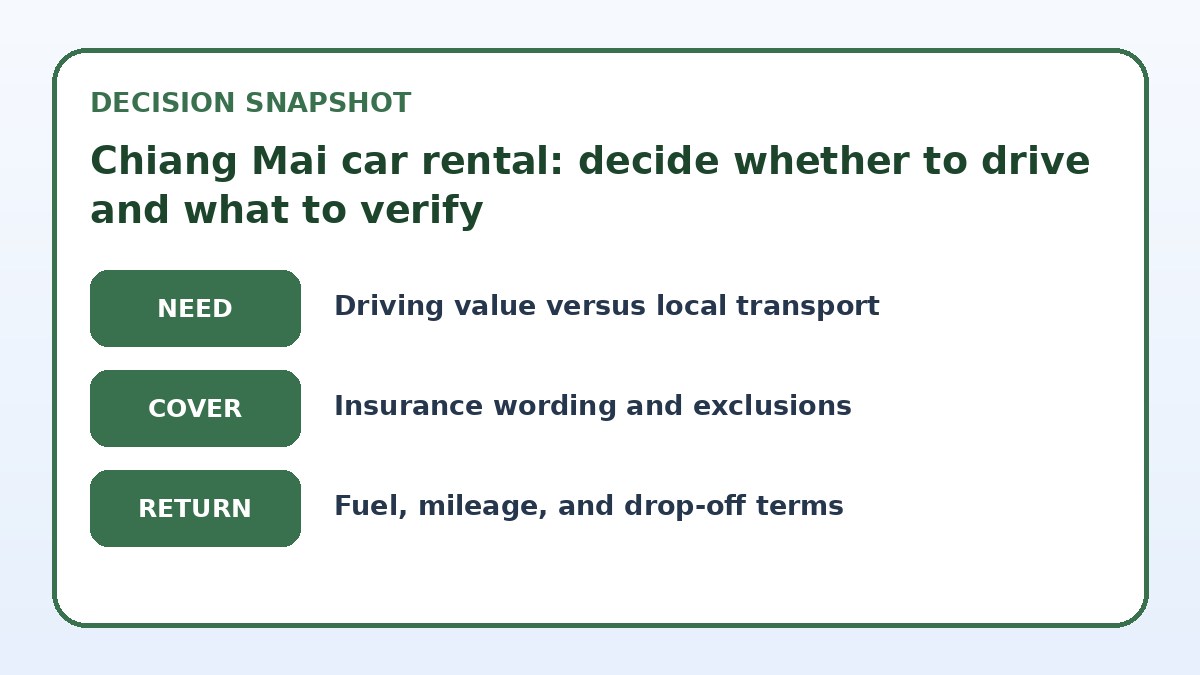
Decide whether driving actually improves your couple’s Chiang Mai plan
Start by comparing what you would do with a car against what public transport, taxis and day tours already cover. If your couple’s priorities are exploring the Old City, temple-hopping, and eating at night markets, you’ll find most of that within walking distance or a short taxi ride. But if you want sunrise at Doi Suthep, a sunset drive to Samoeng or a flexible route to waterfalls and hill-tribe viewpoints, a car does offer time savings and privacy. Think about whether those private moments are worth handling the logistics of driving on unfamiliar roads, paying for parking, and increased attention to insurance language.
Consider also the rhythm of your days: if you prefer spontaneous stops and photo detours, a rental is valuable. If one partner will drive most of the time, verify that the contract names both drivers or explicitly allows additional authorised drivers without voiding coverage. Weigh the comfort of personal transport against the small but real chance of a claim; for many couples, an afternoon car hire for one or two specific trips combines the best of both worlds and reduces continuous risk exposure.
Decide whether driving earns its place
| Mobility strategy | Best for | Cost or friction to check |
|---|---|---|
| Full-day car rental with named drivers | Couples wanting maximum flexibility for a day trip to Doi Suthep, waterfalls, or countryside | You assume vehicle liability for the rental period and must verify authorised-driver clauses and excess amounts. |
| Short-term one-way hop (hourly or half-day car hire) | Couples who need a few hours of private transport without long-term exposure | Less paperwork but may have strict mileage or return-time clauses that affect claims eligibility. |
| Taxis and ride-hailing apps | City-centre couples focused on markets, restaurants, and evening activities | No vehicle liability, but less control over schedules and potential surge pricing during busy periods. |
| Organised private day tours or local driver hire | Couples who want scenic routed trips with a local driver experienced on rural roads | Lower personal liability and specialist knowledge, but less total privacy and fixed itineraries. |
Check live rental choices only after the route test
Use the exact driver, dates, pickup point, and return plan to compare current conditions.
Understand the insurance wording that changes your exposure
Insurance sections are where most couples lose clarity; focus on definitions first. “Authorised driver” tells you who may legally control the vehicle under the policy — if your partner isn’t listed, they might not be covered after a mishap. “Collision damage waiver” (CDW) and “loss damage waiver” (LDW) are often used to limit liability for vehicle damage, but the rental contract might still include an excess or deductible you must pay before any waiver applies. Confirm whether waivers remove the excess entirely or only reduce it, and whether they'd be invalidated by off-road driving, driving under the influence, or using non-designated roads.
Next check third-party liability limits and whether the policy covers passengers and property inside the vehicle. ‘Territorial limits’ or ‘jurisdiction’ clauses can restrict coverage to Chiang Mai province; crossing into other provinces or neighbouring countries may void the policy. Also look for explicit exclusions such as windscreen, tyre, and undercarriage damage. If language is ambiguous, request to see the insurer’s certificate or the precise clause on the provider’s final booking page — do not rely on verbal assurances alone.
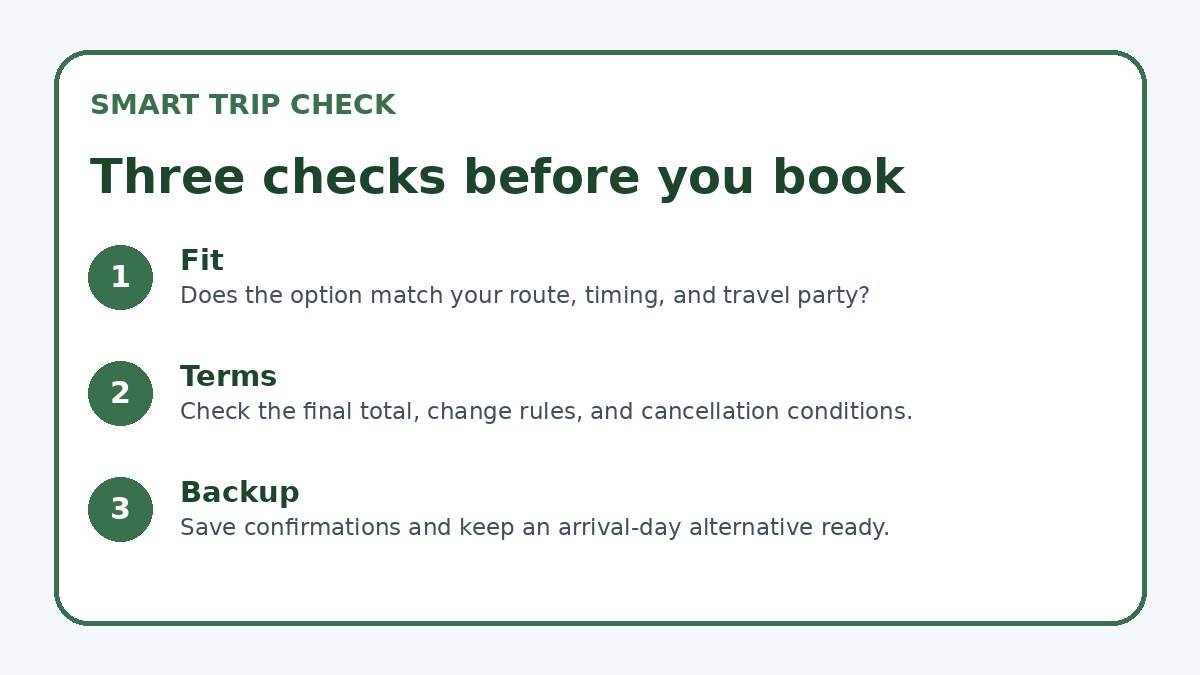
Compare the full rental conditions
Confirm insurance wording, exclusions, deposit, fuel, mileage, and return terms on the final page.
Pickup and return friction: what to expect and how insurance wording affects it
Pickup and return are the moments when insurance language meets practical friction. Agents will inspect for damage and compare notes to the check-in report. If the rental requires all drivers to be listed, expect an identity check and signature on return; missing a named-driver signature can trigger disputes and charges even for minor scratches. Read the rental’s damage report process and dispute protocol. Ask how the company documents pre-existing dents and whether they provide a written or photographed record you can keep. Some agencies require you to report even small damage immediately or face larger charges later.
Fuel, mileage limits, and late-return penalties also interact with insurance; some insurers limit coverage if the car has been driven beyond agreed mileage or during a period with expired rental authorization. If you plan a one-way drop-off or after-hours return, confirm whether those options affect coverage or produce extra fees. Finally, ask how claims are handled locally: will the provider advance repair costs and invoice you, or will your credit card or third-party insurer be expected to settle immediate expenses? Verify the claim contact and the required documents on the booking page before you leave.
Car rental terms to verify
- Confirm both partners are listed as authorised drivers on the booking page and keep a screenshot of the confirmation.
- Request the insurer’s certificate or the exact policy clause showing territorial limits and permitted road types, and save a photographed copy.
- Ask whether CDW/LDW options remove or only reduce the excess, and document the precise excess figure in writing before signing.
- Photograph the vehicle from all angles with timestamps at pickup and return, and keep the agent’s signed condition form.
- Ask how claims are processed locally: payment responsibility, contact numbers, required documents and typical timelines.
- Check whether off-road, mountain, or unpaved-road use is excluded and plan alternative transport if those activities are on your itinerary.
Non-driving fallback for couples: how to stay mobile without a car
If the insurance wording adds too much uncertainty, use a layered mobility plan: combine taxis, ride-hailing apps, and pre-booked day trips for longer excursions. Taxis and ride-hailing remove your responsibility for vehicle damage and avoid excess exposure, while day-trip operators usually include local guides who know safe routes and timing. For couples who want a scenic photo stop at a waterfall or viewpoint, book a private half-day tour that includes pickup and drop-off — it gives privacy without the contractual risk. Keep receipts and booking confirmations to prove organized travel dates if any disputes arise.
Another option is to rent a car only for a single day when you need flexibility and use public options otherwise. This limits the days when insurance wording matters and reduces the chance of disputes during long hires. When choosing local transport, verify cancellation policies and pickup windows. If you plan mountain or dirt-road outings, prefer a licensed local driver with experience on those routes; many insurers void coverage for owner-drivers who go off-paved roads, but a professional operator’s insurance may cover rougher terrain.
Car Rental & Road Trip questions travelers ask
If only one partner is listed as the named driver, can the other still drive in an emergency?
Policies vary; some contracts permit temporary emergency driving by an unnamed person but still treat any damage as uninsured. If the rental wording is silent or unclear, assume coverage won’t apply and ask the agent to add the second driver. At pickup, request written confirmation on the contract page or a signed addendum that names both drivers. If adding a driver isn’t possible, decide whether to accept the risk for a true emergency or rely on local assistance and taxis to avoid creating an uninsured incident.
What does ‘excess’ mean and how can couples reduce their cash exposure?
Excess is the portion you must pay after a claim before the insurer covers the remainder; it’s often called deductible. Rental companies may sell excess-reduction or zero-excess products that lower your out-of-pocket cost, but read the fine print: some reductions exclude certain damage types like tyres, windscreens or underbody damage. Your credit card may offer secondary coverage that still leaves the rental company’s excess in place until reimbursed. Get the exact excess amount in writing and compare the cost of reduction against potential repair bills for typical local hazards.
Will insurance cover damage from driving on rural dirt roads or to mountainous viewpoints?
Many rental policies exclude off-paved-road driving or limit coverage on rough terrain; this often appears under exclusions for undercarriage, suspension, or off-road use. If your planned route includes dirt tracks, ask the provider to confirm whether such roads are permitted and whether any special insurance applies. Alternatively, hire a local driver for those segments or use a guided tour whose operator carries appropriate coverage. Always verify the exact clause on the final booking page and keep written confirmation; verbal assurances are not reliable if a claim arises.
Final decision note
For couples, the decision to rent a car in Chiang Mai hinges less on whether driving is enjoyable and more on whether your insurance paperwork actually covers both of you and the roads you plan to use. Read definitions — authorised driver, excess, territorial limits, CDW/LDW, and exclusions for tyres, windscreen or off-road damage — before you sign. Minimise pickup and return friction by photographing the car, saving the signed condition report, and confirming claim procedures. If the wording remains unclear or restrictive, choose short hires, taxis, or a private driver for risky segments. When in doubt, get the policy clause on the provider’s final booking page and keep a copy.
Continue planning
Check current options and final conditions
Use the provider page to confirm live availability, the final total, cancellation terms, and every condition that matters to your trip.
This evergreen planning guide was created with AI-assisted drafting and a structured quality review. It does not display live prices, schedules, availability, visa guidance, or provider rankings. Verify current details before booking. Some links are affiliate links; we may earn a commission at no additional cost to you.