Practical answer first: for most business travelers to Taipei, start checking fares and package availability 6–8 weeks before departure and aim to lock in bookings 3–6 weeks out if your dates are firm. If your dates are flexible or your company requires lowest possible cost, begin monitoring earlier (8–12 weeks) and set alerts to catch changes. Conversely, if your itinerary is uncertain or you need refundable terms, prioritize refundable fares or flexible hotel rates even when those are more expensive. The rest of this guide explains what to compare before choosing a bundle, how inclusions and flexibility change the calculus, and which traveler-specific factors should drive your final decision. Follow the checklist at the end and verify final terms on the actual provider booking page—Trip.com can be one place to check current availability and conditions.
Test package value fairly
| Booking approach | Best for | Tradeoff to check |
|---|---|---|
| All-in package (flight + hotel + transfers) | Travelers wanting simplicity and who have fixed dates and needs. | May use nonrefundable fares or stricter hotel cancellation rules; verify all inclusions and invoicing before booking. |
| Package without baggage or seats included | Travelers looking for a lower headline price and willing to add ancillaries later. | Ancillary costs can erase savings; compare full final price including baggage, seats, and correct fare class. |
| Separate bookings (book flight and hotel independently) | Travelers requiring maximum flexibility, customized schedules, or corporate supplier compliance. | Requires more time to research and manage; you lose the convenience of a single vendor for changes and support. |
| Flight-only bundled with refundable hotel | Business travelers who need flight certainty but flexible ground arrangements. | Refundable hotels are pricier; confirm cancellation windows and whether flight and hotel can be changed independently. |
Check current package and separate options
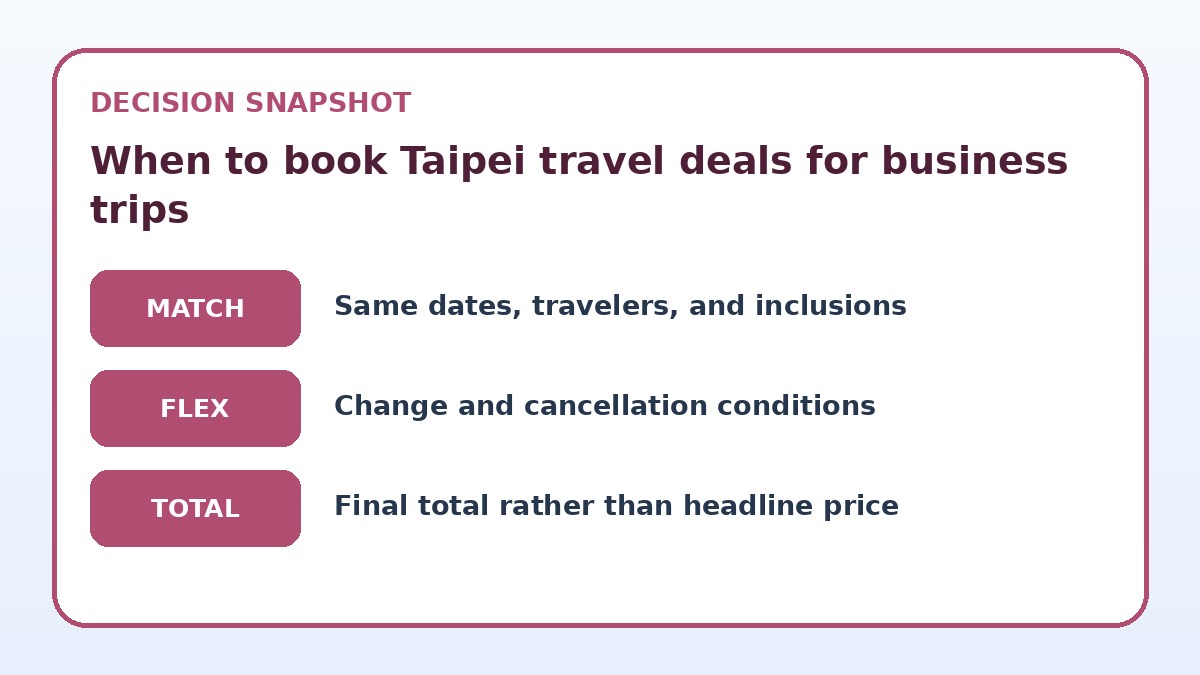
Use identical dates, travelers, room needs, baggage, and flexibility so the comparison stays meaningful.
What to compare before judging a bundle
Before accepting a package labeled as a deal, line up each component against separate-booking alternatives. Match airline fare classes (not just cabin), specific flight times, and stopover patterns because two itineraries that both say “economy” can have very different transfer times, baggage rules, or change fees. For hotels, compare the same room type, breakfast inclusion, and cancellation window. If a package includes airport transfers, confirm whether those are private or shared and what the pickup rules are. The objective is to create a true apples-to-apples comparison so that perceived savings don’t disappear when you account for inconvenient connections or stricter refund policies.
Next, check the total all-in cost and the treatment of taxes, service charges, and ancillary fees. Bundles sometimes advertise a lower headline price but allocate fewer inclusions, forcing you to pay extra at check-in or at the airport. For business travelers, also confirm invoice and billing options for corporate reimbursement, and whether the provider issues separate invoices for flights and hotels. If the trip requires specific expense coding or travel policy approvals, verify that the bundle’s invoicing format meets those administrative needs before relying on it for cost savings.
How inclusions change the booking window decision
Inclusions such as checked baggage, seats, airport transfers, and breakfast materially affect when to commit. If a bundle includes checked baggage and seat selection at a reasonable rate, you can feel comfortable booking slightly earlier because you’re locking in those conveniences. However, if baggage and seat selection are excluded or offered only as post-booking add-ons, the bundle’s apparent savings can vanish when you need those items for a business trip. For short notice travel, bundles that pre-package essentials may simplify logistics—just be sure the included items match what your company reimburses.
Hotel inclusions matter too: free breakfast, late checkout, and meeting-space access give business travelers tangible value. If those amenities are critical and the bundled hotel rate guarantees them, the added certainty may justify booking earlier. Conversely, if the package only promises a room without breakfast or flexible cancellation, you might prefer to wait and book a refundable room nearer to departure. Always read the specific inclusions and how they’re described on the provider’s booking page—words like “subject to availability” can mean the inclusion isn’t guaranteed.
Look past the headline total
Compare inclusions and change conditions before deciding whether a package is genuinely useful for this trip.
Deal comparison checklist
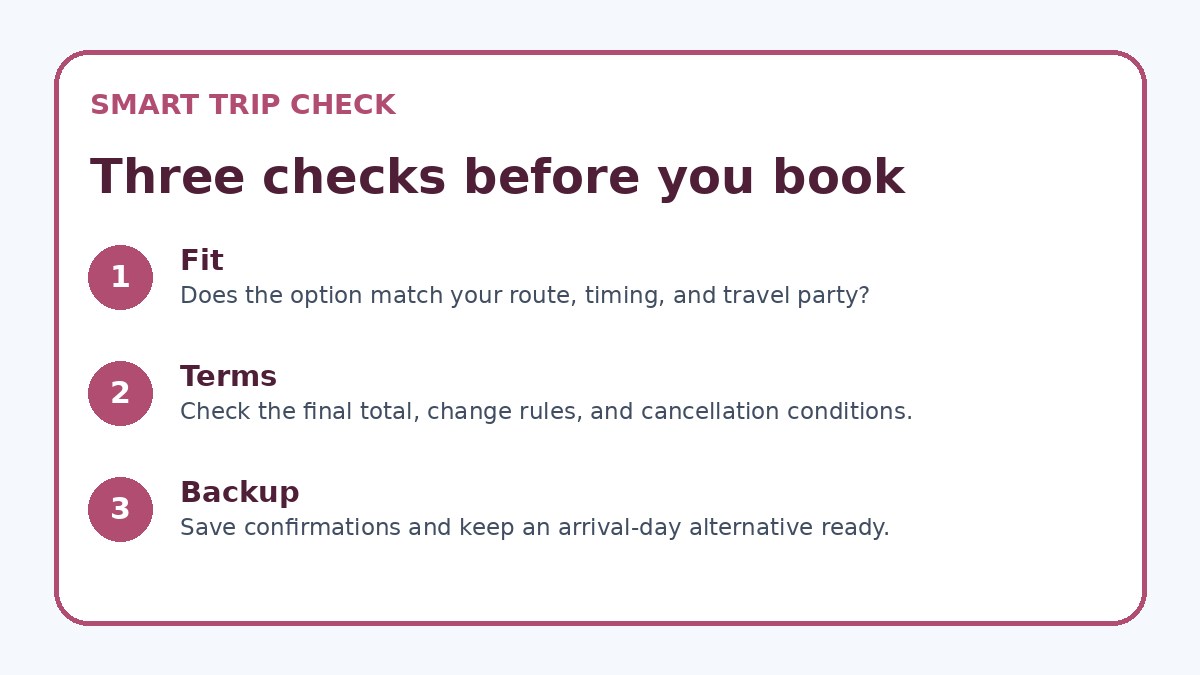
- Set price and availability alerts for your exact Taipei travel dates at least 8 weeks before departure.
- Match flight fare class, baggage allowance, and connection pattern when comparing a package to separate bookings.
- Confirm hotel room type, breakfast inclusion, check-in/out times, and the precise cancellation window on the booking page.
- Verify corporate invoice requirements and whether the provider issues separate invoices for flight and hotel.
- Compare total out-the-door cost including ancillaries (seats, baggage, transfers, taxes, service fees) for both bundle and separate options.
- Read the provider’s final terms for change fees, refund processing method, and how partial cancellations are handled.
Flexibility: change fees, refunds, and corporate needs
For business trips, flexibility often trumps headline savings. Check change and cancellation policies for both flights and hotels in the bundle and compare them to separate-booking flexible fares and refundable rates. Some bundles use nonrefundable tickets to offer a lower package price, leaving you exposed to expensive change fees if meetings shift. Also verify whether the bundle allows date or name changes and whether refunds for canceled components are processed promptly or credited as travel vouchers. If your employer requires refundable bookings or specific invoice details, make sure the bundle complies.
Corporate policies can impose additional constraints—preferred suppliers, negotiated rates, and reporting requirements may favor separate bookings through an approved channel. If your company supports rebooking or last-minute changes, a slightly higher flexible rate booked earlier could save stress and administrative time. When assessing bundles, ask how replacements or rebookings are handled if only part of the package needs changing (for example, if a meeting is postponed and you need to cancel the hotel but keep the flight). The provider’s final booking page should detail these terms—don’t rely on marketing language alone.
Traveler-specific value: schedule, length, and reimbursement
Your personal and corporate priorities decide the optimal booking window. If you travel frequently and your schedule is rigid, locking in a low-fare nonrefundable ticket 6–8 weeks out may be fine. If the trip is to support fragile timing—client approvals, pending visas, or conditional meetings—choose refundable or changeable selections and book closer to departure when you can confirm details. For multi-leg business trips or meetings spread across Taipei and surrounding areas, prioritize itineraries with reasonable connection times and the ability to change individual legs without voiding the whole package.
Consider length of stay and recovery time too. Short, tightly scheduled trips benefit from direct or minimally connecting flights and hotels near meeting locations—even if that convenience costs a bit more. Longer stays might make bundled long-stay hotel discounts or included laundry useful. Finally, think about reimbursement: if your company will not reimburse certain add-ons, build those costs into your comparison. Always verify invoicing, amenity confirmations, and any corporate-negotiated terms on the provider’s final booking page before committing.
Travel Deals & Booking Strategy questions travelers ask
How far in advance should I book flights to Taipei for a short business trip?
For short, fixed-date business trips to Taipei, many travelers monitor fares starting 8–12 weeks out and commit 3–6 weeks before departure if dates are firm. This window balances fare fluctuations with seat availability for desirable times. If your schedule is flexible, begin earlier to capture price movements; if you need refundable or changeable fares, prioritize those terms even if booking closer to the travel date costs more. Always confirm fare rules, baggage allowance, and change fees on the final booking page before purchasing.
Are bundled hotel and transfers worthwhile for Taipei business travel?
Bundles that include hotel and transfers can simplify logistics—useful when traveling from the airport to a meeting-heavy schedule. They’re worth it if the included transfer type, hotel location, room type, and cancellation terms match your needs. If a bundle excludes essentials you require or uses strict nonrefundable rules, separate bookings may offer better flexibility. Verify on the booking page whether transfers are private or shared, exact pickup procedures, and whether hotel amenities are guaranteed rather than 'subject to availability.'
What clauses should I check on the provider’s booking page before finalizing a Taipei package?
On the final booking page, check fare rules (change and cancellation fees), baggage and seat policies, hotel cancellation deadlines, exact room descriptions, and whether taxes and service fees are included. Look for statements about refunds versus credits, processing timelines for returns, and invoicing options for corporate reimbursement. If the package includes transfers or extras, confirm their operational details and whether they’re guaranteed. If any phrasing is ambiguous, contact the provider directly or use a comparison site like Trip.com to view current terms before purchase.
Final decision note
Choosing a realistic booking window for Taipei travel deals hinges on matching your business priorities—schedule certainty, corporate policy, and required inclusions—with the package’s terms. Start monitoring fares and packages early, but default to booking when dates are firm and you’ve compared the exact components against separate bookings. Favor refundable or changeable options when meetings or approvals could shift. Always read the provider’s final booking page for fare rules, baggage, cancellation windows, and invoicing details. Use the checklist to avoid false savings and confirm that any perceived deal truly covers what you need for a smooth business trip.
Continue planning
Check current options and final conditions
Use the provider page to confirm live availability, the final total, cancellation terms, and every condition that matters to your trip.
This evergreen planning guide was created with AI-assisted drafting and a structured quality review. It does not display live prices, schedules, availability, visa guidance, or provider rankings. Verify current details before booking. Some links are affiliate links; we may earn a commission at no additional cost to you.