If you need a practical answer right away: for most first-time visitors the high-speed train offers the fastest door-to-door journey with the simplest logistics between central London and central Paris; coaches are the lowest-effort budget choice; flights can make sense for connections beyond Paris or if you already have air tickets to use; ferries are viable if you want to drive your own car or enjoy a slower, scenic crossing combined with a road trip. Which option suits you depends on priorities: total travel time, luggage and mobility needs, cost flexibility, comfort preferences, and where exactly you want to start and finish in each city. Below I compare the tradeoffs so you can pick the practical travel plan that fits your schedule and comfort level. I also highlight what to verify on booking pages—schedules, luggage rules, station-to-city transfers, and refund terms. Trip.com can be used to check current availability, but always confirm details on the provider’s official site before you commit.
Train: central-to-central speed and simple connections
Trains between London and Paris are geared toward travelers who want the fewest transfers and predictable total journey time. Trains depart from central stations and arrive in the heart of Paris, which usually reduces the need for costly airport transfers. Expect straightforward access for luggage and less intensive security than air travel, but check whether the service you pick is direct or involves a change—if a change is possible, compare total door-to-door time rather than timetable-to-timetable travel time. When booking, verify the station names, platform access rules, seat assignment policies, and whether your fare allows changes or refunds.
Deciding on a train depends on priorities: if you prefer a calmer, roomier environment and want to arrive downtown quickly, book a direct high-speed option when available. If price is the main factor you can compare off-peak departures and advance-purchase fares, but be mindful of strict ticket rules and cancellation limits. Also confirm luggage allowances and any identity checks required before boarding. For accessibility needs, check station facilities in advance and look for assistance options on the operator’s final booking page.
Coach: budget-focused, flexible, but slower
Coaches on the London–Paris route appeal to travelers prioritizing low fare and flexible booking windows. Coaches often use out-of-town terminals, so you should account for extra time and cost getting to and from coach stations. Journey times are longer and subject to traffic, border checks, or rest stops, so the total travel window can be wide; if your schedule is tight, this unpredictability matters. On the booking page, confirm exact pick-up and drop-off locations, luggage rules (especially for oversized items), onboard amenities, and the operator’s stance on delays and rebooking.
Coaches can be an excellent choice when you’re traveling light or on a strict budget, and they sometimes offer night services that save on a night’s accommodation. However, seating is usually less spacious than trains, and restroom stops break the continuity of travel. If comfort and predictability matter, compare coach door-to-door timing against train alternatives including transfer times to see which offers the better overall value for your itinerary.
| Approach | Best for | Tradeoff to check |
|---|---|---|
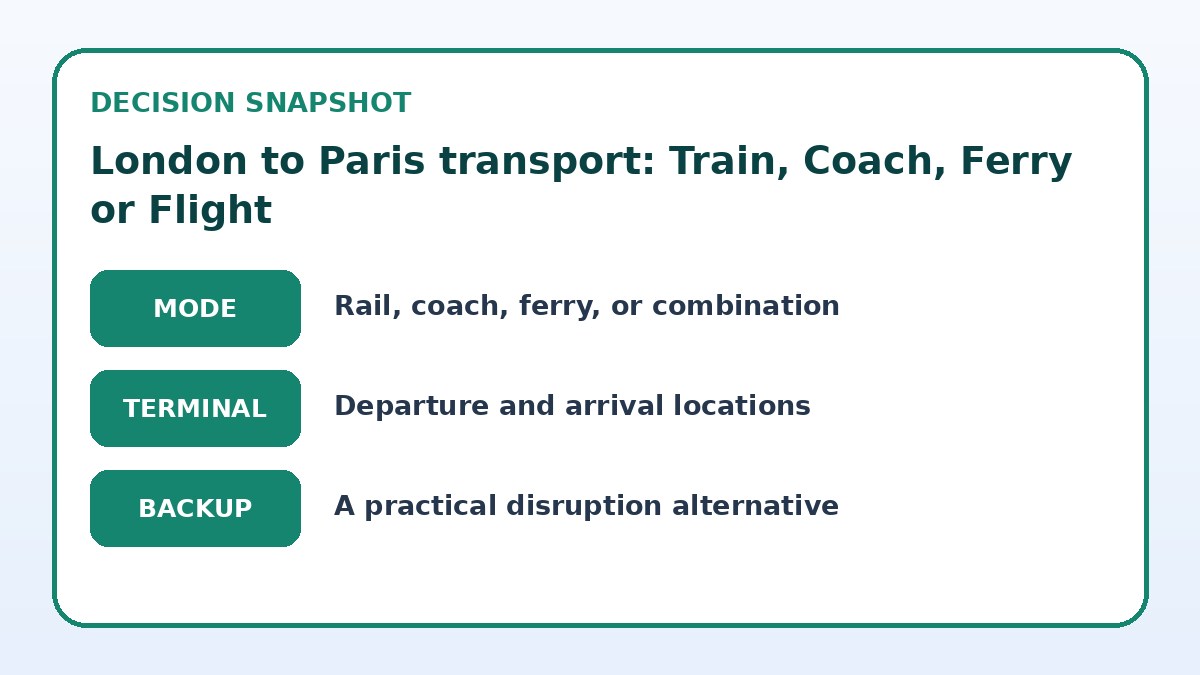
| High-speed train (central stations) | Travelers who prioritize fast, predictable door-to-door travel without airport transfers | Generally higher baseline fares and possible advance-purchase restrictions |
| Coach services | Budget-minded travelers who accept longer, traffic-dependent journeys | Less comfort, more variable total travel time, and out-of-center terminals |
| Flight | Those linking to international flights or using existing airline travel credits | Added airport transfer and security time; more disruption risk |
| Ferry + car | Travelers who need a vehicle in France or want a slower, scenic crossing | Longer overall travel time and extra complexity with car hire and port transfers |
Flight: when air travel fits the bigger plan
Flying between London and Paris is rarely the fastest door-to-door option for central city travel because airports sit outside city centers and require security and bag-check time. Flights do make sense if you are linking to international connections, if you already have air tickets or frequent-flyer considerations, or if you need to pair the trip with destinations better served by air. For meaningful comparisons, calculate total time from your origin in London to your final destination in Paris, including airport transfers, check-in, security, and potential delays. On the airline’s booking page verify baggage allowances, minimum check-in times, terminal details, and transfer options into central Paris.
Air travel also introduces additional failure points—weather, air traffic control, and stricter baggage rules—so weigh the risk tolerance for potential disruption. Budget carriers may offer lower headline fares but charge extra for seats, carry-on baggage, and priority services; full-service airlines include more in the ticket price. If you decide to fly, check which Paris airport you’ll use and how long ground transfers typically take to your intended neighborhood.
Before you book
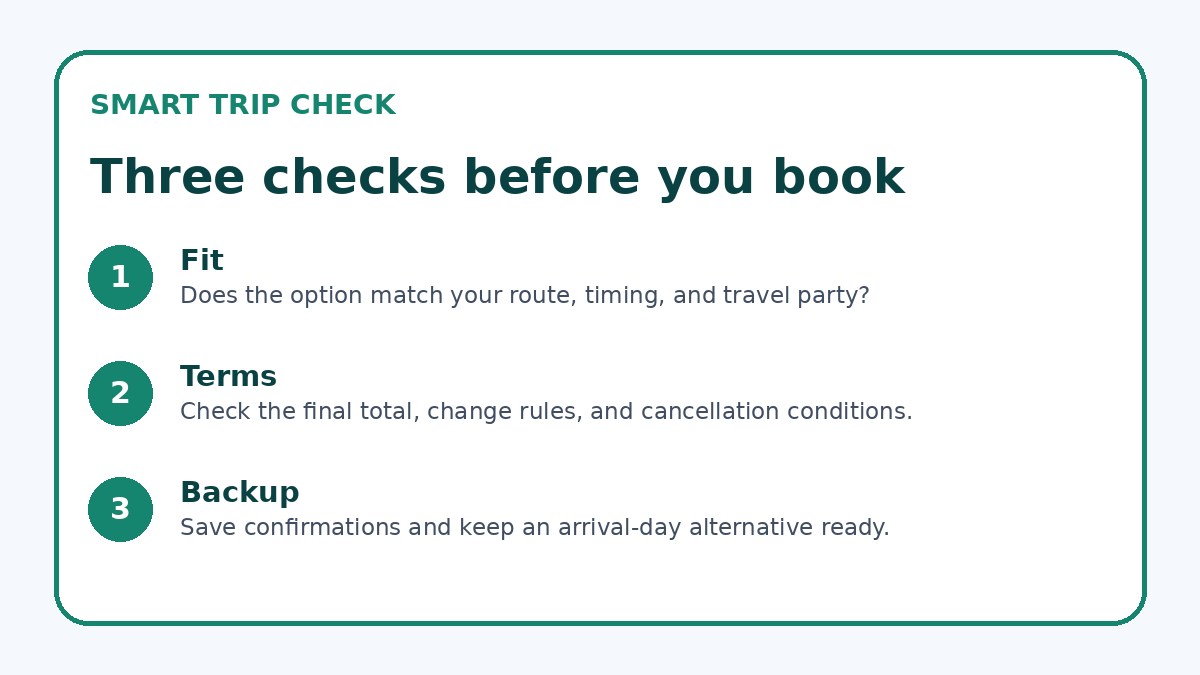
- Confirm exact origin and destination locations (station name or airport/port) and calculate door-to-door travel time before booking.
- Compare total trip time including transfers, security checks, and expected wait times rather than only in-vehicle duration.
- Verify luggage allowances, seat reservations, and any extra fees on the carrier’s official booking page prior to purchase.
- If you require accessibility or assistance, request help in advance and check station or port access details on the operator site.
- For mixed-mode trips, check timetable connections and allow generous transfer buffers to absorb delays or customs checks.
- Keep digital and printed copies of tickets and identity documents; verify which ID is accepted by each transport provider.
Ferry and car: scenic or necessary if you drive
A ferry crossing across the Channel paired with driving is for travelers who need a car in France or who relish a slower, scenic approach. Ferries depart from English ports and arrive at French ports; include boarding time, customs/immigration checks when applicable, and onward driving time to evaluate total trip length. If you are hiring a car, read the rental company’s cross-border policy carefully; many companies restrict or charge extra for taking vehicles into other countries. Confirm port terminal locations and recommended arrival windows on the ferry operator’s booking page.
Ferries can be paired with rail or coach segments if you plan a mixed-mode journey—check timetables carefully to avoid long waits. Driving gives flexibility for side trips beyond Paris but adds parking costs and city driving complexity once you arrive. If you prefer not to drive, a ferry day trip is still a leisurely option provided you are comfortable coordinating port transfers and potential delays for weather or operational reasons.
Frequently asked questions
Is the train always the fastest way between London and Paris?
Not always, because ‘fastest’ depends on your origin and final destination within each city. A high-speed train is typically quickest for central-to-central travel since it avoids airport transfers and long security lines. However, if you live near an airport with a non-stop flight and your final destination is close to Paris’s airport, a flight could be comparable in door-to-door time. Always calculate total transfer times, check-in/security windows, and expected traffic or rail transfers to determine the fastest practical option for your specific itinerary.
How should I decide between booking train or coach for a tight budget?
Start by listing your non-negotiables: must-arrive-time, luggage needs, and comfort level. Compare the total travel window for each option rather than ticket price alone—coaches often cost less but add unpredictable traffic delays. If the cheapest coach requires long overnight travel or inconvenient terminals, factor in the cost of extra local transfers or lost time. When comparing, verify onboard amenities, luggage allowances, and refund/change policies on the operator’s booking page so you’re not surprised by additional fees.
What should I verify on a provider’s final booking page before I pay?
Check exact departure and arrival points, baggage rules and fees, seat-reservation requirements, and the carrier’s refund or change policy. Confirm recommended arrival times for boarding, identity document requirements, accessibility options if needed, and how delays or cancellations are handled. For flights, look at terminal information and transfer options to central Paris; for ferries and coaches, confirm drop-off locations and any additional local transport needed. If you use a comparison tool like Trip.com, use it to find options but always read the operator’s official terms before confirming.
Final planning note
Choosing how to travel from London to Paris comes down to balancing time, cost, comfort, and where you need to start and finish in each city. Trains usually deliver the cleanest central-to-central experience and predictable travel, coaches save money but add variability, flights are useful when tied to broader air travel needs, and ferries combine well with driving or a relaxed itinerary. Use the checklist to compare total door-to-door time, fees, and transfer logistics, and always verify critical details—baggage rules, arrival terminals, accessibility, and ticket change policies—on the provider’s official booking page before you buy. With that information you can pick the option that fits your schedule and travel style.
Continue planning
Check current options and final conditions
Use the provider page to confirm live availability, the final total, cancellation terms, and every condition that matters to your trip.
This evergreen planning guide was created with AI-assisted drafting and a structured quality review. It does not display live prices, schedules, availability, visa guidance, or provider rankings. Verify current details before booking. Some links are affiliate links; we may earn a commission at no additional cost to you.