If you have only a few days in Osaka as a solo traveler, choose the hotel area first — it shapes every day. For short stays, prioritize one or two neighborhoods that reduce daily commute friction and match what you’ll actually do: sightseeing, food hunting, evening strolls, or catching trains to nearby cities. This guide gives a direct recommendation up front, then walks through the tradeoffs you’ll face so you can confidently shortlist an area and the exact room type before checking live inventory. Think about how you move between arrival point, hotel, and your top two activities each day. That pattern tells you whether to pick a central transfer hub, a neighborhood with late-night food and transport, or a calmer residential option that still links quickly to the main sights. Use the sections below to match a stay area to your pace and practical needs, then verify specific hotel policies, cancellation terms, and exact room photos on the booking page you choose.

Check live stays in the areas that fit
Use your dates and party size to compare current rooms after you narrow the neighborhood fit.
Neighborhood fit: match your daily priorities
Start by listing the two things you will do most: museum or shopping, day trips, constant restaurant hopping, or nightlife. If your top priorities are eating and late street life, Namba and Dotonbori put you within walking distance of dozens of options; you’ll sacrifice quieter mornings but gain convenience. For museum- or department store–centric days, Umeda’s cluster of galleries, department stores, and quieter hotel blocks suits a calmer pace without sacrificing transit choices.
If your plan centers on fast regional travel — arriving late or leaving early for Kyoto, Nara, or Hiroshima — prioritize Shin-Osaka. The area is optimized for rail transfers and tends to have efficient business hotels where rooms are compact but functional. Tennoji and Tenma sit between those extremes: more local in feel, often better value for slightly larger rooms, and still connected by major lines; they’re a practical compromise when you want local character and reasonable transit times.
Choose an area-selection strategy
| Area approach | Best for | Tradeoff to check |
|---|---|---|
| Base near Namba/Dotonbori | Solo travelers focused on food and nightlife who want walkable evening options. | More noise late at night and smaller rooms in core entertainment blocks. |
| Base near Shin-Osaka | Travelers prioritizing fast rail links and efficient day trips outside Osaka. | Fewer late-night dining options and a more businesslike hotel scene. |
| Base in Umeda/Kitashinchi | Those who want broad transit coverage, shopping, and quieter mornings. | Slightly longer walks to the nightlife districts and higher business-hotel presence. |
| Base in Tennoji or local neighborhoods | Budget-conscious solo travelers seeking local atmosphere and larger rooms. | Potentially longer transfers to central nightlife hubs and main attractions. |
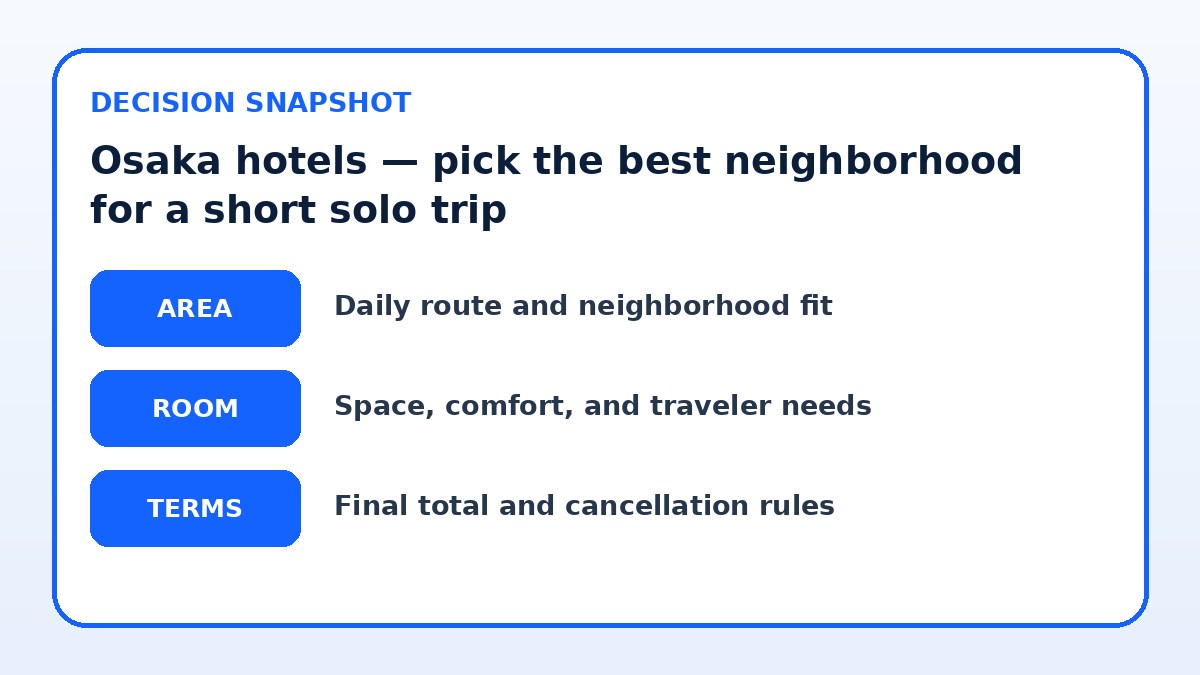
Daily-route friction: what adds minutes to your day
Estimate transfer time as door-to-door: hotel to station, wait times, and walking at your destination. In Osaka, a 10–20 minute walk plus a single subway ride often feels faster than a 30–40 minute rail connection with transfers. Choose neighborhoods with the fewest necessary changes for your most common routes. For example, if arriving at Kansai Airport and your hotel requires an extra bus or transfer, consider a place closer to a direct airport train line to reduce fatigue on arrival.
Also think about late-night transport: if you plan to eat late or explore nightlife, staying near lines that run until midnight or a short taxi ride from lively districts matters. Shin-Osaka’s strength is speed to other cities but its late-night dining options near the station are more limited than Namba’s. Umeda gives excellent coverage for multiple lines, often shortening cross-city trips and reducing the number of transfers that create friction on short stays.
Now compare like with like
Keep the same dates, guests, room needs, and cancellation preferences while you compare the final choices.
Room and party needs: single traveler priorities
Solo travelers usually need safe, comfortable rooms with good storage, a reliable shower, and quiet for rest. Business hotels near Shin-Osaka or Umeda typically offer compact single rooms with sensible layouts; boutique or mid-range hotels in Namba can offer slightly more character and proximity to food options if you prefer exploring after dark. If you value space, target neighborhoods where slightly higher nightly rates still deliver larger rooms — Tennoji sometimes offers more room for the same budget as central nightlife districts.
Consider building amenities you’ll use: coin laundry, luggage storage, 24-hour front desk, and late-check-in options. Solo travelers should check whether the hotel charges extra for early luggage drop or late check-in and confirm security features such as keycard access and after-hours entry. Always verify these operational details on the hotel’s official booking page before finalizing; policies vary and can change.

Hotel booking check before payment
- List your two highest-priority activities and map the nearest train lines and stations to decide which neighborhood minimizes transfers.
- Check the hotel’s stated walking time to the nearest named station exit and preview the walking route on a map for luggage or mobility concerns.
- Confirm front desk hours, late-check-in policy, and luggage storage options on the hotel’s booking page before paying.
- Verify exact room type, bed size, and whether photos match the published room layout to avoid surprises on arrival.
- Confirm cancellation and modification rules along with any prepayment requirements; screenshot or save the confirmation page.
- Compare at least two booking platforms (including Trip.com if desired) and then validate final terms on the hotel’s official site.
Final booking terms: what to verify before you book
Before you commit, confirm the cancellation policy, exact bed type and room layout, whether breakfast is included, and whether the hotel lists accessible arrival options (e.g., luggage storage, late check-in). Photos can be staged or outdated, so compare multiple room images and read recent guest notes on the provider’s reservation page. If you depend on an early train or late arrival, verify the front desk hours and whether there’s a 24/7 check-in or specific instructions for late access.
Also check how the hotel describes its nearest station and exits. “Nearby” can mean a 2–3 minute walk or a 12–15 minute walk with stairs; find the stated walking time and the station name, then view the route on a map to see if it matches your mobility and luggage needs. If you will travel beyond Osaka, verify luggage forwarding or storage options and whether the hotel provides printed or digital receipts you may need for transit refunds or business records. Trip.com can be used to compare availability but always confirm final terms on the hotel’s page.
Hotel Guide questions travelers ask
Which Osaka neighborhood saves the most travel time for a short solo stay?
For minimizing travel time within Osaka, choose a central hub where your most frequent destinations require the fewest transfers. Namba is ideal for food and evening activities since many spots are walkable from a single base. Umeda offers the broadest transit coverage for cross-city travel and department store access. If day trips are your primary goal, Shin-Osaka reduces intercity rail time. To decide quickly, map your arrival station, hotel, and two top destinations; the neighborhood that keeps that loop shortest will save the most time.
Is it safer for solo travelers to stay in Namba or Umeda at night?
Both Namba and Umeda are generally safe, but they offer different experiences at night. Namba is lively with late-night diners and neon streets, which can feel bustling and energetic late into the evening. Umeda is busier during business hours and quieter at night, with many hotels in mixed commercial districts. Choose Namba if you want immediate nightlife access; choose Umeda if you prefer quieter evenings and earlier bedtimes. Regardless of neighborhood, prioritize well-lit streets, hotels with secure entry, and a short walk from the nearest station.
How do I balance room size and location on a short Osaka solo trip?
If you only have a few nights, prioritize location that reduces daily transit to what’s most important to you — less time in transit often offsets a smaller room. However, if you need workspace, longer rest, or prefer room comfort after full days, target neighborhoods like Tennoji or peripheral Umeda blocks where the same budget can sometimes buy a larger room. Look for hotels that clearly list room square footage, or compare single and semi-double options for extra space. Always verify room details and photos on the hotel’s final booking page before confirming.
Final decision note
For a short solo stay in Osaka, pick the neighborhood that shortens the loop between your arrival point, accommodation, and your two main daily activities. Namba gives instant food and nightlife access; Shin-Osaka delivers fast rail links for day trips; Umeda provides broad transit coverage and calmer mornings; Tennoji and local neighborhoods offer value and space. Once you shortlist an area, focus on room type, front-desk hours, and stated walking times to the station. Compare offers on a couple of platforms — Trip.com is one option — but always verify final cancellation terms, exact room photos, and arrival instructions on the hotel’s official reservation page before booking.
Continue planning
Check current options and final conditions
Use the provider page to confirm live availability, the final total, cancellation terms, and every condition that matters to your trip.
This evergreen planning guide was created with AI-assisted drafting and a structured quality review. It does not display live prices, schedules, availability, visa guidance, or provider rankings. Verify current details before booking. Some links are affiliate links; we may earn a commission at no additional cost to you.