Short answer: for many Montreal business trips, you probably don’t need a car unless your schedule includes suburban client visits, late-night logistics, or off-hours site inspections. Downtown Montreal has dense transit, frequent taxis and rideshares, and compact driving that can add parking cost and time. If your meetings are spread across the island, in Laval, or the South Shore, a rental can save travel time and offer flexible staging for equipment or samples. Before you book, prioritise checking the car-rental fuel policy, any daily or kilometre (mileage) limits, and insurance wording — these are the items that most affect total cost and legal exposure. If you decide not to drive, plan a clear fallback combining transit, rideshare and a short-term rental only for last-mile needs.
Route value: when a car actually saves time
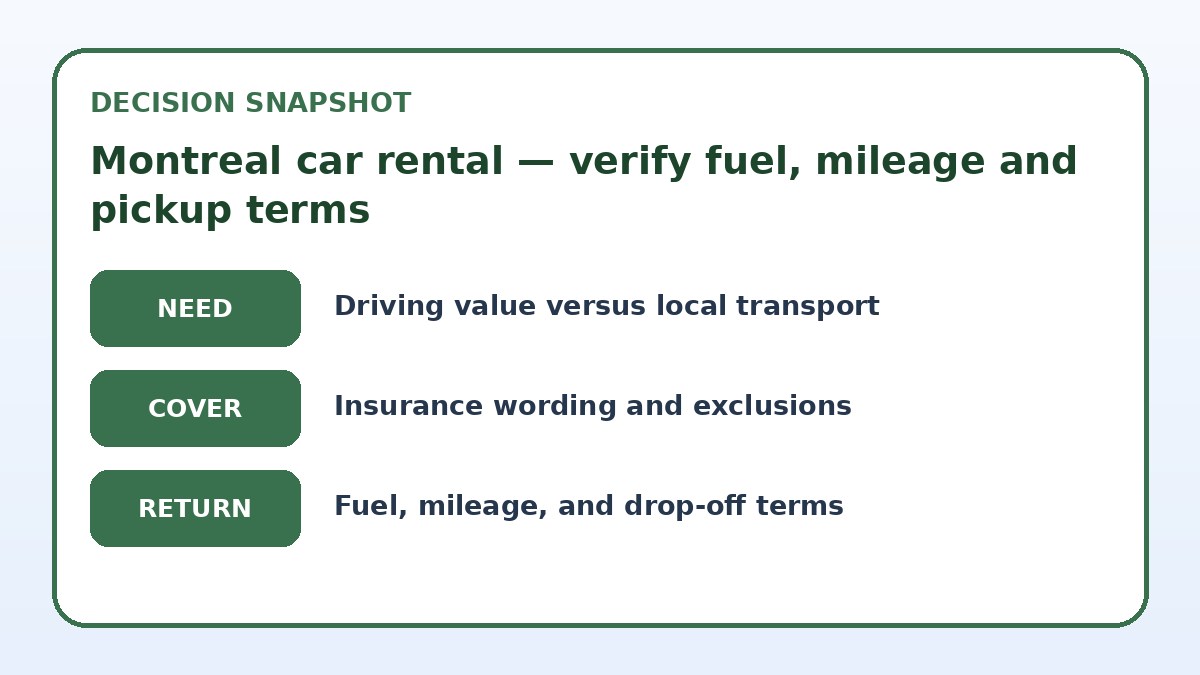
Decide whether driving genuinely improves your Montreal schedule by mapping meeting locations and typical meeting hours. If your appointments are clustered in downtown or in the Plateau, transit, walking and short rideshares will usually be faster and cheaper than parking and navigating rush-hour traffic. A rental earns its keep when you have back-to-back appointments across different municipalities (for example, island to South Shore or to Laval), when you need to transport bulky samples or equipment, or when you must meet clients outside transit hours.
When assessing route value, estimate door-to-door time including parking and walking from lots, and compare that with transit or rideshare times at the specific hours you’ll travel. Also factor in downtown parking availability and fees — these are often the decisive variable for business travelers. If your firm pays for car time or you can deduct mileage, include that in the calculation. Finally, when considering intercity trips, verify whether the rental’s per-kilometre limit will affect total cost before assuming the car is cheaper than trains or interurban shuttles.
Decide whether driving earns its place
| Mobility strategy | Best for | Cost or friction to check |
|---|---|---|
| Full rental for entire trip | Business travelers with many cross-city appointments or equipment needs | Higher base cost, parking hassles, and risk of fuel/mileage charges if not checked in advance |
| Transit plus rideshare | Downtown-heavy schedules and short meeting clusters | May be slower for dispersed meetings and can become expensive late at night or for bulky equipment |
| Carshare/hourly rental for on-demand needs | Short errands, one-off site visits, or last-mile staging without full-day commitment | Availability can vary; may be costly for long trips or heavy cargo |
| Hybrid: rental for specific days only | Trips with a few out-of-town days but mostly downtown meetings | Requires careful booking and pickup/return planning to avoid extra fees and lost time |
Check live rental choices only after the route test
Use the exact driver, dates, pickup point, and return plan to compare current conditions.
Insurance and wording: what to verify on the booking page
Insurance language can hide substantial gaps. On the rental provider’s final booking page, check the collision damage waiver (CDW) scope, the liability coverage limits, and the deductible amount you would be responsible for after a claim. Confirm whether additional drivers are included, whether corporate or personal auto policies apply in Quebec, and whether the rental company allows coverage from credit cards—if so, what documents the card issuer requires for a claim.
Also verify exclusions specific to Quebec and cross-border travel if you plan to drive into the U.S. Read any text about permitted drivers’ ages, driving history restrictions, and banned uses (for example, off-road or commercial use). If the wording is dense or unclear, take screenshots of the terms on the final booking page and forward them to your corporate travel manager or insurer for a quick pre-trip review. This prevents surprises if you need to make an on-site claim.
Compare the full rental conditions
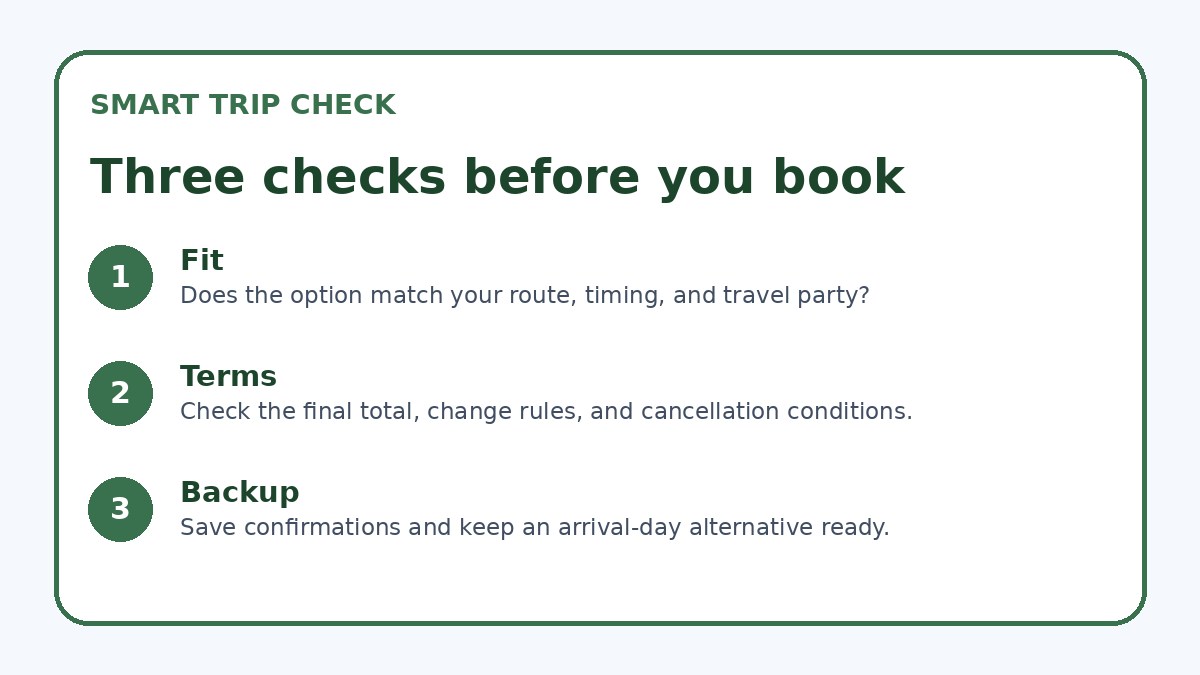
Confirm insurance wording, exclusions, deposit, fuel, mileage, and return terms on the final page.
Pickup and return friction: minimize time and unexpected fees
Pickup and return logistics are frequent sources of frustration. Airport counters may be faster but can include higher surcharges and longer shuttle waits; downtown branches sometimes require reservations for specific pickup times. On the booking page, check fuel and return conditions, the allowed drop-off locations, late-return grace periods, and after-hours return procedures. Note any extra fees for returning the car to a different city branch or for out-of-hours drop-offs.
Ask how the provider documents fuel level on return (photo, in-person inspection, or sealed tank option) and whether they levy a refuelling service charge that often exceeds local pump prices. If you expect to return outside staffed hours, confirm whether they accept key drop boxes and how they record odometer and fuel level. These details determine whether a same-day schedule change will cost you time or money when you’re trying to get to the airport or your next meeting.
Car rental terms to verify
- On the provider’s final booking page, confirm the fuel policy wording (full-to-full, pre-purchase, or return-with-fuel) and screenshot it for records.
- Check the quoted mileage allowance and per-kilometre overage fee, then estimate your planned kilometres to calculate potential overage costs.
- Verify insurance terms: CDW limits, deductible amount, liability coverage, and whether corporate or credit-card coverage is accepted.
- Confirm pickup and drop-off logistics: branch hours, after-hours procedures, key drop policy, and any one-way drop fees.
- Ask whether additional drivers are included or cost extra and whether driver age or licence-history restrictions apply to your team.
- If you may cross the border, verify cross-border rules and required documentation on the booking page before departure.
A practical non-driving fallback for business trips
If you decide not to rent, assemble a fallback plan that covers on-demand needs and predictable travel. Combine Metro and STM bus routes for downtown mobility, pre-book rideshares for airport transfers and late-night returns, and use short-term hourly car rentals or local carshare services for one-off trips that require cargo space. For client visits outside transit corridors, budget for scheduled rideshare legs rather than an open-ended rental.
Keep a small checklist with business alternatives: a local SIM or eSIM for quick rideshare booking, a list of taxi numbers your firm trusts, and a backup supplier for same-day courier services if you need to move equipment. If you anticipate more than two intercity day trips, compare the total projected cost of rideshares and intercity transit to a rental with verified mileage terms; Trip.com can be used to check current availability, but always confirm the provider’s terms on their booking page before committing.
Car Rental & Road Trip questions travelers ask
How do I interpret a rental company’s ‘unlimited mileage’ claim for a business trip?
‘Unlimited mileage’ generally means you’re not charged per kilometre, but you still must check for territorial limits and permitted uses on the booking page. Some contracts permit unlimited mileage only within a province or country and may add fees for cross-border travel. Also look for clauses that limit wear-and-tear or commercial use—if you’ll be driving heavy loads or towing, that could void the unlimited clause. Always save the specific booking text and, if unclear, request written confirmation from the provider before you travel.
Will my corporate credit card insurance cover damage to a rental in Montreal?
Corporate credit cards often provide secondary cover for rentals, but coverage varies by issuer and by the cardholder’s terms. On the rental booking page, locate the insurance and waiver descriptions and ask your card issuer what documentation they require for claims in Canada. Important details include whether the card’s coverage is primary or secondary, age limits, and whether it covers Quebec’s specific legal framework. Don’t assume coverage—get written confirmation from your card provider or corporate travel manager.
What’s the simplest way to avoid fuel-related surcharges on a short business trip?
The least risky approach is to choose a full-to-full policy and return the vehicle with the same fuel level documented on pickup. Photograph the fuel gauge at pickup and return if the provider does not use sealed-tank inspections. If you select a pre-purchase fuel option, compare the quoted refuelling charge to local pump prices; pre-purchase may still be more expensive if you return the car nearly full. Always verify the provider’s refuelling charges and photo evidence requirements on the final booking page to avoid surprise invoices.
Final decision note
For business travelers to Montreal, the right choice is driven by where and when you must be. If your itinerary is downtown-focused with predictable hours, skip the full rental and rely on transit, taxis and short-term carshare. Rent when your schedule includes multiple cross-municipal trips, late-night logistics, or heavy equipment. Before booking, confirm fuel policy, mileage limits, and insurance wording on the provider’s final booking page — save screenshots and share them with your corporate travel or finance team. Finally, plan pickup and return windows carefully to avoid after-hours fees; a small extra check now prevents large surprises on your expense report.
Continue planning
Check current options and final conditions
Use the provider page to confirm live availability, the final total, cancellation terms, and every condition that matters to your trip.
This evergreen planning guide was created with AI-assisted drafting and a structured quality review. It does not display live prices, schedules, availability, visa guidance, or provider rankings. Verify current details before booking. Some links are affiliate links; we may earn a commission at no additional cost to you.