Practical answer up front: for most couples balancing comfort, romance and convenience, an overnight or daytime soft-seat/berth train gives the best blend of space and scenery, while private cars or combined coach-plus-flight options win when door-to-door time and transfers matter most. Ferries can be romantic but are rarely direct on this route and add transfers that increase friction. Start by deciding whether you value time in transit (shorter door-to-door), onboard privacy (a couchette or private car), or budget flexibility (coach options). Once you choose the priority, compare terminal access, luggage handling, and how easily you can switch to an alternate if something changes. Use the rest of this guide to weigh tradeoffs, plan real transfer steps, and build a practical backup plan that keeps your trip relaxed and flexible.
How to decide based on terminal fit and transfers
Terminal location frequently changes a plan’s practicality more than the ride itself. Trains in Vietnam normally arrive and depart from central stations that are easier to reach by taxi or ride-hail, which can save door-to-door time for couples with luggage. Coaches may use large intercity bus terminals outside the city center or smaller roadside stops; that can add 30–90 minutes in transfers. Private cars or airport departures put you closer to expressways but factor in city traffic when estimating total travel time. Go beyond advertised travel time and map the actual transfer route from your hotel to each terminal; that will reveal whether a slightly longer ride is actually faster overall.
If you value a romantic, low-stress start and finish, prioritize options that minimize transfers. Look at pickup and drop-off points: a coach that drops at a central terminal beats one that stops on a highway exit. For trains, find out whether your station has easy taxi ranks or a covered pedestrian route; poorly connected stations undermine the comfort of a sleeper berth. When possible, arrange an airport or station pickup for the final leg—especially at night—to reduce navigation stress for two travelers.
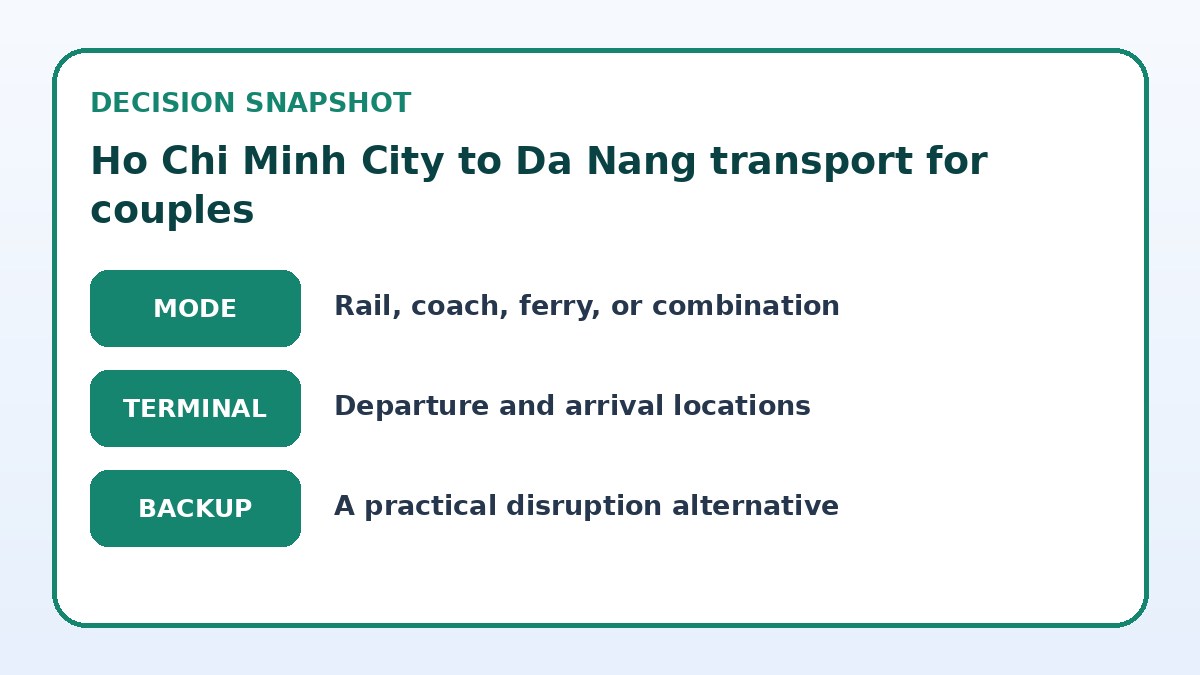
Choose the end-to-end journey plan
| Journey approach | Best for | Friction to check |
|---|---|---|
| Prioritize comfort: overnight train or private sleeper | Couples who want privacy and to convert travel time into rest | Longer scheduled journey than a flight and may require central station transfers |
| Prioritize door-to-door speed: private car or combination with flight | Couples with limited time who value short total travel time | Higher cost and sensitivity to road traffic or airport transfer windows |
| Prioritize budget and flexibility: daytime coach services | Cost-conscious couples who can accept more frequent stops and transfers | Less onboard privacy and variable drop-off locations add transfer time |
| Prioritize experience: mixed route using ferry segments plus land travel | Couples seeking scenic travel and memorable moments en route | Usually adds transfers and planning complexity, increasing door-to-door time |
Check live intercity options
Look beyond the ride itself and compare terminals, transfers, luggage, and arrival fit.
Luggage, comfort and onboard privacy for couples
Different modes have different real-world luggage friction. Trains often have overhead racks plus guard areas for larger suitcases; couchettes or private sleepers increase privacy, making an overnight journey comfortable and intimate. Coaches vary widely: some allow generous checked baggage, while others treat everything as carry-on in limited compartments. On ferries, luggage handling can be informal and require you to manage bags during transfers to the dock. If one partner prefers uninterrupted sleep, a reserved berth or private car is the best choice—just confirm how your bags will be stowed and whether attendants can help during boarding and disembarkation.
Comfort is more than the seat. Consider noise, privacy and the ability to move around. Sleeper trains allow couples time together without staring at each other in cramped seats; daytime trains with larger seats are a good compromise. Coaches can be surprisingly comfortable on daytime runs but expect less privacy and fewer movement options. Ferries provide open decks and seaside views that make for memorable moments, but motion and weather can affect comfort. Pack a small travel pillow, earplugs and a compact blanket to increase onboard comfort regardless of mode.
Timing flexibility and real-world scheduling advice
Check not just nominal frequency but the realistic ability to change plans: coaches usually run frequently and can sometimes be rebooked quickly, while trains may have fewer departures but clearer rules on seat reservations. For flexible couples, a coach or a train with multiple daily departures lets you shift plans with little penalty. If your schedule is tight, prioritize services with central terminals and predictable travel times; flights shorten in-air time but add airport transfer windows and security checks that affect door-to-door planning. When mixing modes—train then flight or coach plus short ferry—build connection buffers to allow for small delays without losing onward reservations.
Night versus day travel also matters for couples’ experience. Overnight trains turn travel time into sleeping time, which can be romantic and time-efficient, but verify how safe and quiet the station environment is for late arrivals. Daytime options let you enjoy scenery and disembark refreshed, but arrive earlier to pick up luggage and navigate crowded terminals. Always have a backup transport app or local taxi contact and allow at least 60–90 minutes between connections if you are not using the same provider for the whole journey.
Compare the practical alternatives
Use the final page to confirm what is actually offered on your dates and save a workable fallback.
Intercity travel checklist
- Map exact terminal addresses and estimate taxi or ride-hail time from your accommodation before booking.
- Confirm luggage allowances and whether checked baggage handling or porters are available at each terminal.
- Build a minimum 60–90 minute buffer between connections; increase it if one leg is by road in heavy-traffic hours.
- Save screenshots and printed copies of booking confirmations and contact numbers for operators and local taxi services.
- Identify a simple backup route (alternate train, coach or short flight) and know how to buy it quickly if needed.
- Prebook a station or airport pickup for arrivals after dark to reduce navigation stress and simplify transfers.
Disruption backups and practical checks before booking
Plan for common disruptions—traffic, strikes, weather or late arrivals—by choosing flexible tickets or services with clear rebooking rules. If your chosen route requires a tight connection, consider a higher-cost but simpler door-to-door option as a fallback: a private transfer can solve a missed connection at short notice. Keep digital and printed copies of bookings, emergency contacts, and local maps, and know where embassy or consular help is located if documents are lost. For couples traveling together, assign roles: one handles navigation and tickets, the other manages bags and accommodations to reduce stress during hiccups.
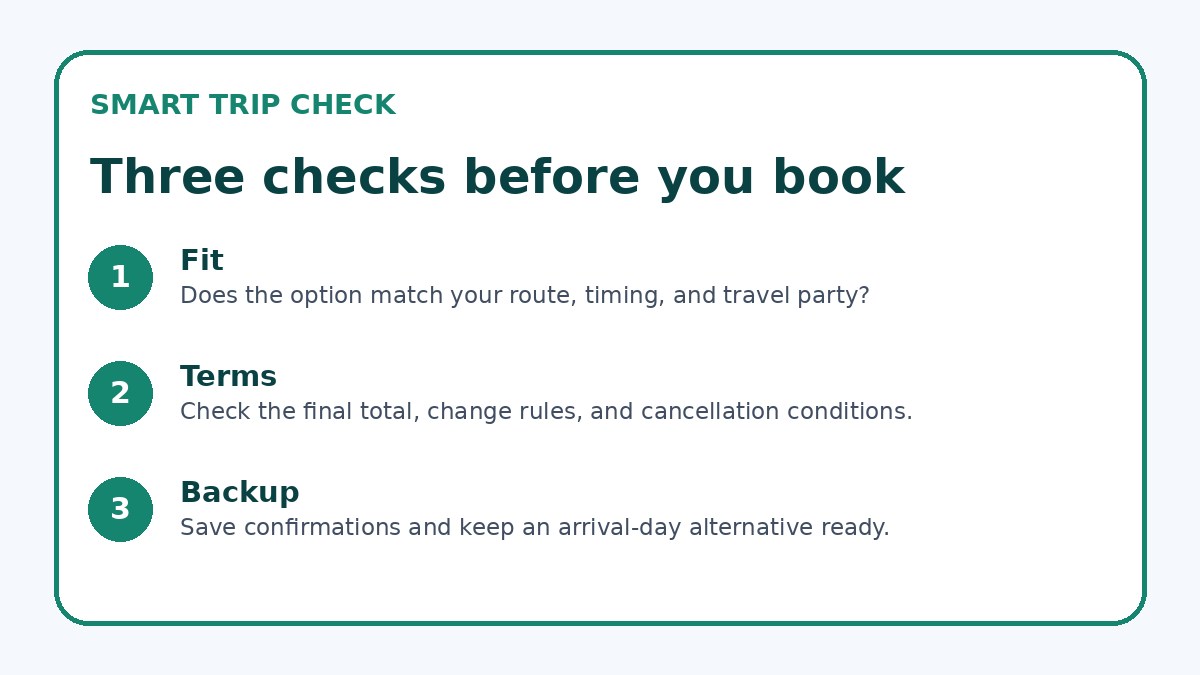
Before you book, verify provider policies on the final booking page: cancellation and rebooking rules, exact terminal addresses, luggage allowances and whether transfers are included. If comparing routes on aggregation websites like Trip.com, double-check details on the operator’s page before payment. Also confirm pickup/drop-off times and whether night pickups are available. Finally, plan a simple backup route—another train, a coach, or a short domestic flight—so you can buy it quickly if your original plan becomes impractical.
Rail & Intercity Transport questions travelers ask
Is taking the train from Ho Chi Minh City to Da Nang a romantic choice for couples?
A train can be very romantic for couples, especially if you book a private berth or a comfortable soft sleeper where you can relax together. Sleeper trains turn travel time into private time and allow you to wake up near your destination—ideal for long routes. However, romance depends on practical details: central station access, quiet overnight platforms, and how your luggage is handled. Verify the exact station arrival and whether onward transfers are simple; a romantic sleeper is less appealing if you face a difficult taxi ride on arrival.
Can ferries be used to travel directly between Ho Chi Minh City and Da Nang?
Ferries rarely operate as direct point-to-point services between those two cities without significant land transfers before or after the sailing. Ferry travel is best considered for scenic segments where the sea leg is part of a longer, mixed-mode route rather than a direct alternative. If you want to include a ferry for the experience, plan the land connections carefully and confirm dock locations, baggage procedures, and any shuttle services that link the ferry terminal with main transport hubs. Check operator pages for exact boarding rules before you book.
How do we choose between a coach and a private car if we’re trying to balance cost and comfort?
Compare the real door-to-door time and transfer needs rather than just the advertised journey length. Coaches often look cheaper but may arrive at peripheral terminals requiring longer final transfers, which increases time and inconvenience. Private cars give door-to-door convenience and reduce transfers but usually cost more. For couples, factor in how much you value privacy, flexible pickup times, and the ability to stop en route. Verify luggage policies for coaches and ask about express versus regular services to ensure the coach option actually fits your schedule.
Final decision note
Choosing how to travel from Ho Chi Minh City to Da Nang as a couple comes down to three clear decisions: prioritize door-to-door time, onboard comfort and privacy, or the travel experience itself. Trains and private sleepers offer privacy and the chance to rest together; private cars and flights minimize total travel time; coaches and mixed ferry segments can lower cost or add scenic variety but usually increase transfers. Before booking, map terminals, confirm luggage rules, and plan a simple backup route to reduce stress. Double-check final details on the provider’s booking page—times, terminals, and rebooking policies—so your trip stays smooth and enjoyable.
Continue planning
Check current options and final conditions
Use the provider page to confirm live availability, the final total, cancellation terms, and every condition that matters to your trip.
This evergreen planning guide was created with AI-assisted drafting and a structured quality review. It does not display live prices, schedules, availability, visa guidance, or provider rankings. Verify current details before booking. Some links are affiliate links; we may earn a commission at no additional cost to you.