Practical choice first: for most couples the fastest door-to-door option between Seoul and Busan is rail (high-speed or intercity) when your hotel and schedule match a main station; coach or a mixed rail-plus-ferry plan can work when you prioritize cost, scenic value, or a specific terminal. Start by mapping where you’ll be in Seoul (central hotels near Seoul Station, Yongsan, or the airport) and where you want to end in Busan (downtown, Haeundae, or the port). That determines which stations and terminals minimize transfers and luggage handling. This article focuses on how to pick a route based on terminal fit, luggage and transfer friction, timing flexibility, and a clear disruption backup, so you and your partner can choose the practical, least stressful option rather than just the fastest single ride.
Choosing between rail, coach, ferry or mixed routes
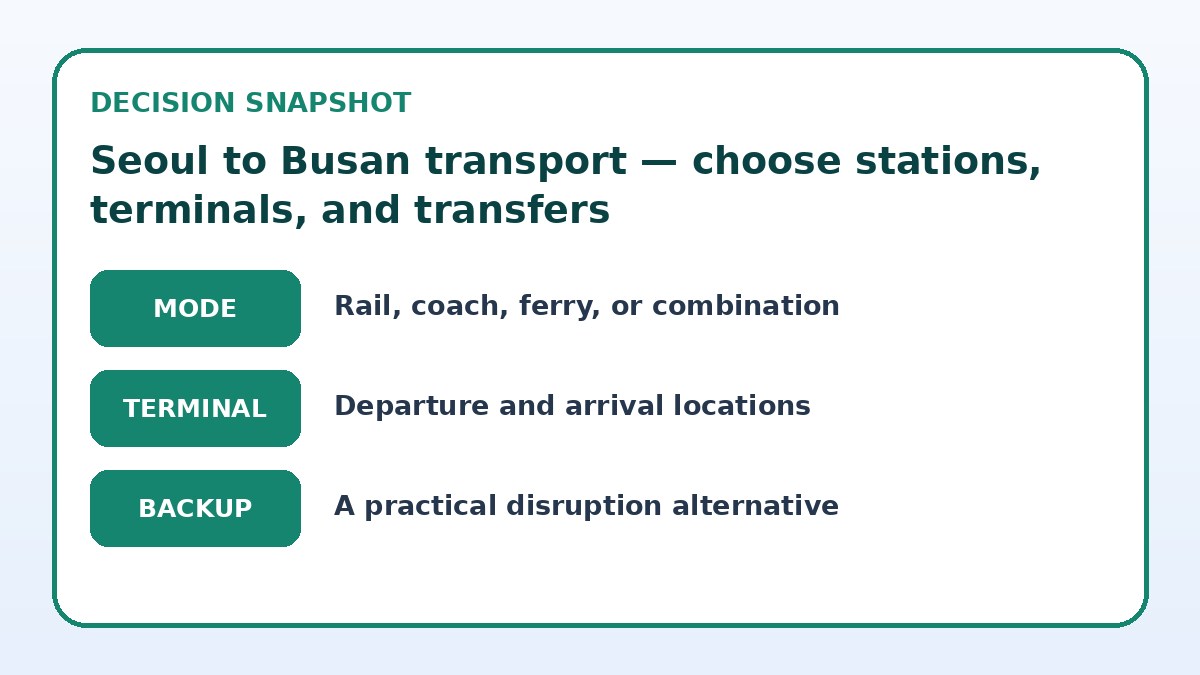
Start by comparing modes by how they meet your end-to-end needs: rail typically wins for speed and predictability if your origin and destination are near major stations; coaches win when you want fewer transfers between neighborhoods that sit near coach terminals; ferries are only relevant if you specifically want a sea leg or are connecting from ports. Couples should weigh whether the journey time saved by a faster train is worth the extra walking or transfers at either end. Think door-to-door: a quicker ride that leaves you with a long taxi or subway journey might be less appealing than a slightly slower service that drops you near your hotel.
Also factor in how you travel together—do you prefer staying together in one seat, stretching legs on a coach, or splitting tasks (one handles luggage while the other buys tickets)? Mixed routes can smooth timing—for example, a train into Busan combined with a short taxi or subway to a seaside neighborhood—or they can add friction if schedules don’t align. Consider arrival and departure terminals, frequency, and how easy it will be to change your plan mid-journey; couples often appreciate options that keep both partners comfortable and minimize solo sprints with bags.
Choose the end-to-end journey plan
| Journey approach | Best for | Friction to check |
|---|---|---|
| Direct high-speed or intercity rail | Couples prioritizing speed and predictable schedules with minimal door-to-door time. | May require longer walks or metro rides at either end; check station access and elevator availability for luggage. |
| Express coach between central terminals | Couples who want simpler terminal-to-terminal transfers and often cheaper or evening departures. | Slower on the road and subject to traffic; verify drop-off proximity to your final lodging in Busan. |
| Mixed rail plus local transit or taxi | Couples balancing speed and neighborhood fit—fast into the city, then short local transfer to your hotel. | Adds a connection step which may complicate luggage handling and needs accurate transfer timing. |
| Scenic or ferry-inclusive route | Couples seeking a leisurely trip or a specific port arrival experience tied to sightseeing. | Usually longer and more complex logistically; confirm ferry terminals and onward transport availability. |
Check live intercity options
Look beyond the ride itself and compare terminals, transfers, luggage, and arrival fit.
Terminal fit and minimizing transfer friction
Terminal fit means matching the transport terminal to where you'll start and finish in the city. In Seoul, different rail and coach terminals sit in different neighborhoods; in Busan the same applies. Choose the combination that cuts cross-city travel. If your Seoul hotel is central, a station in the same neighborhood avoids a taxi. In Busan, decide whether you value being next to the beach, nightlife, or a quiet neighborhood; that determines whether you should prefer a station that connects to local metro lines or a coach stop with easy taxi ranks.
Practical steps to reduce transfer friction include booking seats together, reserving a larger-seat or accessible spot if you have multiple bags, and checking station maps in advance so you know exits and elevator locations. For couples, assign roles—one carries documents and electronics, the other manages luggage—so transfers feel coordinated. If several stations serve your route, choose the one with the simplest onward connection (single subway line or short taxi ride) rather than the theoretically faster terminal that requires multiple changes.
Timing flexibility and how to schedule with a partner
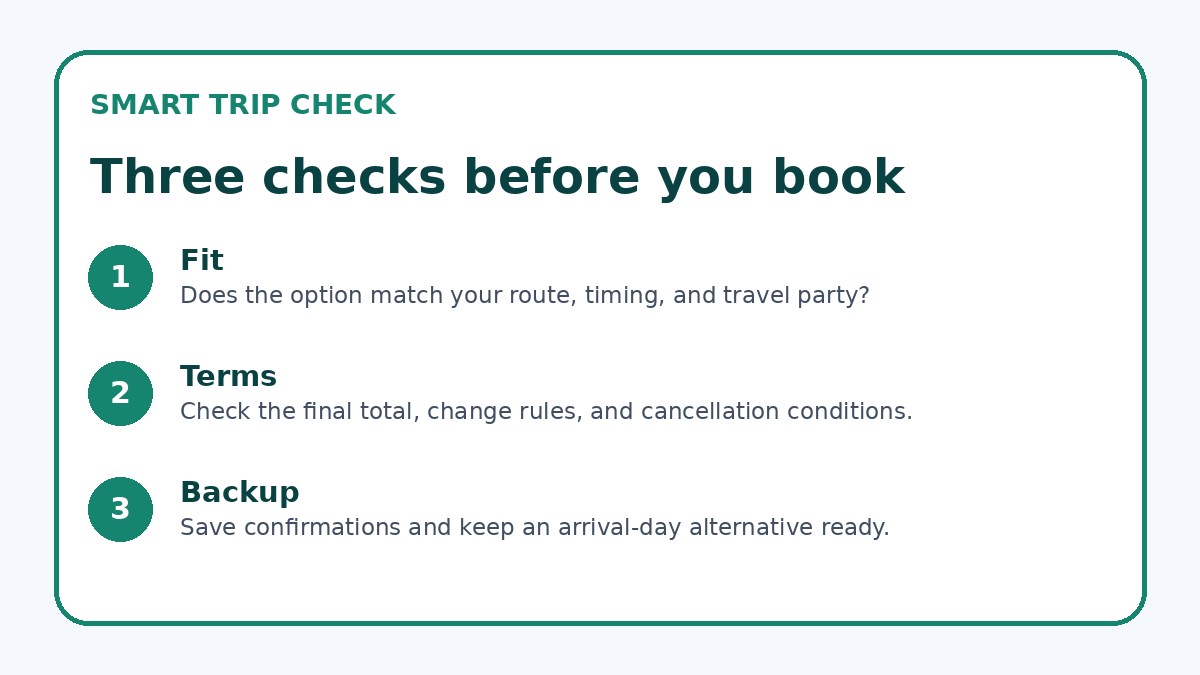
Build timing flexibility into your plan: aim for trains or coaches with frequency so you’re not locked into a single departure, and leave extra margin for check-in to hotels or for weather-related delays. Couples should pick departure windows that match both partners’ energy levels—early departures can save daytime in Busan but can be stressful after a late evening; midday options might be more relaxing but reduce sightseeing time. Also think about arrival time: a midday or early evening arrival gives you time to settle and eat together, while late arrivals may mean limited transport options to your lodging.
When booking, pick options with flexible cancellation or easy rebooking if you expect schedule changes. If you plan connections with local transit or taxis on either side, check those operating hours and frequency. For couples traveling with differing mobility or preferences, pick a service with easier boarding or more comfortable seating; a slightly slower departure with better comfort can make the whole day more enjoyable than a rushed express option.
Compare the practical alternatives
Use the final page to confirm what is actually offered on your dates and save a workable fallback.
Intercity travel checklist
- Map origin and destination addresses and choose the terminal closest to each to minimize taxi or metro transfers.
- Check station exit maps and elevator/escalator locations online so you can avoid long stairs with luggage.
- Reserve seats together and choose ticket options that allow simple rebooking if plans change.
- Plan at least a 30–60 minute buffer for connections and unexpected delays when scheduling departures.
- Save station pickup points and a local taxi number in your phone for quick door-to-door transfers on arrival.
- Identify one alternative train or coach and a fallback accommodation plan in case of major disruptions.
Disruption backup: alternatives and practical contingencies
A simple backup plan keeps stress down. Identify one alternative train and one coach that run on the same corridor, and mark their departure windows in your phone. Also note the nearest taxi ranks, ride-hailing pickup points, and a local station where you could switch modes. For couples, agree ahead who will handle the logistics if a disruption happens so decisions don’t become fraught under time pressure—one person can research the next service while the other keeps hold of luggage and documents.
When providers change schedules or when delays occur, check official provider pages for live status and verify final booking terms before you change reservations. Consider a flexible last-night option in Busan or a daytime buffer on arrival so a missed morning connection doesn’t wreck your first full day. If you carry physical maps or offline transit apps, you can quickly find alternate routes without relying on mobile data. Trip.com can be used as one place to compare live availability at booking time, but always verify itineraries and transfer details on the operator’s official page before finalizing.
Rail & Intercity Transport questions travelers ask
How do I decide which Seoul station to use for a couple traveling to Busan?
Choose the Seoul station that minimises onward travel from your hotel. If you’re staying near central neighborhoods, pick the major station in that area to avoid a long taxi or subway ride. Compare the station’s access to elevators, luggage services, and nearby taxi ranks. Also consider train frequency from that station and whether connecting local transit in Busan will be straightforward for your arrival neighborhood. Verify platform access and transfer details on operator pages before booking.
What’s the best way to handle luggage during transfers with two people?
Divide roles so one person manages documents and small items while the other handles larger bags, and use luggage with wheels for easy movement. Choose services with simple, short transfers between platforms or to taxi ranks to cut repeated lifting. Look up station maps to find elevator locations and the shortest exits for taxis or buses. If you have oversized items, check operator baggage policies and consider a direct taxi from the station to the hotel rather than multiple public-transit changes.
If our train is delayed, what practical back-up options should couples prepare?
Identify the next few departures for trains and coaches and note their departure points; save them in your phone for quick reference. Know the nearest taxi ranks or ride-hailing pickup spots at both stations, and have a basic backup meeting plan (where to wait, who calls which number). Consider a flexible hotel arrival plan for the first night in Busan so a delay doesn’t ruin activities. Always confirm any rebooking fees or change rules on the operator’s booking page before adjusting reservations.
Final decision note
For couples planning Seoul to Busan transport, the most practical decisions come from prioritizing door-to-door fit over single-ride speed. Start by matching your hotel locations to specific stations or terminals to avoid extra transfers, then choose a mode that balances luggage handling, comfort, and timing flexibility. Reserve seats together, plan buffer time, and agree on a simple backup process so one delay doesn’t become an argument. Use official operator pages (and Trip.com as a comparison tool) to confirm final schedules, platform access and rebooking rules before you buy. With a clear transfer plan you’ll spend more of the journey enjoying the trip together and less time juggling logistics.
Continue planning
Check current options and final conditions
Use the provider page to confirm live availability, the final total, cancellation terms, and every condition that matters to your trip.
This evergreen planning guide was created with AI-assisted drafting and a structured quality review. It does not display live prices, schedules, availability, visa guidance, or provider rankings. Verify current details before booking. Some links are affiliate links; we may earn a commission at no additional cost to you.