Short answer: for most couples visiting central Osaka, a rental car is more a convenience for specific day trips than an everyday necessity. The city itself is compact, with excellent rail and subway connections, high walkability in districts like Namba and Umeda, and plentiful taxis for after-dark returns. A car becomes worthwhile if you plan multiple day trips to outlying places—Awaji Island, Kinosaki Onsen, or rural Kansai wineries—or if one partner needs mobility assistance that public transit can’t easily meet. Before you book, compare total door-to-door times, parking availability and cost at your lodgings and destinations, and how comfortable you’ll be driving on Japanese roads. This guide gives couples the decision checklist, the insurance and pickup wording to understand, the tradeoffs you’ll face, and a clear non-driving plan so you can decide with confidence.
Does driving actually improve your couple’s itinerary?
Start by listing the places you really want to visit and map them by day. Central Osaka neighborhoods—Dotonbori, Shinsaibashi, Umeda, Osaka Castle—are densely served by train and subway lines; travel between them is typically faster and cheaper than navigating traffic and searching for parking. Contrast that with a rural destination: if you aim for a single remote onsen or a day exploring several small towns in Kansai, a car can compress travel time and let you stop where trains don’t go. For each day, compare door-to-door travel time if you use public transport versus a car, including expected waits, walking to stations, and parking searches.
Consider comfort and rhythm. Couples who enjoy spontaneous scenic detours, stopping at roadside viewpoints, or carrying bulky items (picnic gear, a child seat, multiple suitcases) often gain from a car’s flexibility. If either partner prefers not to drive in dense city traffic, that’s a major factor against renting. Also factor in evening plans: late-night dining and bars are easier with a car if you’re staying outside the subway network—but taxis are also an option if you prefer not to drive.
Decide whether driving earns its place
| Mobility strategy | Best for | Cost or friction to check |
|---|---|---|
| Rental car | Couples planning multiple rural day trips, scenic flexibility, and carrying bulky gear. | Parking, tolls, pickup/return logistics, and insurance wording to verify; city driving can be slow. |
| Train + subway | Couples focused on central Osaka sights, efficient inner-city travel, and low navigation stress. | Limited reach to remote areas and less flexibility for spontaneous roadside stops. |
| Taxis & app-based rides | Late-night returns, short door-to-door trips, and couples avoiding driving responsibilities. | Higher per-trip cost for longer journeys; availability outside busy hours or rural towns can vary. |
| Bikes + walking | Active couples covering neighborhoods, enjoying slow local exploration, and avoiding vehicle costs. | Less practical for long distances, poor weather days, or carrying large luggage. |
Check live rental choices only after the route test
Use the exact driver, dates, pickup point, and return plan to compare current conditions.
Insurance wording: what to verify before you accept coverage
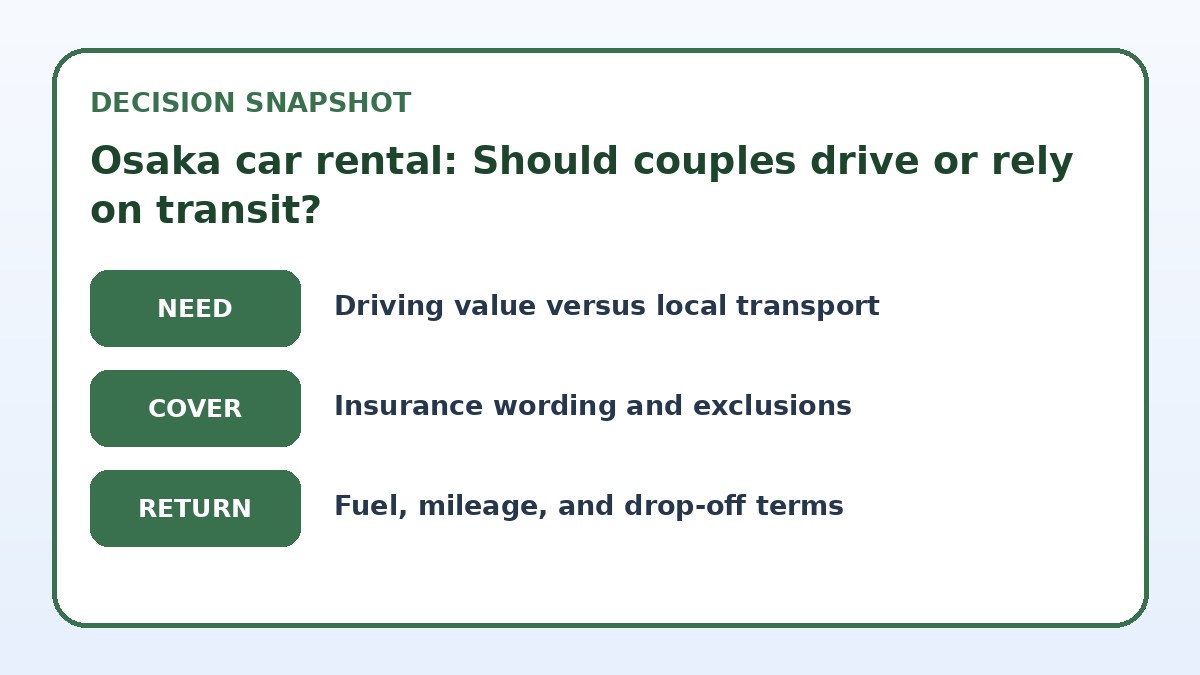
Insurance pages use specific terms that change the financial stakes. Look for Collision Damage Waiver (CDW) or Loss Damage Waiver (LDW), which limit your responsibility for damage to the rental vehicle, and confirm whether there is a separate deductible or excess that you would pay up front. Liability coverage limits indicate how much the rental company covers for third-party injury or property damage; many travelers supplement local policy with coverage from credit cards or travel insurance—verify that those policies explicitly cover rentals in Japan and list any required enrolment steps or claims processes.
Also check what the provider means by 'theft protection' and whether personal items in the car are covered. Pay attention to geofencing clauses (areas where coverage is void), mileage limits, and rules about driving on unpaved roads. If the wording references a partner insurer or local laws, note those names and confirm on the provider’s final booking or policy page. If anything is unclear, get the rental company to confirm in writing before payment.
Compare the full rental conditions
Confirm insurance wording, exclusions, deposit, fuel, mileage, and return terms on the final page.
Pickup, return friction, and practical logistics for couples
Where you pick up the car changes the experience. Airport counters can be convenient but sometimes require a shuttle to the lot; city-center pickups might be closer to your hotel but can involve narrow streets and limited lot availability. Read the rental terms to learn where the drop-off office accepts returns, whether after-hours returns require key-drop procedures, and if there are extra charges for returning at a different location. For couples, also decide who will drive and whether the rental agreement allows additional drivers—many companies charge for that or require identification at pickup.
Think about parking at your accommodation and planned stops. Many city hotels in Osaka have limited spaces, reserved lots, or require advance booking for parking; some guesthouses explicitly don’t allow guest parking. Look for secure parking for overnight stays if you’ll leave the car there. Also plan for toll roads on certain expressways—these are common in Kansai and can add cost; the rental firm will often offer an ETC card for electronic toll payment, but verify daily fees and how tolls are billed to your rental.
Car rental terms to verify
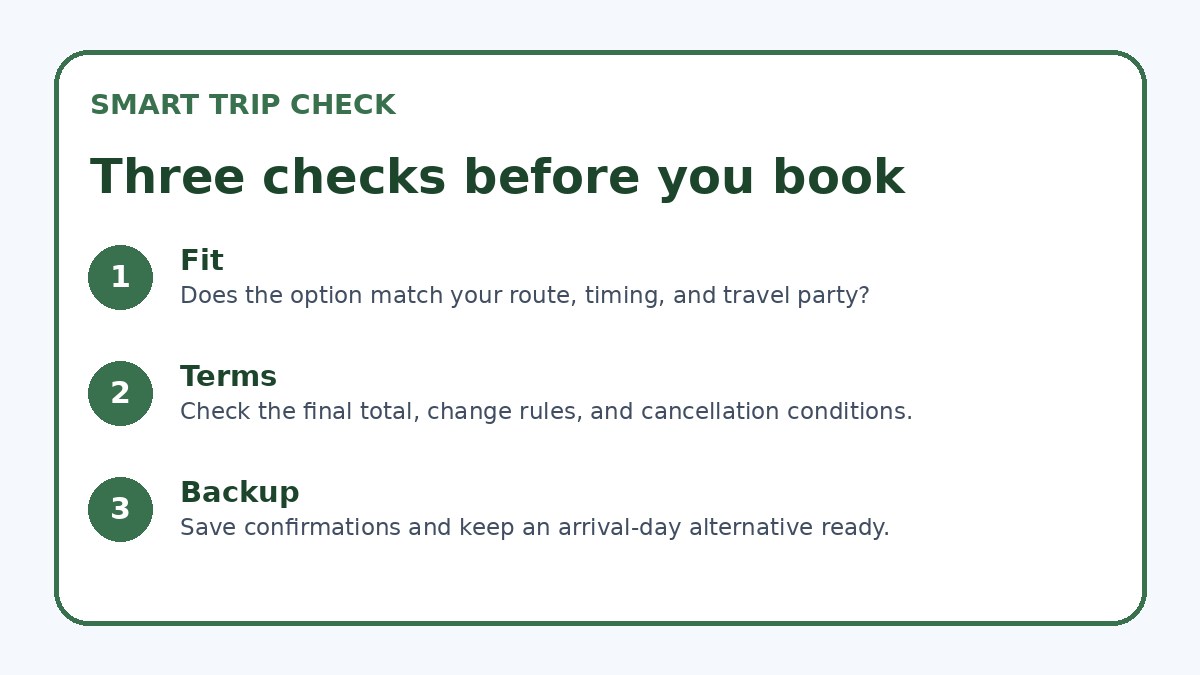
- Map each planned day and compare door-to-door time using a car versus public transit for that specific route.
- Confirm parking availability and overnight parking policies with every accommodation you book.
- Read rental insurance terms for CDW/LDW, liability limits, deductibles, and any geographic exclusions.
- Check pickup and drop-off locations, after-hours return rules, and whether an airport shuttle is required.
- Decide who will be the designated driver and add any additional-driver fees to your cost comparison.
- If skipping a car, prebook rail tickets, regional buses, or a guided day trip for rural destinations to secure seats.
A solid non-driving fallback for couples who skip the car
If you decide not to rent, build a fallback plan that covers the same priorities: mobility, comfort, and late returns. For mobility, combine the excellent Osaka subway and rail network with regional JR lines for day trips; use local buses where trains don’t reach small towns. Reserve occasional taxis for late nights or when you’re carrying luggage. For comfort, choose hotels near major stations so you minimize walking with heavy bags—this often beats the time spent finding parking and walking from a remote lot.
For rural day trips, arrange guided day tours or bus connections ahead of time and compare them to the driving time you'd have with a rental. Many tourist sites offer on-site lockers or luggage forwarding (takuhaibin) so you can travel light on trains. Finally, if accessibility is a concern, check station elevator availability, taxi wheelchair options, and whether your accommodation can provide on-site pickup—these are practical alternatives to driving that can preserve independence without the hassles of a car.
Car Rental & Road Trip questions travelers ask
Will driving in Osaka be difficult for visitors unfamiliar with Japanese roads?
Driving in Osaka requires adapting to local patterns: you’ll drive on the left, signage mixes Japanese and English in many places, and urban streets can be narrow. Traffic can be heavy during rush hours, and lane markings sometimes differ from what visitors expect. If you’re not comfortable with tight urban driving or Japanese road signs, consider using trains or taxis for city days and only drive for rural day trips. If you choose to drive, practice on quieter roads first, ensure your license is valid in Japan, and confirm any GPS or smartphone navigation options the rental company provides.
How do tolls and ETC cards work if I rent a car in Osaka?
Many expressways in the Kansai region use tolls; rental companies often offer an ETC (electronic toll collection) card so you don’t stop at each booth. Verify whether the ETC device has a daily rental fee or if tolls are billed via the rental contract. The rental terms should explain how toll charges appear on your final invoice and whether you need to pay cash at unmanned booths. Always confirm on the provider’s booking page how tolls and ETC usage are handled to avoid surprises at return.
Can my credit card or travel insurance cover rental damage in Japan?
Some credit cards or travel insurance policies provide secondary or primary rental coverage, but the scope varies. Check your card’s benefits guide for explicit rental-car coverage in Japan—look for language on CDW/LDW reimbursement, required activation steps, enrollment dates, and exclusions (for example, certain vehicle classes or driving outside defined areas). If relying on card coverage, bring the issuing card to pickup and request a written confirmation of coverage terms. Also verify whether the rental company requires you to decline their collision waiver to use your card benefits; confirm all details on both the card issuer’s and the rental company’s final booking pages.
Final decision note
For most couples staying within central Osaka, public transit, walking and occasional taxis provide the best balance of speed, cost, and low friction. Rent a car when your itinerary includes multiple rural or hard-to-reach day trips where trains are circuitous or nonexistent, when you need to carry bulky gear, or when mobility needs make public transit impractical. Before booking, run the checklist: map door-to-door times, confirm parking at hotels, read insurance and toll wording carefully, and plan pickup and return logistics. If you remain unsure, compare availability and provider terms on the final booking pages—Trip.com can be used as one place to check current rental options—but always verify insurance, pickup hours, and drop-off rules directly with the rental company.
Continue planning
Check current options and final conditions
Use the provider page to confirm live availability, the final total, cancellation terms, and every condition that matters to your trip.
This evergreen planning guide was created with AI-assisted drafting and a structured quality review. It does not display live prices, schedules, availability, visa guidance, or provider rankings. Verify current details before booking. Some links are affiliate links; we may earn a commission at no additional cost to you.