For business travelers, the practical question when planning Sydney to Melbourne transport is not just speed, but how a ticket’s flexibility matches meeting schedules, transfer times, and the cost of changing plans. Start by deciding whether rail, coach, air, or a mixed itinerary best fits your day — each mode has different terminals, luggage handling and last-minute change rules that affect your door-to-door time. Choose the approach that keeps your options open (refundable or changeable fares, or travel credits) if meeting times may shift. Below I compare the core decision paths you’ll face, show where friction commonly appears, and list concrete things to check on booking pages so you leave the office confident that the trip can adapt when plans do.
Terminal fit: where the trip really starts and ends
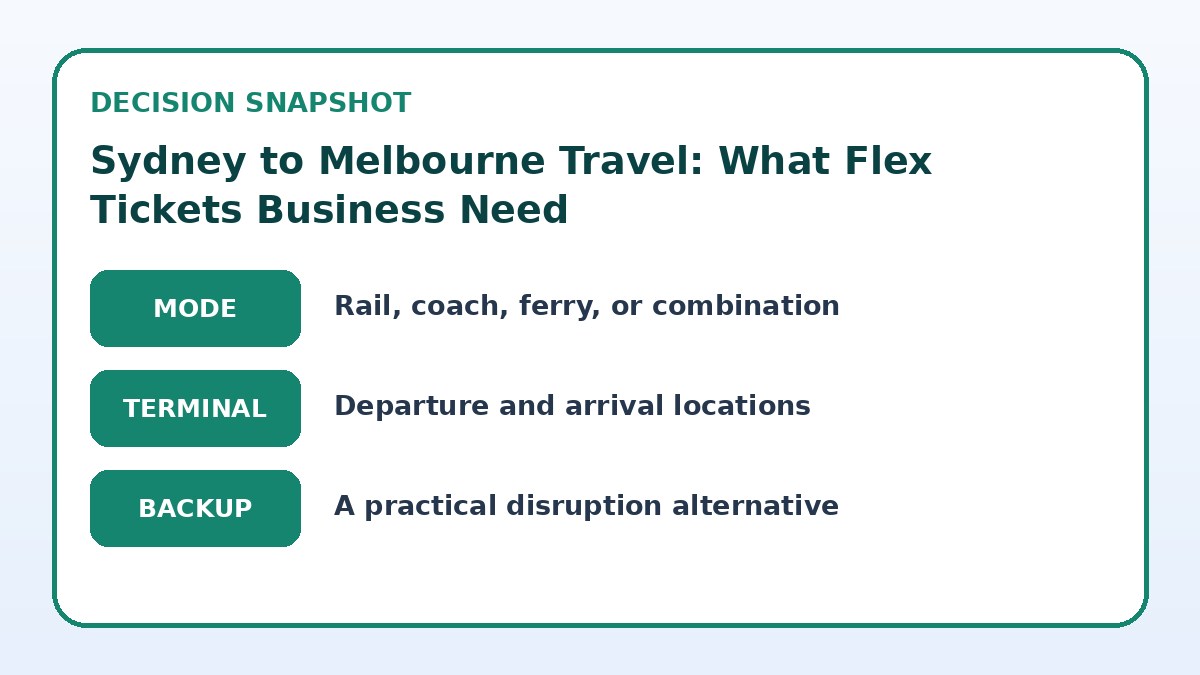
When comparing ticket flexibility, think end-to-end: is your origin an office, a hotel, or a residential address? For rail journeys, main city stations typically sit closer to business districts; coaches often use central terminals too, while flights usually require airport transfers that add time and variability. A ticket that looks flexible on paper can still leave you stranded if the time saved between cities is lost getting to or from terminals that are poorly connected to your meeting location.
Before you book, map the door-to-door route and check public transport, rideshare or private transfer options from both origin and destination. Factor in weekday peak traffic and any luggage needs that change transfer times or require extra handling. If you must be at a morning meeting, a slightly slower but centrally-arriving service with more flexible change terms may be more reliable than the fastest available option with rigid change penalties.
Choose the end-to-end journey plan
| Journey approach | Best for | Friction to check |
|---|---|---|
| Single rail ticket (direct or with simple transfers) | City-center to city-center business trips needing moderate flexibility and low transfer friction | Fewer last-minute schedule options than air but easier door-to-door routing; verify change rules and seat reservation policies. |
| Air with airport transfers | When saving travel time outweighs transfer complexity and you can absorb stricter change rules | Faster in transit but dependent on airport transfer reliability and often stricter baggage/change conditions. |
| Intercity coach services | Budget-conscious business trips that tolerate longer journey times but want simple luggage handling and flexible fares | Slower and more exposed to road delays, so check frequency and clear change/cancellation terms. |
| Mixed itinerary (air + rail/coach) | Complex schedules where speed matters for one leg and central arrival matters for another | Offers balance of speed and convenience but increases coordination risk and complexity of change/cancellation across providers. |
Check live intercity options
Look beyond the ride itself and compare terminals, transfers, luggage, and arrival fit.
Luggage and transfer friction: small details that cost time
Business travelers often carry a laptop bag plus a rollaboard or briefcase; different modes treat that mix differently. Trains and many coaches allow easy under-seat or luggage-compartment storage with minimal handling, so you can move quickly between platform and city center. Flights add security, check-in, and potential baggage drop queues; even carry-on rules can slow boarding if strict. If your itinerary requires multiple modes, account for transfer time and how easy it is to move between platforms, terminals or stops with your luggage.
Also check whether the fare class includes priority boarding, seat reservations, or dedicated luggage allowances — these reduce friction when you’re pressed for time. On mixed itineraries, make sure connection windows are realistic given luggage handling and potential delays. Verify transfer options on the operator’s booking page or contact customer service to confirm how changes to one ticket affect the rest of your journey.
Timing flexibility: change policies and booking levers
Ticket flexibility hinges on change and cancellation rules, credit validity, and how easy it is to rebook. Some fares allow free or low-cost changes up to a set time before departure, others levy steep fees or limit rebooking to specific channels. For business travelers who may need to move or cancel trips at short notice, prioritize tickets offering refundable options, open or semi-flexible fares, or those that convert to travel credit with a reasonable expiry window.
When comparing options, read the fine print on the booking page: check what constitutes a change, whether changes are permitted online or must be handled by phone, and whether name changes or partial refunds are permitted. If you’re booking separate legs across different providers, confirm their individual change terms and plan for the worst-case of rebooking each sector separately if one leg is disrupted.
Compare the practical alternatives
Use the final page to confirm what is actually offered on your dates and save a workable fallback.
Intercity travel checklist
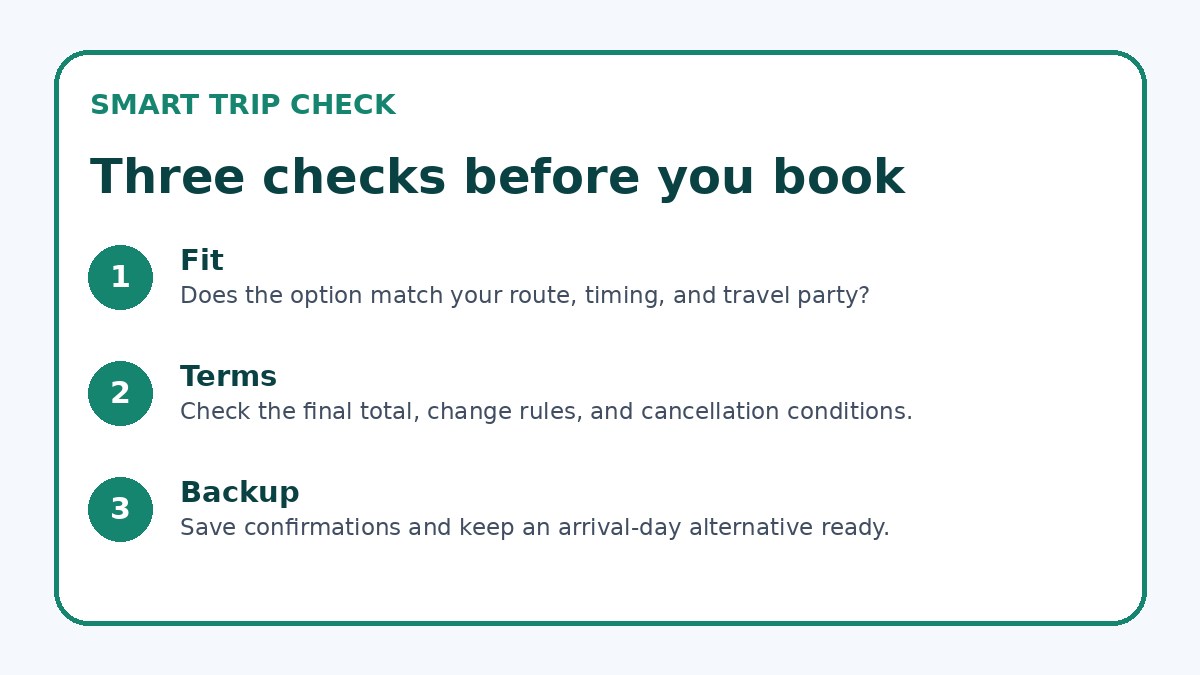
- Map door-to-door times including transfer modes and peak traffic, then compare total journey durations rather than ride time alone.
- Read the final booking page for each provider to confirm change windows, fees, and whether changes can be made online or require phone support.
- Check luggage rules and boarding/transfer procedures to estimate realistic time needed between connectors with your typical baggage.
- Identify at least two alternative departures and the provider’s same-day rebooking policy in case of delays or meeting rescheduling.
- Confirm whether corporate travel policies or travel insurance will reimburse change fees or additional transfer costs before booking non-refundable fares.
- Save contact details, booking references and screenshots of fare conditions so you can act quickly if you need to change or cancel.
Disruption backup: practical contingency planning
Even with flexible tickets, disruptions happen. Build a backup scenario into your plan: identify the next few departures by rail, coach, or air and know how to switch to them. For city-center meetings, note later services that still deliver you in time; for flights, identify alternative carriers or kerbside transfer options. Keep key contact numbers and confirmation details in one place to expedite changes.
Also consider transport insurance or corporate travel policies that cover last-minute changes and additional transfer costs. If you rely on dedicated connections, add buffer time for cross-mode transfers and know whether your ticket allows same-day rebooking without penalties. Where possible, use booking platforms that clearly display change policies — you can check current availability and conditions on aggregator sites such as Trip.com, but always verify rules on the final provider booking page before paying.
Rail & Intercity Transport questions travelers ask
How do I decide between a refundable ticket and a cheaper flexible ticket with fees?
Start by estimating the likelihood and cost of making a change. If meetings often shift at short notice, a refundable fare or a fully flexible ticket can save time and stress even if it costs more upfront. If changes are unlikely, a fare with reasonable change fees might be better value. When comparing, calculate the break-even point: how many changes would offset the price difference. Always verify what qualifies as a permitted change on the provider’s booking page and whether credits have expiry conditions.
Can I mix providers and still keep flexibility if one leg is disrupted?
You can mix providers but flexibility becomes fragmented: each leg follows its own rules. If a disruption affects one segment, the other provider may not accommodate changes without fees. To mitigate risk, leave generous connection buffers, buy flexible fares on the more critical segment, or choose coordinated booking options (through an agent or platform) that offer combined rebooking assistance. Confirm change and refund policies for each leg before booking so you know your options in a disruption.
What practical documents and confirmations should I carry when booking flexible business travel?
Keep digital and printed copies of booking confirmations, fare conditions and change/cancellation terms. Save screenshots of the provider’s final booking page showing the rules, and note phone numbers for customer service. If your company uses travel management tools or corporate cards, ensure the itinerary is entered there so approvals and reimbursements are straightforward. Also carry proof of meetings or client contacts if your travel policy requires justification for last-minute changes or refunds.
Final decision note
For business travel between Sydney and Melbourne, flexibility is more than a fare type — it’s about how the chosen mode fits your door-to-door needs, luggage handling, and contingency plans. Rail often wins on central arrival and simpler transfers; flights can save transit time but add airport friction; coaches and mixed itineraries each have their place depending on priorities. Before you book, map transfers, read the provider’s change rules on the final booking page, and plan at least two backup options. That preparation turns a ticket into a reliable part of your working day, not a gamble on meeting outcomes.
Continue planning
Check current options and final conditions
Use the provider page to confirm live availability, the final total, cancellation terms, and every condition that matters to your trip.
This evergreen planning guide was created with AI-assisted drafting and a structured quality review. It does not display live prices, schedules, availability, visa guidance, or provider rankings. Verify current details before booking. Some links are affiliate links; we may earn a commission at no additional cost to you.