
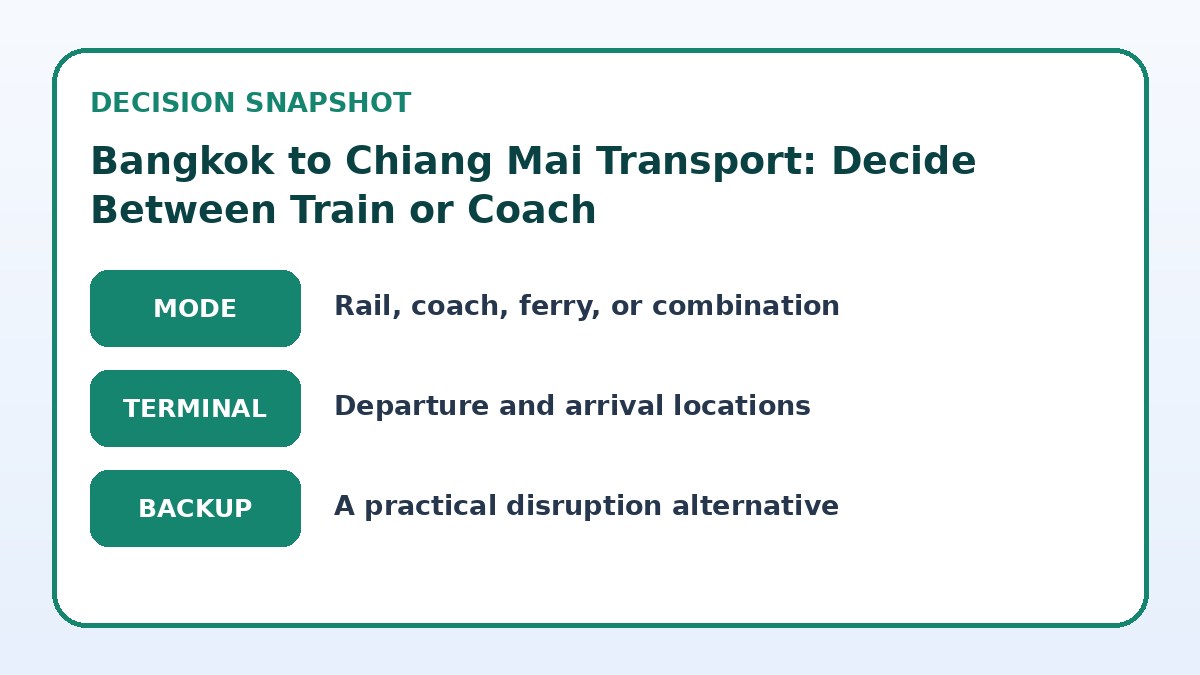
Practical answer first: most couples choose either the overnight train for comfort and scenery or a daytime coach for lower fuss and flexible departure options; flying is the fastest if time is tight, and ferries only make sense combined with multi-leg coastal routes. What matters most for couples is balance: sleep quality, luggage handling, arrival time, privacy, and whether you want a travel experience as part of the trip. This article compares the common choices along the Bangkok–Chiang Mai corridor, describes tradeoffs, and gives decision criteria you can use right away. Read the quick points, then use the sections to weigh comfort, logistics, and romance versus efficiency. Finally, use the checklist and FAQs to prepare and verify details before you book.
Train: romance and downtime en route
The overnight train is popular with couples because it converts travel time into rest and shared experience. Sleeping cabins or reclining berths make travel part of the trip: you board in the evening, settle in for dinner or snacks, wake up in the cooler north and arrive refreshed enough to start exploring. Trains generally handle luggage without the carry-on hassles of flying, and the relaxed pace reduces transfer stress. For couples celebrating an occasion, a private compartment or reserving upper and lower berths together enhances privacy and makes the journey feel intimate rather than merely functional.
Tradeoffs to check before you book include berth configuration, whether the carriage is air-conditioned, and if bedding is included. Verify exact departure stations and arrival station proximity to your Chiang Mai hotel, since some stations sit outside the city centre. Movement between platforms and stepping onto trains can be awkward with large suitcases, so plan luggage assistance as needed. Finally, confirm what food service exists onboard or if you should bring snacks; dining options vary and couples often prefer packing a favorite bottle or picnic to enjoy together.
Coach: flexible daytime travel
Coaches are straightforward: frequent departures, multiple comfort levels, and easy online booking. For couples, daytime coaches allow you to watch the changing landscape, break the journey when you want, and avoid overnight logistics if you prefer sleeping in a proper hotel. Coaches suit travelers who prioritize cost-effectiveness and predictable schedules without the need for plane transfers. Modern long-distance buses often offer reclining seats, onboard restrooms, and power outlets—details that matter when deciding whether to spend several hours sitting together or splitting the ride between rest and sightseeing stops.
Downsides include longer travel times than flights and varying seat comfort across operators; not all coaches provide the same legroom or amenities. Also check departure locations—some coach terminals are outside central Bangkok and require an additional transfer. For couples, consider choosing premium coach services with fewer stops to minimize motion discomfort and to maintain privacy; otherwise, factor in the possibility of crowded mid-route stops and the need to coordinate restroom breaks or snacks.
| Approach | Best for | Tradeoff to check |
|---|---|---|
| Overnight train (sleeper berths) | Couples who want to sleep through travel and arrive rested while enjoying a romantic, low-effort journey. | Longer scheduled time than flying and variable berth privacy depending on carriage class. |
| Daytime coach | Budget-conscious couples who prefer flexible departure times and scenic daytime travel without airport hassle. | Longer journey time and comfort varies widely between operators and seat classes. |
| Flight | Couples prioritizing speed and extra time at the destination or short itineraries. | Extra time and stress for airport transfers and security reduces some of the saved travel time. |
| Mixed ferry/land routes | Couples planning a multi-destination trip who want a varied travel experience and coastal stops. | Significantly more complex logistics, with multiple tickets and higher risk of missed connections. |
Flights: speed versus arrival logistics
Flying between Bangkok and Chiang Mai is the fastest practical option and suits couples who want to maximize time at their destination or who are on short itineraries. The advantage is clear: you trade road or rail hours for a short flight, which can convert an overnight into an extra day exploring. Flights are a logical choice for couples arriving late into Bangkok or with tight onward schedules. They also pair well with onward plans if you’ll be connecting from Chiang Mai to other domestic or international flights.
However, speed comes with extra steps: airport transfers, check-in, security queues, and luggage reclaim which can add to the door-to-door time. Couples should compare total transit time from their accommodation in Bangkok to their Chiang Mai lodgings rather than relying on flight duration alone. Also verify baggage allowances and whether early check-in or seat selection is included. For peace of mind, review airport transfer options and consider booking meet-and-greet services if you value a seamless, less stressful experience.
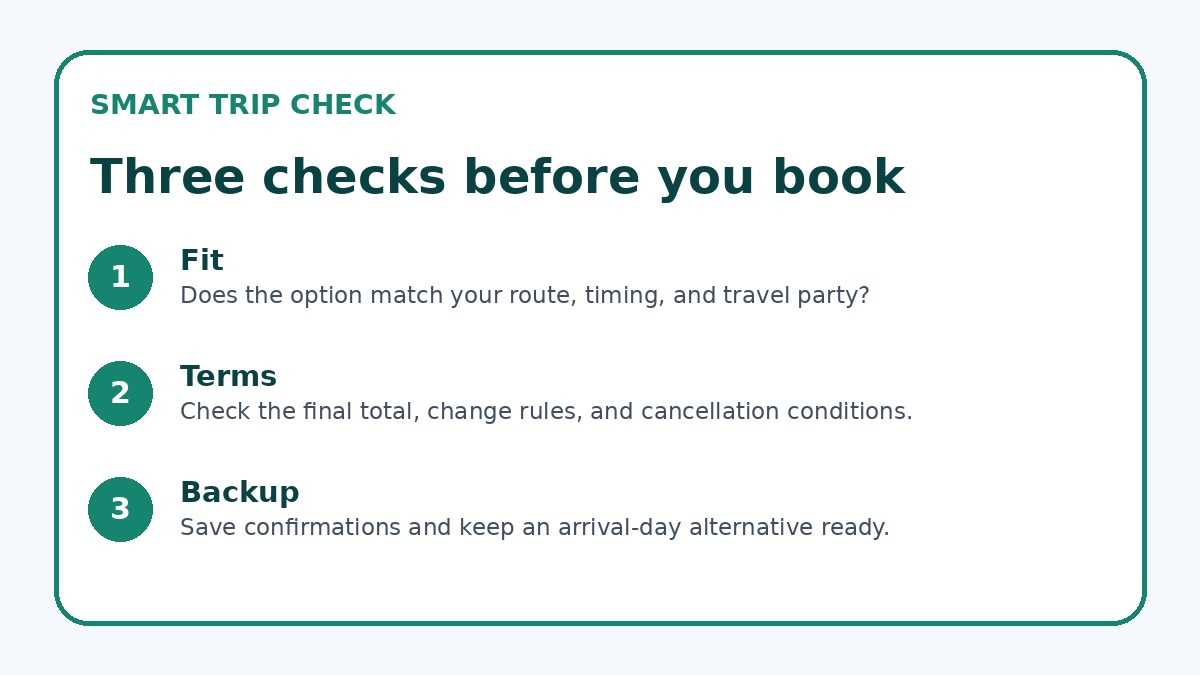
Before you book
- Decide whether you value door-to-door speed, sleep quality, or travel experience to shortlist train, coach, or flight options.
- Check departure and arrival locations for each mode and map out door-to-door travel time from your accommodation.
- Confirm baggage allowances and whether transfers will require you to collect and re-check luggage between legs.
- If considering overnight trains, verify berth configuration, bedding inclusion, and privacy level before booking.
- Compare total transit time—not just scheduled duration—by adding likely taxi, check-in, and security time for flights and buses.
- Look up current schedules and seat availability on provider sites or Trip.com and confirm cancellations, change policies, and final booking details.
Ferry and mixed-route options: when to consider them
Direct ferries are not a standard point-to-point option between Bangkok and Chiang Mai because Chiang Mai is inland; however, ferries become relevant when building multi-stop coastal itineraries that include southern Thailand islands or when combining land and water travel for variety. Couples who want a slow-travel adventure—moving from Bangkok to coastal towns, islands, then north by rail or road—will find mixed routes appealing. These itineraries add planning complexity, but they reward travelers who enjoy diverse scenery and a longer, multi-mode journey.
The primary tradeoffs are time, logistics, and cost unpredictability. Multiple tickets, varying transfer points, and different operators increase the chance of delays and missed connections. Couples should only pick mixed routes if they value the experience more than efficiency. If you go this way, plan buffer time between legs, verify baggage transfer policies, and keep digital and paper copies of each ticket. Consider combining a scenic ferry day with a restful hotel night to avoid rushed transfers and to savor the maritime portion together.
Frequently asked questions
Is the overnight train more romantic than flying for couples?
Many couples find the overnight train romantic because it turns travel into part of the trip: shared berths, slow scenery, and an arrival that feels leisurely. The intimacy of a private compartment or adjacent berths creates moments for conversation, snacks, and unwinding together. However, romance depends on comfort level—if either partner is a light sleeper, sensitive to motion, or dislikes shared facilities, flying and a good hotel may be more relaxing. Assess sleep quality and privacy needs; for many couples the train is memorable, but it shouldn’t come at the cost of one partner’s comfort.
How should couples decide between coach and flight if they’re on a tight budget?
Budget decisions hinge on total door-to-door cost and time. Coaches often have lower ticket costs and fewer extra fees than flights, but adding a slow journey’s lost daylight and potential overnight accommodation changes the equation. Flights can sometimes appear cheaper but add taxi transfers and luggage charges. Couples should compare the full cost of transfers, baggage, and the value of saved time. If comfort and privacy while traveling are priorities, a slightly higher fare for a faster or more comfortable option can be worth it.
What practical checks should we make the day before departure?
Confirm your final booking details with the provider: departure terminal or station, boarding time, seat/berth assignments, and baggage rules. Double-check transport arrangements to the departure point—book a taxi or airport transfer if needed—and allow generous time for traffic or delays. Pack a small carry-on with essentials, chargers, and any motion-sickness remedies; include snacks and water if onboard food is uncertain. Finally, save digital and printed copies of tickets and contact numbers for customer service in case of last-minute changes.
Final planning note
For couples deciding how to travel from Bangkok to Chiang Mai, start by prioritizing what you value most: speed, comfort, privacy, or the journey itself. If sleep and a shared travel experience matter, an overnight train with suitable berth choices is compelling. If time is scarce, flights win on speed but require careful door-to-door planning. Coaches provide a practical middle ground for flexible daytime travel, while mixed ferry and land options fit only those building extended coastal itineraries. Use the checklist to compare total transit time, luggage policies, and departure locations, and verify current schedules and terms on provider pages or Trip.com before you book.
Continue planning
Check current options and final conditions
Use the provider page to confirm live availability, the final total, cancellation terms, and every condition that matters to your trip.
This evergreen planning guide was created with AI-assisted drafting and a structured quality review. It does not display live prices, schedules, availability, visa guidance, or provider rankings. Verify current details before booking. Some links are affiliate links; we may earn a commission at no additional cost to you.