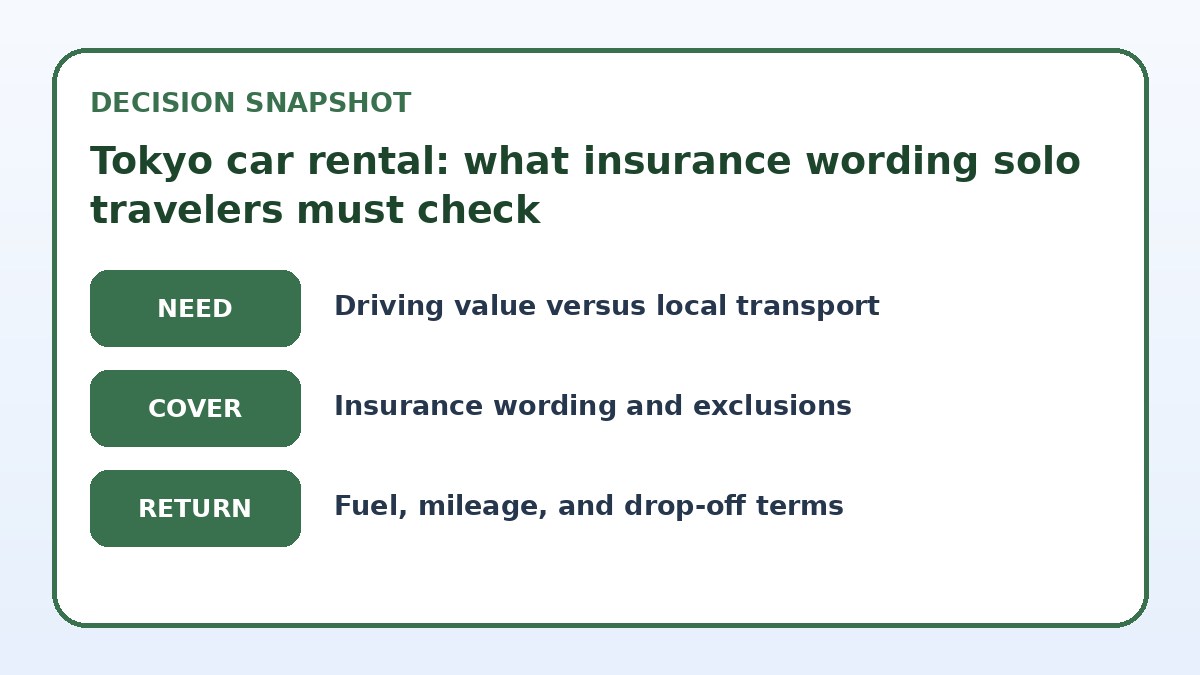
Decide first whether driving in Tokyo will actually improve your trip. For most solo travelers staying in central Tokyo, public transit is faster, cheaper, and less stressful than driving; however, if your plan includes rural day trips, late-night station gaps, or carrying bulky gear, a car can unlock routes that trains and buses don’t serve. The practical answer: rent only if the route value—access to specific rural sights, flexible timing, or multi-stop countryside runs—outweighs the extra time and paperwork that comes with driving here. If you do rent, the single most important skill is reading the insurer’s wording. Insurance language determines who pays for what, when coverage applies, and what out-of-pocket costs you might face. This guide helps solo travelers read those contract phrases, weigh tradeoffs, minimize pickup and return friction, and pick a realistic non-driving fallback.
Deciding if driving improves your Tokyo plan
Start by mapping your must-see stops. Tokyo’s transit system covers the metropolis and nearby attractions efficiently; driving shines when your route includes rural Noto, coastal stretches, mountain passes, or dispersed onsen towns outside convenient rail links. Ask whether driving saves transfer time, lets you reach places at unusual hours, or carries bulky equipment you couldn’t handle on trains. For a single day trip to a nearby national park or to reach multiple rural temples spread across a wide area, a rental can be a net gain for a solo traveler.
Balance expected gains against the costs: longer door-to-door times because of traffic, time to find and pay for parking, unfamiliar road signs, and the administrative burden of insurance and claims. Solo travelers also shoulder the entire driving responsibility—fatigue, navigation, and potential language friction during incidents. If most of your itinerary stays inside central wards or near well-served rail corridors, the inconvenience and paperwork usually outweigh the small gains in flexibility.
Decide whether driving earns its place
| Mobility strategy | Best for | Cost or friction to check |
|---|---|---|
| Full-time rental for entire trip | Travelers needing daily flexibility and remote access on most days | Higher total insurance exposure, parking hassle, and more time spent on pickup/return bureaucracy |
| One-day or short-term rental for specific rural legs | Solo travelers who need a car only for targeted outings away from rail networks | Must coordinate pickup and return times; insurance terms may still impose geographic or driver restrictions |
| Public transit with taxis for late-night gaps | Urban-focused solo travelers prioritizing speed and simplicity without driving stress | Less control over remote routes and higher cost if taxis are used frequently in suburbs |
| Public transit plus guided day tours or luggage forwarding | Those who want access to off-grid sites without handling driving or insurance details | Less private flexibility and fixed schedules, but minimal insurance responsibility and paperwork |
Check live rental choices only after the route test
Use the exact driver, dates, pickup point, and return plan to compare current conditions.
Reading insurance wording: what changes your liability
Insurance phrases like 'collision damage waiver', 'excess', 'third-party liability', 'supplementary liability', and 'policy territorial limits' determine who bears financial risk. Collision damage waiver (CDW) often reduces your direct responsibility for damage to the rental vehicle but rarely eliminates it completely; the policy will usually state an excess amount you must pay first. Third-party liability covers injury or damage you cause to others; check the limit amounts and whether these apply on local roads or only in designated areas. 'Supplementary' or 'optional' coverage may appear to remove excess but can have conditions and exclusions in the fine print.
Focus on explicit exclusions: drivers under certain ages, off-road use, driving under foreign license restrictions, using the car for commercial activity, or damage to specific components like tires, windows, underneath the vehicle, or keys. Wording about 'authorized drivers' is critical for solo travelers who might plan to swap drivers with a friend later; if the contract restricts drivers to those listed or to certain age ranges, that alters coverage. Always get those clauses written in the rental agreement and confirm whether a credit-card coverage or a separate travel insurance policy overlaps or conflicts with the rental terms.
Compare the full rental conditions
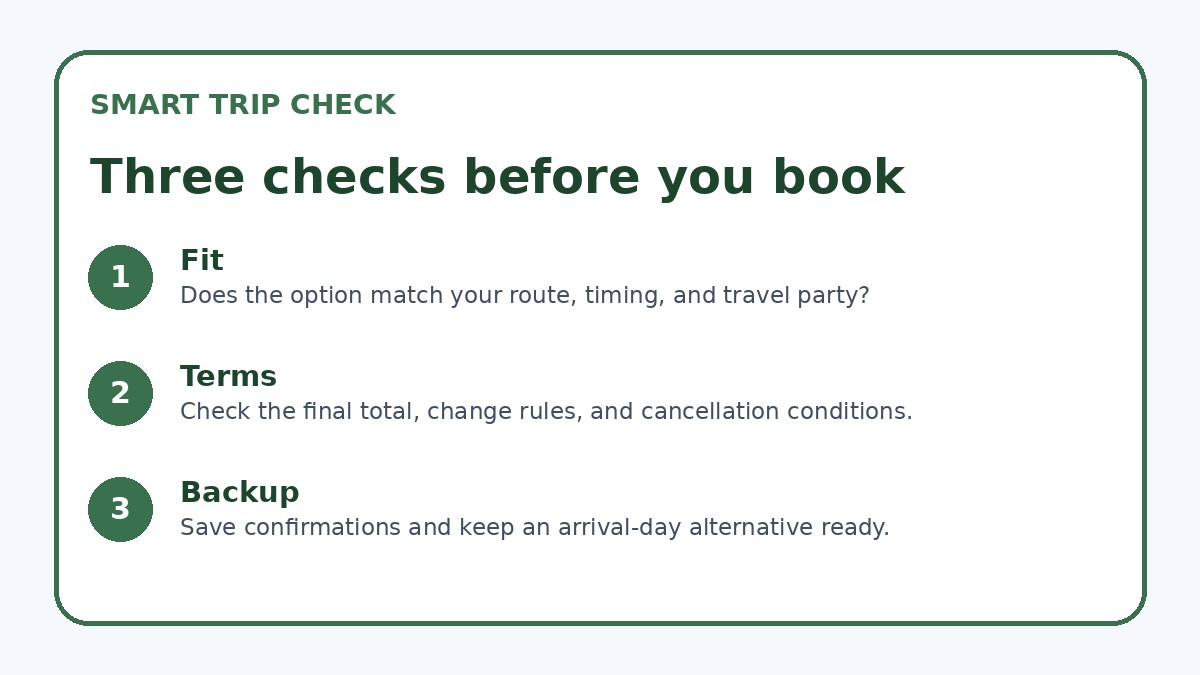
Confirm insurance wording, exclusions, deposit, fuel, mileage, and return terms on the final page.
Pickup, return friction, and minimizing surprises
At pickup, don’t rely on broad summaries—ask to see the exact clause text that sets excess, start and end coverage times, and any geographic limits. Verify the vehicle condition file and take time-stamped photos or video of the car from multiple angles before driving away. Ask whether minor dings and windshield chips are treated the same as major collisions. If the agent quotes an excess reduction product, read the precise exclusions: some reduce your excess only for collision but not for theft or undercarriage damage.
On return, expect inspections and possible administrative fees for late returns, cleaning, or refueling. Confirm the fuel policy, whether the company accepts off-site refuel receipts, and what documentation they require for any damage claims. If you plan to cross prefectural borders or travel into remote areas, double-check the 'territorial limit' wording so coverage remains valid. For any contested charge, get a written explanation of the damage assessment and the clause it falls under; avoid verbal-only promises—insist on documented terms to contest later if necessary.
Car rental terms to verify
- Map every planned driving segment and confirm whether public transit or guided options cover the same destinations.
- Request and read the exact insurance clauses for CDW, excess, third-party liability, and territorial limits before signing.
- Photograph the vehicle on pickup with timestamps and save the inspection sheet provided by the agent.
- Ask which components are excluded (tires, windscreen, undercarriage, theft, keys) and get exclusions in writing.
- Confirm fuel, late-return, and cleaning fee policies and keep receipts for any off-site refueling.
- If using credit-card coverage, check the card issuer’s policy wording and ensure it does not conflict with the rental company’s terms.
Non-driving fallback: routes and strategies in Tokyo
Plan concrete alternatives for each trip segment where you might otherwise rent. For most Tokyo-to-nearby-day-trip needs, a mix of JR regional trains, limited express services, and highway buses covers the same destinations without rental complexity. When you need late-night flexibility, factor in taxi availability and approximate ride durations; in many suburban and rural areas, taxis can bridge last-mile gaps even when public transit has stopped, albeit at higher cost. Regional bus networks often serve scenic rural routes directly and may be bookable in advance.
If your primary reason for renting is lugging gear or reaching off-grid spots, look for locker networks at major stations, luggage forwarding (takkyubin) services, or local guided tours that include transport. Renting a car only for the days when you really need it—combined with public transport for the rest of your stay—reduces insurance exposure and paperwork. Keep Trip.com or similar platforms in mind to compare current availability and language support, but always verify final insurance wording and terms on the provider’s final booking page before you commit.
Car Rental & Road Trip questions travelers ask
Can I rely on my credit card’s insurance instead of the rental company’s options?
Possibly, but you must read the card issuer’s policy wording and the rental agreement together. Credit-card coverage often requires you to decline the rental company’s collision waivers and to pay with that card for the rental. Confirm territorial limits, eligible vehicle categories, named driver requirements, and whether the card covers excess or only secondary costs. At pickup, ask the agent if using your card affects any clauses in the rental agreement. Keep a copy of the card’s policy and the rental contract; if there’s a dispute, both documents will determine responsibility.
What do common insurance terms mean on a rental contract in Tokyo?
Collision Damage Waiver (CDW) reduces your financial liability for damage to the rental vehicle but usually leaves an excess you must pay first. Excess (also called deductible) is the amount you pay before insurance covers the rest. Third-party liability covers damage or injury you cause to others and may list monetary limits. Territorial limits define where coverage applies and can exclude off-road or non-designated regions. Optional products may lower excess but often exclude specific parts like tires or windscreens—read each clause to see how it changes your exposure.
If the rental company claims damage after return, how should I proceed?
Immediately request a written damage report that cites the specific contract clause. Provide your pickup photos and the inspection sheet as evidence. Ask for a detailed cost breakdown and the estimated repair invoices. If you purchased an excess-reduction product or have credit-card coverage, file a claim with that provider and supply the rental company’s documentation. Keep all correspondence and receipts. If language is a barrier, insist on written explanations and consider contacting your travel insurer or credit-card benefits desk for assistance in disputing charges.
Final decision note
For most solo travelers staying in and around central Tokyo, avoiding a rental will simplify logistics and remove the need to parse complicated insurance wording. Rent only when the route value—access to specific rural sights, late-night flexibility, or carrying bulky gear—clearly outweighs transit alternatives. If you decide to drive, make reading and documenting insurance clauses your first priority: confirm excess amounts, exclusions, territorial limits, and authorized-driver rules on the contract, and capture vehicle condition at pickup. Always plan a non-driving fallback for each segment so unexpected exclusions, costs, or administrative delays don’t derail your trip. Verify every insurance detail on the provider’s final booking page before you sign or pay.
Continue planning
Check current options and final conditions
Use the provider page to confirm live availability, the final total, cancellation terms, and every condition that matters to your trip.
This evergreen planning guide was created with AI-assisted drafting and a structured quality review. It does not display live prices, schedules, availability, visa guidance, or provider rankings. Verify current details before booking. Some links are affiliate links; we may earn a commission at no additional cost to you.