Practical answer first: if your meeting times are fixed, prioritize nonstop or single-connection flights that maximize on-time predictability and short total travel time; if your itinerary can flex, prioritize refundable or changeable fares and mid-day connections to reduce risk and stress. For business travelers between New York City and Los Angeles, the tradeoff is clear: convenience (nonstops, tight connections, airport choices) speeds you door-to-door, while schedule flexibility (wider connection windows, flexible fares, refundable options) reduces disruption risk from delays or meeting changes. Before you shop, pin exact departure and return dates, preferred arrival windows into Los Angeles, how much baggage you’ll carry, and whether you need same-day return. With those details ready you can compare direct versus connecting options, fare rules, and the total door-to-door time that matters most to your calendar and company policy.
See live routes for your exact travel day
Compare direct and connecting choices with the same baggage and traveler details.
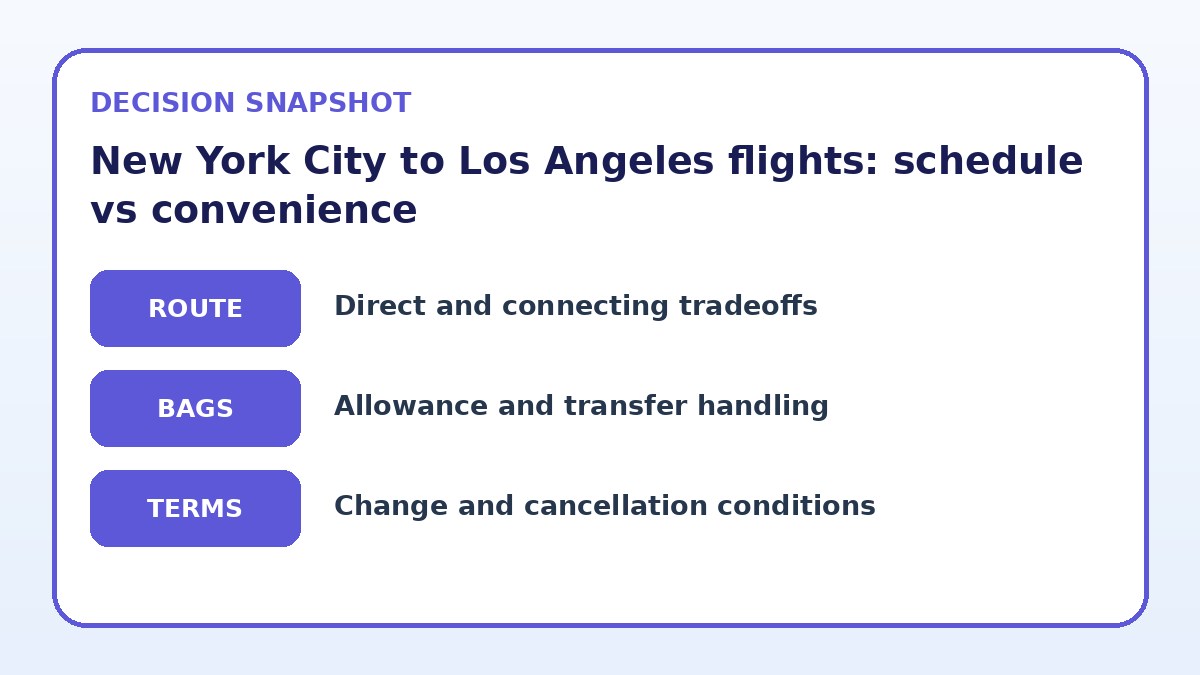
Routing: direct flights versus strategic connections
Direct (nonstop) flights are the simplest routing for business travelers: fewer moving parts, simpler baggage flow, and less chance of missing a connection when meetings or ground transfers are tight. But direct flights can be less flexible on timing and may operate only at certain hours. When comparing options, map the hour you must be in Los Angeles to the likely arrival windows and see whether a nonstop gets you there with sufficient buffer for travel from the airport to your meeting location. If it does, the convenience often outweighs any marginal fare premium.
Strategic connections are worth considering when schedules are constrained or when flexible fares provide better overall value. A single well-timed connection can expand your departure choices from New York-area airports and offer mid-day options that avoid red-eye fatigue. Compare maximum connection times and airport layouts: a long connection increases schedule resilience but lengthens travel time, while a short connection saves time but raises the chance of disruption if your inbound is delayed. Always factor in the worst-case transfer time between gates and the need to re-check baggage on some itineraries.
Baggage and connection risk: what to protect against
If you travel with a laptop bag and checked suitcases for multi-day meetings, baggage rules change the practical convenience of a flight. Lower fare classes often restrict or charge for checked luggage, which can add time at check-in and uncertainty on arrival. For business trips with tight schedules, paying for at least one checked bag on a direct or single-connection itinerary can be faster overall than squeezing everything into carry-on and risking gate-checks or last-minute fees. Check the airline’s final booking page for exact baggage allowances, weight limits, and the cost for additional pieces before you commit.
Connection risk grows with the number of segments and with minimum connection times. For a same-day return or an early-morning meeting on arrival, favor itineraries with ample connection buffers or direct flights. If you choose a connecting itinerary, prioritize single-carrier or alliance routings to reduce complications with interline baggage transfers and re-ticketing. Verify on the carrier’s booking page how they handle missed connections, re-accommodation policies, and whether the ticket is protected under the airline’s control—these are the specifics that determine how much connection risk you actually carry.
Compare flight-selection strategies
| Flight strategy | Best for | Risk to check |
|---|---|---|
| Nonstop premium fare | Travelers who must minimize travel time and risk of missed connections. | Higher base fare and fewer cheap change options if plans shift. |
| Connecting flight with flexible fare | Those needing schedule changeability while keeping reasonable travel times. | Longer door-to-door time than nonstop and added connection points. |
| Lowest-cost multi-segment tickets | Cost-conscious travelers where schedule can be adjusted freely. | Higher connection and baggage risk, plus restrictive change and cancellation rules. |
| Midday flights with refundable or changeable tickets | Business trips with uncertain meeting times requiring easy rebooking. | Often more expensive than restrictive off-peak fares and may require corporate approval. |
Recheck the complete itinerary
Confirm airports, connection handling, baggage, and change conditions before deciding.
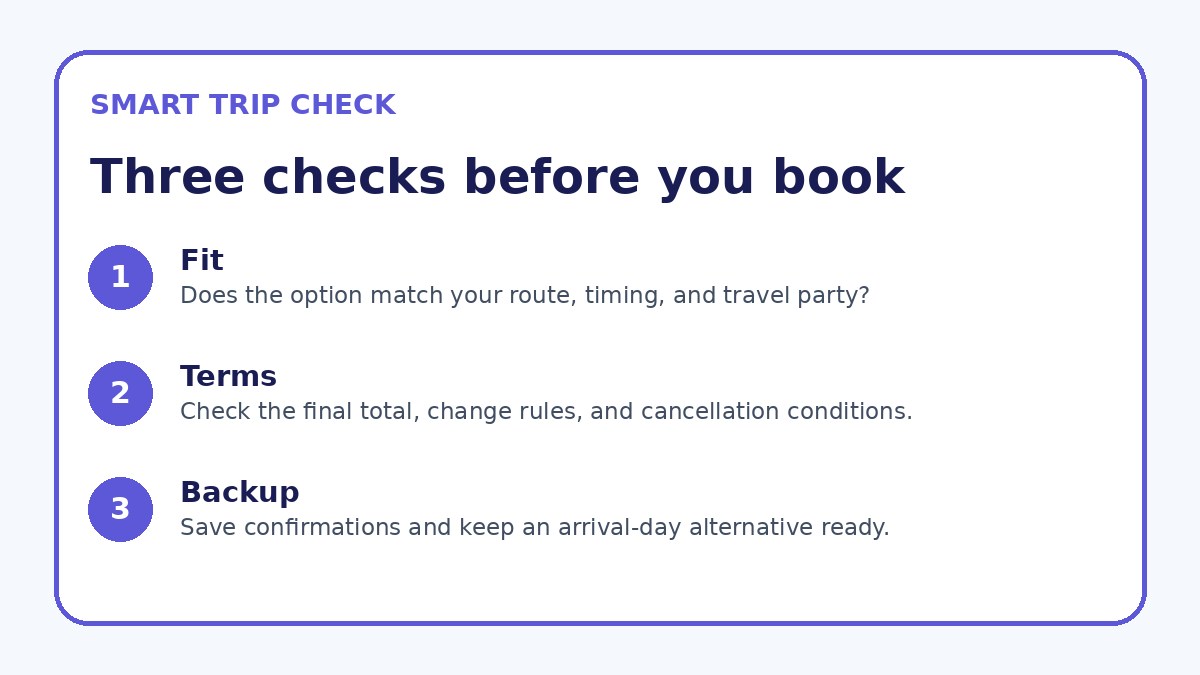
Schedule fit: matching flights to critical meetings
Start by working backward from the meeting time you cannot miss. Identify the latest acceptable arrival time in Los Angeles, then select flights that include a practical buffer for airport transit and potential minor delays. For meetings that begin in the morning, overnight red-eyes may let you be in town first thing but can leave you fatigued. Midday departures give more flexibility and easier connections, at the cost of an earlier day off in New York. Consider whether you need to be ready-to-work on arrival—if so, choose flights and seat types that support arriving refreshed.
If you might need to change appointments at short notice, build flexibility into your schedule by choosing flights with flexible fare conditions or connection options later in the day. For same-day round trips, make sure both outbound arrival and return departure windows are realistic given ground travel times and check-in requirements. Plan for contingencies: identify one or two later flights you could rebook to if the primary plan fails, and check change-fee policies and stand-by rules on the carrier’s final booking page before buying a ticket.
Flight details to verify
- Confirm exact departure and arrival dates, preferred arrival window in Los Angeles, and any same-day return constraints before searching fares.
- Collect traveler details (full name as on ID, loyalty numbers, corporate payment method) to avoid rebooking issues at checkout.
- Check the airline’s final booking page for baggage allowances, carry-on rules, and any fees for the specific fare you plan to buy.
- Compare total door-to-door travel time including ground transport, not just scheduled flight duration, for each itinerary under consideration.
- Verify fare conditions on the carrier’s official booking page: change fees, refundability, same-day rebooking policies, and whether changes can be made online.
- If using corporate travel tools, confirm approval limits and whether the chosen fare conforms to company expense policy before finalizing purchase.
Fare conditions: flexibility, refunds, and corporate rules
When comparing fares, the headline price tells only part of the story. Look closely at change and cancellation penalties, refundability, and whether changes can be made online or require an agent. Many business travelers benefit from either refundable fares or tickets with low or waived change fees, especially if meetings are prone to last-minute shifts. Also confirm whether upgrades, seating assignments, and name corrections are permitted without punitive fees. On the airline’s final booking page, verify the exact fare conditions, the method to request changes, and any corporate travel policy requirements that affect allowable fares.
Corporate accounts and loyalty programs affect the net value of a fare beyond the ticket price. If your company pays for upgrades or enrolls you in priority services, a slightly higher fare that includes checked baggage or seat selection may save time and risk later. Conversely, if the company requires the lowest fare class, factor in the administrative overhead of change fees and potential out-of-pocket costs. When possible, have your corporate travel policy and approver on hand during booking so you can align fare rules with approval timelines and expense rules.
Flight Guide questions travelers ask
Should I always choose a nonstop from New York City to Los Angeles for business travel?
Not always. Nonstops minimize scheduled travel time and reduce connection risk, which is ideal if meeting times are fixed. But nonstops may run only at certain times that don’t fit your schedule or might be pricier. If your meetings can shift or you need more flexible change rules, a single connection with a flexible fare can be a better choice. Evaluate your tolerance for travel time versus the cost and changeability of the ticket before deciding.
How much buffer time should I leave between landing and a critical meeting in Los Angeles?
Buffer needs depend on the airport, ground transport, and final meeting location. For central Los Angeles meetings, allow at least 90 to 150 minutes from scheduled arrival to meeting start to cover taxi or ride-hail, baggage claim, and unpredictable traffic. If you must clear customs or travel from a more distant airport, add extra time. When in doubt, choose an earlier arrival or a fare that permits easy rebooking so you can handle delays without missing the meeting.
What specific fare details must I verify on the airline’s booking page before purchasing?
On the carrier’s final booking page verify exact change and cancellation fees, refundability terms, baggage allowances and costs, seat assignment rules, and whether upgrades are permitted. Also check any restrictions on name changes and how the airline handles missed connections or schedule changes. If you rely on corporate payment or travel approval, confirm the fare class meets company policy and that the ticket can be modified through your corporate travel channel.
Final decision note
Balancing schedule flexibility and convenience on New York City to Los Angeles flights comes down to clarifying what matters most to your trip: guaranteed arrival time and minimal connection risk, or the ability to change plans without costly penalties. Start with your fixed constraints—meeting times, baggage needs, and company approval rules—then compare nonstops against single-connections and flexible fares for total door-to-door time and change terms. Before you book, gather traveler details and verify all fare conditions on the airline’s booking page; if you want a quick place to compare live options, consider checking Trip.com while remembering to confirm specifics on the carrier’s site. A deliberate tradeoff decision will save time, minimize stress, and keep your itinerary aligned with both your schedule and corporate rules.
Continue planning
Check current options and final conditions
Use the provider page to confirm live availability, the final total, cancellation terms, and every condition that matters to your trip.
This evergreen planning guide was created with AI-assisted drafting and a structured quality review. It does not display live prices, schedules, availability, visa guidance, or provider rankings. Verify current details before booking. Some links are affiliate links; we may earn a commission at no additional cost to you.