For business travellers moving between Dubai and Abu Dhabi the practical question is not just which vehicle to take, but which ticket type gives you the flexibility your schedule may need. Decide first whether you want fixed departure times that lower planning stress, semi-flexible options that allow modest changes, or fully flexible fares that let you rebook at short notice. Consider the whole door-to-door journey: how you get to the terminal, the friction of luggage transfers, and whether your arrival point fits a meeting location or hotel. This article compares the main decision approaches — reserved scheduled coach or rail legs, on-demand private transfers, hybrid coach-plus-taxi combinations, and flexible corporate or multi-modal passes — and explains how to evaluate terminal fit, luggage rules, timing flexibility, and disruption backups before you book.
Terminal fit and door-to-door practicality
Terminal fit means matching arrival and departure points to your meeting locations or overnight accommodation. For example, a vehicle that lands you at a major transport hub may be convenient for onward scheduled services but could add a taxi leg to reach a corporate campus. Conversely, private transfers or drop-off services that stop closer to business districts reduce last-mile friction, saving time and stress on tight itineraries. When comparing options, map the exact pickup and drop-off coordinates, not just city names, and confirm whether a scheduled service uses a central station or a peripheral bus terminal.
Also consider parking, pick-up zones and paperwork: some coach or rail terminals require passengers to check-in at a counter or wait in assigned bays, which can add minutes at each end. If your arrival time coincides with rush hour, a transfer that deposits you at the door of your hotel or meeting venue can be worth a higher fare. For multi-leg journeys, think about luggage movement between modes — if you need assistance to transfer bags between coach and taxi, factor that into total travel time and connection margins.
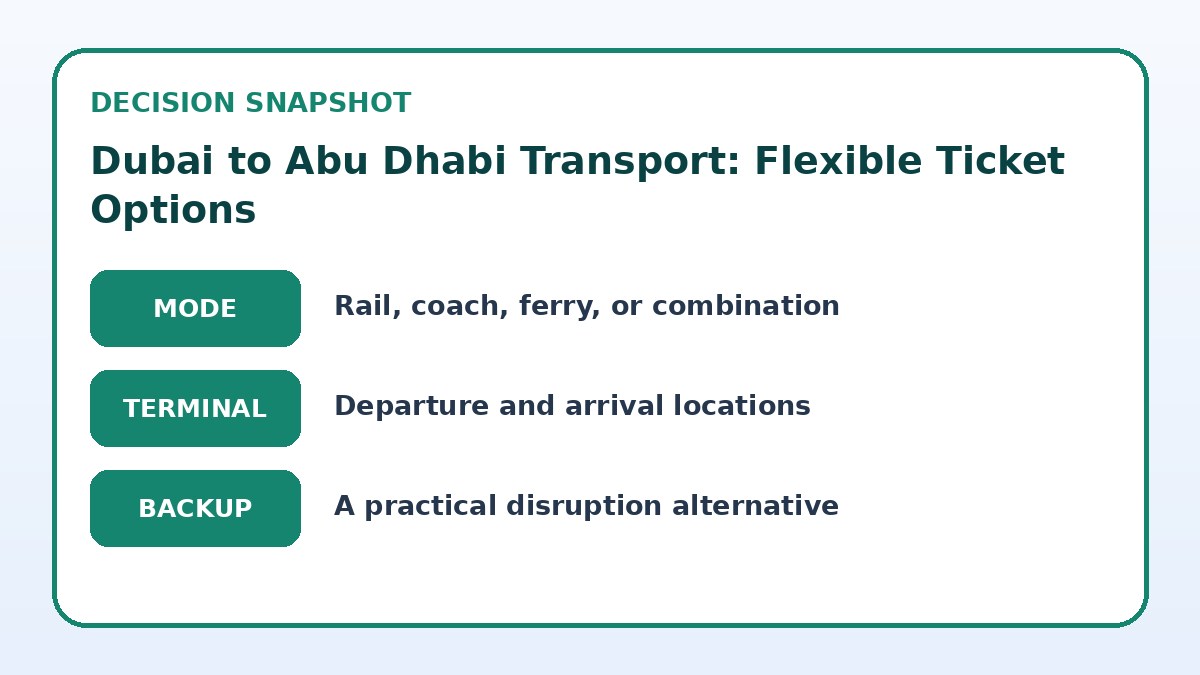
Choose the end-to-end journey plan
| Journey approach | Best for | Friction to check |
|---|---|---|
| Reserved scheduled coach or rail | Predictable schedules for travellers with fixed appointments and need for cost control. | Less flexible for same-day changes; may require extra taxi legs at either end of the journey. |
| Private door-to-door transfer | Direct drop-off to hotels or offices and minimal luggage handling for high-priority meetings. | Higher cost and exposure to road traffic; verify cancellation/change rules before booking. |
| Hybrid coach plus local taxi | Budget-conscious travellers needing a balance of schedule reliability and last-mile convenience. | Adds a transfer step and potential luggage friction; requires time buffers between legs. |
| Flexible corporate passes or multi-modal bundles | Frequent business travellers who require transferability across services and centralised billing. | May have complex rebooking rules; confirm cross-mode change policies on the provider’s booking page. |
Check live intercity options
Look beyond the ride itself and compare terminals, transfers, luggage, and arrival fit.
Luggage, transfer friction and working en route
Business travellers often carry sensitive items, laptop bags, and presentation materials; luggage allowances and handling rules matter. Scheduled public services can have strict carry-on limits and require you to stow items in luggage bays, while private vehicles permit door-to-door handling with minimal handling. If you must work during transit, evaluate whether the mode offers stable connectivity or a comfortable seat for laptop use. Private transfers typically provide a quieter environment and uninterrupted power options, but verify that these conveniences are described on the provider’s booking page before relying on them.
Transfer friction is also about how many times you must change vehicles and the distance between platforms or terminals. Each additional transfer increases the chance of delay and baggage mishandling. When you compare options, list the steps from office/hotel to final destination, including walking distances, elevator/stair needs, and whether baggage assistance is available. If mobility or time is a constraint, favour single-leg journeys or arrangements that include meet-and-greet services to eliminate transfer delays.
Timing flexibility and ticket interchangeability
Ticket flexibility ranges from strict fixed-time fares to fully flexible tickets that allow day-of rebooking. For business travellers whose schedules shift, flexible or refundable tickets reduce stress but may come with trade-offs in availability or terms. When evaluating a fare, read the change and cancellation policy on the provider’s final booking page: look for permitted rebooking windows, fees, and whether you can exchange to a different mode (for example, switching from a coach to a private transfer) under corporate arrangements. Don’t assume that a flexible label means free same-day changes—confirm the exact conditions before purchase.
Also assess how ticket rules interact with the rest of your itinerary. If you connect to flights or international meetings, you may need a ticket that explicitly allows reissue without penalties to avoid missing connections. For corporate accounts, check whether your company’s travel policy offers managed flexibility or negotiated emergency rebooking services. Where multi-modal options exist, consider whether a bundle or pass allows changes across modes, and verify the provider’s cross-service exchange process before committing.
Compare the practical alternatives
Use the final page to confirm what is actually offered on your dates and save a workable fallback.
Intercity travel checklist
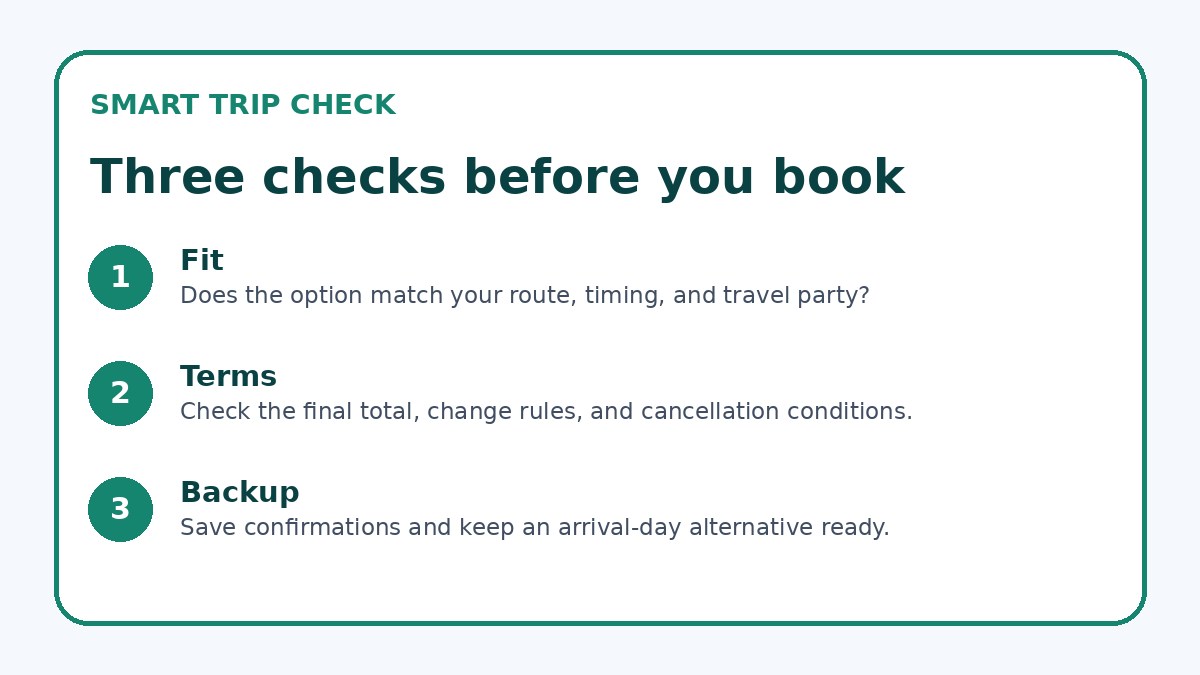
- Map exact pickup and drop-off points and measure walking/taxi time to your meeting or hotel
- Read the provider’s change and cancellation terms on the final booking page before purchase
- Confirm luggage allowances and whether staff will assist with transfers between modes
- Plan at least one disruption backup (later service, alternate terminal, or private transfer contact)
- Ensure your mobile connectivity and payment method work for last-minute rebookings
- If booking under a corporate account, verify emergency rebooking procedures and approval channels
Disruption backup: practical plans beyond the primary booking
A sensible backup reduces risk of missed meetings. Prepare a ranked set of alternatives: a later scheduled service, a different departure terminal, a private transfer provider, or intra-city taxis and ride-hailing apps. Keep contacts for local transfer companies and your corporate travel manager, and store screenshots or booking references where you can find them offline. If you use a corporate credit card or an approved supplier list, know whether emergency rebookings are pre-approved, and whether your policy covers surge pricing during peak disruption.
Also factor in communications and local access: ensure your mobile roaming or local SIM can handle calls and apps used for last-minute arrangements, and download relevant route maps or timetables in advance. If you book a ticket with limited change options, pre-authorise a contingency fund or card for alternatives. Before finalising any booking, verify on the provider’s final booking page whether same-day changes are possible, where to request refunds, and the exact procedure for handling service cancellations.
Rail & Intercity Transport questions travelers ask
How do I decide between a scheduled coach/rail service and a private transfer for a business trip?
Start by weighing predictability against control. Scheduled services usually offer reliable published departure times and can be cost-effective, which suits tight budgets and predictable itineraries. Private transfers give door-to-door convenience and reduce last-mile friction—valuable when you must arrive at a specific office or hotel entrance. Compare total door-to-door time, luggage handling, and the provider’s ticket-change policy. Always verify the pickup/drop-off coordinates, permitted waiting times, and rebooking rules on the provider’s final booking page before committing.
What should I check about ticket flexibility if my meeting time might change?
Look for explicit wording on change windows, penalty fees, and whether same-day rebooking is permitted. Some fares may allow swaps to later departures with a fee; others require purchasing a new ticket. For bundled or corporate tickets, confirm whether changes can be processed through a travel manager or online self-service. Keep proof of purchase and the provider’s contact details handy to speed up emergency changes. If uncertain, consider a more flexible fare or a private transfer that can be retimed with less friction.
How do I plan a disruption backup without overspending?
Identify a ranked list of alternatives that progressively increase cost: a later scheduled service, a different departure terminal, a short taxi from the nearest hub, and finally a private transfer. Pre-save contact details and app credentials for ride-hailing services to avoid delays while searching. If your company permits, allocate a small contingency for urgent rebookings. Before travel, note the provider’s refund or exchange procedures so you can act quickly without buying unnecessary duplicate tickets.
Final decision note
For business travel between Dubai and Abu Dhabi, flexibility is as much about the ticket rules as it is about the entire door-to-door experience. Choose scheduled services when you need consistent departure times and predictability; pick private transfers when first- and last-mile convenience and luggage handling trump cost. Hybrid and corporate pass approaches suit travellers balancing budget with occasional need to rebook. Before you book, map exact pickup/drop-off points, verify ticket-change rules on the provider’s final booking page, and prepare at least one practical disruption backup to protect your meeting schedule.
Continue planning
Check current options and final conditions
Use the provider page to confirm live availability, the final total, cancellation terms, and every condition that matters to your trip.
This evergreen planning guide was created with AI-assisted drafting and a structured quality review. It does not display live prices, schedules, availability, visa guidance, or provider rankings. Verify current details before booking. Some links are affiliate links; we may earn a commission at no additional cost to you.