Practical answer up front: for many families visiting Da Nang, a rental car makes sense only when your itinerary includes multiple day trips outside the city, you’ll travel with small children or a lot of luggage, or you want door-to-door convenience for early starts and late returns. If you plan to stay mainly in central Da Nang, use taxis, ride-hailing apps, and occasional motorbike taxis, a car is often more hassle and cost than it's worth. Driving in Vietnam requires comfort with local traffic, confident navigation through mixed-use streets, and an awareness of parking limits in tourist zones. Use this guide to weigh the tradeoffs, compare decision approaches, and follow a checklist of things to verify before booking a vehicle for a family trip.
When a rental car is the right move for your family
A rented car becomes valuable when your plans include multiple destinations that are hard to link by public transport or you travel with infants and toddlers needing predictable schedules. Day trips to outlying places—mountain viewpoints, rural attractions, or beaches beyond the main city—are more comfortable by car because you control timing, stops, and air-conditioning. Families carrying strollers, beach gear, or multiple suitcases also appreciate the storage and the ability to move with fewer transfers than buses or ride-hails require. If mobility and tailoring the day to nap times matter, the convenience of a private car can outweigh the extra coordination.
Think about who will drive and how comfortable they are with Vietnam’s mixed traffic, scooters weaving between lanes, and different driving etiquette. If the nominated driver lacks confidence, consider hiring a car with a driver—this adds cost but preserves the convenience without the stress. Also account for the age and health of family members: elderly travelers who need frequent rests or flat, easy access will prefer a car. Finally, factor travel time: a car can reduce walking and waiting time, which often matters more to families than marginal financial savings.
When to skip a rental and use local transport
If your stay is mostly within Da Nang’s central districts, taxis, ride-hailing apps, and short motorbike-taxi rides are usually quicker and cheaper than a full-day rental. The city’s main attractions—My Khe Beach, the Dragon Bridge, museums, and many restaurants—sit close enough that you can plan a child-friendly day without a car. Hotels often provide shuttle options or can arrange excursions, and walking short distances avoids parking hassles entirely. Remember that city driving also means paying for parking and possibly navigating narrow streets and one-way systems.
Public transport and ride-hailing relieve you of the work of navigation and parking, and they spare you from local driving norms and road types you may not know. For families on a tighter budget or who prefer not to handle insurance and deposit logistics, relying on local transport or guided tours for day trips is a practical choice. If unpredictable traffic or unfamiliar road signs would add anxiety, let a local driver or the transit network handle the trip instead of adding driving duties to your itinerary.
| Approach | Best for | Tradeoff to check |
|---|---|---|
| Self-drive rental | Families comfortable with local driving who want full itinerary control. | Must handle navigation, parking, and unfamiliar traffic patterns; insurance and deposit logistics. |
| Rental with driver | Families prioritizing stress-free travel and local traffic knowledge. | Higher daily cost but removes driving burden and local rules complexity. |
| Taxis and ride-hailing | Short city stays and families avoiding parking and vehicle paperwork. | Less flexibility for multi-destination day trips; costs add with many trips or long drives. |
| Guided day tours or private transfers | Families wanting structured itineraries and included admission logistics. | Less spontaneity; check child seating policies and pickup/drop-off convenience. |
Practical tradeoffs: cost, comfort, and driving stress
Cost comparisons are more than daily rental rates. Include fuel, parking, potential tolls, insurance excess, and deposits when comparing to taxis or tours. Comfort counts: a private car lets you store belongings, control the climate, and make stops for breaks, changing diapers, or snacks without juggling bags and public transfers. For families, those small conveniences add up. On the flip side, a rental means dealing with paperwork, local traffic rules, and the constant need to park or find secure spots when you stop for meals or sightseeing.
Driving stress is not just personal; it affects the whole family’s enjoyment. Vietnam’s roads include many scooters, abrupt lane changes, and local signaling customs unfamiliar to visitors. If the primary driver prefers predictable, low-pressure travel, consider hiring a car with a driver or booking organized family-friendly excursions. Using a local driver preserves legroom and flexibility without immersing you in traffic navigation. Whatever you choose, allow extra time between stops for traffic variability and factor rest breaks into each day’s plan.
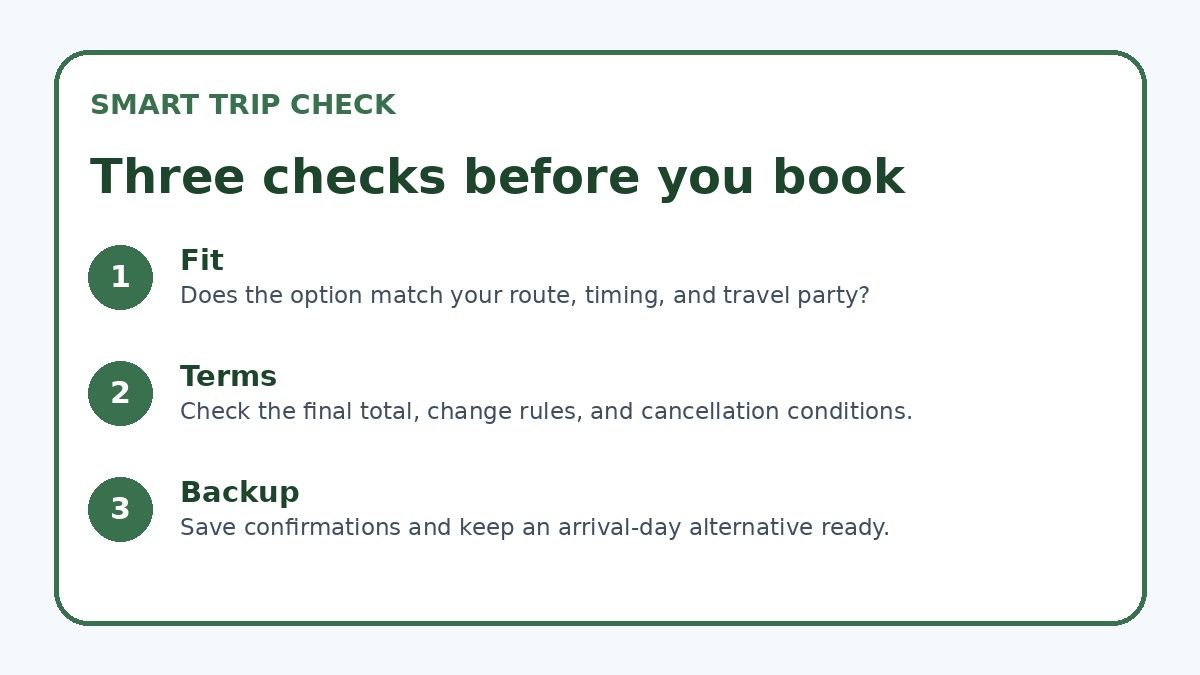
Before you book
- List every planned stop and confirm whether public transport, taxis, or a car best links them without excessive transfers.
- Verify child-seat availability (type and age/weight suitability) and request installation details on the rental provider’s booking page.
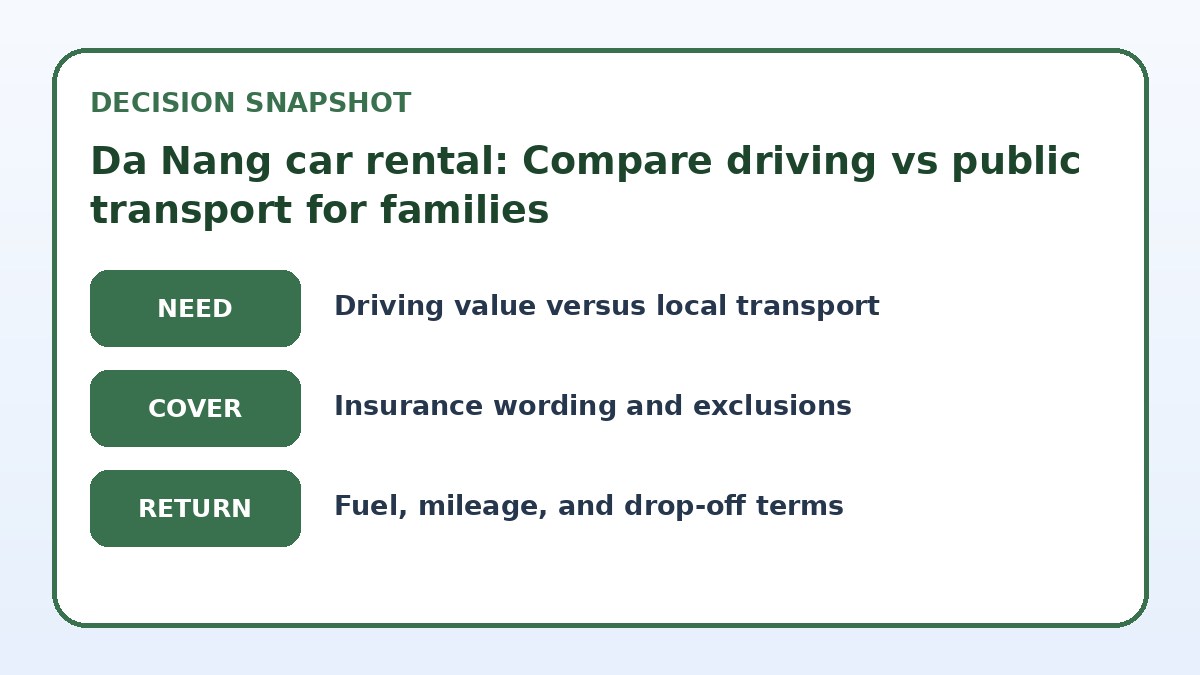
- Read the rental contract for insurance cover, excess amounts, fuel policy, mileage limits, and payment/hold procedures.
- Check pick-up and drop-off logistics: airport vs city office, after-hours fees, and whether hotel delivery is offered.
- Decide who will drive and confirm their accepted license type; if unclear, verify document requirements on the provider’s final booking page.
- Compare the total landed cost (rental, fuel, parking, driver fees if any) against private transfers or guided tour prices for key days.
How to decide: a simple decision checklist
Start by writing your rough itinerary: list each day’s main destinations and estimate travel time and transfers. Check whether each destination is within easy reach by taxi or a group tour; if you have three or more days with lengthy transfers, a car may pay off in convenience. Next, assess your family composition: number of children, ages, luggage, and mobility needs. If a stroller, booster seats, or medical devices must travel easily, a car adds predictable access and storage.
Finally, decide who will drive and how comfortable that person is with local roads. If no one is comfortable, look for rentals that include a driver. Before booking, compare the total landed cost—including fuel, insurance, and parking—against the price of hiring drivers for each day or booking private transfers for key day trips. Use that comparison to choose the option that balances comfort and cost for your family.
Frequently asked questions
Can I drive in Da Nang with my foreign license?
Eligibility to drive in Vietnam depends on your license type and nationality. Many visitors can drive with an International Driving Permit plus their home license for short stays, but rules differ by country and can change. Rental companies often require proof of an appropriate license and may have age or document requirements. Before you book, confirm accepted licenses and any translation or permit needs on the rental company’s booking page or customer service line so you don’t arrive without the correct paperwork.
Are child seats commonly available with car rentals in Da Nang?
Some rental companies and chauffeur services offer child seats, but availability and the exact type (infant, convertible, booster) vary. You should request the specific seat type when booking and ask how it will be fitted and whether there’s an extra charge. If a company can’t supply an appropriate seat, plan to bring an approved child restraint or book transfers and tours that explicitly confirm child-seat provisions. Always verify seat availability and any costs on the provider’s final confirmation.
Is parking difficult to find around Da Nang’s main attractions?
Parking availability varies by area and time of day. Popular beaches, markets, and Hoi An day-trip departure points can have limited or paid parking, especially during weekends and holidays. Some hotels include parking; others may have limited spaces. Check with your accommodation about secure parking options and whether they can reserve a space or advise nearby lots. When comparing rental options, include potential parking costs and convenience as part of your decision.
Final planning note
Choosing whether to rent a car in Da Nang for a family trip comes down to your itinerary, who will drive, and how much you value convenience over the hassle of local driving rules and parking. Rent a car—or rent one with a driver—if you have multiple day trips, bulky gear, or small children whose schedules benefit from flexible stops. Skip the rental when you’ll stay mostly downtown, prefer avoiding paperwork, or are uncomfortable with mixed traffic conditions. Before you book, map your days, compare total costs, confirm child-seat and license requirements, and verify all details on the rental provider’s final booking page or a comparison site such as Trip.com if you want a quick cross-check.
Continue planning
Check current options and final conditions
Use the provider page to confirm live availability, the final total, cancellation terms, and every condition that matters to your trip.
This evergreen planning guide was created with AI-assisted drafting and a structured quality review. It does not display live prices, schedules, availability, visa guidance, or provider rankings. Verify current details before booking. Some links are affiliate links; we may earn a commission at no additional cost to you.