If you’re visiting Chiang Mai for the first time, pick your hotel area based on what you want to do most: sightseeing, cafe culture, calm riverside evenings, or night market energy. The Old City puts temples and historic walls within easy walking distance. Nimman offers boutique hotels near trendy restaurants, co-working spaces and nightlife. The riverside and Night Bazaar areas give different vibes—more relaxed views and market convenience, respectively. This article lays out the practical pros and cons of each area, decisions you’ll face when booking (transport, walking vs. tuk-tuk access, noise levels, and food options), and what to verify on the hotel’s final booking page before committing. Read this to clarify where to stay in Chiang Mai so your first trip fits the rhythm you want, whether that’s a temple-focused stay, a food-and-coffee week, or easy evening markets.
Old City: walk everywhere for history and temples
Staying inside Chiang Mai’s Old City gives you unmatched convenience for sightseeing. From most hotels here you can walk to major temples, museums and many restaurants; tuk-tuks and songthaews are plentiful if you prefer not to walk. This compact layout makes mornings and late afternoons easy to manage because popular sights cluster relatively close together. For a first visit, the Old City’s sense of place and history helps you get oriented quickly—many travelers wake up and step out to a temple or a market within minutes.
Tradeoffs include noise and tourist density. Streets near the main temples and Sunday Market can get crowded and lively after dark. Hotels vary widely: guesthouses, boutique stays and mid-range hotels are common, but room sizes and amenities differ. When booking, verify whether the property is inside the walled square or just outside—this affects walking time and traffic exposure. Also check the hotel’s room orientation, elevator access, and any noise-mitigation measures listed on the booking page.
Nimman: cafes, boutiques and a modern vibe
Nimmanhaemin Road and its side streets cater to travelers seeking trendy cafes, creative shops, and a lively nightlife scene. Hotels range from stylish boutique options to small chains and serviced apartments aimed at digital nomads; the neighborhood is walkable for daytime exploring and has plenty of food choices, specialty coffee and craft beer bars. If you plan to spend your days in cafes, galleries, coworking spaces or younger-nightlife venues, Nimman centralizes those options and reduces travel time.
The area’s bustle brings tradeoffs: nights can be loud and parking or street access can be tight. Nimman is a few kilometers from the Old City, so budget extra travel time if you intend to visit temples or markets frequently. Check whether your chosen hotel provides shuttle service or easy taxi/tuktuk access, and look at room reviews for noise concerns and whether rooms face internal courtyards. Confirm cancellation terms and whether the property charges for extra beds or airport transfers on the booking page.
| Approach | Best for | Tradeoff to check |
|---|---|---|
| Stay in the Old City | First-timers focused on temples, walking tours, and quick access to historic sites | Higher tourist density and potential evening noise near main attractions |
| Choose Nimman | Travelers wanting cafes, nightlife, and modern boutique stays | A few kilometers from the Old City and temples; expect more nightlife noise |
| Book riverside hotels | Those seeking quieter mornings, scenic meals and a relaxed pace | Often farther from clustered sights—requires taxis or shuttles to major attractions |
| Stay near Night Bazaar/Chang Khlan | Visitors prioritizing evening markets, easy transport access, and terminal connections | Livelier nights with market noise and busier streets to navigate |

Riverside and Wat Ket: calmer mornings and scenic meals
The riverside neighborhoods, including Wat Ket, offer a quieter pace with scenic views over the Ping River and a mix of boutique hotels and established mid-range properties. This area suits travelers who want relaxed mornings, alfresco dining, and a different feel from the compact Old City. Riverside hotels can be an excellent choice if you appreciate a calmer setting after daytime sightseeing and prefer laid-back evenings by the water or at hotel restaurants that capitalize on the view.
Downsides include distance to some core attractions: you may need tuktuks, taxis, or rental transport to reach certain temples or markets. Public boat services, where available, and hotel shuttles can reduce travel friction—so check the booking page to confirm transport options and how the property describes distance to major sights. Also verify whether riverside rooms come with balconies or river views if that matters for your experience; not all riverside properties guarantee a scenic room.
Before you book
- Confirm exact neighborhood location on the booking page map, not just the hotel name.
- Read recent guest comments about noise, street traffic and early morning activity for your room type.
- Check whether the property offers airport pickup, shuttle service, or clear taxi instructions.
- Verify bed configuration, extra bed rules and any fees the hotel lists on its final booking page.
- Look for photographs showing room layout and view; request a courtyard or higher-floor room if noise is a concern.
- Compare cancellation and payment terms and note how the hotel handles late check-in on the supplier page.
Night Bazaar, Chang Khlan and transport convenience
Hotels around the Night Bazaar and Chang Khlan Road put evening market shopping, street food and transport links close at hand. This area is useful if you plan to arrive late, need frequent taxi or bus connections, or want easy access to the night market scene without long transfers. Accommodation here ranges from budget options to larger hotels, and the nighttime atmosphere is lively—good for travelers who want evening entertainment steps away from their door.
Expect evening and overnight noise near the market and main thoroughfares. If you prefer quiet nights, request a room away from the street when booking. Compare how far the hotel is from both the Old City and the airport bus or long-distance bus terminals if travel logistics matter. As always, confirm airport transfer options, late check-in policies and whether the hotel lists soundproofing measures on the provider’s final booking page.
Frequently asked questions
Which Chiang Mai neighborhood is safest for solo travelers staying overnight?
Chiang Mai is generally regarded as safe for tourists, but safety can vary block by block. For solo travelers who want easy walking routes and a visible tourist presence, the Old City and Nimman are practical choices because they are busy, well-lit and frequently patrolled by police. Riverside areas are also safe but may feel quieter at night; if you pick riverside accommodation, check how well-lit the streets are and confirm taxi or shuttle access for late returns. Always follow basic personal-safety practices: avoid poorly lit alleys late at night, keep valuables secure, and verify emergency contact information on the hotel’s booking page.
How do I balance convenience versus quiet when choosing a Chiang Mai hotel?
Balancing convenience and quiet requires prioritizing what matters most during your trip. If you want to minimize daily transfers and walk to temples and markets, choose the Old City and accept more street activity and noise. If quiet mornings and scenic relaxation are important, riverside hotels usually offer calmer environments but add transit time to core attractions. Nimman is a middle ground for lively daytime cafe culture but can be noisy after dark. To tip the balance toward quiet at any location, request a room facing an internal courtyard or higher floor and verify room placement and soundproofing details on the property’s booking page.
Should I book near the Night Bazaar to avoid long taxi waits at night?
Booking near the Night Bazaar reduces the need for late-night transport when you plan to shop or dine there, since you can walk back to your hotel. However, that convenience comes with more nighttime activity and noise. If you plan only occasional night-market visits, staying in the Old City or Nimman and taking a short tuk-tuk or taxi might be quieter overall. Check whether your hotel provides late-night reception or 24-hour desk service, and verify typical taxi or ride-hail availability for your stay dates on the provider’s booking page to avoid surprises.
Final planning note
Choosing where to stay in Chiang Mai on your first visit comes down to what you’ll do most of the time. Pick the Old City for instant temple access and walkable sightseeing; choose Nimman for cafes, contemporary restaurants and nightlife; opt for riverside hotels if you want calmer mornings and scenic meals; and stay near the Night Bazaar for evening market convenience and transport links. Before you book, confirm the hotel’s exact location, transport options, noise-related details, and room orientation on the final provider page. If you want to compare current availability, Trip.com is one place to check listings and up-to-date property details, but always verify policies on the hotel’s official or booking provider’s final page.
Continue planning
Check current options and final conditions
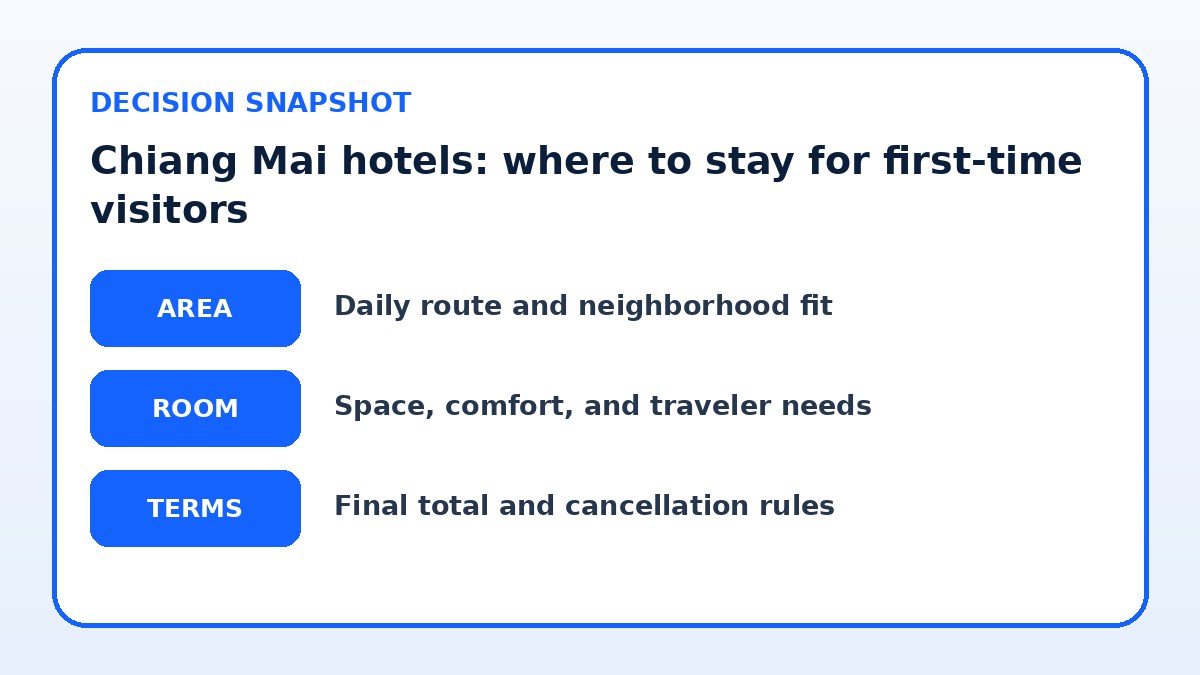
Use the provider page to confirm live availability, the final total, cancellation terms, and every condition that matters to your trip.
This evergreen planning guide was created with AI-assisted drafting and a structured quality review. It does not display live prices, schedules, availability, visa guidance, or provider rankings. Verify current details before booking. Some links are affiliate links; we may earn a commission at no additional cost to you.