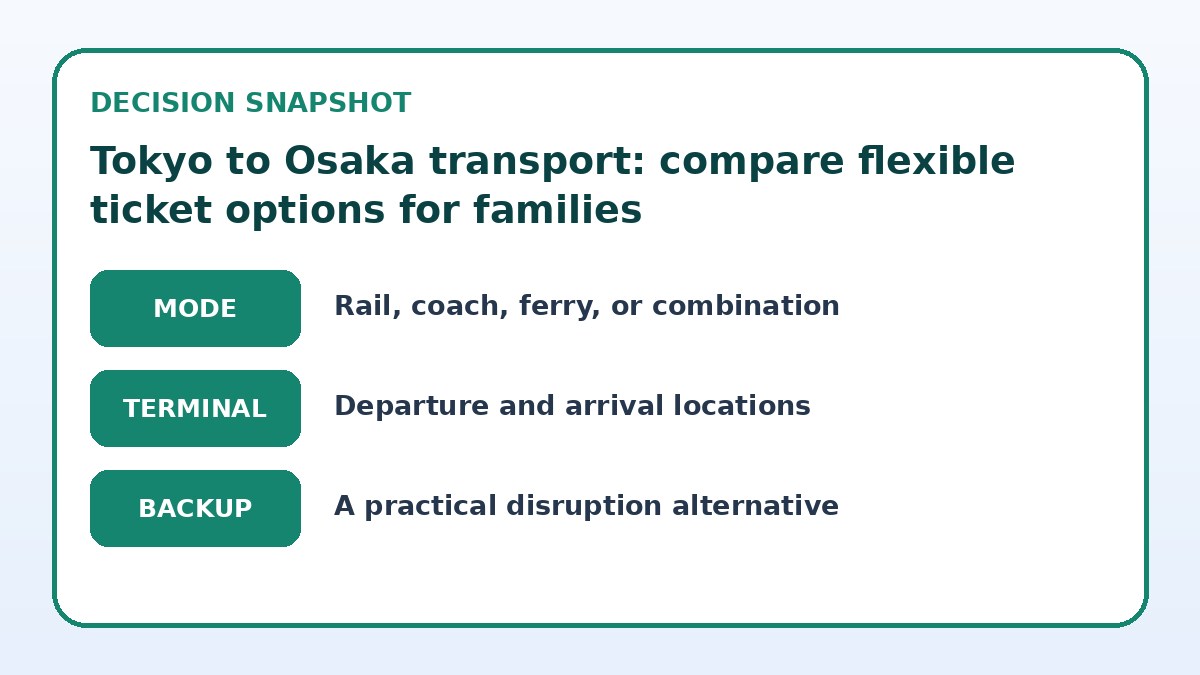
If your family is traveling from Tokyo to Osaka and flexibility matters, start by choosing between refundable or exchangeable tickets with reserved seats and flexible boarding windows. For many families the practical choice balances the ability to change plans (late-night arrival, sick child, or extra luggage) with the lower hassle of an advance reserved seat. That means evaluating cancellation and change policies, seat-assignment rules for children, and whether a rail pass or point-to-point ticket gives the family the adaptability you need. When details could change—cancellation windows, child-age definitions, or seat-assignment deadlines—verify the exact terms on the provider’s final booking page. Trip.com can help surface current availability, but always confirm provider policies before booking.
Ticket types and what flexibility really means
Ticket flexibility comes in several practical forms: refundable fares that return money if you cancel, exchangeable tickets that let you move the reservation without a full refund, and open or flexible-dated options that let you take the next service within a time window. For families, the easiest-to-use options are usually those that permit seat changes or exchanges with minimal paperwork. Read the fine print for how many days prior to departure a change is allowed, whether a fee applies, and whether the ticket must be changed at a ticket office or can be handled online. Those logistical limits often matter more than the headline ‘refundable’ label.
Another important distinction is reserved versus unreserved seating. Reserved seats guarantee the whole family sits together—especially useful when traveling with young children or grandparents. Unreserved or non-seat-specific tickets may be cheaper but risk splitting your group during peak periods. If you choose unreserved tickets to save money, have a backup plan: arrive early, or buy one reserved seat and additional unreserved tickets so at least one adult sits with children. Confirm seating rules, whether children under a certain age require a ticket, and if seat changes are permitted on the provider’s booking page.
How age categories and child fares affect flexibility
Child fare rules and age cutoffs vary between operators and ticket types; some count children under six as free when seated on a lap, others require a paid seat for any child occupying a seat. These rules change how many seats you need and whether you must reserve them in advance. For families, double-check the provider’s definition of infant, child, and youth age ranges before booking. If the operator requires a separate ticket for each child above a certain age, account for that when comparing refundable versus non-refundable options—refunds sometimes apply differently to child fares.
When comparing flexibility, also check documentation requirements: some carriers ask to show ID or proof of age at boarding for discounted child tickets. If you expect to make changes—like moving to an earlier or later train—the change policy for child fares may differ or incur additional steps. Always verify whether exchanges or refunds for children follow the same rules as adult tickets and whether online self-service allows changes, or whether you must visit a ticket office at the station.
| Approach | Best for | Tradeoff to check |
|---|---|---|
| Refundable tickets with reserved seats | Families that value the ability to cancel and rebook without losing seat guarantees | Higher upfront fare and potentially stricter purchase windows |
| Exchangeable tickets (credits or free rebook) | Families who expect to change departure times but don’t need full refunds | Possible administrative fees or rebooking limits; check whether children follow same rules |
| Non-refundable tickets with reserved seats | Fixed plans where sitting together matters but schedule changes are unlikely | Cheaper but low adaptability; cancellations often forfeit fare |
| Unreserved tickets or open passes | Flexible, spontaneous families willing to arrive early to secure seats | Risk of seating apart during busy travel times and less control over travel time |
Reserved seats, group seating and family-friendly conveniences
Reserved seating is usually the simplest option for families who want to sit together, store strollers or luggage nearby, and avoid the stress of finding multiple adjacent seats. Some operators offer family compartments or priority seating; others only allow standard reserved rows. If reserving seats, check how many seats you can book together online and whether the reservation system can hold seats for short periods while you complete a multi-ticket purchase. Also confirm any time limits for collecting tickets and whether a seat is released automatically if not collected before departure.
Group booking rules may offer a streamlined process but can add restrictions, such as heavier penalties for cancellations or requirements to change all tickets together. If you value maximum flexibility, booking individual refundable or exchangeable tickets might allow altering part of the group without affecting others. Conversely, a group reservation can simplify finding adjacent seats but could complicate last-minute individual changes. Verify group and family-seat terms on the provider’s booking page so you know whether changing one person’s travel forces a change to everyone’s ticket.
Before you book
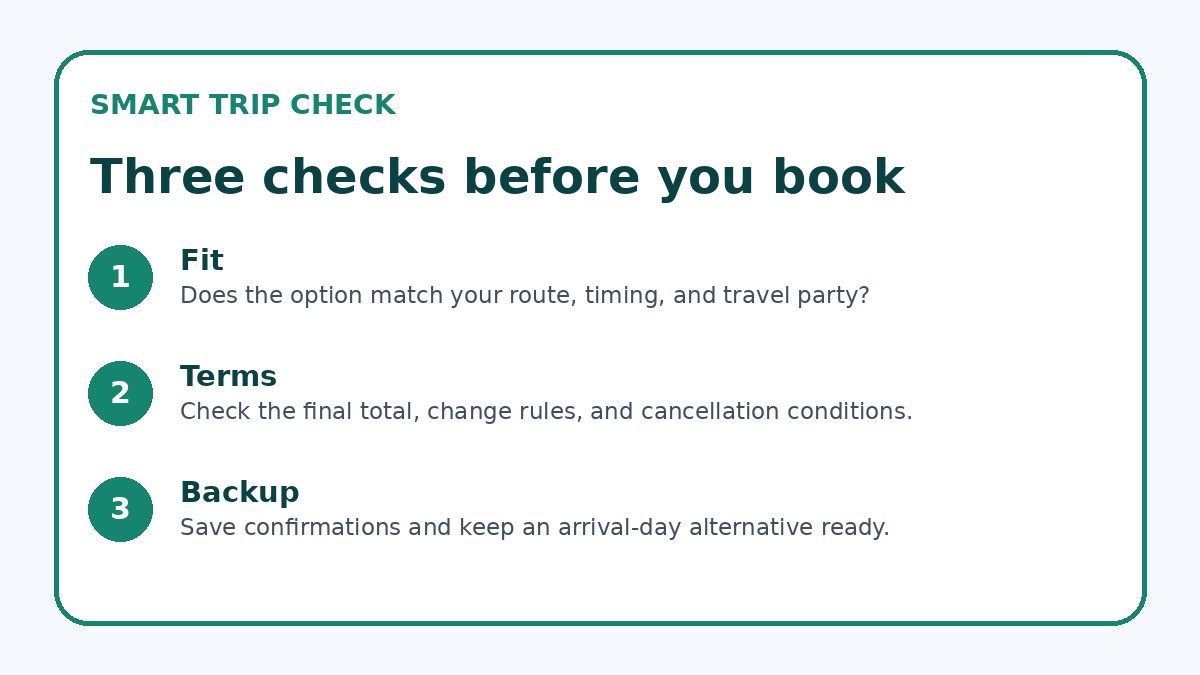
- Confirm the exact cancellation and change deadlines on the provider’s final booking page before you pay.
- Verify the child age bands and whether children require seats or ID at boarding for discounted fares.
- Decide if reserved seats are essential—book them for at least one adult per small child if full family seating is unavailable.
- Check whether exchanges or refunds can be done online or require a station ticket office visit.
- Note any group-booking conditions that may force all tickets to be changed or refunded together.
- Keep printed or screenshot copies of your booking terms and any change confirmations until the trip is complete.
Practical tradeoffs: when flexibility pays for families
Flexibility costs something—often higher fare tiers, fees for day-of changes, or stricter conditions on refunds. Weigh that cost against the likelihood and impact of changes: a sick child, delayed connections, or a desire to explore en route can all justify paying more for flexible conditions. Also factor in non-ticket costs: missing a reserved seat could mean spending time finding alternatives at busy stations, which is a serious consideration when traveling with small children. Sometimes paying a modest premium for an exchangeable ticket and reserved seats saves stress and time, which matters more to families than marginal monetary savings.
If your itinerary includes a tight onward connection or timed activities in Osaka, prioritize tickets that allow same-day changes or protected onward rebookings. On the other hand, if your travel dates are fixed and changes are unlikely, simpler non-exchangeable tickets plus early booking for reserved seats keep planning straightforward. Whatever you choose, document cancellation and change deadlines, the refund calculation method, and any penalties on the booking confirmation. Always verify the most current, binding terms on the provider’s final checkout page before you pay.
Frequently asked questions
Should I buy refundable tickets for a family if one child is likely to be sick?
If illness could force a cancellation, refundable tickets reduce financial risk and simplify rebooking. Evaluate how long before departure the ticket remains refundable and whether refunds are full or partial. If fully refundable fares are prohibitively expensive, look for exchangeable options that convert the fare into future travel credit without a large penalty. Always check whether child fare refunds follow the same rules as adult fares and whether proof (such as a medical note) is required for a full refund on the provider’s final booking page.
Can I reserve seats together for a family with mixed-age children?
Most reservation systems allow selecting adjacent seats, but availability varies by service and booking method. If the online system limits how many seats you can reserve in one transaction, contact the operator’s ticket office or the booking agent. For very young children, confirm whether they require a separate seat or can travel on a lap. If you need family-specific compartments or priority seating, ask the operator directly when booking and verify any special-seat policies on the final checkout page.
Is it better to use a rail pass or individual tickets for Tokyo to Osaka travel with kids?
A rail pass can be convenient if your family plans multiple long-distance or regional trips that justify the pass’s flexibility; it often allows flexible boarding within validity rules. However, passes sometimes require seat reservations for long-distance services, and booking those reservations can introduce limits. If you only plan the single Tokyo–Osaka leg and a few local trips, individual flexible or refundable tickets with reserved seats may be simpler. Compare the actual booking and reservation terms of passes and point-to-point tickets on the provider’s pages before deciding.
Final planning note
Families traveling from Tokyo to Osaka should prioritize seat reservations and clear change/refund terms when flexibility matters. Start by deciding whether refundable fares, exchangeable tickets, or reserved non-refundable tickets fit your risk tolerance and travel habits. Reserved seats reduce on-board stress; refundable or exchangeable fares reduce financial exposure. Check child fare rules, documentation requirements, and how changes are processed—online or in person—on the provider’s final booking page. Use the checklist to gather the exact terms before purchase, and consider Trip.com or similar sites to compare current availability, then confirm policy details directly with the carrier before completing payment.
Continue planning
Check current options and final conditions
Use the provider page to confirm live availability, the final total, cancellation terms, and every condition that matters to your trip.
This evergreen planning guide was created with AI-assisted drafting and a structured quality review. It does not display live prices, schedules, availability, visa guidance, or provider rankings. Verify current details before booking. Some links are affiliate links; we may earn a commission at no additional cost to you.